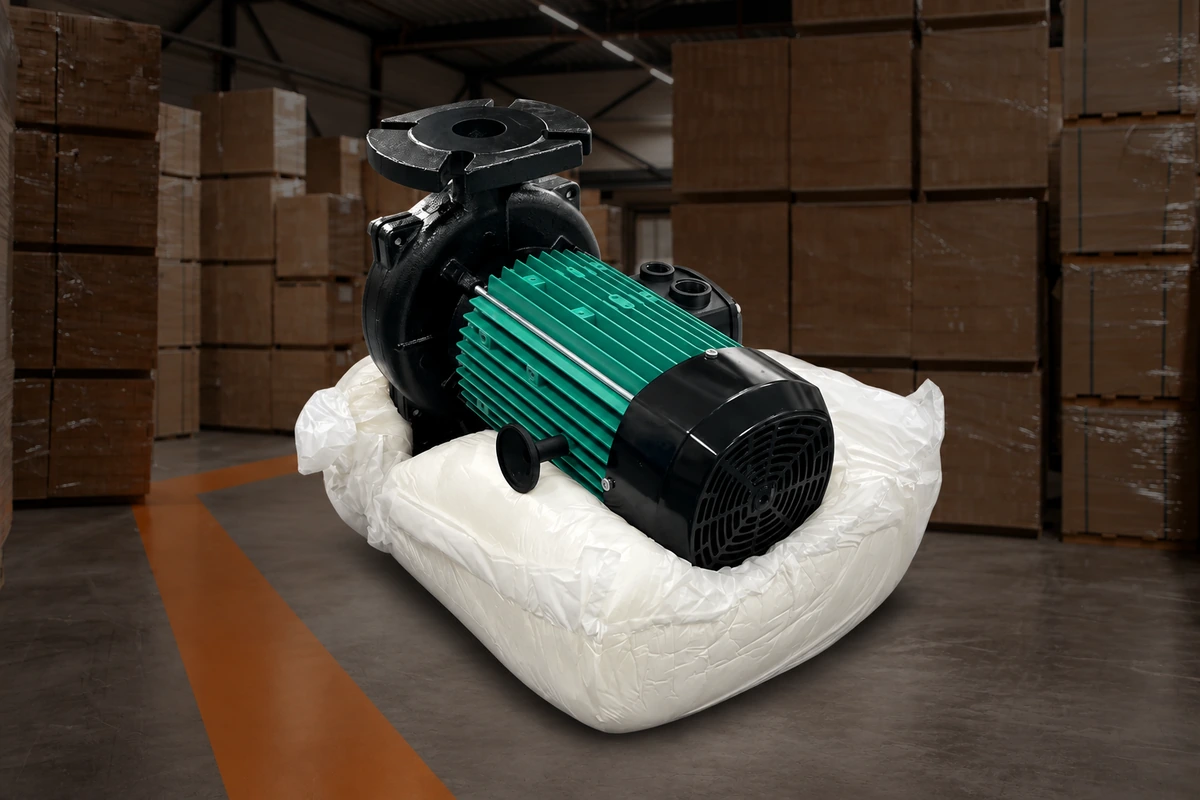
To investigate suspected foam-in-place packaging condensation, establish where the moisture first appears and compare the affected surface temperature with the dew point of the air reaching it. A cold part entering a warmer packing area deserves attention, but droplets alone do not establish their source. Neither winter weather nor heat from foam formation is a diagnosis.
For a packaging team, the useful question is precise: was the product already wet before the cushion arrived, did moisture appear during packing, or was it first found after storage or unpacking? Record that sequence before changing the packing method. The checks below provide an investigation framework for cold parts and visible moisture; they do not establish a moisture barrier or cold-chain rating for the foam package.
First Establish Which Surface Is Wet
Separate moisture on the product, the product-facing side of a foam bag, the inside of the bag, and the carton. Those locations require different evidence. “Water inside the packaging” is too vague to guide a technical review.
Record the location without disturbing suspect material. For a bagged system, name which side of the film carries the droplets only when that distinction is observable. If it is unclear, record the location as uncertain. Do not open a foam bag to investigate.
A leaking bag, exposed liquid, or unidentified material belongs in the foam-in-place packaging problems investigation. Follow the applicable product and site procedures; do not touch or smell an unknown liquid to classify it as water. Keep affected packs identifiable while quality personnel determine their disposition.
Also establish the product’s condition before packing. Ask whether the part arrived from outdoor storage, an unheated room, washing, or another process with its own moisture controls. These are possible investigation inputs, not presumed causes.
What Temperature Evidence Supports Condensation?
Condensation is consistent with a surface temperature at or below the dew point of the air in contact with it during the relevant period. Relative humidity without air temperature, or room temperature without product temperature, is insufficient for that comparison. Establishing those conditions does not identify an unknown liquid as water.
Vaisala’s explanation of dew point describes the temperature at which air becomes saturated as it cools. Applied to a packing station, this means evaluating the part surface against the relevant air conditions. A room that feels comfortable can still contain a component cold enough for condensation.
Have the technical team select a measurement method suitable for the actual surface and document the measurement position. A reading from an accessible housing face does not automatically describe a recessed area where droplets were found. Record the instrument, units, time, and location so another person can interpret the result.
The workstation’s air reading also does not describe every enclosed space. Air trapped within a closed package or foam bag must not be assigned the room’s conditions without evidence. Where direct measurement would disturb the package, engineering should define an appropriate trial method and its limitations.
Build a Timeline From Arrival to Inspection
Use one record for each identified sample pack. Align temperature observations with packing events instead of comparing a morning room reading with a product inspected hours later.
| Record | Details that make the observation useful |
|---|---|
| Product arrival | SKU, previous location, arrival time, visible condition |
| Air at packing | Measurement location, time, temperature, relative humidity |
| Product surface | Temperature, exact location, time, measurement method |
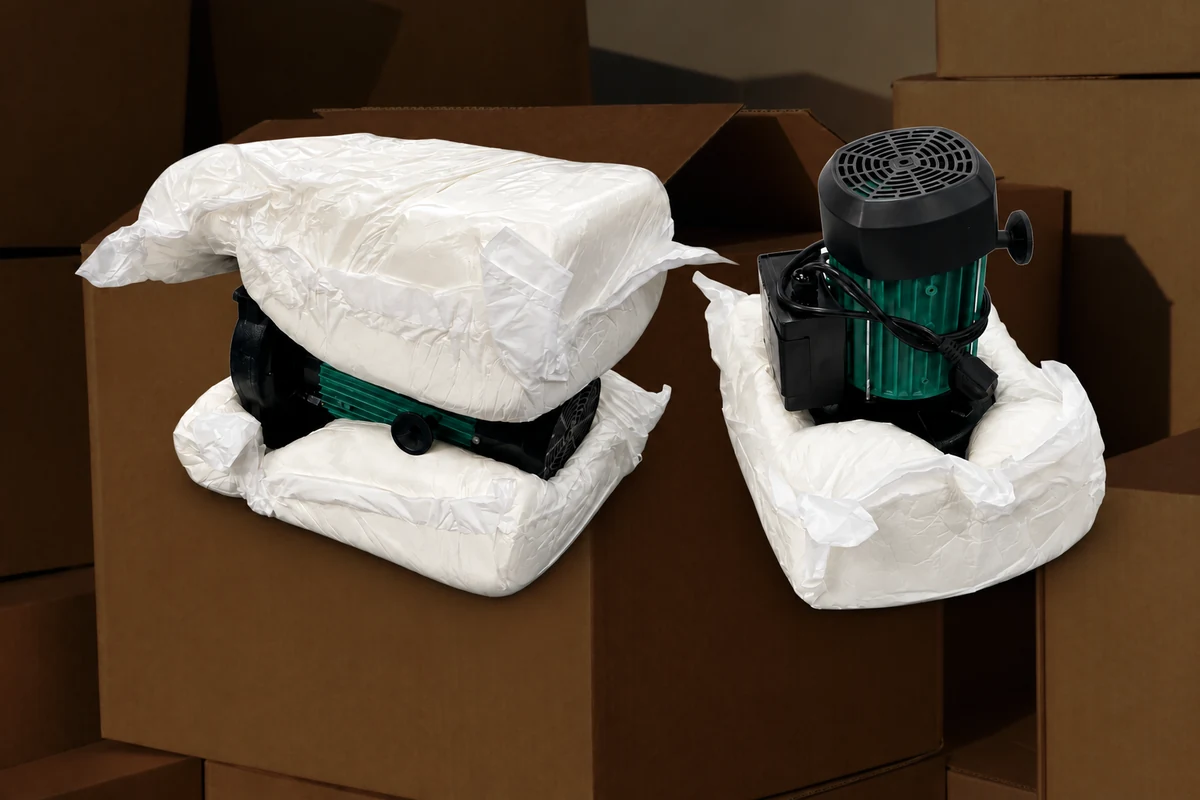
| Foam package | System, material codes, bag format, carton, method revision |
| Packing events | Product placement, cushion placement, closing and sealing times |
| First moisture observation | Location, time, appearance, stage of the process |
| Later inspection | Storage conditions, opening time, product condition |
Include packs without visible moisture in the comparison. For example, identify whether affected and unaffected parts came from the same storage area and were packed during the same interval. Use counts within a defined inspection group instead of descriptions such as “sometimes wet.”
Avoid cleaning away the evidence before the initial quality assessment. If the approved response requires immediate handling, document what was observed and what action followed. A later dry surface does not reconstruct its earlier condition.
Use the First Observation to Choose the Next Check
The earliest documented moisture narrows the investigation. It does not, by itself, prove the mechanism, but it helps prevent an unrelated change to foam output or packing timing.
Moisture present before packing: review incoming product condition and transfer into the packing area first. Foam formation cannot explain moisture already recorded on that part before foam was introduced. Keep upstream drying or cleaning requirements with the process owner.
Moisture first observed during packing: compare measurements and events around that point. Establish whether the product was checked immediately beforehand, which surface became wet, and whether bag integrity remained acceptable. Finding droplets after cushion placement does not prove the cushion generated them.
Moisture first found on opening: document storage, transit if relevant, and the receiving inspection environment. Distinguish droplets visible at opening from droplets noticed later. Without earlier observations, an unpacking finding does not establish when moisture developed.
For any of these routes, record surface damage separately from the moisture observation. Where coatings, decorative films, or adhesive layers are involved, use the sensitive-finish contact and heat-exposure checks to define the product assessment. Visible moisture and acceptable product condition are separate findings.
Confirm an Adjustment Before Making It Standard
Select the adjustment from the supported cause and the product’s permitted conditions. Where incoming temperature is implicated, engineering can assess the transfer or conditioning process. Where incoming wetness is documented, review the upstream process. An unexplained liquid or bag-integrity problem needs its own resolution.
There is no universal “leave the part for ten minutes” rule. Specify an acceptance condition that the site can verify, with engineering accounting for measurement uncertainty and relevant variations. Keep the foam materials and equipment within their supplier-specified conditions throughout the trial.
Do not treat foam reaction heat as a product-drying step or a guarantee against condensation. Adding a separator or desiccant also changes the proposed package; neither establishes moisture control without an appropriate design assessment. If moisture protection is a product requirement, obtain a defined moisture-protection specification rather than relying on cushioning approval.
Repeat the agreed evaluation with representative incoming conditions, using the same observation stages. Confirm product appearance and required function as well as the absence of visible moisture. Record the accepted conditions and review triggers in the packing instruction, especially changes to storage location, seasonal conditions, contact materials, or the packing sequence.
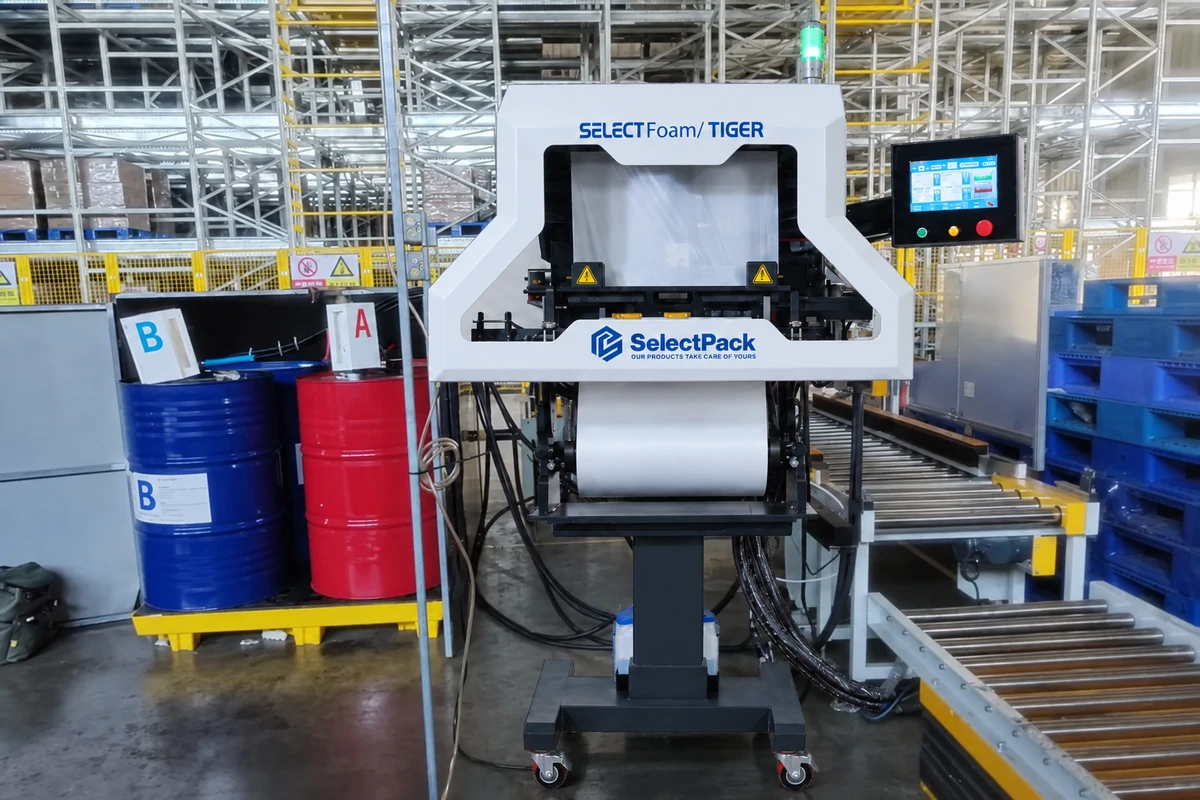
For a review involving the SelectFoam system or bag range, provide the configuration and timeline together with the measured conditions and affected surface. That gives the packaging and quality teams a concrete starting point for deciding whether the existing process fits the product or needs a revised trial.