Air cushion machine capacity should be compared with the usable material your packing stations need during normal and peak operation. A machine’s film speed in meters per minute is not the number of acceptable cartons packed per minute. Convert demand into the same material units, then account for interruptions, rejected sections and the way material reaches operators.
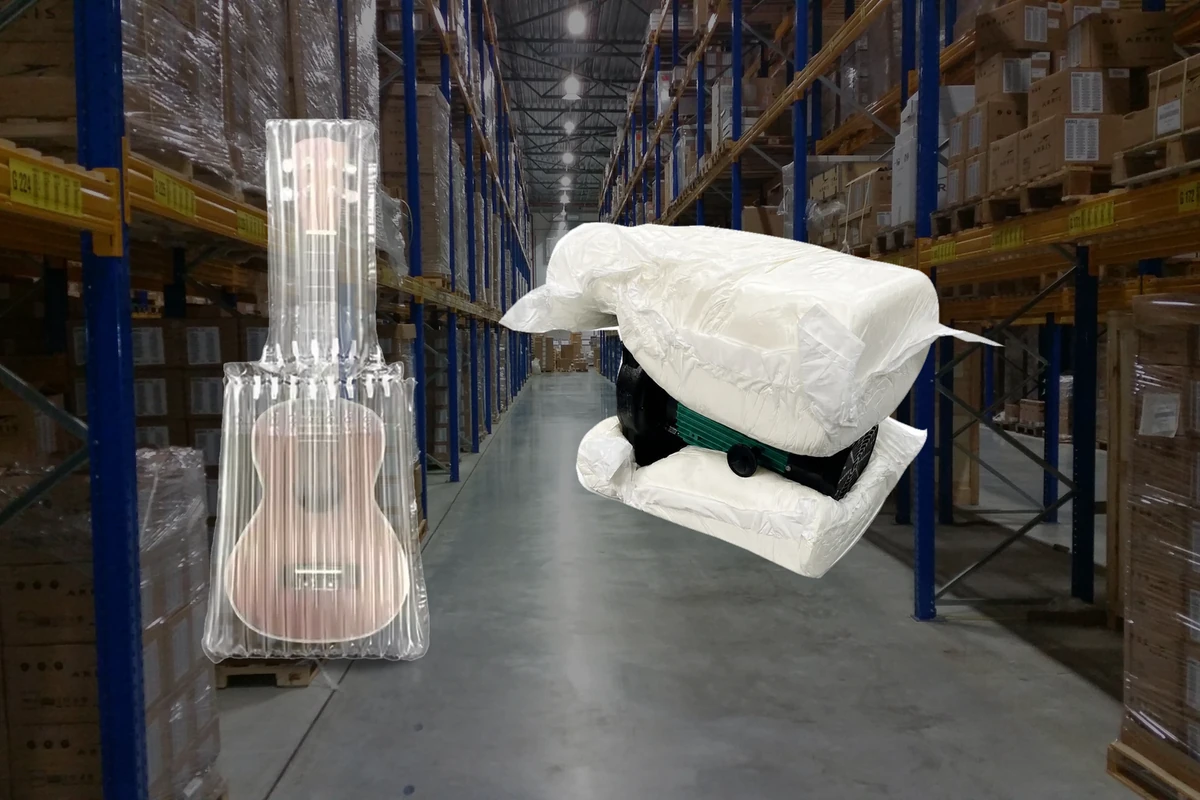
The equipment also has to process the required format. Enough pillow output does not solve a shortage of bubble wrapping film, and an air column inflator is a separate material route. Confirm the machine-and-material combination before calculating capacity.
The purchasing decision is whether the complete supply arrangement keeps the intended stations packing, including roll changes and demand peaks. That might mean production beside each operator, a shared production point or a controlled buffer of inflated material.
Translate Packing Demand into Material Demand
Calculate demand from the approved quantity of each material per carton and the number of cartons needing it. Use the actual pack method rather than an estimated handful of pillows or a guessed wrapping length.
For a length-based format:
Net pack requirement = acceptable cartons per period × approved film length per carton.
Add usable material consumed by station trimming, damaged sections and repacking when those losses are not already included in the measured length per acceptable carton. Keep these station losses separate from rejected machine output to avoid counting the same waste twice. The supply requirement is the net pack requirement plus any additional station consumption not already counted.
For pillows counted as pieces, record pieces per carton and the finished section pitch needed to convert pieces into roll length. For fitted bags, use bags per carton and the confirmed roll format. Do not compare pillow counts with a film-speed specification without that conversion.
Mixed SKUs require separate demand lines. A product using a short void-fill section and a product requiring several wraps create different material consumption, even if operators complete the same number of cartons. Record formats that require a roll change or a different machine.
Describe the time window too. Shift demand determines total consumption; a concentrated release of orders determines the short-term supply requirement. An average across a quiet morning and a busy dispatch period hides the peak that causes operators to wait.
Calculate Air Cushion Machine Capacity in Usable Material Units
Usable output is the acceptable material delivered during the full observation period. Measure that output with the proposed roll, settings and routine interruptions included.
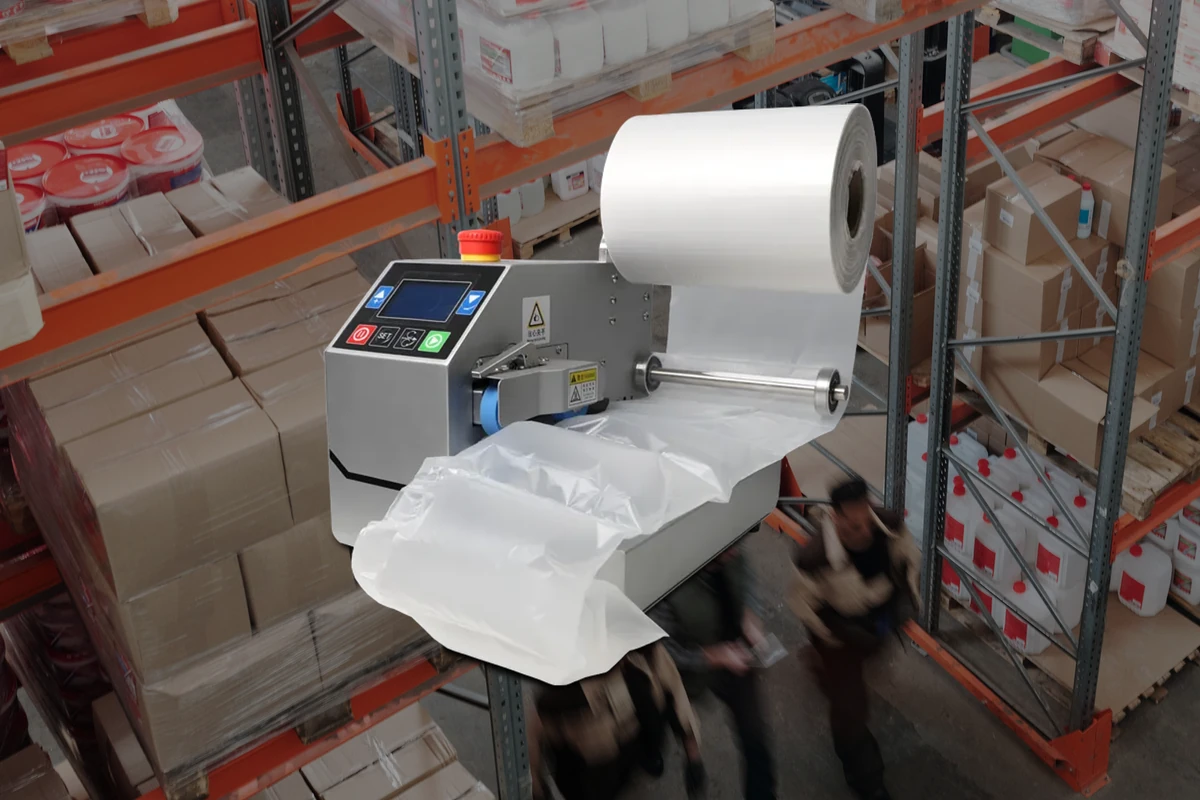
The SelectAir Bee is an on-demand pillow, bubble and tube machine. Its product-page speed describes equipment output under the stated specification; it does not establish a completed-carton rate for your station. Obtain the exact quoted configuration and evaluate the required format.
Where production records separate running time from downtime, a planning calculation is:
Usable film length = running output rate × actual running minutes × accepted-output fraction.
Use actual running minutes after roll changes, pauses and other interruptions. The accepted-output fraction excludes unusable material. If a trial already measures accepted meters over the complete elapsed period, use that result directly; multiplying it by another downtime or scrap allowance counts those losses twice.
Confirm the film compatibility specification for the trial. A result obtained with a different roll width, material or cushion geometry does not establish output for the roll you plan to buy.
A Worked Example: Average Supply Can Hide a Peak Shortage
The following figures are hypothetical planning inputs, not SelectPack equipment specifications or a recommended buffer size. They illustrate a shared machine supplying several stations with one approved format.
Assume the stations collectively require 480 acceptable cartons per hour. In this example, 0.6 m is the total station consumption per acceptable carton, including trimming and repacking losses, so no separate station-loss allowance is added. Required material is:
480 × 0.6 = 288 m/hour, or 4.8 m/minute.
In a hypothetical one-hour trial, the machine produces film at 8 m/minute during 45 running minutes. Of that output, 90% is usable:
8 × 45 × 0.90 = 324 usable m/hour, or 5.4 m/minute averaged over the hour.
At 0.6 m per carton, 324 m supplies 540 carton equivalents. Average material output therefore exceeds the assumed 480-carton demand. This calculation says nothing about operator capacity or transport protection.
Now assume a ten-minute dispatch peak requires 12 cartons/minute across those stations. Material demand rises to:
12 × 0.6 = 7.2 m/minute.
If usable supply during that peak remains 5.4 m/minute, the difference is 1.8 m/minute. Covering ten minutes requires 18 m of already usable material, equivalent to 30 packs at the assumed consumption. That buffer is sufficient only for the modeled difference. A roll change during the peak or simultaneous format changes require a different calculation.
Validate whether the buffer fits, remains acceptable while held and can be replenished before the next peak. An arithmetic surplus averaged over an hour does not establish a workable station layout.
Locate the Bottleneck Beyond Inflation
Find the step that limits complete acceptable packs. A machine producing more film does not speed up product wrapping, bag insertion or carton preparation when one of those tasks is the constraint.
Observe the operator’s complete sequence: obtain material, separate a section, position or wrap it, insert the product and close the carton. Record waiting for material separately from hands-on packing time. That distinction determines whether a capacity problem belongs to the inflation system or the pack method.
For shared production, include the replenishment route. Material in a central bin is not available to a station until someone moves it. Record travel, container changes and the point that triggers replenishment. Check whether several stations call for material at the same time.
For production at the station, evaluate reach and roll-change access. An inconvenient machine position can add handling even when its output is sufficient. Keep usable material from obstructing working space and the movement of products or cartons.
Air column equipment requires a separate assessment. The Q15P route needs an external compressed-air supply and a confirmed bag or roll format. Utilities and material transfer belong in its trial; pillow-machine results cannot be transferred to that process.
Design a Trial Around the Actual Demand Pattern
A capacity trial should include the SKU mix and replenishment events that matter to the purchasing decision. Running a long uninterrupted strip on an empty bench answers a narrower question.
Use the intended material, packing instructions, operators and station arrangement. Include a representative busy window, a planned roll change and the normal pause or restart process. Agree the duration and acceptance criteria from the operational requirement rather than imposing a universal trial length.
Record these outputs together:
- Acceptable material produced and delivered to each station.
- Acceptable packs completed by format or SKU.
- Material rejected and why it was rejected.
- Usable material discarded or consumed in rework at the stations, recorded separately from machine rejects.
- Time lost to production, replenishment or packing constraints.
- Buffer level at the start, during the peak and at the end.
Review whether the buffer recovers between peaks. A system that meets the first peak by consuming all stored material may fail the next one. Also identify who replenishes the buffer and whether that work displaces another necessary task.
Compare on-demand and pre-inflated supply arrangements when the main uncertainty concerns stock placement and replenishment. Those logistics choices change the usable supply at the station even with the same inflation equipment.
Send SelectPack the format, material per carton, normal and peak packing demand, station count and available utilities when discussing its air cushion packaging systems. Request a configuration and trial that demonstrate usable supply for that demand pattern, with the assumptions attached to the result.