Foam-in-place packaging for sensitive finishes needs a contact assessment as well as a cushioning assessment. Holding a product securely does not establish that its coating, decorative film, or polished surface will remain acceptable after unpacking. Evaluate the actual finish against the material touching it, under conditions that represent the proposed packing and delivery process.
The approval should identify a particular surface, contact material, and packing method. “Suitable for painted parts” is too broad to guide a packing station: it does not identify the coating, its condition when packed, or the customer’s acceptance limits.
If foam is still one of several materials under consideration, use the protective foam packaging guide to compare protection needs. Once a foam pack is proposed, the following review focuses on marks, adhesion, coating transfer, and residue at the contact surface.
Define an Acceptable Finish Before Building the Sample
Agree on the appearance criteria with the product owner before testing. Without a baseline and a consistent inspection method, one person may accept a slight contact mark while the receiving customer rejects the same part.
Ask quality or product engineering to identify:
- The substrate, finish specification, and coating or protective-film revision.
- The production condition at packing, including any specified curing or waiting requirement.
- Cosmetic zones, permitted support areas, and surfaces that must remain free of contact.
- The defects that trigger rejection, including any customer limits for visible marks or transfer.
- The inspection conditions and the time between unpacking and assessment.
Record the condition of each sample before packing. Keep an unpacked reference where practical so the review can distinguish an existing finish variation from a change observed after the packaging trial.
Use specimens representative of production. A fully aged display sample does not represent a component packed at the earliest permitted point in the actual manufacturing process. Obtain that permitted point from the product or coating specification; do not invent a universal waiting time for painted parts.
Identify What Actually Touches the Product
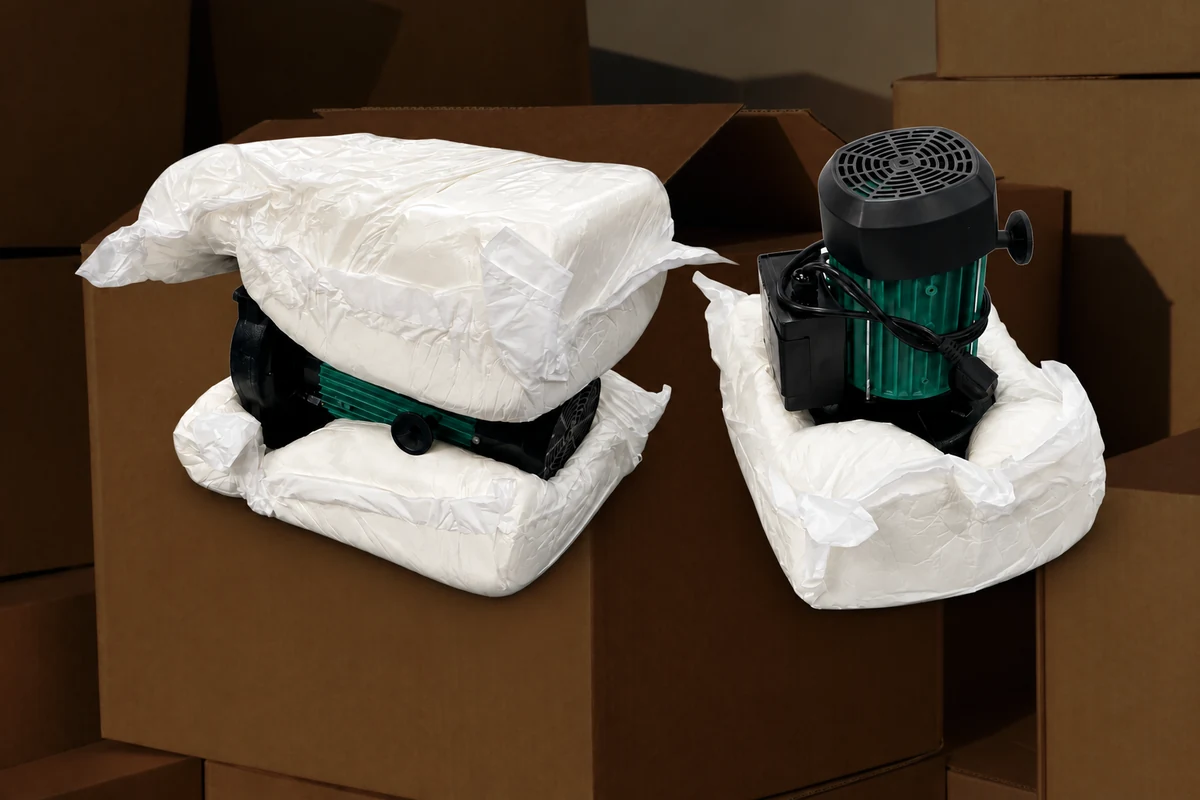
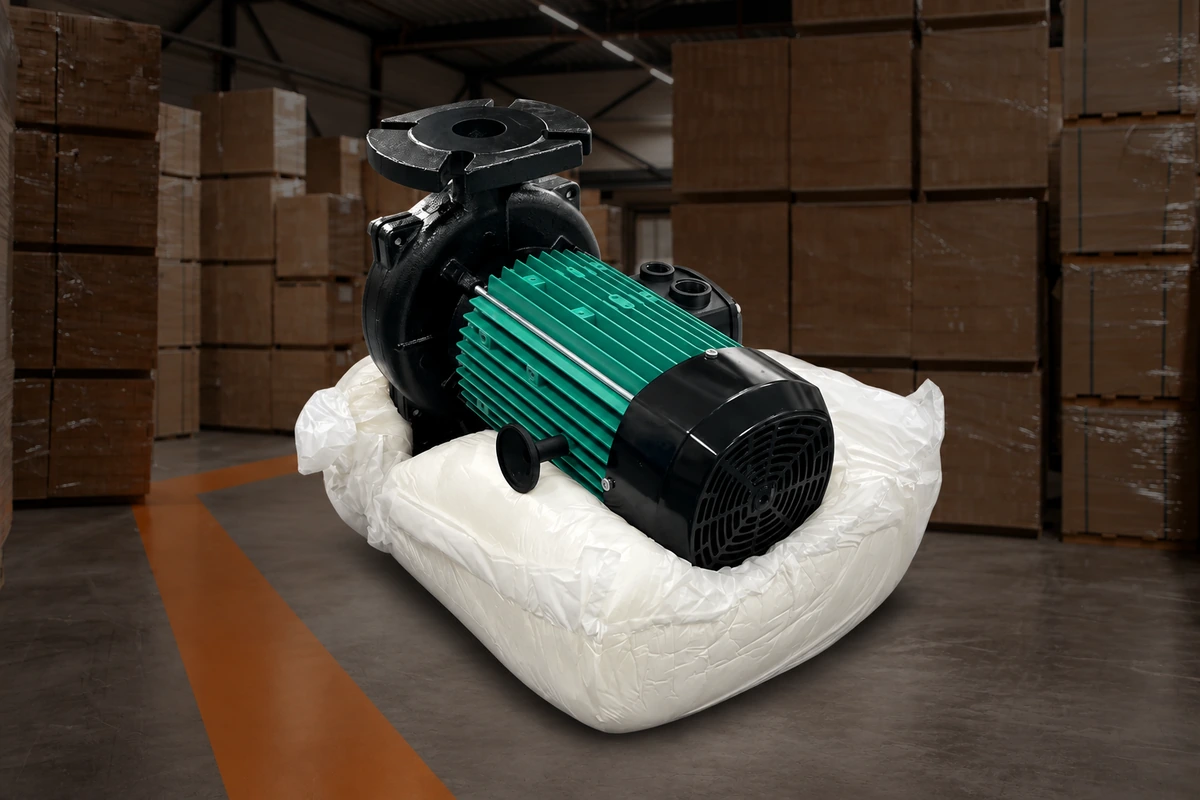
Evaluate the immediate contact layer first, then the cushion and support arrangement behind it. In a bagged foam pack, the product contacts the bag surface or an added protective layer. That layer must be identified just as carefully as the foam material.
Write down the film, sleeve, or separator product code and the side that contacts the finish. Include folds, seams, labels, and any overlap positioned against the part. A review of a flat film sample leaves those details unresolved when the production pack places a folded seam against a visible panel.
Adding a soft wrap is a candidate design change, not an automatic approval. Evaluate the new contact combination and check whether the added thickness changes fit, placement, or the load carried at the contact point.
For example, consider a painted housing supported along two lower edges. A trial should distinguish the lower support zones from the large visible side panels. If a seam rests against a side panel, record its location rather than describing the entire pack simply as “film against paint.” That distinction makes the next design change testable.
Plan a Contact Trial Around the Real Packing Conditions
Use a written trial plan agreed by the packaging and product teams. The plan should reproduce the relevant contact combination and exposure conditions, with acceptance criteria established before samples are evaluated.
The following fields form a practical trial record. They describe what to control; the product requirements and technical review determine the actual values.
| Trial field | What to record |
|---|---|
| Surface specimen | Part revision, finish, and production condition |
| Contact layer | Material code, revision, and contacting side |
| Contact arrangement | Support zones, seams, folds, and orientation |
| Packing process | Approved method and timing of product placement |
| Exposure | Contact duration and relevant environmental conditions |
| Product restrictions | Specified temperature and pressure limits |
| Inspection | Baseline, inspection timing, method, and acceptance criteria |
| Result | Observed changes, disposition, and reviewer |
A small surface specimen can help screen a candidate contact material. It cannot reproduce every feature of a complete pack, including the actual support geometry and unpacking access. Follow screening with a representative packaged product before releasing the arrangement.
Include the intended storage interval, not only a demonstration unpacked shortly after packing. Where the product specification contains exposure limits, have the technical team decide how those limits will be checked in the proposed process. An equipment setting is not, by itself, a measurement of conditions at the product surface.
SelectPack’s aerospace packaging assessment calls for review of sensitive surfaces, permitted temperature and pressure exposure, and changes such as marks or coating transfer. The customer’s actual part specification is still needed to define what passes.
Inspect Unpacking as Part of the Trial
Inspect the surface before attempting to clean or correct any observed change. Cleaning first removes evidence and makes it harder to establish whether the packaging arrangement met the original requirement.
Record the removal sequence and note whether the contact layer lifts away as intended or catches on a feature. Separate marks observed as the layer is removed from damage associated with difficult extraction. Both matter to the recipient, but they point to different changes in the pack.
Use consistent descriptions:
- Imprint or contact mark: record its location and whether it matches a seam, fold, or support area.
- Adhesion: note where the contact layer resists separation from the finish.
- Transfer: record visible material on the removed layer and any corresponding change on the part.
- Residue or appearance change: record what is visible without assigning an unverified chemical cause.
A contact pattern is a useful observation, not proof of a mechanism. Preserve the material identities and trial conditions for the product, coating, and packaging specialists to review. Do not turn a packaging assessment into an improvised solvent or surface-repair procedure.
What Should Change If the Finish Fails?
Revise the specific contact condition associated with the failure, then repeat the relevant evaluation. Possible candidates include relocating a seam, moving support to an approved area, or assessing a different separator. Select the change with the product and packaging teams rather than adding material without a defined reason.
Keep unchanged variables identifiable. If the finish, film, cushion arrangement, and contact duration all change together, a better result will not show which change mattered.
Recheck mechanical protection when the revision affects fit or support. Moving contact away from a cosmetic surface must not leave the product resting on a fragile projection. Passing a surface trial also does not establish that the complete package will meet its distribution requirements; the release needs both forms of evidence.
Release the Tested Combination to the Packing Station
Approve a documented combination of product finish, contact material, arrangement, and conditions. Make that information available in the packing instructions so an operator can distinguish the approved separator and orientation from a visually similar alternative.
The release record should identify the sample results, permitted configurations, unresolved exclusions, and approving responsibility. Define which changes require review, especially a new coating revision, different packing timing, replacement contact film, or altered support location.
To discuss SelectFoam packaging options, send the part dimensions and mass together with the finish specification, permitted contact zones, proposed separator, and appearance criteria. Include the current failure description if one exists. Those details support a focused sample-pack review and a clear decision about whether the proposed foam arrangement suits the finished product.