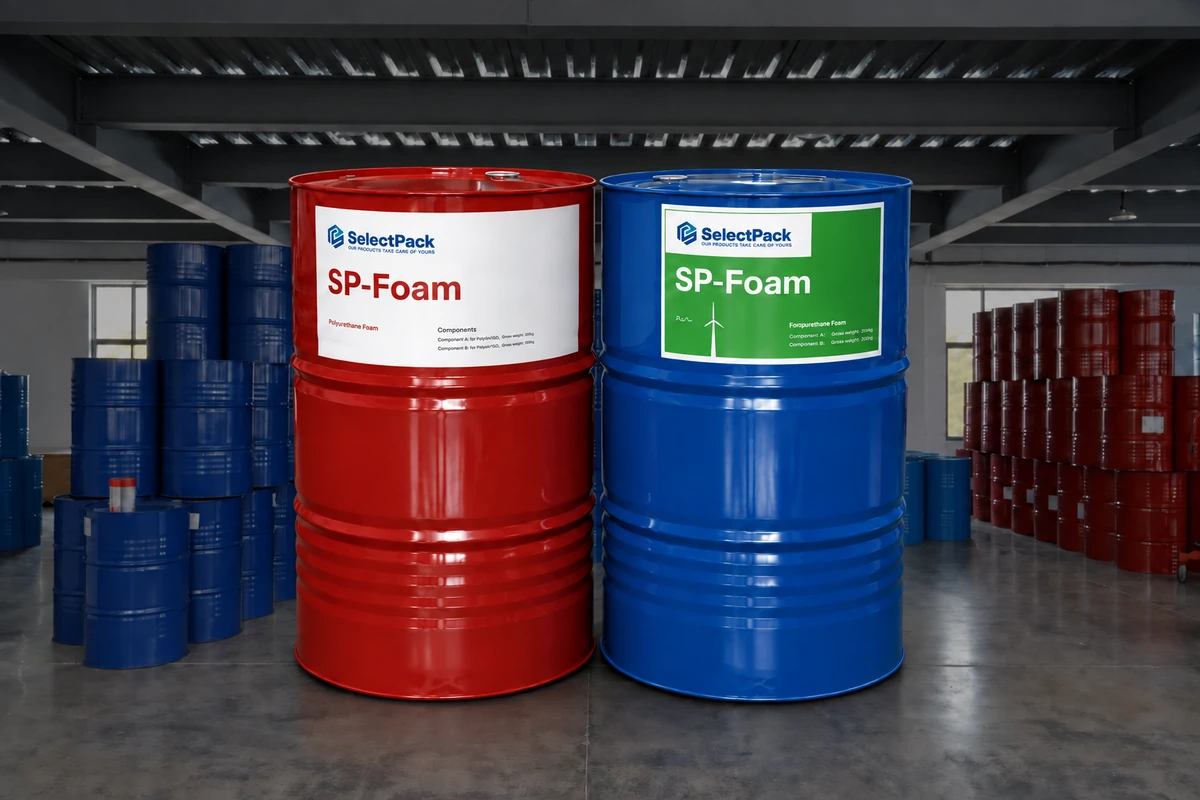
Different foam-in-place density grades are used for different product loads. Within a matched material range, a lower-density grade is normally softer and suited to lighter loads, while a higher-density grade is normally harder and better able to support heavier products or concentrated loads. Higher-density material also usually costs more because each unit of finished foam contains more chemical material.
The correct choice is not simply “heavy product equals high density.” Product weight is the first input, but the supplier must also consider where the weight rests, how much foam carries the load, cushion thickness, product fragility and shipping conditions. The practical goal is to select the lowest-cost grade and cushion design that supports the product and passes the required packaging validation.
If you first need to decide whether this packaging method fits your application, begin with the foam-in-place packaging guide. This article focuses on selecting the material grade after foam-in-place has become a realistic option.
How Do Foam Density, Hardness and Load Capacity Relate?
In a supplier’s coordinated foam-in-place material range, density grades commonly provide different hardness and load-bearing responses. As the grade increases, the cured foam normally becomes harder and can carry more weight over the same support area and cushion thickness.
This relationship gives buyers a practical starting point:
| Relative foam grade | Typical hardness | Typical load condition | Relative material price |
|---|---|---|---|
| Lower density | Softer | Lighter products and loads spread over a broad area | Lower |
| Medium density | Medium | Moderate product weight or mixed industrial parts | Medium |
| Higher density | Harder | Heavier products, small bearing areas or concentrated loads | Higher |
These are selection directions, not universal weight limits. A supplier should not assign the same kilogram range to every foam chemistry, cushion thickness and carton design. Ask for the actual grade identification, density, hardness or compression response, recommended loading range and relevant cushioning data.
Density and hardness also need separate specifications. Density is mass per unit volume. Hardness or firmness describes how strongly the cured foam resists compression. The Polyurethane Foam Association’s explanation of foam performance notes that these properties are not automatically interchangeable across all polyurethane formulations. A high-density foam can be formulated with a softer surface response, and two foams with similar density can behave differently under load.
For SelectPack material selection, compare grades within the compatible foam-in-place system supplied for the machine, film and packaging method. Do not use density alone to declare an unrelated formulation equivalent.
Start With Product Weight, Then Check Where the Weight Rests
Product weight establishes the total load, but the effective support area determines how strongly that load acts on the foam. A 30 kg product resting on a broad, flat base creates a different demand from a 30 kg machine resting on four small feet.
For a simplified support condition:
Average static stress = supported force ÷ effective bearing area
This relationship explains why suppliers need more than the gross product weight. When the same weight is carried by a smaller area, the stress on the foam increases. The package may then need a harder or higher-density grade, a larger approved bearing area, greater cushion thickness, or a different support arrangement.
Before requesting a grade recommendation, identify:
- The product’s total weight and shipping orientation.
- Heavy zones, an offset center of gravity and concentrated loads.
- Feet, bases or housings that are allowed to carry weight.
- Handles, shafts, connectors, covers, lenses and other features that must remain clear.
- The top, bottom and side areas available for foam cushions.
Do not count the complete carton footprint as the bearing area unless the product actually transfers its load through that area. Foam touching the side of a product may control movement without supporting its vertical weight.
Match the Foam Grade to the Product Load
The supplier should narrow the foam grade by combining product weight with the load pattern and available cushion space. A useful selection discussion separates three common conditions.
Lighter Products
Lower-density, softer foam is often suitable when the product is light and the load can be spread across a broad cushion. The softer response can also help the cushion conform around an irregular product without placing unnecessary pressure on delicate areas.
Using a harder, higher-density grade for a very light item may leave the cushion insufficiently compressed during impact. It can also add material cost without improving the finished package. The sample pack still needs enough foam thickness and correct placement to control movement.
Medium-Weight Products
Medium-density material is a common starting point for industrial parts that need more support than a light product but do not create extreme concentrated loads. The decision still depends on the base geometry, fragile features, carton clearance and expected drop height.
A medium-weight product with small metal feet may require a different grade or support arrangement from a heavier product with a wide, stable housing. Weight categories should therefore guide the first sample, rather than serve as final approval limits.
Heavy Products or Concentrated Loads
Higher-density, harder foam is generally considered when the product is heavy, the support area is small, or the cushion must resist greater compression. The harder grade can carry more load before excessive compression or bottoming occurs.
Higher-density foam does not replace structural packaging. Heavy machines and freight shipments may still require a pallet, crate, blocking, bracing or mechanical restraint. Foam should cushion approved contact areas while the outer packaging and restraint system control the load.
Choose Cushion Thickness With Density
Density and hardness cannot compensate for insufficient cushion thickness. A harder foam layer that is too thin may transmit more shock or run out of useful deflection. A softer foam with adequate thickness may perform better for a lighter, fragile item.
Review these variables together:
| Design variable | What it changes |
|---|---|
| Foam density grade | Hardness, load response and material price within the supplied grade range |
| Cushion thickness | Available distance for the foam to compress and absorb energy |
| Bearing area | Load applied to each unit of foam area |
| Cushion position | Where weight is supported and which features stay clear |
| Carton or crate | Available clearance, structure and restraint |
A protective foam packaging material review should begin with the actual damage risk. If the main problem is carton collapse or load restraint, increasing foam density is not the first corrective action.
Why Does Higher-Density Foam Cost More?
Higher-density foam usually has a higher material price per unit of finished volume because it uses more A/B chemical material to produce that volume. Moving from a lower-density grade to a higher-density grade therefore normally raises the consumable cost of an equivalent-size cushion.
The price difference should be evaluated at package level:
Foam cost per pack = material price × actual material used per pack
The full packaging cost also includes film or bag material, carton size, operator time, equipment operating cost, maintenance, storage and damage-related costs. The foam packaging machine price guide explains the equipment and project costs separately.
Choosing the cheapest foam grade does not always produce the lowest packaging cost. Foam that is too soft for the load may compress excessively, allow movement or require a larger volume. A grade that is harder than necessary can increase material cost and place unnecessary pressure on the product. Compare candidate grades using the same product, carton, cushion positions and shipping requirement.
Do not publish a fixed percentage stating how much more a higher-density foam costs unless it comes from a current quotation. Chemical prices, density grade, order quantity, packaging, destination and supply terms can all change the price difference.
Use Cushioning Data Instead of a Universal Weight Chart
A supplier-specific selection chart can be useful when it identifies the exact foam grade, cushion thickness, static loading and impact condition. A general table saying “this density supports this product weight” is incomplete because it ignores support area and package geometry.
A cushioning curve relates static loading to the acceleration transmitted through a material under defined test conditions. Before using one, check:
- Whether the data belongs to the exact proposed foam grade.
- The specimen thickness and bearing area.
- The test drop height or impact input.
- Whether the result represents the first impact or repeated impacts.
- The product’s allowable acceleration or damage criterion.
ASTM D1596 covers dynamic shock cushioning characteristics of packaging materials. Its scope also makes clear why material-test data must be applied under the correct conditions. Use the data to choose a starting grade and geometry, then validate the finished package.
What Information Should You Send the Foam Supplier?
A good recommendation should name the grade and explain why its density, hardness and price fit the application. Send the same information to each supplier so that quotations can be compared on the same basis.
| Buyer input | Information to provide | Supplier response to request |
|---|---|---|
| Product load | Weight, orientation and weight distribution | Proposed density and hardness grade |
| Bearing surfaces | Base, feet and allowed contact zones | Load carried by each cushion |
| Fragile features | Finishes, connectors, lenses and protrusions | Clearances and non-load-bearing zones |
| Cushion space | Internal carton dimensions and available thickness | Cushion thickness and placement |
| Shipping conditions | Parcel, freight, export route, drops and vibration | Applicable test conditions |
| Commercial requirement | Packs per day, annual volume and destination | Grade price and estimated material use per pack |
Ask whether the quoted price is based on material weight, drum or kit quantity, finished foam yield, or another unit. Also confirm that the A/B chemicals and film are approved for the selected equipment. The SelectFoam equipment and material range provides the commercial starting point, but the grade should be confirmed for the actual pack.
Validate the Grade With the Complete Package
The final approval should cover the product, foam grade, foam hardness, cushion thickness, bearing area, film, carton or crate and packing method as one configuration. A change in any of these variables can change the load carried by the foam.
A practical approval process is:
- Select a candidate density grade from the product weight and bearing conditions.
- Build the proposed lower and upper cushions with the actual product and carton.
- Check product position, cushion thickness, contact areas and carton closure.
- Run the agreed handling, drop, vibration or distribution tests.
- Inspect the product and package against documented acceptance criteria.
- Record the approved grade, material amount and cushion arrangement for production.
ASTM D4168 addresses transmitted shock characteristics of foam-in-place cushioning materials and considers the foam, film and box system. A standard test reference is useful, but the final test plan still needs to match the actual product and distribution route.
The correct foam-in-place density is the grade that provides the required hardness and load support in the approved cushion design at an acceptable package cost. Product weight starts the selection, while support area, thickness, fragility and testing determine whether the proposed grade is suitable.