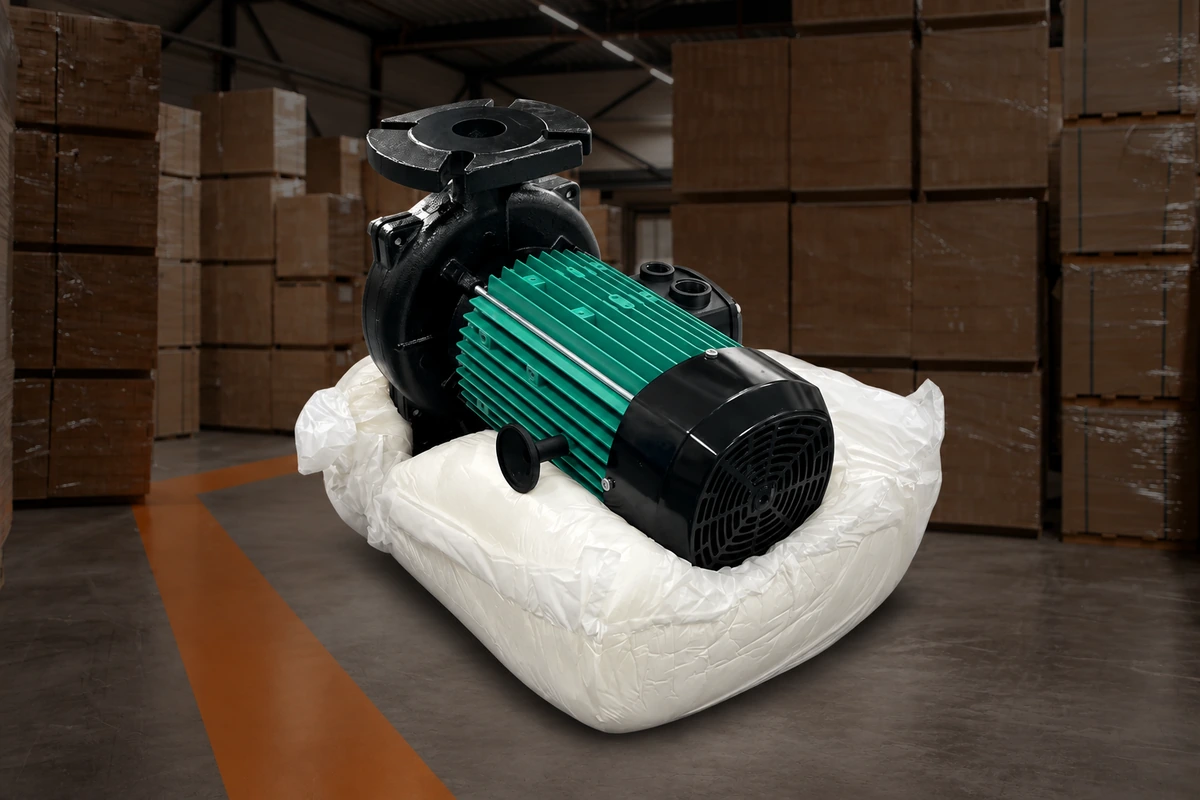
Foam packaging machine price is not a single equipment number. A useful quote separates the machine configuration, foam and film usage, site setup, training, spare parts, and the sample-pack work needed to prove the system fits the product.
If you ask for a price without product and workflow details, the supplier can only give a rough equipment quote. To compare quotes properly, treat the purchase as a cost model: what the system costs to install, what each protected shipment costs to run, and what damage or labor problem the system is expected to improve.
This article focuses on quote factors, not price ranges. Unverified ranges can mislead buyers because a low-volume expandable bag workflow and a higher-volume automated foam-in-bag station are different purchasing decisions.
If the buyer has not chosen a workflow yet, start with the foam-in-place packaging machine selection guide before requesting firm pricing.
Build the Quote Around Four Cost Buckets
Use this structure when reviewing a foam packaging machine price. It keeps the discussion practical and makes quotes easier to compare.
| Cost bucket | What belongs in it | Why it matters |
|---|---|---|
| Equipment configuration | Machine type, controls, dispensing method, bag or film handling, output range, and accessories | This is the visible capital cost, but it only explains part of the investment. |
| Consumables per pack | Foam chemicals, bags, film, liners, waste, startup material, and reorder quantities | This determines the recurring cost of every protected shipment. |
| Site implementation | Space, power, storage, operator layout, chemical handling, installation, and startup support | A machine that does not fit the packing station creates hidden labor and rollout cost. |
| Support and validation | Sample packs, operator training, spare parts, maintenance guidance, and service expectations | This determines whether the system can be used consistently after purchase. |
A quote that only lists equipment price is incomplete for a warehouse, 3PL, or industrial shipper. It may still be a starting point, but it is not enough for a buying decision.
Equipment Configuration: What You Are Actually Buying
The first cost bucket is the system type. The buyer should not assume that every foam packaging machine is built for the same job.
Use the SelectFoam equipment paths to separate quote scopes before comparing suppliers: automated bag output, handheld dispensing, and expandable foam bags do not carry the same equipment and consumable assumptions.
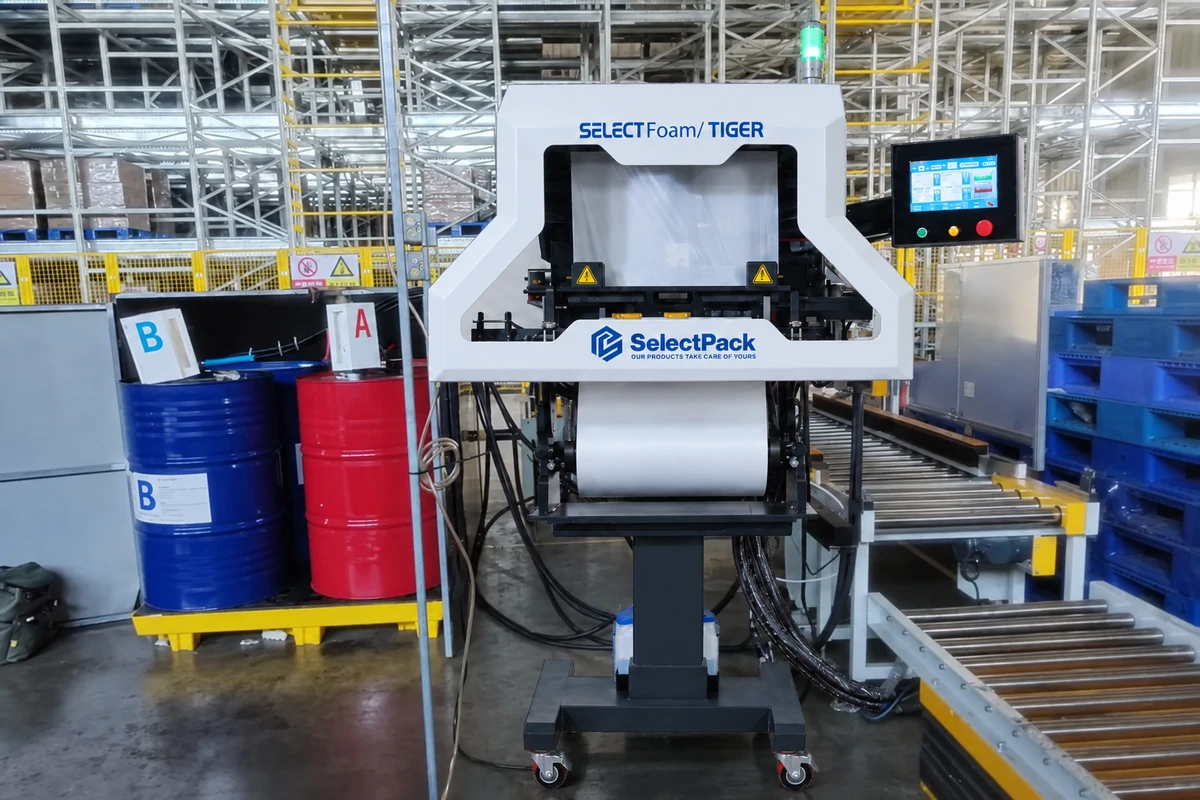
An automated foam-in-bag machine is usually priced around repeatable bag output, controlled foam delivery, and a packing station that can standardize products or carton families. The SelectFoam/Tiger expanding foam packaging machine is relevant when the operation needs repeatable on-demand foam bag production.
A handheld foam-in-place system is priced around flexible dispensing, operator control, hose or gun access, and the ability to handle variable products. This type of system is worth evaluating when product mix changes often.
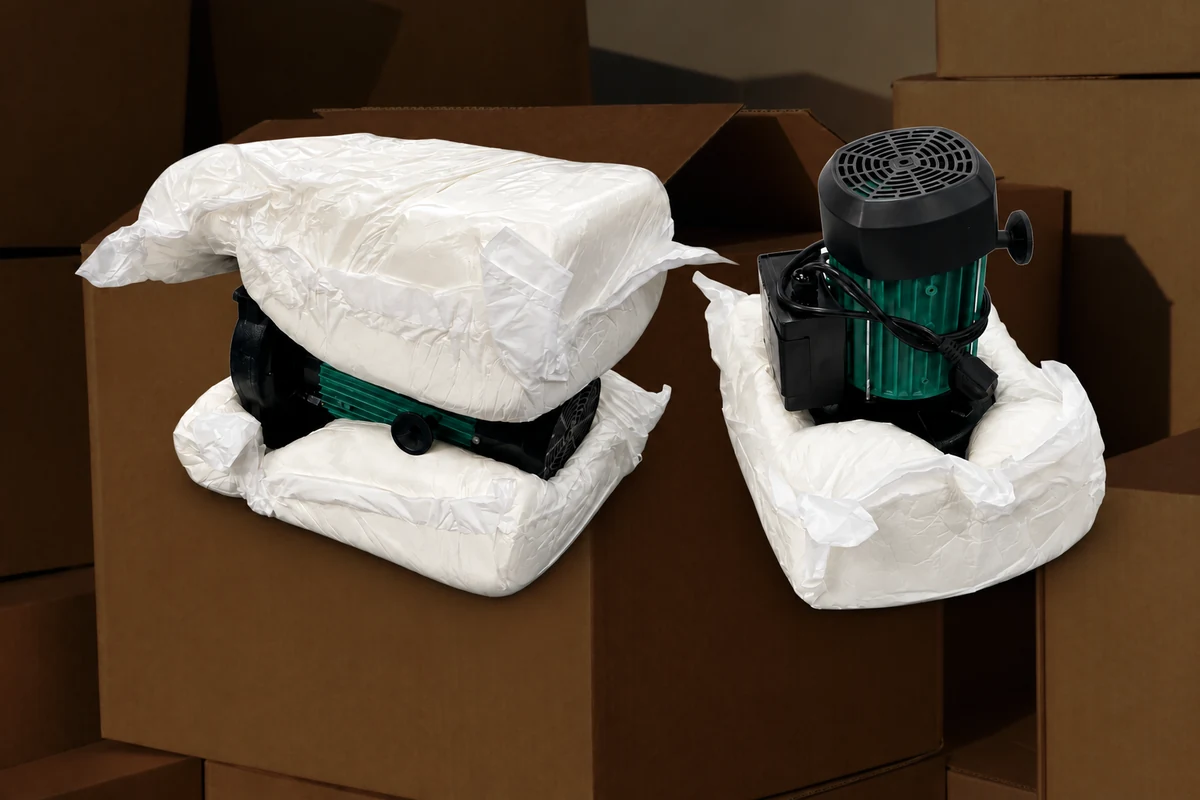
Expandable foam bags may reduce equipment scope, but they shift more of the cost into consumables and manual pack steps. They can be evaluated when the buyer wants shaped cushioning without a machine-first workflow.
Consumables: The Cost That Repeats Every Day
For many buyers, consumables matter more than the machine line item over time. Ask the supplier to estimate usage by product family, not only by average shipment.
Confirm:
- Foam amount per pack for each representative product.
- Bag or film size needed for the carton.
- Expected waste from startup, changeover, or operator error.
- Monthly usage at average and peak volume.
- Storage conditions and shelf-life constraints.
- Reorder lead time and minimum order quantities.
This is where a higher machine price can sometimes make sense. If a controlled system reduces foam waste, operator variation, or damage claims, the lowest equipment quote may not be the lowest operating cost.
Site Implementation: The Hidden Quote Variable
Two buyers can request the same machine and still need different quote scopes because their packing areas are different. Before asking for foam in place packaging equipment for sale, map the real station.
Document:
- Available floor or bench space.
- Carton staging before and after foam application.
- Operator reach, table height, and product handling method.
- Power availability, cable routing, and custom cable assembly design.
- Chemical or bag storage location.
- Maintenance access.
- Whether the system must serve one station or multiple stations.
- Who owns startup, cleaning, and troubleshooting.
If the packing station is cramped, mobile, seasonal, or shared with other tasks, tell the supplier early. The site layout may change the recommended workflow before it changes the price.
Support and Validation: What Prevents a Bad Purchase
The quote should state what happens before and after the machine arrives. A useful scope may include sample pack work, startup guidance, operator training, maintenance training, spare parts, or service support.
Ask for the support scope in writing:
- Are sample packs included or separate?
- Will the supplier help define bag size, foam amount, and carton fit?
- Is operator training included?
- Are maintenance routines and wear items documented?
- What spare parts should be held on site?
- What support is available if the foam output, film feed, or pack quality changes?
This is not a generic service question. Foam-in-place packaging depends on repeatable pack design. A quote that ignores setup and training may look cheaper but create more variation on the packing floor.

How to Compare Two Foam Packaging Machine Quotes
When two suppliers quote different systems, compare them at the same operating assumptions:
If supplier capability is also part of the decision, use the foam packaging machine supplier scorecard alongside the quote table.
The sample below is illustrative. Use it to check whether both quotes show the same level of detail.
| Comparison item | Example Quote A | Example Quote B |
|---|---|---|
| Target products included in the recommendation | Instruments and repair parts | Same product list |
| Packs per shift used for sizing | 120 average; 180 peak | 120 average; 180 peak |
| Workflow type | Automated foam-in-bag | Handheld dispensing |
| Equipment scope | Machine and bag handling | Dispenser and hose/gun set |
| Consumables included or excluded | Foam and film quoted separately | Foam quoted; bags excluded |
| Estimated material use per pack | By product family | Average estimate only |
| Startup and training scope | Included | Basic startup only |
| Spare parts and maintenance support | Wear items listed | Not listed |
| Sample-pack or validation support | Sample trial included | Add-on service |
| Items not included | Cartons, freight, site work | Cartons, storage, extra training |
If the assumptions differ, the prices are not comparable. Ask each supplier to restate the quote around the same product list, pack volume, and support scope.
RFQ Details That Produce a Better Price Discussion
Send one concise buying brief instead of a vague “machine price” request:
- Product dimensions, weight, photos, and fragile zones.
- Current carton size and packaging method.
- Current damage type or the protection problem to solve.
- Daily, peak, and seasonal pack volume.
- Number of SKUs and size variation.
- Preferred workflow if known: automated bag output, handheld dispensing, or expandable bags.
- Available packing space and site constraints.
- Desired quote scope: equipment, consumables, training, startup, spare parts, or sample testing.
This information helps SelectPack or another supplier quote the right system rather than the easiest machine to describe.
Price Red Flags
Be careful when a quote:
- Recommends equipment without product dimensions or pack volume.
- Does not separate equipment from consumables.
- Ignores cost per protected shipment.
- Treats installation, training, and sample work as afterthoughts.
- Gives no assumptions behind the quote.
- Avoids discussing when foam is not the right material.
The best price discussion is specific enough that a packaging, purchasing, and operations team can all see what is included.