A cardboard shredder demo should answer one purchasing question: can the exact quoted configuration process representative corrugated cardboard into usable packaging material through a repeatable workflow? A polished run with one easy sheet is not enough. The evaluation needs a defined sample set, acceptance criteria agreed before the run, repeat observations, and a record that connects every result to the machine and input used.
The demo is a machine-and-output evaluation, not proof that the resulting material will protect every product in distribution. It can show how the equipment handles agreed inputs, what the output looks like, how many operator steps are required, and where limitations appear. Package performance still has to be evaluated with the actual product, carton, interior packaging, closure method, and distribution environment.
Use this checklist before approving a model or treating a demonstration as purchasing evidence. Confirm the format and scope in writing. A sample run, remote demonstration, written test report, or on-site trial is included only when it is documented.
Build the Cardboard Shredder Demo Around One Decision
Start by writing a short decision statement. It should describe the uncertainty the demonstration is intended to remove, without turning the session into another general buying conversation.
For example:
We need to confirm whether the quoted machine can process our normal range of approved corrugated cartons and produce output that our packers can handle consistently at the workbench.
That statement keeps the evaluation focused. Site utilities, installation clearances, and delivery planning belong in an installation review. Daily volume, peak arrival rate, and capacity calculations belong in a sizing exercise. The demo should test the physical input, the observed machine workflow, and the resulting material.
For the equipment questions beyond the demo scope, use the complete guide to cardboard shredders for businesses to review output types, suitable cardboard, machine formats, capacity, installation, cost, and model families.
Define the required decision before sending any samples:
| Decision area | Question the demo should answer | Evidence to retain |
|---|---|---|
| Input compatibility | Which samples run within documented limits? | Sample log, model, comments, and exceptions |
| Workflow | Which preparation, feeding, collection, and handling steps are required? | Observed steps, touches, and setup notes |
| Output usability | Does the output suit the agreed packing task? | Labeled samples, measurements, and permitted media |
| Repeatability | Do repeat runs produce consistent output? | Run observations and retained samples |
| Limitations | What was rejected, restricted, or not tested? | Exclusions and open issues |
Avoid acceptance statements such as “works well,” “high quality,” or “fast enough.” Replace them with observations tied to a sample and use case: accepted or rejected input, preparation required, usable output dimensions, handling steps, timed batch boundary, repeated exceptions, and packer usability.
Build a Representative Cardboard Sample Set
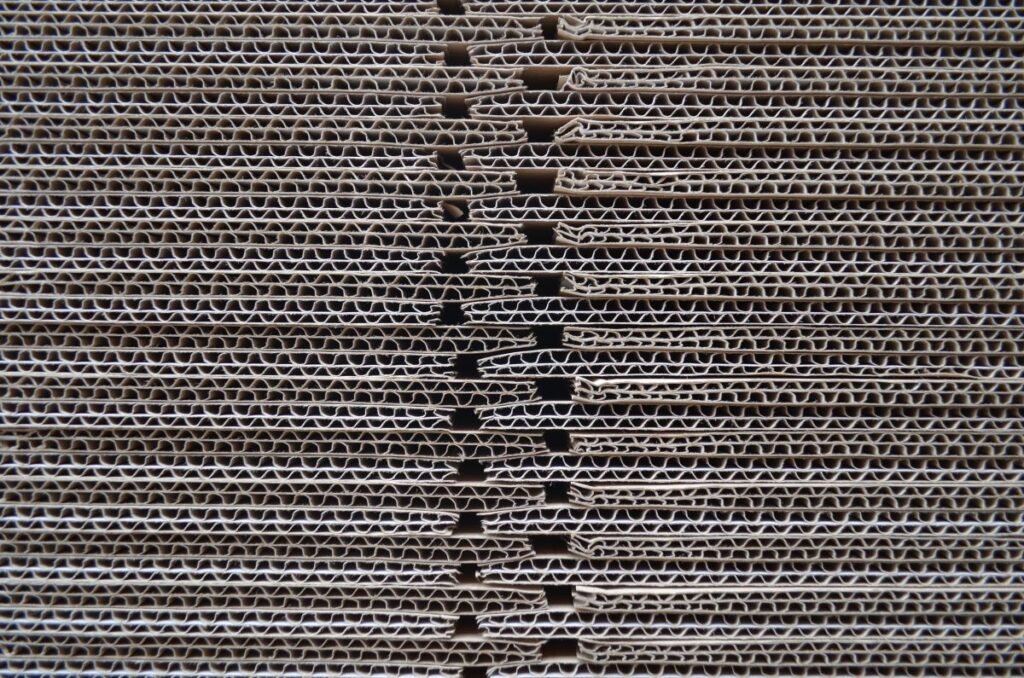
The quality of the decision depends on the sample set. Include the sizes and conditions the operation normally receives, not only clean, flat, uniform pieces.
Map the normal input range
Collect samples from the cardboard streams expected to supply the machine. Depending on the operation, that may include cartons from inbound deliveries, boxes from returns processing, corrugated dividers, or clean production offcuts. Keep the set limited to materials the business would realistically approve for reuse as outbound packaging.
For every sample type, record:
- A unique sample ID.
- Source department or process.
- Corrugated construction as identified by the facility or documented by its source.
- Measured thickness and sheet dimensions.
- Flat, folded, creased, crushed, damp, or otherwise changed condition.
- Tape, labels, staples, coatings, liners, or contamination observed.
- Approximate share of the normal cardboard stream.
- Intended output use, such as wrapping, layering, or void fill.
Acceptance on another machine does not establish compatibility because input limits vary by model. Have the demonstrator identify which samples fall within the quoted machine’s documented range before any run. The existing guide to preparing cardboard for a cardboard shredder can help organize the input review, but the current model documentation controls the demo.
Include boundary samples without creating a misuse test
A useful set contains normal samples and legitimate edge cases, such as the widest common carton panel or the thickest board the facility regularly receives. Edge cases must still stay within the quoted model’s documented test conditions.
Exclude any request to force folded board, unknown metal, wet cartons, hidden straps, or an over-thickness sample into the machine to “see what happens.” A purchasing demo is not a jam, overload, guard, or interlock challenge. Record out-of-range material as an exclusion and decide how it will be diverted.
Send a sample manifest
If samples will leave the facility, include a manifest and label each piece or bundle. Retain a reference piece or a clear measured description for each important sample type so the returned result can be checked against what was sent. Confirm the quantity, dimensions, condition, and packaging the test location will accept. Also ask what will happen to unused material and test output. These logistics are part of the agreed demo scope.
Set Acceptance Criteria Before the Machine Runs
Acceptance criteria should be written before anyone sees the demonstration. Otherwise, an impressive-looking output sample can shift the decision away from the original operational need.
Set criteria in five areas before the run.
1. Sample coverage
State which sample IDs are required and which are optional. If a required sample is not run, the result remains open rather than becoming a pass.
2. Required output form
Specify the intended material behavior in operational language. For example, the operation may need a flexible mesh that can be separated and wrapped at a bench, or a cut output that can be collected and dispensed as void fill. Avoid relying only on names such as “mesh,” “strip,” “pad,” or “perforated cardboard,” because vendors may use those terms differently.
The guide to cardboard shredder output types provides useful terminology, but the demo should confirm the physical output of the exact quoted configuration.
3. Operational usability
Define what the packing team needs to observe. That may include whether one person can perform the documented feed-and-collect sequence, whether the output reaches the packing point without tangling or uncontrolled debris, and whether the material is practical to separate or fold for the intended task.
Keep transport protection separate. “The packer can handle the material” and “the package protects the product through distribution” are different findings.
4. Repeatability
Plan more than one run for important sample types. Keep the machine configuration, input preparation, and observation method unchanged unless the change itself is being tested. Record whether output form, usable width, cut continuity, and handling behavior remain within the operation’s pre-agreed range. There is no universal tolerance that can be borrowed from an unrelated application.
5. Stop and exception rules
Agree on what will pause the evaluation. Examples include an unidentified input, a sample outside the documented range, an unplanned stop, output that cannot be matched to its source sample, or an unrecorded configuration change. Only an authorized demonstrator or service technician should address the equipment according to the applicable manual and site procedure.
Record the Demonstration as a Controlled Test
A useful demo record connects each result to a sample, machine, configuration, and run. Without that connection, the team may compare output with a quote for a different model or mistake an undocumented adjustment for a standard feature.
Before the run, record:
- Demonstrating organization and test location.
- Date and participants.
- Exact machine model and configuration shown.
- Electrical configuration displayed or documented.
- Output setting or cutting configuration, if applicable.
- Who is authorized to operate the machine during the session.
- Sample IDs scheduled for the run.
- Any preparation performed after the samples left the originating facility.
During each run, use a simple log:
| Field | What to record |
|---|---|
| Run ID | Unique run and linked sample ID |
| Input | Piece count or measured amount presented |
| Preparation | Flattening, trimming, separation, or other steps |
| Machine state | Run, pause, overload indication, or other status |
| Operator work | Feed, collect, move, and reset steps observed |
| Output | Form, dimensions, consistency, debris, and retained quantity |
| Exceptions | Rejection, adjustment, stop, or untested result |
| Evidence | Labeled sample and permitted media or notes |
If throughput matters, time a defined representative batch rather than quoting only nominal cutting speed. State the starting and stopping points, sample quantity, number of operators, and whether preparation, feeding, collection, interruptions, and output handling are included. A cutter’s stated linear speed is not the same measurement as usable packaging material produced per labor hour.
Observe the Complete Operator Workflow
The machine is only one step in the process. Watch what has to happen immediately before and after it.
Before feeding
Note how cardboard is identified, inspected, flattened, sized, and staged. Count the manual decisions and handling steps. If the demonstration uses pre-cut laboratory-like sheets while the facility handles assembled cartons, record that difference instead of assuming equal labor.
During normal operation
Have the authorized demonstrator show the normal start, feed, stop, and output collection sequence for the quoted model. Confirm where the operating manual defines the approved input range and user tasks. Guard bypasses, staged jams, and access to cutting components are outside the demo scope.
Observe whether the operator has to support large sheets, repeatedly reposition material, manage offcuts, or clear the output area between runs. These details may affect staffing and workstation design even when the machine processes the cardboard successfully.
After processing
Follow the material to the point where a packer would use it. Record whether it needs manual expansion, separation, folding, bundling, binning, or transfer. Identify any material that is unusable for the intended packing task and record how the usable share was determined.
If permitted, let an experienced packer handle labeled output away from the operating machine. Ask for specific feedback: ease of separation, tendency to snag, ability to form around a representative shape, debris on the bench, and storage behavior. This handling review does not replace package-performance testing.
Separate Machine Acceptance From Package Performance
A cardboard shredder demo can establish that the equipment processes agreed cardboard and creates a particular output. It cannot establish that the output protects every product, box, and distribution route.
ISTA organizes its test procedures around packaged-product evaluation and different levels of distribution testing. Treat retained demo output as an input to a later package-validation plan, not as proof that the material will protect every product and route.
After the machine evaluation, the packaging team may need to test the selected output with:
- The actual product and primary packaging.
- The intended shipping carton and closure method.
- The proposed amount and placement of interior material.
- Relevant product damage and package acceptance criteria.
- A test method appropriate to the distribution environment.
A machine may pass the input-and-output demonstration while the proposed packout still needs redesign. One difficult sample may require a sorting rule rather than disqualifying a machine that fits the rest of the approved stream.
Turn the Evidence Into a Purchasing Decision
Close the session with a written status for every required criterion, including findings first raised in verbal comments.
Use one of three outcomes:
Proceed
All required sample types were evaluated on the quoted configuration, the agreed observations were documented, limitations are acceptable, and no unresolved exception changes the intended workflow.
Proceed with conditions
The core use case is supported, but the quote, order specification, or implementation plan must capture conditions. Examples include an input exclusion, a required output configuration, a separate collection method, an operator-training requirement, or a package-validation action.
Retest or withhold approval
Use this status when required samples were not run, the demonstrated machine differs from the quoted model, evidence is incomplete, repeat results exceed the pre-agreed tolerance, or a material limitation prevents the intended workflow.
Before approval, request written confirmation of:
- Which exact model and configuration produced the retained samples.
- Which submitted samples were accepted, excluded, or modified before processing.
- Which observed settings or accessories are included in the proposed scope.
- Which tasks are normal operator tasks and which require authorized service personnel.
- Which manuals, training, warranties, spare parts, and support terms are actually included.
- Which results are measured demo observations and which remain unmeasured estimates.
The quote should also identify any difference between the demonstrated configuration and the unit offered for purchase. A different feed width, cutting configuration, electrical version, accessory, or collection arrangement can change the result even when the product-family name is the same.
Use the current SelectPack cardboard shredder product hub to identify the exact model under consideration. Then ask which demo format, sample evaluation, documentation, and acceptance options are available for that project.
Keep a Compact Demo Evidence Pack
Keep the final record traceable. Retain:
- The approved test objective and acceptance criteria.
- The sample manifest and photos of the inputs.
- The exact machine and configuration demonstrated.
- The run log and exception list.
- Labeled output samples where practical.
- Permitted photos, videos, or measurements.
- Packer handling observations.
- Technical clarifications and exclusions.
- The final proceed, conditional, or retest decision.
- Separate actions for package-performance validation.
This evidence turns a cardboard shredder demo from a sales presentation into a controlled purchasing evaluation. Procurement, operations, packaging, EHS, and the demonstrator can then work from the same record of results, exclusions, and open questions.