Water-activated tape fits a carton-sealing workflow when the tape is properly wetted, the carton surface accepts the adhesive and the operator can place and press the prepared strips consistently. Pressure-sensitive plastic tape fits workflows where tape is applied directly from a suitable dispenser or sealing machine, with the selected adhesive matched to the carton and operating conditions.
Neither material is the automatic winner. Compare complete, accepted carton closures: the same box, shipping requirement, operator task and inspection criteria. Roll price, tape color and a quick hand-peel demonstration are insufficient purchase evidence.
The adhesive changes the application sequence
Water-activated tape requires a wetting step before application; pressure-sensitive tape requires application pressure without that water-activation step. Both workflows still depend on suitable tape, a compatible carton surface and adequate contact across the required closure area.
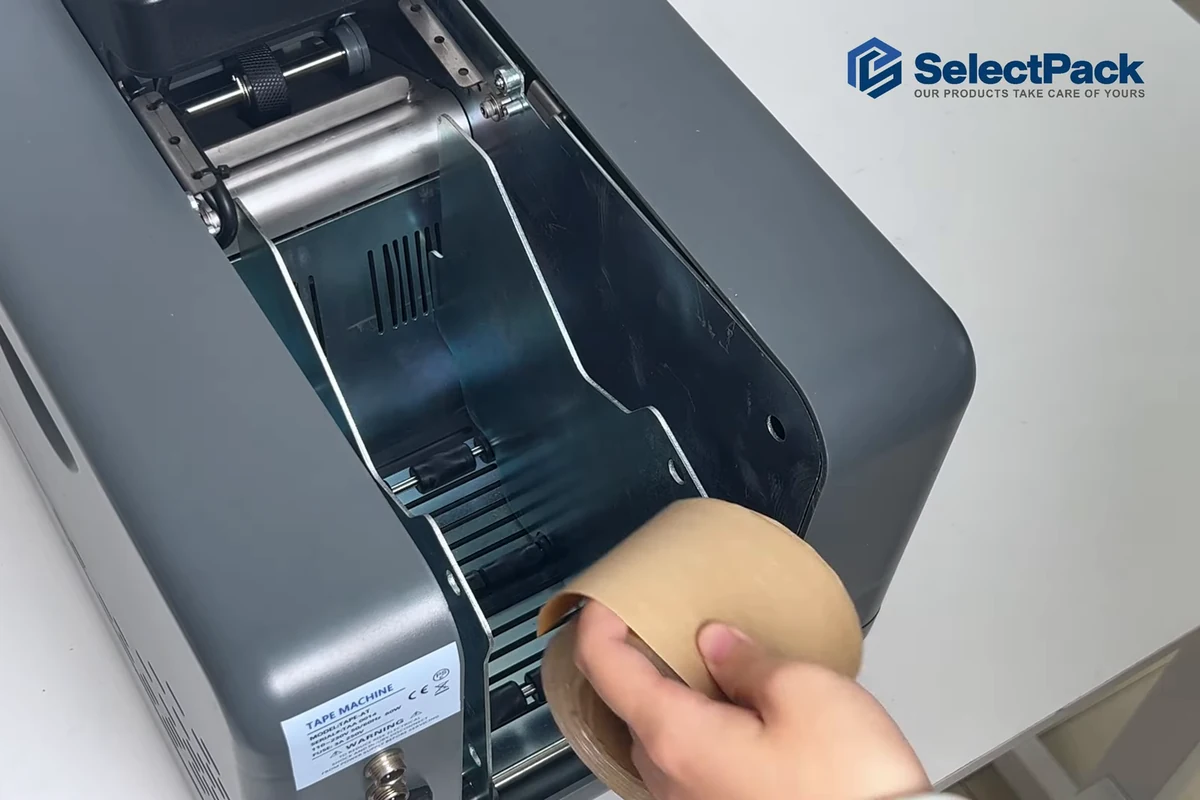
Gummed paper tape has an adhesive coating activated by water. An electric water-activated tape dispenser feeds, wets and cuts a selected strip for the operator to place on the carton. The operator then presses the tape onto the panels and seam according to the approved application method.
Pressure-sensitive plastic packing tape carries an adhesive intended to bond when pressed onto the substrate. Depending on the equipment, the operator draws and cuts tape with a handheld dispenser, or a carton sealer applies the tape as the box passes through. Those are different equipment workflows, even though the material category is the same.
The meaningful comparison is therefore not an electric gummed-tape dispenser against a roll of plastic tape lying on a bench. It is one complete station against the other station that would actually replace it.
| Comparison point | Water-activated tape workflow | Pressure-sensitive plastic tape workflow |
|---|---|---|
| Preparation | Activate adhesive and dispense a strip | Unwind tape through the chosen applicator |
| Operator action | Pick up, position and press the strip | Guide the applicator or prepare the carton for a sealer |
| Material checks | Tape grade, wetting and carton surface | Adhesive grade, tape backing and carton surface |
| Station interruptions | Roll loading, water replenishment, approved care | Roll loading and applicator or sealer adjustments |
| Main trial result | Accepted closures with the required coverage | Accepted closures with the required coverage |
Which carton surfaces need a closer check?
Coated, dusty, contaminated or unfamiliar carton surfaces require a material-and-application trial before either tape is approved. Do not infer compatibility from the word “corrugated” or from the appearance of a clean brown box.
Record the liner surface, printed or coated areas, carton supplier and condition at the packing station. A tape strip crossing a heavily printed panel encounters a different surface from one placed on an unprinted liner. Dust from storage or converting also belongs in the investigation when adhesion is inconsistent.
Record conditions during application separately from conditions during shipping and storage. Check the tape and carton temperature at the station, moisture or condensation, and the selected grade’s stated application and service limits. A tape approved for cold storage after bonding is not automatically approved for application to a cold carton. Trial both workflows under the conditions the station actually encounters. Confirm the dispenser’s permitted operating environment before placing it in a chilled or damp working area.
For water-activated tape, inspect whether the adhesive was activated evenly and brought into full contact with the box. For pressure-sensitive tape, confirm the selected adhesive grade and the pressure delivered by the applicator. If either tape bridges a gap, wrinkles over a corner or contacts only part of the panel, a material comparison is being distorted by application quality.
Use cartons from the actual supply chain, including any alternative supplier under consideration. A successful trial on a convenient sample box does not approve all future liners, coatings or tape grades.

Compare the same closure requirement
Tape consumption is comparable only when both methods satisfy the closure requirements for the same package and route. Do not give one candidate fewer sealed seams merely to make its consumption look better.
Define the top and bottom closure pattern, required seam coverage and overlap before measuring tape length. Some workflows receive cartons with the bottom already sealed; others build and close the entire carton at the station. Count only equivalent tasks.
For example, FedEx’s US packing guidance lists pressure-sensitive plastic, water-activated paper and reinforced water-activated tape as sealing options and specifies an H taping method. Those instructions belong to that regional guidance. Verify the requirements for your carrier, service, shipment location and package rather than treating one page as a worldwide tape specification.
A reinforced tape is not permission to omit required seams. Likewise, several extra layers of plastic tape are not proof that the underlying carton, adhesive or application is suitable. Follow the approved package design and investigate why additional strips are being used.
Where does each workflow fit the station?
Prepared gummed-tape strips suit stations where the operator has a controlled place to collect, position and press tape. A pressure-sensitive applicator suits a task when its handling or machine application fits the required box flow. Trial the reach, box orientation and interruption pattern rather than assuming one method reduces labor.
A repeated carton size allows predictable strip lengths. Mixed sizes require a way to change lengths without generating unwanted strips. An operator working with long wetted strips needs sufficient space to keep adhesive surfaces from folding together.
A handheld plastic-tape workflow has its own handling requirements: the operator must guide the dispenser across the seam and around the required overlap. An automatic carton sealer has additional requirements for carton size range, flap presentation and machine adjustment. Do not transfer the output of an automatic sealer to a manual packing-station comparison.
When the water-activated route fits the task, the next step is choosing a dispenser around the carton mix and controls. SelectPack supplies water-activated tape and related dispensers; the plastic-tape route in this comparison is an alternative workflow to evaluate, not a claim about SelectPack’s plastic-tape supply.
Run a comparison that exposes rework
A useful tape comparison includes normal application errors and inspection rejects instead of recording only the fastest successful boxes. Set an agreed closure standard and record why each carton passes or fails.
Use representative operators and carton families. Provide appropriate training for each method before the timed run, then include recurring tasks such as replenishment and routine adjustments in the measured period. Keep unfamiliarity during initial training separate from steady production results.
Log accepted cartons, total tape consumed, operator person-hours, discarded strips and reworked closures. Photograph or retain failure samples where practical. Distinguish a tape tearing within its backing from a strip releasing at the carton surface: those observations point to different causes.
Inspect the complete pack after the handling checks appropriate to the product and route. Successful adhesion at the bench does not by itself validate cushioning, carton strength or transport protection. Changing tape is one component of a package decision.
Compare cost after the closure passes
Cost per accepted carton is the useful financial comparison once both workflows meet the package requirement. Include actual material consumption and attributed labor, with rework counted once. A cheaper roll can produce a more expensive closure if the task requires more tape or repeated work.
The water-activated tape cost-per-carton calculation guide explains the measurement basis, inventory treatment and a worked example. Use the same accounting boundaries for the alternative workflow. Do not turn a hypothetical example or supplier marketing percentage into a savings forecast.
To evaluate the water-activated option, send SelectPack your current tape method, carton surface, closure pattern and the problem you are trying to resolve. The SelectTape dispenser and tape range supports a discussion about a matched consumable and station configuration. The decision should follow the trial result: acceptable closures, a workable operator sequence and a cost calculation based on your operation.