In many warehouses, fulfillment centers, and manufacturing plants, cardboard shredding is treated as an “easy win”—feed used cardboard into a shredder and instantly get protective void fill. In reality, improper cardboard preparation is one of the most common reasons behind machine jams, inconsistent output, poor cushioning performance, and unnecessary wear on cutting components.
The good news? Proper preparation is straightforward. By standardizing a few key steps—classifying material, removing contaminants, checking moisture, and sizing cardboard to the documented limits—your team can produce reliable, paper-based void fill with fewer interruptions and longer equipment life.
This practical guide walks you through the preparation workflow, common mistakes to avoid, and how to build a sustainable cardboard-to-void-fill process that works at scale. It covers material screening and normal external feeding only. The approved manual for the exact shredder model, the supplier’s written instructions, and the facility’s safety procedures take priority over this general guide.
Classify Cardboard as Feed, Verify, or Reject
Before preparing cardboard, give operators three clear decisions: Approved to Feed, Hold for Verification, and Do Not Feed.
Use the exact model manual to confirm permitted board types, feed width, thickness, folds, attachments, and feeding method. The categories below support material screening but do not replace model-specific instructions.
| Decision | Typical input | Action |
|---|---|---|
| Approved to Feed | Clean, dry, flat board within model limits | Feed per manual |
| Hold for Verification | Thick, coated, taped, folded, oversized, or unknown board | Segregate and verify |
| Do Not Feed | Plastic, foam, metal, wet, moldy, oily, waxed, or laminated board | Remove or reject |
Approved to Feed
Clean, dry single-wall corrugated board is often the simplest input, but wall count alone does not approve it. The panel must also be within the documented feed width and thickness, free from prohibited attachments and contamination, and prepared in the orientation required by the exact model manual.
Hold for Verification
Place double-wall, triple-wall, coated, heavily printed, folded, tape-heavy, label-heavy, and unknown board in a clearly marked hold area. Do not use motor sound, a previous successful pass, or an operator’s estimate as proof of compatibility. Release the material only after checking the current manual or obtaining written confirmation for the quoted model.
Do Not Feed
Reject foreign objects and contaminated board that the manual does not permit. At minimum, screen for:
- Plastic straps, plastic film, foam inserts, and corner protectors
- Loose metal, clips, and fasteners not explicitly permitted by the exact model manual
- Wet, moldy, oily, or chemically contaminated cardboard
- Wax-coated, laminated, or plastic-lined board
If the prohibited component can be removed safely at the carton-breakdown station, reclassify the remaining board from the beginning. If it cannot, route the item to the facility’s approved recycling or disposal stream rather than testing it in the shredder.
Cardboard compatibility is only one part of the equipment decision. To compare output types, machine formats, capacity, installation, and cost, use the cardboard shredder guide for businesses.
Remove Contaminants Before Shredding
Contaminants can affect feeding, output cleanliness, and maintenance requirements. The correct decision depends on what the exact model manual permits, so uncertain material belongs in Hold for Verification, not in the feed opening.
Staples, Metal Clips, and Fasteners
Do not assume that all cardboard shredders handle staples or other fasteners the same way. Unless the exact model manual explicitly permits a fastener, hold the carton and remove the metal at the carton-breakdown station before releasing the board for normal feeding.
Best practices for high-volume operations:
•Make staple removal part of receiving or carton breakdown, not a last-minute task at the shredder.
•Provide only the fastener-removal tools approved for the site’s carton-breakdown task.
•Train staff to focus on common staple zones: bottom flaps, reinforced corners, and banded cartons.
If your business processes high volumes daily, you’ll get better results by standardizing an inspection step rather than relying on “someone will catch it.”
Tape, Labels, and Adhesives
Tape and labels vary in backing, adhesive, thickness, and placement. Their acceptability is model-specific.
- Put reinforced filament tape, thick overlapping tape, and large label clusters in Hold for Verification and remove them before release unless the exact model manual says otherwise.
- Small amounts of standard tape are not automatically approved. They may remain only when the current manual and site SOP permit them.
- Reinspect the board after removal; hidden fasteners, plastic film, or damaged wet layers can change its classification.
Other Foreign Objects to Watch For
Plastic straps, film, foam, corner protectors, and loose parts are Do Not Feed items. Remove them at the preparation station where permitted by the site procedure. Never rely on the shredder to separate foreign material from cardboard.
Flatten and Size Cardboard Correctly
Once cardboard is “clean,” the next priority is geometry. Shredders perform best when fed a consistent thickness and width.
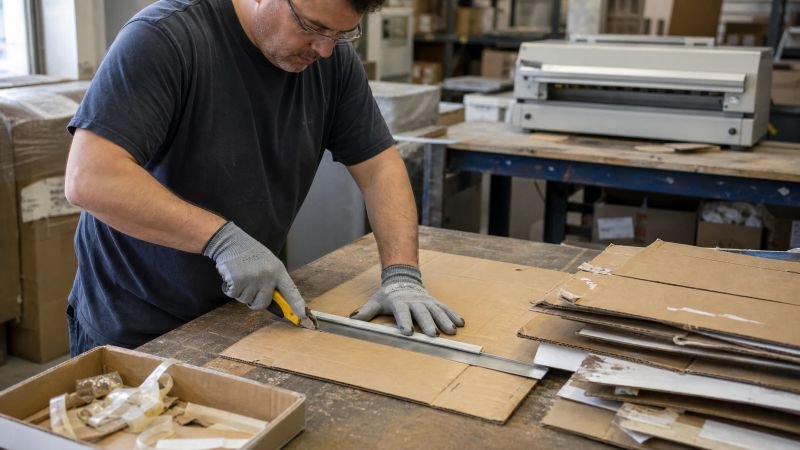
Cutting or Folding Oversized Cardboard
Every shredder has a documented feed width and permitted input range. Treat those values as limits, not targets to estimate during operation.
Cut oversized cartons into panels that fit the documented feed width. Fold cardboard only when the exact model manual explicitly permits the resulting construction and thickness; otherwise keep it flat. If the approved method is unclear, place the material in Hold for Verification.
Warehouse-friendly tip: Keep a dedicated cutting station near the breakdown area (with safety cutter + bin for removed tape/plastic). Don’t push cutting work to the shredder operator at the last moment.
Feeding Cardboard Evenly
Even approved cardboard must be fed according to the exact model manual and the facility’s operating procedure.
- Use only the permitted number of sheets or bundle thickness.
- Keep hands outside the guarded feed opening and never force material into the machine.
- If resistance, unusual noise, repeated reversing, a fault, or abnormal output occurs, stop normal feeding and follow the model-specific stop and escalation procedure. Do not reach into the feed area or improvise a jam-clearing method.
Check Cardboard Thickness and Density
Thickness is not just “single-wall vs double-wall.” Density varies by board grade, humidity, and construction.
Understanding Cardboard Thickness Limits
Use the current manual or approved data sheet for the exact model to determine permitted thickness, board construction, layers, and folds. Operating symptoms are stop signals, not a measuring method and not permission to keep testing an uncertain input.
If the limit is missing or the board construction is unclear, place the material in Hold for Verification and ask the supplier to confirm it in writing or perform an approved sample evaluation.
Mixing Different Cardboard Types
Different board constructions can behave differently during feeding. Do not assume that approval for single-wall board also covers double-wall board or a mixed stack.
Recommended sorting practices:
- Maintain separate stacks for single-wall and double-wall if volumes are high.
- If the manual permits double-wall board, process it only under the approved model-specific instructions rather than mixing it casually with other material.
- Keep reinforced/tape-heavy cartons as a separate stream for extra prep.
Consistency beats speed here. The goal is stable production, not maximum feed rate at the cost of stoppages.
Prepare Cardboard for Different Shredding Applications
Different packaging uses require different output characteristics, but the intended application never overrides input compatibility. Use only material already classified as Approved to Feed for the exact machine.
Cardboard for Void Fill and Cushioning
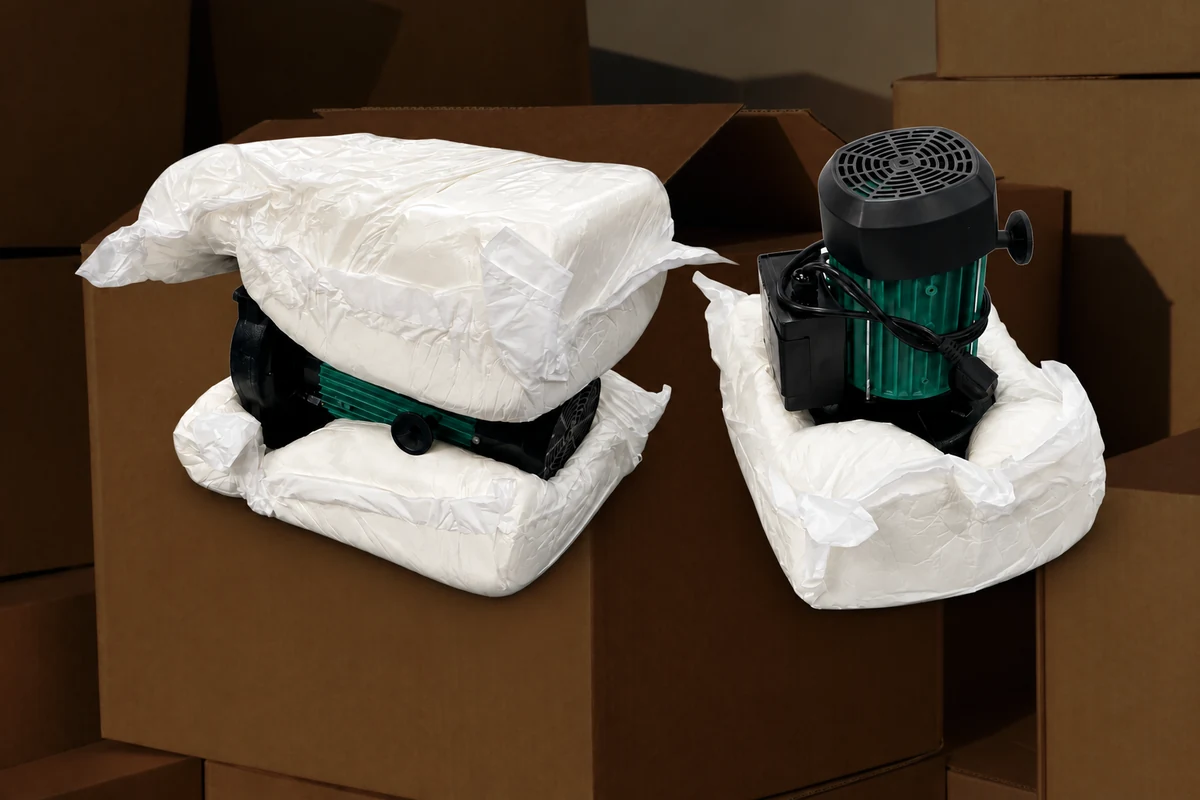
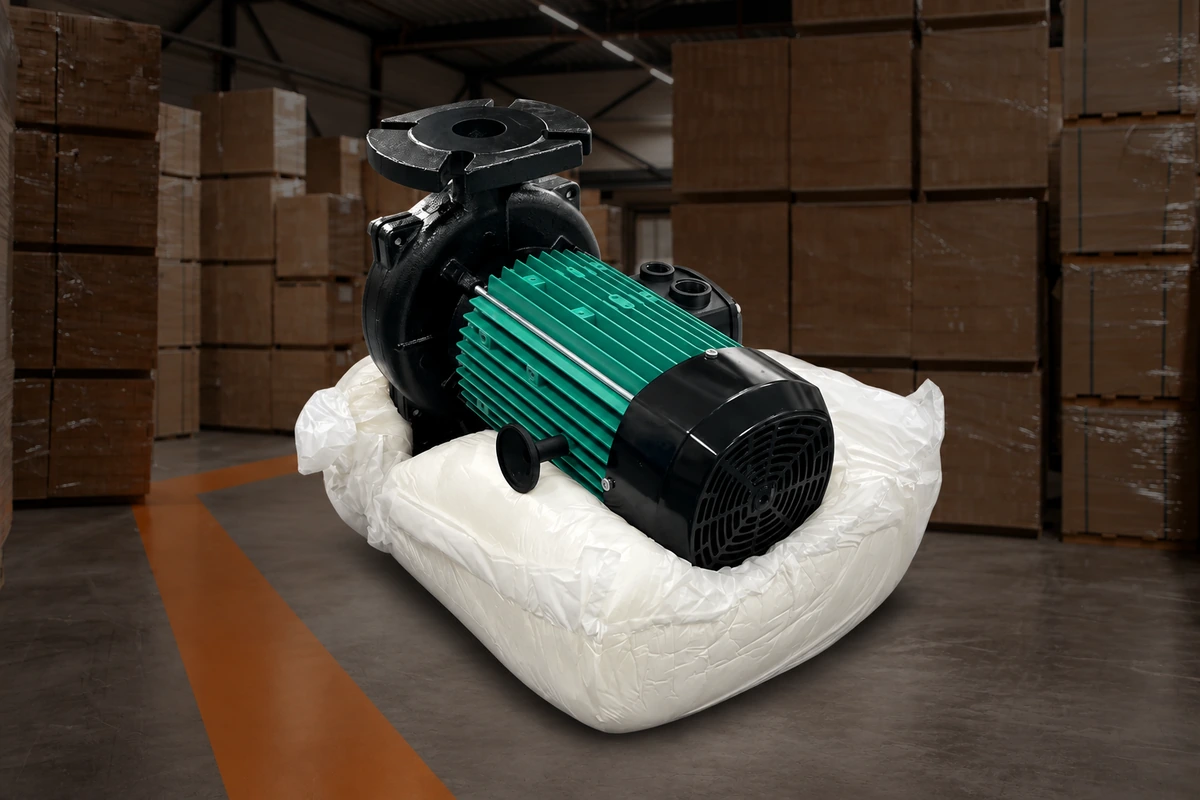
For void fill, consistency matters. Your goal is output that springs back (resilience), fills space effectively, and creates stable protection without collapsing.
Preparation priorities:
- Remove contaminants so output stays clean.
- Flatten and size consistently.
- Avoid wet material.
If output is abnormal or inconsistent, stop normal feeding and review the input record and model-specific procedure. Do not diagnose the cause by continuing to test uncertain material.
Cardboard for Packing Wrap or Interleaving
If you use shredded cardboard as wrap or interleaving, you may want longer, more continuous strips, less fragmentation, and uniform panels as input.
Preparation priorities shift toward:
- Fewer cuts (where possible).
- Consistent panel orientation during feeding.
- Reduced mixed-density inputs.
Complete Cardboard Preparation SOP Workflow
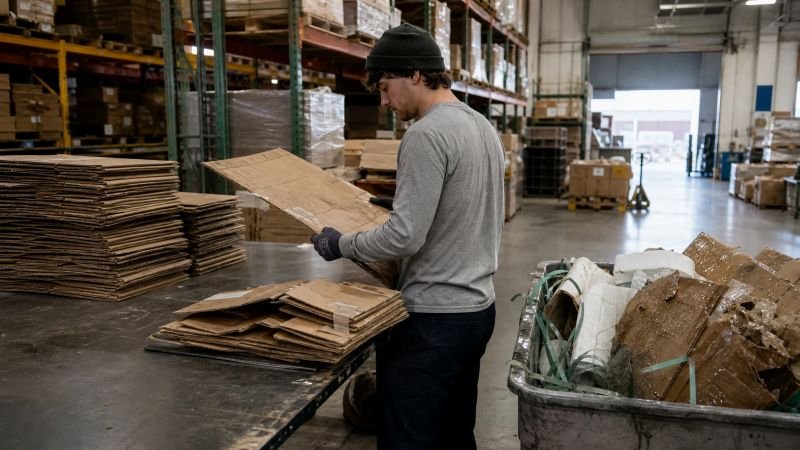
Use this decision sequence from collection to normal feeding:
- Identify the exact shredder model and use its current manual or approved input specification.
- Inspect the board for construction, attachments, contamination, moisture, folds, size, and thickness.
- Mark it Approved to Feed, Hold for Verification, or Do Not Feed.
- Segregate held and rejected material so it cannot return to the approved stack by mistake.
- Flatten, clean, and size approved material only within the documented model limits.
- Feed it using the model-specific operating procedure; stop and escalate if abnormal operation occurs.
The following visual supports the preparation process:
Safety Boundaries During Cardboard Preparation
This section covers carton breakdown, material screening, and normal external feeding. It does not define machine start-up, guard bypass, jam clearing, cleaning, maintenance, or hazardous-energy isolation. Those tasks require the exact model manual, the facility’s procedures, and appropriately trained or authorized personnel.
Workplace Safety During Preparation
- Select hand protection for carton breakdown through the facility’s PPE assessment. Gloves do not make it safe to place a hand near or inside a feed opening.
- Review lifting, reaching, bending, and cutting tasks for the actual workstation and carton volume.
- Use the site’s approved safety cutter and storage method, and remove staples or tape only at the designated preparation station.
For repetitive or high-volume carton preparation, have the facility’s safety or ergonomics owner assess the actual workstation, tools, handling distances, and work pattern rather than relying on a universal setup from a blog.
Reducing Risk Before Feeding Cardboard
- Keep guards in place and hands outside the guarded feed opening. Never reach into the machine while it is energized.
- Keep the floor and material-staging area clear so waste, tools, and rejected material do not enter the normal feed path.
- Post the model-specific decision card at the station: Approved to Feed → Hold for Verification → Do Not Feed.
For U.S. general-industry workplaces, OSHA 1910.212 addresses machine guarding, while OSHA 1910.147 addresses hazardous-energy control during covered servicing and maintenance. Other locations and sectors may apply different requirements. These sources do not replace the installed machine’s manual or the employer’s site-specific safety program.
Common Preparation Mistakes Businesses Should Avoid
Overloading the Shredder
Overloading means exceeding the exact model’s permitted sheet count, bundle thickness, or operating pattern. Use the documented limit and normal feed method; do not create a universal stack size from this guide.
Skipping Preparation Steps to Save Time
Skipping the classification step can send uncertain material into normal production. When an attachment, coating, board grade, thickness, or moisture condition is unclear, place the material in Hold for Verification rather than testing it in the machine.
Ignoring Manufacturer Guidelines
Preparation limits vary by model. Keep the current manual or an approved input specification at the station, identify the exact machine model on the SOP, and record who may release held material. Do not turn general blog guidance into a substitute for manufacturer instructions.
Operational Differences Between Manual and Industrial Shredding
A paper shredder, tabletop cardboard shredder, and floor-standing cardboard shredder can have different permitted inputs and operating rules. Do not transfer a material approval from one machine to another. Apply the same three-way classification, then use the manual for the exact unit to make the final decision.
As a general business rule: The higher your daily volume, the more valuable a standardized preparation workflow becomes. It’s not about making operators work harder; it’s about making output predictable and reducing downtime.
Conclusion: Proper Preparation Leads to Better Shredding Results
Preparing cardboard before shredding is a small operational step with outsized impact. Standardize the three decisions—Approved to Feed, Hold for Verification, and Do Not Feed—then use the exact model manual to control contaminants, size, thickness, folds, moisture, and normal feeding.
If you’re building a more efficient packaging workflow, SelectPack can help you turn suitable used cardboard into consistent, paper-based void fill. Explore our current cardboard shredder models and confirm permitted input, feed width, output, and operating requirements for the quoted model.
Related Resources:
- Cardboard Shredder vs Buying Void Fill: Cost & Sustainability Comparison
- How to Choose the Right Cardboard Shredder for Your Business
- Industrial Cardboard Shredder ROI: How Long Does It Take to Pay for Itself?
- Cardboard Shredder Output Types: Strip-Cut vs Mesh-Cut Cardboard for Packaging
- SelectPack Protective Packaging Solutions
Frequently Asked Questions
Q: Can I shred cardboard with tape and labels still on it?
A: Tape and labels are model-specific inputs. Put the carton in Hold for Verification unless the exact model manual and site SOP permit the attachment. Remove reinforced tape, thick overlaps, and large label clusters before release unless the manufacturer gives different written instructions.
Q: What’s the maximum cardboard thickness my shredder can handle?
A: Use the current manual or approved data sheet for the exact model. Do not infer a limit from motor sound, feed speed, or a previous successful pass. If the board construction or thickness is uncertain, place it in Hold for Verification and obtain written confirmation.
Q: How do I prevent jams when feeding cardboard?
A: Start with material already classified and prepared under the model-specific SOP, then use only the permitted sheet count, thickness, orientation, and feed method. Never force material or reach into the feed opening. If resistance, a fault, or abnormal operation occurs, stop normal feeding and follow the approved stop and escalation procedure.
Q: Does moisture affect cardboard shredding?
A: Yes. Place visibly damp, softened, moldy, or water-damaged cardboard in Do Not Feed. Store candidate material in a dry, protected area. If humidity creates uncertainty without visible damage, hold the material and use the exact model manual and site quality criteria; this guide does not set a universal humidity threshold.
References
- OSHA 1910.147 — The Control of Hazardous Energy — U.S. general-industry requirements for covered servicing and maintenance activities.
- SelectPack Cardboard Shredder Models — Current model range and published specifications; confirm the quoted model and its supplied manual before use.
- OSHA 1910.212 — General Requirements for All Machines — U.S. general-industry machine-guarding requirements.