In modern warehouses and e-commerce fulfillment centers, cardboard packaging generates significant waste on Businesses can reuse suitable corrugated cardboard on-site by collecting it, checking it against a defined acceptance standard, and processing it with a cardboard perforator for approved packaging tasks. Depending on the machine, the output may be an expandable mesh sheet for wrapping and layering, loose strips for filling open carton space, or both.
This approach works best when a facility has a reliable supply of clean corrugated board, recurring demand for protective packaging, and a packout process that can use the converted material consistently. It is not an automatic replacement for every purchased packaging material. The output must be matched to the product, carton, distribution hazards, and customer requirements through representative trials.
Before selecting equipment, quantify the usable cardboard stream and the packaging demand it could serve. Then control the input, test the output, and calculate the economics from your own operating data. For a broader overview of the technology and its limits, see our cardboard shredder guide.
When Does On-Site Cardboard Reuse Make Sense?
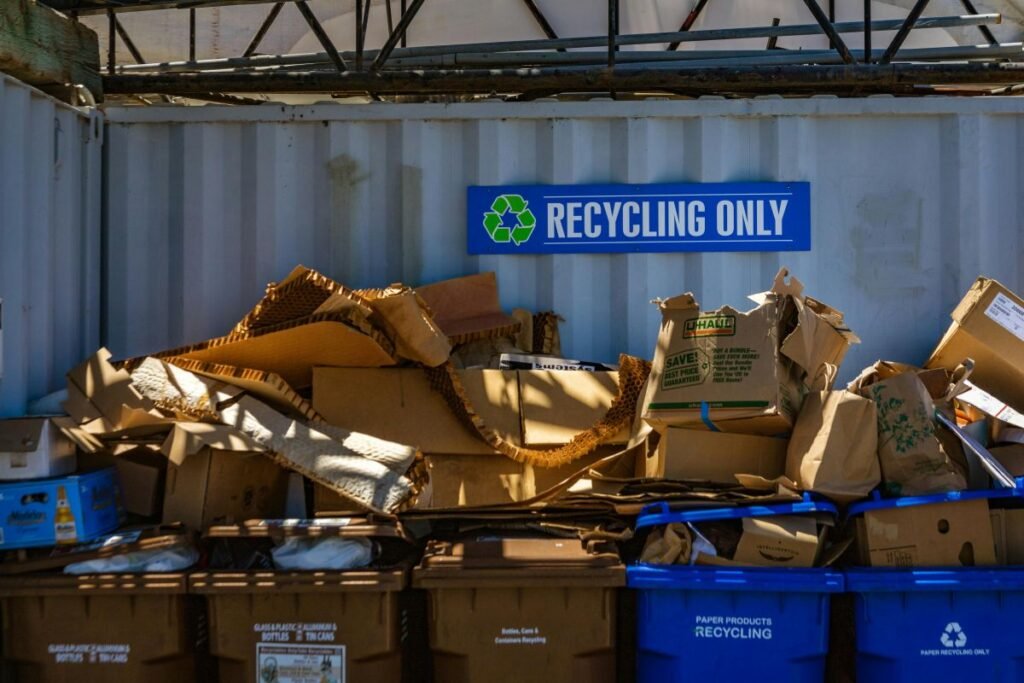
Start with the material hierarchy. Intact cartons that are still fit for their intended use may be candidates for direct reuse. Corrugated board that is no longer suitable as a box may be evaluated for conversion into packaging material. Material that does not meet the site’s reuse standard should remain in the appropriate recycling or waste stream.
The U.S. EPA waste management hierarchy ranks source reduction and reuse above recycling while also noting that no single method is suitable for every material and circumstance. On-site perforation is a reuse workflow: the business gives suitable cardboard another internal use before it leaves the facility. It does not eliminate the need for recycling rejected or excess material.
| On-site conversion may be worth evaluating when | Use caution or consider another route when |
|---|---|
| Clean corrugated board is generated consistently | Most incoming board is wet, contaminated, heavily damaged, or otherwise unsuitable |
| Packing stations regularly use wrapping, layering, separation, or void-fill material | The operation has little recurring demand for the available output |
| Operators can collect, inspect, prepare, and store the material | The added handling would disrupt receiving or packing work |
| The facility can run and document package trials | Packaging requirements do not permit used corrugated material |
| The site has suitable space, electrical service, and safety controls | The proposed location cannot support safe feeding, material flow, or maintenance access |
The key question is not simply, “How many boxes do we discard?” It is, “How much acceptable cardboard can we convert into material that passes our packaging requirements?”
Measure Cardboard Supply and Packaging Demand
Measure supply and demand over representative operating periods, including normal variation and peak conditions. Counting incoming cartons alone can be misleading because board size, thickness, condition, and contamination affect the usable quantity.
Measure the usable cardboard stream
Record the following:
- the weight or volume of corrugated board collected per shift or week;
- the percentage accepted after inspection and preparation;
- common flattened dimensions and board thicknesses;
- the amount of tape, labels, staples, moisture, oil, or other contamination encountered;
- where the board is generated and how far it must travel to the proposed machine; and
- seasonal or production-related changes in supply.
Measure the packaging demand
At the packing side, record:
- the products and carton sizes being considered;
- the current packaging material and its purpose;
- material consumption and purchase cost;
- pack time and any handling or storage requirements;
- daily demand, peak-hour demand, and the number of packing stations served; and
- damage, presentation, cleanliness, or customer requirements that the trial must address.
Compare compatible supply with approved demand in the same unit, such as kilograms per shift or cubic volume per week. Do not count all discarded board as available supply, and do not count the full purchased-material budget as a saving unless the converted cardboard can actually replace it in validated packouts.
Build an Input Acceptance Process
A cardboard perforator should not become the destination for every used box in the building. A simple acceptance process protects the machine, keeps output more consistent, and prevents unsuitable material from reaching the packing station.
- Separate material at the source. Place clearly identified collection points near the receiving or unpacking areas that generate suitable corrugated board.
- Inspect before processing. Reject wet, oily, dirty, mold-affected, or otherwise contaminated board. Follow the machine manufacturer’s instructions for staples, clips, tape, hard objects, board thickness, and other feed restrictions.
- Prepare the board. Flatten cartons and size the material so it can be fed without folding, forcing, or exceeding the machine’s rated inlet and thickness limits.
- Keep accepted material dry and organized. Prevent good board from being mixed with rejected waste or creating an obstruction around the workstation.
- Document the standard. Use a short visual work instruction so receiving, warehouse, and packing teams apply the same rules.
- Train operators. Operators should follow the equipment manual and site safety procedures, keep guards and safety devices in place, and isolate power before clearing or servicing the machine as required by the approved procedure.
Our guide to preparing cardboard for a cardboard shredder provides a practical starting point. The final acceptance rules must still be based on the exact model, supplier instructions, and site risk assessment.
Match the Output to the Packing Task
“Shredded cardboard” is not one standard output. The cutting style determines how the material behaves at the packing bench.
| Output type | Form | Packaging tasks to evaluate | Important limitation |
|---|---|---|---|
| Mesh-cut | A connected, expandable corrugated sheet | Wrapping, layering, separation, and surface protection | It is a sheet, not loose fill; protection depends on expansion, orientation, and the number of layers |
| Strip-cut | Loose corrugated strips | Filling open carton space and limiting product movement | It does not wrap a product like mesh and may settle differently under load |
| 2-in-1 | Mesh-cut and strip-cut modes in one machine | Operations with validated demand for both output forms | Both modes still require separate packout standards and operator instructions |
See the detailed comparison of mesh-cut and strip-cut cardboard output before choosing a cutting style.
Match the output to the job it must perform:
- Wrapping: Evaluate whether expanded mesh conforms to the product, protects corners and surfaces, and remains in place during handling.
- Layering and separation: Check whether mesh sheets consistently separate items or layers without creating instability inside the carton.
- Void fill: Check whether strips occupy the available space, limit movement, and remain effective after the package is handled and transported.
Some applications need special controls. Food, pharmaceutical, cleanroom, electrostatic-sensitive, sharp, very heavy, high-value, or highly fragile products may require approved barriers or engineered packaging materials. Used cardboard should not be placed in direct product contact unless the material and application have been reviewed and approved by the responsible quality or packaging team.
Run a Representative Packout Trial
Do not approve the workflow from the appearance of a single sample. Use representative cardboard, products, cartons, packing methods, operators, and distribution conditions.
Start with a controlled packout trial and record the variables instead of relying on general claims.
| Trial item | What to record |
|---|---|
| Input board | Type, thickness, condition, size, and preparation method |
| Machine setup | Model, output mode, relevant settings, and operator |
| Packout | Product, carton, output quantity, placement method, and pack time |
| Package performance | Product movement, surface contact, material settling, carton condition, and any damage |
| Operational impact | Feeding time, interruptions, storage needs, dust or housekeeping observations, and rejected output |
| Acceptance result | Approved application, limits, required changes, and responsible approver |
Compare the trial pack with the current approved packout. Acceptance criteria may include product condition, movement inside the carton, packaging-material consumption, pack time, presentation, unpacking experience, and any customer or regulatory requirements relevant to the shipment.
For low-risk internal movements, a documented handling trial may be enough under the site’s own procedure. Products exposed to parcel, freight, vibration, compression, impact, or other distribution hazards may need more formal validation. The ISTA test procedures can help packaging professionals identify an appropriate packaged-product test approach; select the procedure based on the actual distribution system and product risk.
Once the application is approved, turn the result into a standard work instruction. Our guide on how to use perforated cardboard for packaging covers the basic workflow, but the approved packout must define the output quantity and placement for each product or carton family.
Evaluate the Economics with Site Data
There is no universal saving percentage or payback period. A sound estimate uses costs that the site can verify and counts only benefits created by approved applications.
Annual net benefit = verified avoided costs − new operating costs
Verified avoided costs may include:
- purchased wrapping, layering, or void-fill material actually displaced;
- collection, hauling, or disposal charges demonstrably avoided;
- storage or handling costs that can be removed from the budget; and
- other savings accepted by the site’s finance team.
New operating costs may include:
- equipment, freight, installation, electrical work, and commissioning;
- labor for collection, sorting, preparation, processing, and replenishment;
- electricity, maintenance, replacement wear parts, and housekeeping;
- floor space, material containers, and workstation changes;
- training, package testing, quality checks, and documentation; and
- downtime, rejected input, rejected output, and cardboard sent to recycling.
Use a conservative base case. Keep possible benefits separate from contracted or measured savings, and avoid counting the same reduction twice. For example, a smaller waste volume does not automatically produce a cash saving if the collection contract and pickup frequency remain unchanged.
The comparison should also include alternatives: direct carton reuse, continued recycling, purchasing packaging material, or a hybrid system. A hybrid system may be appropriate when converted cardboard works for routine shipments but approved purchased material remains necessary for specific products, peaks, or customer requirements.
Define Machine Requirements from the Workflow
Choose equipment after the supply, application, and trial requirements are clear. A “boxes per day” estimate is not enough because cartons vary widely and packing demand may be concentrated into short periods.
Prepare the following information for the supplier:
| Requirement | Data to provide |
|---|---|
| Required output | Mesh-cut, strip-cut, or both, with the intended packaging task |
| Cardboard input | Board types, flattened dimensions, thickness range, condition, and representative samples |
| Capacity | Usable board per shift, peak processing requirement, and operating hours |
| Workflow | Machine location, distance from cardboard source and packing stations, and storage method |
| Site conditions | Available space, electrical supply, mobility needs, and environmental constraints |
| Operating plan | Number of operators, duty cycle, cleaning, maintenance access, and training needs |
| Validation | Products, cartons, acceptance criteria, and any sample or package tests required |
SelectPack’s current range includes compact and floor-standing machines for mesh-cut or strip-cut output, plus a 2-in-1 option for operations that need both forms. Model availability, capacity, electrical configuration, feed limits, and site suitability should be confirmed against the current technical specification and your representative material rather than copied from a general article.
Request a Material Test and Equipment Recommendation
A useful supplier recommendation should connect the machine to your material flow and approved packouts. Before requesting a quotation, assemble:
- photos and representative samples of the corrugated board;
- usable cardboard volume and peak processing demand;
- common flattened board dimensions and thicknesses;
- the output type and packaging tasks under consideration;
- sample products and cartons for trial work, where practical;
- available space and electrical supply at the proposed location;
- required documentation, delivery location, and target schedule; and
- the team responsible for operations, maintenance, safety, and package approval.
Send this information through the SelectPack cardboard shredder supplier page. The SelectPack team can review the application, identify suitable current models, and discuss a representative material test. Final equipment selection and packaging approval should be based on confirmed specifications, site requirements, and documented trial results.
On-site cardboard reuse creates value when it is treated as a controlled packaging process, not simply as waste reduction. Measure the material, select the right output, validate the packout, and calculate the business case from evidence. That sequence gives procurement, warehouse, packaging, quality, and finance teams a defensible basis for deciding whether a cardboard perforator belongs in the operation.