Choose air cushion packaging by the job it must perform inside the carton. Start with air pillows for unused space around an already protected product, inflatable bubble film for wrapping and separation, or a correctly fitted air column bag for protection around a specific product shape. These are starting points for selecting a packaging method; each complete package still needs to meet your shipping requirements.
Then check the product’s dimensions, weight, vulnerable surfaces and protrusions, together with the outer carton and packing process. A material that fits the box can still press against a fragile connector, leave two items touching or slow the operator down. The right choice combines a suitable material format, an approved machine-and-film combination and a repeatable packing method.
Before selecting equipment or ordering rolls, define what must be protected and where damage or unwanted movement occurs. That gives your supplier a practical selection task instead of a request for a generic air cushion machine.
How to Choose Air Cushion Packaging by Its Job Inside the Carton
Select the material format according to whether the package needs void fill, wrapping or fitted protection. These jobs overlap in some packages, but filling empty space does not automatically provide the cushioning or surface protection the product needs.
| Packaging job | Format to evaluate | Main selection check |
|---|---|---|
| Fill gaps around an inner pack | Air pillows | Placement, movement and puncture risk |
| Wrap or separate products | Inflatable bubble film | Coverage, contact surfaces and layer retention |
| Protect around a defined product shape | Air column bag | Inflated internal fit, vulnerable areas and carton fit |
Air pillows: start with the empty space
Air pillows are a void-fill option when the product already has suitable primary protection and the remaining task is to occupy gaps in the shipping carton. Evaluate whether the pillows stay in the intended locations during handling and prevent the unwanted movement identified in your packaging review.
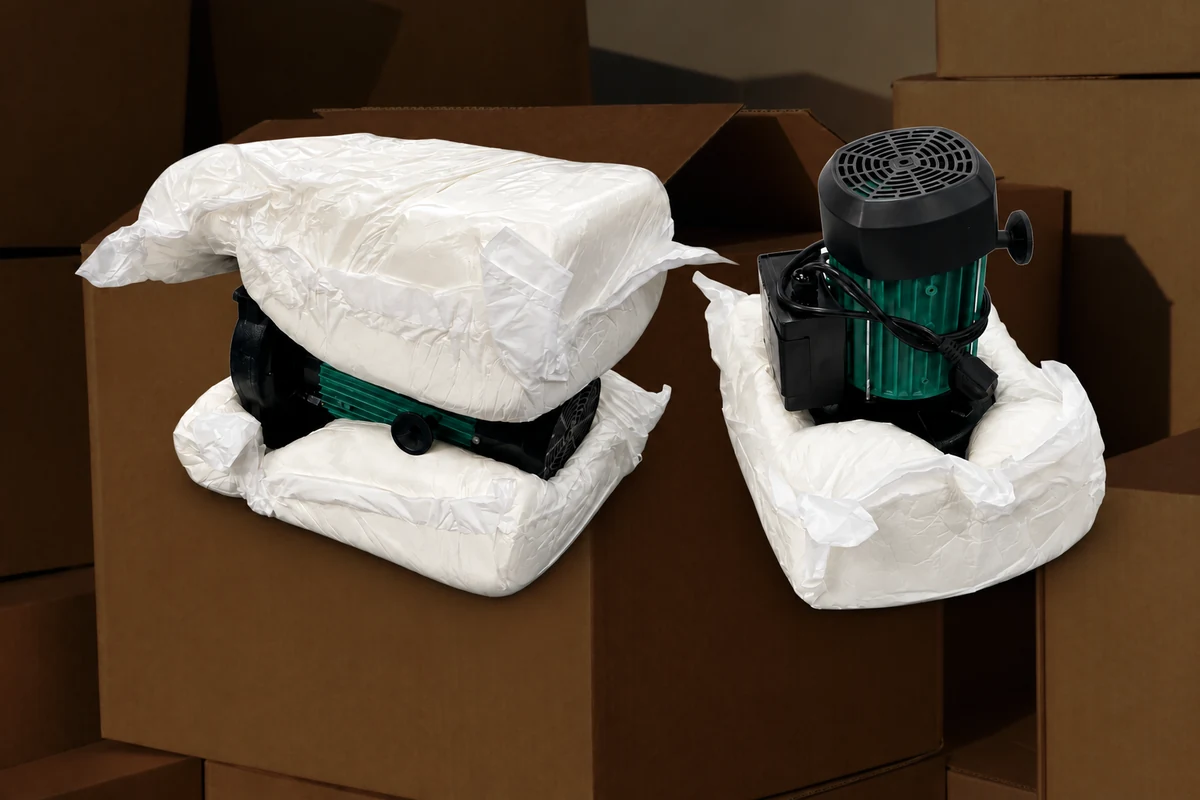
For example, an individually boxed item inside a larger shipping carton presents a different task from an unprotected fragile item placed directly against the carton wall. In the second case, adding pillows to the top gap does not establish protection at the product’s base, sides or corners.
Check the carton size before increasing the amount of fill. An unnecessarily large box creates more space to manage; a smaller suitable carton changes both the material requirement and the packing method.
Inflatable bubble film: start with coverage and separation
Evaluate inflatable bubble film when the task requires wrapping around the product or separating neighboring items. The selection question is whether the chosen sheet format covers the vulnerable areas and remains in place through packing and handling.
Check sheet width, tear-off length, overlap and the way the operator secures or positions the wrap. A short sheet that leaves a protruding part exposed is a different problem from a sheet that covers the product but shifts as it is inserted into the carton.
For multi-item cartons, inspect contact between products as well as contact with the box. Outer wrapping alone does not establish separation between every item.
For a closer material comparison, use the air pillows versus inflatable bubble wrap decision guide to separate the void-fill task from wrapping and product contact.
Air column bags: start with the inflated internal fit
Evaluate an air column bag when its cavity and surrounding columns fit the product and the intended outer carton. Flat bag dimensions alone are insufficient: inflation changes the space available for insertion and the overall package dimensions.
Check the product’s widest points, protrusions and insertion path. The bag should accommodate the product without forcing vulnerable parts into contact, while the complete assembly must fit the carton without unwanted compression. Confirm the required bag shape with a physical sample rather than selecting by product category alone.
Use the air column bag sizing checks to distinguish product dimensions, inflated cavity fit and the assembled carton dimensions before ordering.
Which Product Details Change the Material Choice?
Product geometry, contact pressure and damage sensitivity determine whether a shortlisted air cushion format is suitable. Weight matters, but a weight figure alone does not describe how the product loads or contacts the packaging.
Shape, edges and protruding parts
Inspect the product in the orientation used for packing. Look for exposed threads, corners, brackets, handles and connectors that could puncture the film or receive pressure from it.
A metal component with a projecting fastener needs a different contact arrangement from a smooth product of the same overall size. Address the projection with an appropriate cover, separator or support before relying on inflatable material around it. Confirm that any added component stays in place and is compatible with the product surface.
Weight and where the product bears on the packaging
Identify where the product’s weight presses against the cushioning. A broad contact area and a narrow foot or flange create different loading conditions, even when the products weigh the same.
Do not select an air cushion grade from a universal weight cutoff. Ask the supplier to evaluate the actual product, material specification, contact area and package layout. If the product requires rigid support or mechanical restraint, specify that requirement separately; filling gaps with air pillows does not establish either function.
Fragile finishes, sensitive components and multiple items
Define what counts as unacceptable damage: breakage, scratching, bent connectors, loss of function or damage to an existing retail pack. Different failure criteria lead to different contact and separation requirements.
For a polished surface, check the suitability of the film and any contact layer. For exposed electronics, specify the applicable electrostatic protection requirement rather than assuming ordinary inflatable film meets it. For several products in one carton, check item-to-item contact and whether the packing method is repeatable across the SKU mix.
How Should the Air Cushion System Fit Your Packing Line?
Match the material route first, then assess the full packing cycle. Machine output alone does not show how many cartons an operator can complete with the required protection.
Confirm the machine-and-material combination
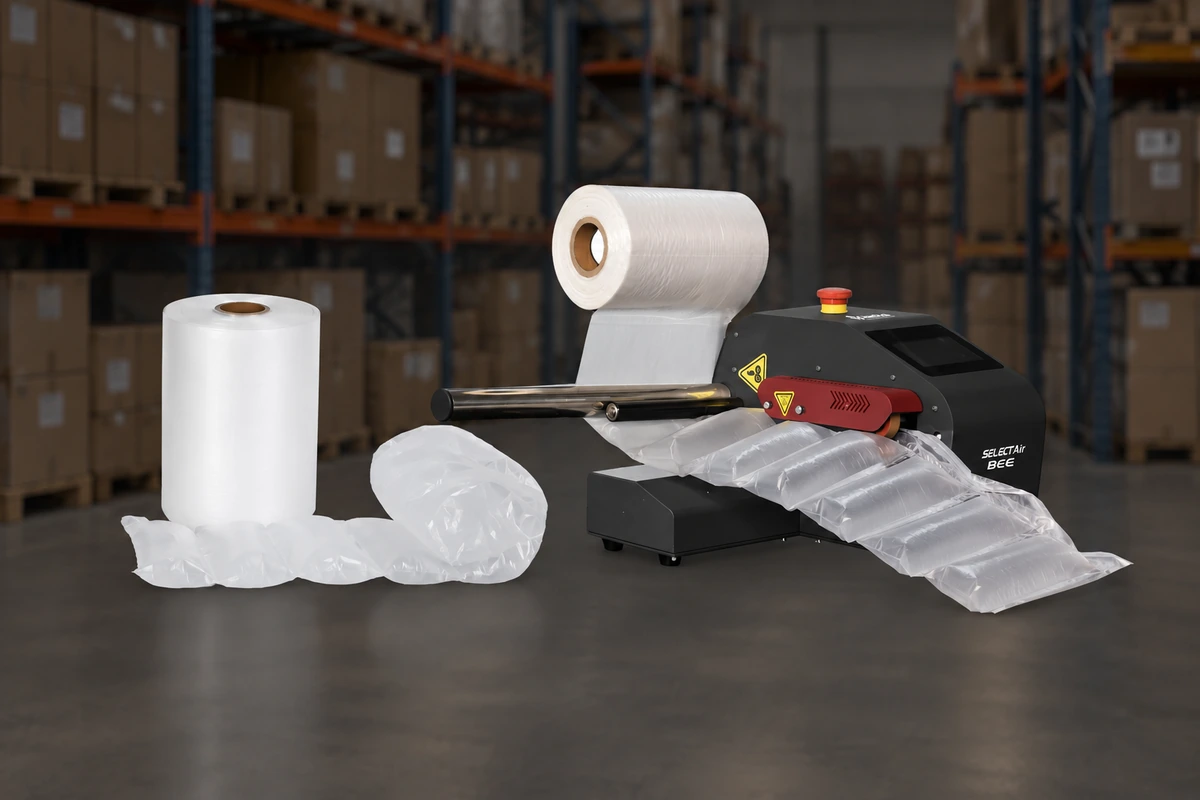
Air pillow and bubble-film production and air column bag inflation are distinct equipment routes. SelectPack’s SelectAir Bee lists on-demand production of air pillows, bubbles and tubes. Its approved film specifications still need to be matched to the exact machine supplied.
For air column packaging, the Q15P air column bag inflator represents a separate route and requires an external air supply. Confirm the intended bag or roll format and the utility requirements for the quoted configuration.
Do not assume that a roll described as “air cushion film” fits either machine. Obtain confirmation of the material format, width, thickness, roll arrangement and inflation or sealing requirements before ordering production quantities.
Assess the operator’s complete cycle
Observe how the operator retrieves the material, separates a usable length, wraps or positions it, inserts the product and closes the carton. A machine that supplies enough material can still leave a bottleneck at wrapping, bag insertion or carton preparation.
Describe demand in the units your station uses: pillow pieces, wrapping length or fitted bags per carton, together with the peak number of cartons requiring that format. For mixed SKUs, identify which products use different formats and how often the operator changes materials or packing methods.
During a trial, record completed acceptable packs, material waste, roll changes and interruptions. Keep the trial conditions attached to the result so that a single easy SKU does not become the assumed capacity for the whole operation.
The air cushion machine capacity calculation shows how to compare usable material output with average demand, peak demand and replenishment needs.
Plan supply, working space and replenishment
Check where the machine, uninflated rolls, usable cushions and packed cartons will sit. Include access for roll changes and routine work specified in the equipment manual. For equipment needing external compressed air, confirm the supply and connection requirements with the supplier.
Decide whether material will be produced at the station or supplied from a shared point. Shared production adds collection, replenishment and buffer-stock tasks; production at the station requires space and convenient access. Compare those tasks using the real station layout.
Include material consumption, handling time, waste and equipment costs when evaluating the system. A lower roll price does not establish a lower cost per acceptable pack, and a storage claim does not establish the total saving for your operation.
What Should a Sample Confirm Before a Bulk Order?
An air cushion packaging sample should first confirm physical fit and a repeatable packing method, then support validation of the complete package for its distribution task. Successful inflation and carton closure are useful checks, but they do not establish shipping protection.
Use the air cushion packaging sample-test guide to define acceptance criteria and record the exact package version before approval.
Use representative products, including awkward protrusions or sensitive surfaces rather than only the easiest SKU. Record the product, carton, material specification and packing arrangement so the result applies to a defined package.
At the station, check whether the operator can reproduce the intended placement, maintain separation and close the carton without forcing the product or cushioning into an unsuitable position. Inspect the product against the agreed damage and functional criteria.
For transport performance, choose a test appropriate to the shipping environment and customer requirements. The ISTA test procedures distinguish early screening from simulation of distribution environments, with different procedures for parcel, less-than-truckload and other shipment types. The appropriate procedure is selected for the complete packaged product, not from the cushioning material’s name.
Agree which changes require another review, such as a different carton, material grade, product geometry or packing method. Approval of one configuration should not be treated as approval of every SKU and package combination.
What Information Should You Send for a Recommendation?
Send the product, carton and protection requirements first. Those details allow a supplier to shortlist material formats and equipment before discussing a specific configuration.
- Product: dimensions, weight, packing orientation, protrusions and vulnerable areas.
- Outer pack: carton dimensions, existing inner packaging and the number of products per carton.
- Protection task: void fill, wrapping, separation or fitted protection, together with the damage you need to prevent.
- Operating demand: SKU mix, peak packing requirement and how material reaches each station.
- Site conditions: available working space, electricity, compressed air where required and any existing equipment.
- Acceptance requirements: shipping route, customer specifications and product damage or functional criteria.
Use this information to discuss the SelectAir air cushion packaging range with SelectPack. Confirm the proposed material, compatible equipment and sample packing method together, so the recommendation addresses both your product and the way your team packs it.