Choose an L-bar sealer when products fit a defined intermittent sealing envelope and the operation values a straightforward enclosed-pack process. Choose a side sealer when continuous flow or long and variable product lengths make the L-bar’s cross-seal cycle restrictive.
The decision is not simply “slower versus faster.” Product width and height, film path, spacing, seal location, tunnel capacity, SKU changes and downstream handling determine which system produces the more stable line. If the package architecture is not yet fixed, start with the types of shrink wrap machines before comparing these two seal paths.
How the Seal Paths Differ
Within the seal-and-shrink process, an L-bar closes film along the side and trailing edge during one sealing cycle. Product length therefore interacts with the available seal geometry and cycle.
A side sealer makes a continuous longitudinal seal and uses a separate cross-seal action between products. This removes a fixed L-bar length as the primary constraint, but accurate product spacing and film tracking become more important.
| Decision | L-bar | Side sealer |
|---|---|---|
| Product length | Must fit the sealing cycle/envelope | Better suited to long or varying lengths |
| Flow | Intermittent sealing action | Continuous longitudinal sealing |
| Product spacing | Important | Critical for cross-seal timing |
| Changeover | Mechanical and film adjustments | More coordinated tracking and timing settings |
| Best starting fit | Repeatable boxes and unit packs | Long products or continuous higher-flow lines |
Product Length Is Only the First Filter
Do not choose a side sealer only because one SKU is long. Record the full product range and run profile. If long products are rare, a different orientation or production plan may be more economical. If length varies every few packs, confirm that sensing and cross-seal timing handle the variation without creating excess film or collisions.
Width and height still limit both systems. The tunnel opening, conveyor support and film width can become the real constraint after the seal geometry is solved.
Compare Sustainable Speed
For an L-bar, check the complete seal cycle and the spacing needed before the next product. For a side sealer, check infeed control, longitudinal-seal stability, cross-seal timing, tunnel pitch and discharge. A catalog rate has little value unless the line maintains accepted seals and shrink quality across the intended SKU mix.
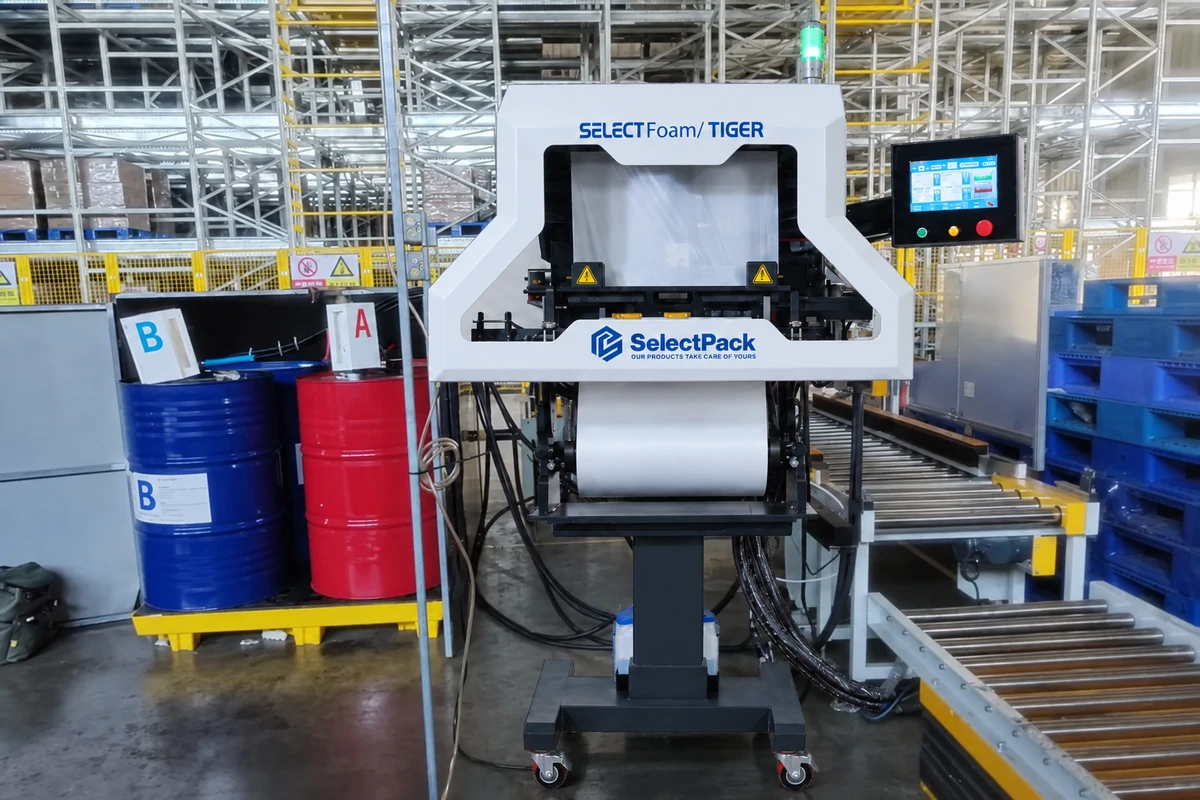
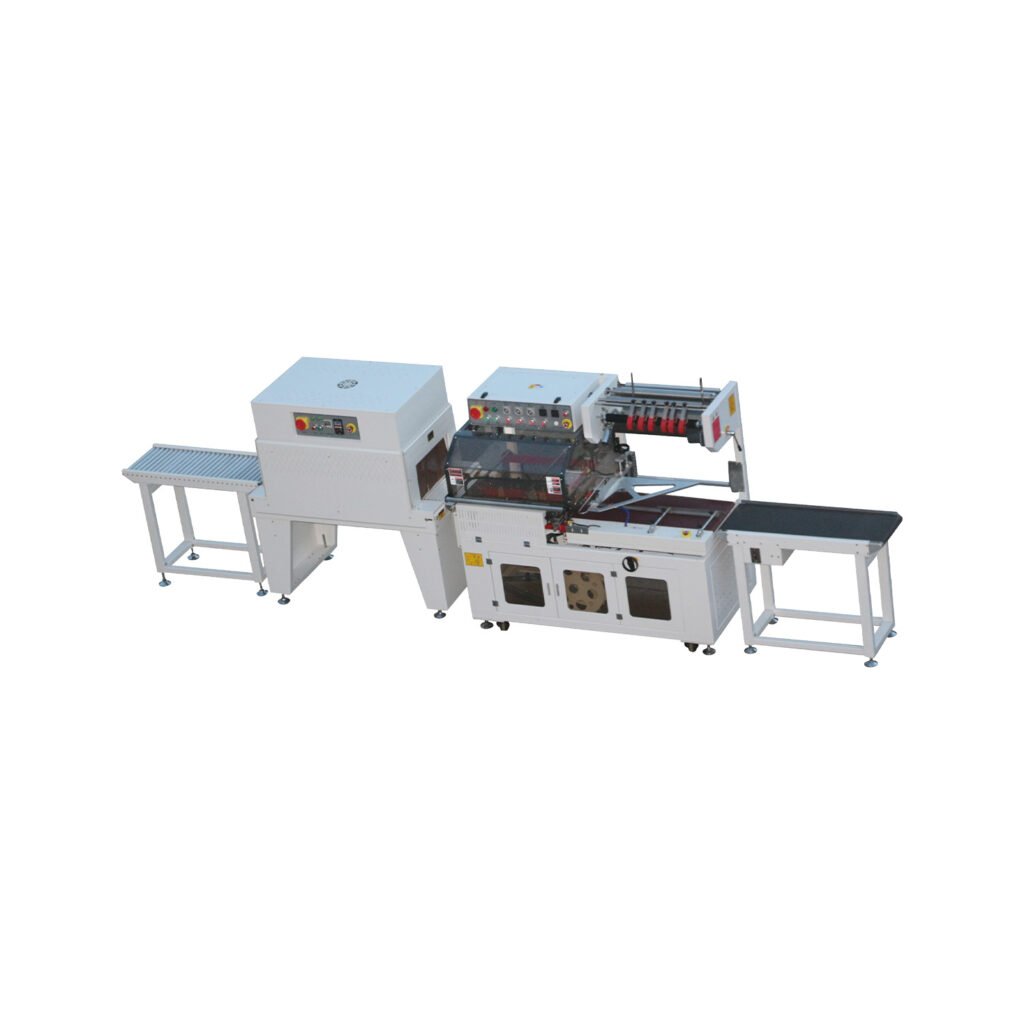
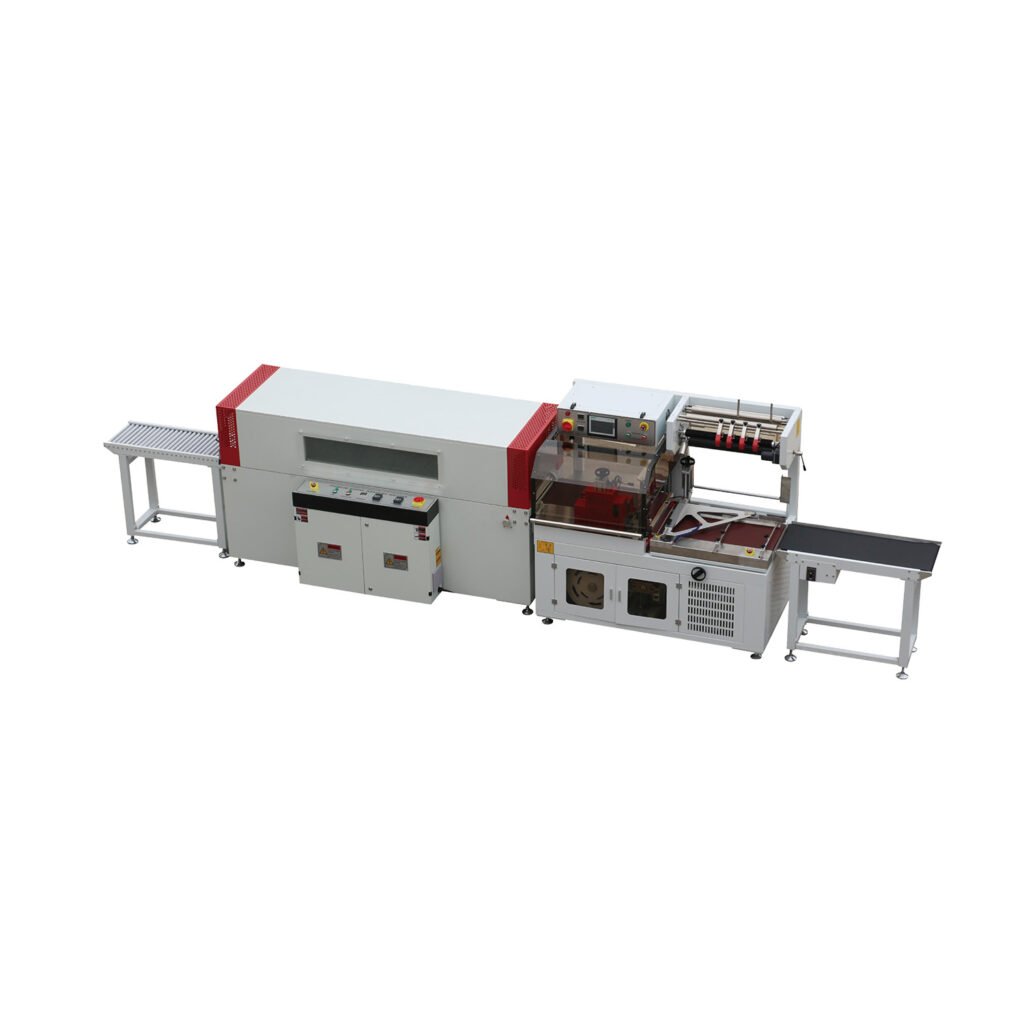
The fully automatic L-bar sealer and shrink tunnel and the automatic side sealer and tunnel represent the two process paths; compare the exact proposed configurations rather than transferring data between models.
Changeover Questions
Ask the supplier to demonstrate changeover from one challenging SKU to another. Record:
- Film width and roll change.
- Infeed guide positions.
- Sealing height and centerline.
- Sensor position or mode.
- Cross-seal timing and product gap.
- Tunnel recipe and conveyor support.
- First acceptable pack and total elapsed time.
A continuous machine can lose its capacity advantage if changeovers require repeated trial-and-error adjustments.
Product Handling and Line Control
Side-seal applications often depend on controlled product pitch. Define who creates that gap and what happens when upstream products touch, rotate or arrive in a surge. Also define stop logic so a tunnel or downstream conveyor does not fill with unaccepted packs.
L-bar systems also need stable presentation, but an intermittent cycle can offer a clearer separation between products. This can suit moderate output and products that benefit from deliberate positioning.
Reject the Configuration That Fails the Flow Test
Use representative short, typical and longest products to test three events: entry spacing, completion of the cross seal and clear discharge into the tunnel. Record accepted output, gap recovery after a stop and time to change between the limiting SKUs.
Keep the L-bar when the full SKU envelope fits comfortably and intermittent sealing meets the sustained rate without creating a downstream constraint. Keep the side sealer when continuous longitudinal sealing solves a documented length or flow limitation and the plant can control pitch, tracking and line states. If the side sealer only increases catalog speed while the tunnel or downstream process remains limiting, it has not solved the capacity problem.