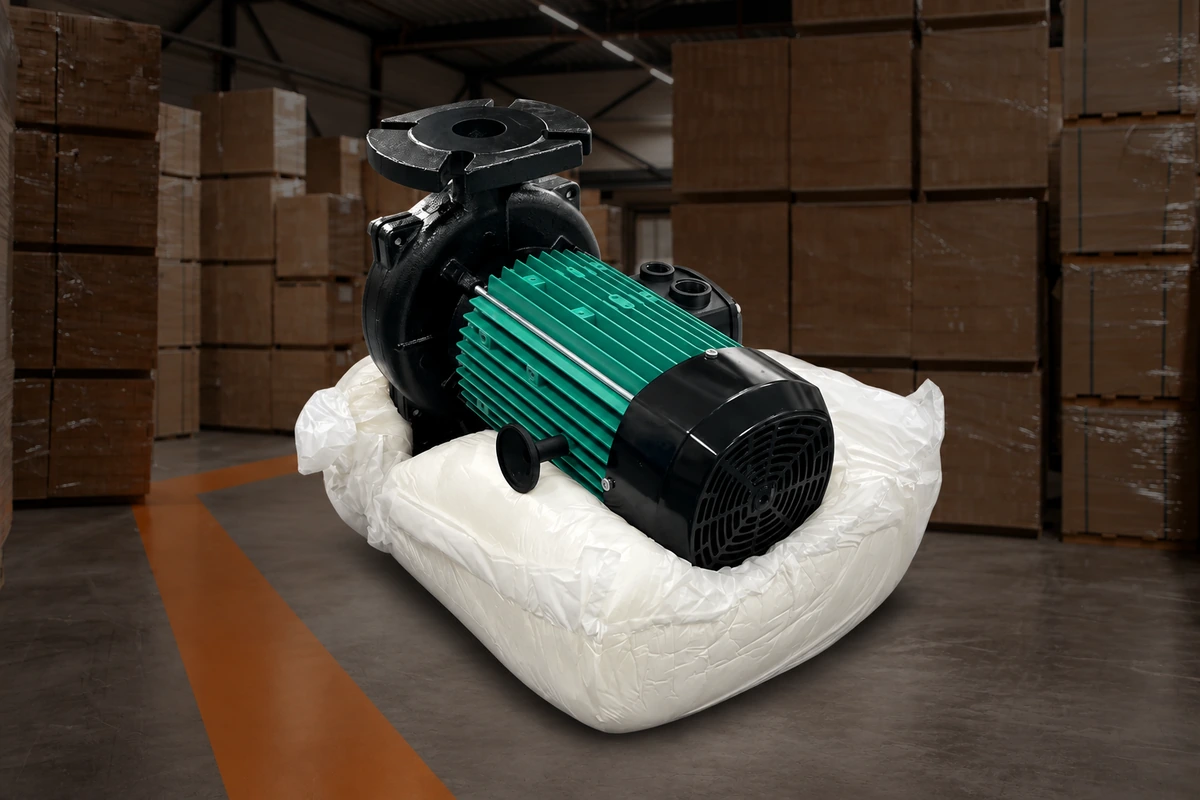
A chamber shrink wrap machine fits compact, operator-led, lower-output work where the product and seal fit comfortably inside one chamber cycle. An L-bar system fits operations that need a separate sealing and tunnel process, more conveyor flow, a wider automation path, or greater room to increase output.
Both can create an enclosed film package. In the basic shrink wrapping process, film sealing and controlled heat exposure are distinct functions. A chamber combines them in one station; an L-bar system separates the sealer from the shrink tunnel.
This comparison assumes an enclosed pack is already the objective. If open-ended bundling, continuous side sealing or another package architecture is still possible, begin with the shrink wrap machine types overview.
Side-by-Side Decision
| Factor | Chamber machine | L-bar + tunnel |
|---|---|---|
| Process layout | One combined chamber | Separate sealing and shrinking stages |
| Operator role | Loads, positions and cycles each pack | Manual, semi-auto or automatic feeding options |
| Footprint | Compact single station | Longer line with conveyor and tunnel |
| Output path | Limited by chamber and operator cycle | Can scale with automation and tunnel capacity |
| Product fit | Must fit chamber and seal area | Must fit L-bar envelope and tunnel opening |
| Best use | Short runs and modest volume | Repeat production and line-oriented flow |
Choose a Chamber System for Simplicity
A chamber machine reduces the number of separate sections to install and coordinate. The operator can observe the product through the cycle and manage mixed short runs without upstream metering equipment.
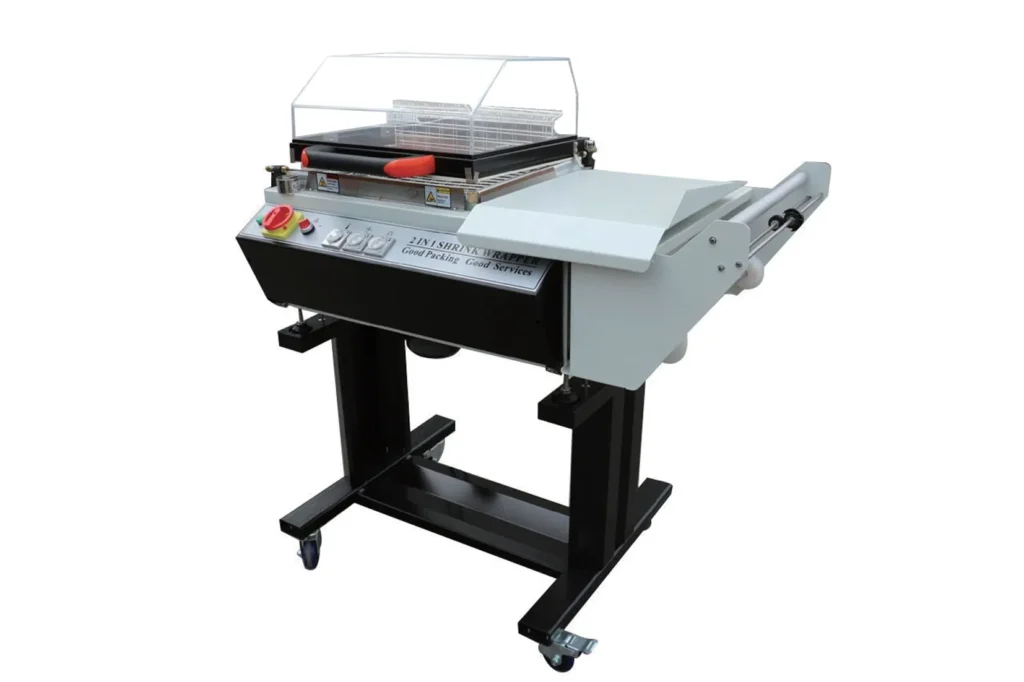
This advantage disappears when products are difficult to load, cycle demand exceeds operator capacity, or maximum items leave too little clearance for film and airflow. Test the smallest and largest products, not only the average SKU. The 2-in-1 chamber shrink wrapping machine shows the combined-process concept.
Choose an L-Bar for Process Separation and Growth
An L-bar creates the seal before the package enters a tunnel. Separating these stages supports conveyor transfer and allows the sealing and shrinking sections to be evaluated independently. Semi-automatic systems retain operator loading; automatic systems can add controlled infeed and product detection.
The longer layout requires more floor space, utilities and transfer control. Confirm that lightweight or unstable products remain positioned as they move from the sealer into the tunnel. A semi-automatic L-bar sealer and tunnel illustrates this two-stage workflow.

Compare the Limiting Product
Measure product length, width, height and weight in the intended orientation. Add the film and operating clearances required by the proposed system. Check:
- Chamber usable space or L-bar sealing envelope.
- Maximum product height under the sealing action.
- Tunnel opening and conveyor support.
- Product stability at transfer points.
- Heat sensitivity and approved exposure.
- Future products near the upper limit.
A nominal opening is not the same as an approved product envelope. Ask the supplier to state the relationship among product dimensions, seal dimensions and tunnel clearance.
Compare Real Output
For a chamber, time a complete operator cycle from picking the product to removing the accepted pack. For an L-bar line, measure product presentation, sealing cycle, tunnel spacing, residence time, cooling and discharge. The lowest stage capacity sets the line rate.
An L-bar creates more room for automation, but it is not automatically faster for every SKU. Short runs, frequent film changes and unstable products can favor the simpler chamber workflow.
Decide with Two Trial Conditions
Run the proposed system with both the most frequent SKU and the limiting SKU. For each run, record operator steps, accepted packs over the agreed observation period, loading and unloading constraints, product condition, seal result and floor-space implications.
Choose the chamber machine when the compact operator-led cycle meets the sustained requirement with usable clearance. Choose the L-bar system when separate sealing and shrinking provide a justified capacity or automation path and the site can support the longer process. If neither trial meets the approved package and rate, reject both configurations rather than selecting from their labels.