With the rapid growth of e-commerce, warehousing, and manufacturing, packaging has become a critical part of business operations. Bagging machines can significantly improve packaging efficiency while ensuring consistent product quality. However, the performance of a bagging machine often depends on the type of bags used. Choosing the right bags is essential for smooth automated packaging. This article provides a comprehensive guide to the types, functions, and selection of bagging machine bags, helping businesses achieve efficient and stable packaging in various scenarios.
Basic Requirements for Bagging Machine Bags
Different types of bags have varying requirements for the machine. Understanding these basics helps companies make informed decisions when selecting bags and bagging machines.
Bag Material
Bagging machines typically support materials such as plastic (PE), paper, and composite bags. Different materials affect feeding, sealing, and load-bearing capacity:
- PE (polyethylene) roll bags / pre-opened bags on a roll: Highly flexible and suitable for high-speed sealing, but sensitive to static electricity. Machines should include anti-static features.
- Paper bags: Eco-friendly and capable of carrying heavier items, but thickness and rigidity require machines with adequate pulling force and bag-opening mechanisms.
- Composite bags: Such as aluminum foil or PO composite bags, offer moisture and oxidation protection, suitable for medical, food, and other high-demand applications. Feeding and sealing temperatures must be precisely matched.
Size and Thickness Compatibility
Bag length, width, and thickness must match the bagging machine’s specifications. Bags that are too thick or too thin may cause feeding issues or poor seals. Manufacturers typically provide recommended bag dimensions, which should be strictly followed.
Bag Opening and Sealing Type
Common sealing methods include heat sealing, cold sealing, compression sealing, and tape sealing. Bag opening types (flat bags, zipper bags, hang-tab bags, or pre-opened bags on a roll) can affect feeding and sealing performance, so selection should consider both the product and end-user experience.
Common Bag Types and Their Functions
Knowing the features and functions of different bags helps companies choose the most suitable option based on product type and packaging requirements.
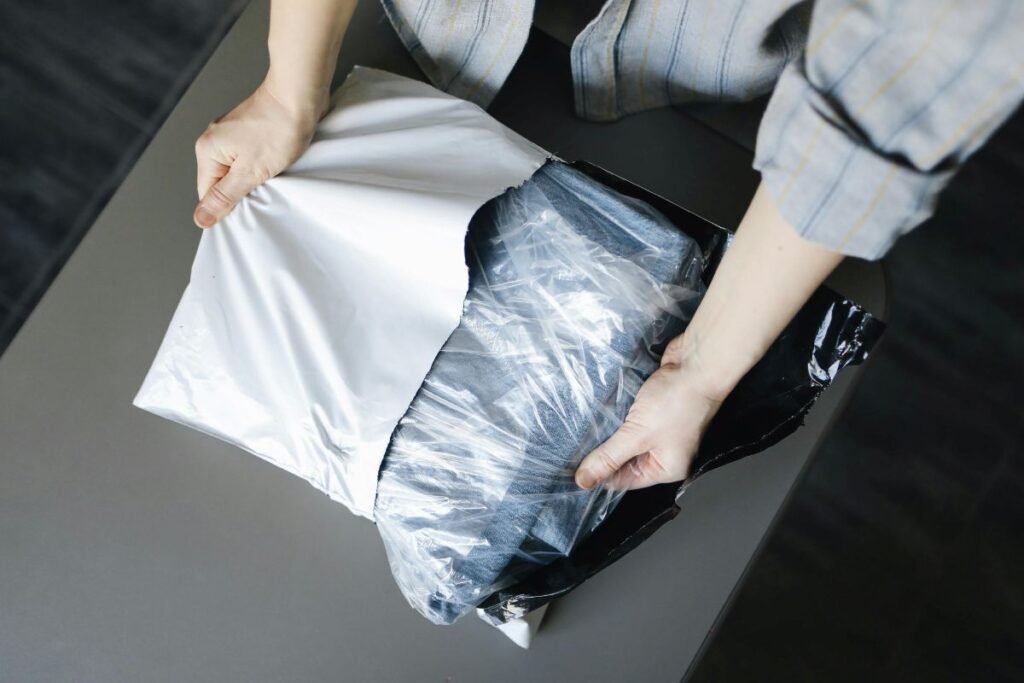
Plastic Roll Bags (PE Roll Bags / Pre-Opened Bags on a Roll)
Features: Flexible, stretchable, suitable for high-speed sealing, adaptable to various product sizes.
Applications: Small e-commerce items, food, accessories, stationery, and other lightweight products.
Advantages: Continuous feed reduces downtime for bag replacement; stable heat sealing; cost-effective.
Resealable / Zipper Bags
Features: Can be opened and closed multiple times, convenient for storage and customer use.
Applications: Retail packaging, samples, electronic components, or small parts.
Advantages: Improves user experience, supports small-batch on-demand packaging, compatible with heat or compression sealing modules on automated bagging machines.
Paper Bags / Kraft Paper Bags
Features: Eco-friendly, load-bearing, suitable for sustainable packaging solutions.
Applications: Food (dry goods, snacks), apparel, electronics.
Advantages: Aligns with green packaging trends; can print brand logos; some bags have a bottom gusset, allowing them to stand upright automatically, which facilitates machine feeding.
Composite Bags (Aluminum Foil / PO Composite)
Features: Moisture-resistant, oxidation-resistant, and anti-static for protecting sensitive products.
Applications: Medical devices, pharmaceuticals, food, and electronics.
Advantages: Extends shelf life and protects delicate products; compatible with automated sealing; suitable for high-end packaging applications.
Specialty Bags (Hang-Tab Bags, Stand-Up Bottom Bags, Biodegradable Bags)
Features: Offer display or eco-friendly functions for niche markets.
Applications: Retail branding, product display, eco-conscious e-commerce.
Advantages: Hang-tab bags allow easy display; stand-up bottom bags automatically stand for convenient packaging; biodegradable bags support sustainability and enhance brand image.
How to Choose the Right Bags
Selecting the right bags not only improves bagging machine efficiency but also reduces machine faults and material waste.
Select Bag Thickness Based on Product Weight and Size
- Lightweight items: Thin PE roll bags or small zipper bags help save material costs.
- Heavy items: Use thicker bags to prevent tearing or deformation.
Match Bag Type with Machine Model and Sealing Method
- Heat-sealing bagging machines: Suitable for PE roll bags or pre-opened bags on a roll, aluminum foil composite bags, and other heat-sealable materials.
- Compression/tape-sealing machines: Suitable for paper bags, composite bags, or special sealing requirements.
Consider User Experience and Application Scenario
- Is resealing needed (zipper bags)?
- Is display or upright positioning needed (hang-tab or stand-up bottom bags)?
- Is eco-friendliness or biodegradability a priority?
Evaluate Cost and Supplier Availability
Bag selection should not only ensure machine compatibility but also consider batch cost and supplier reliability to guarantee stable long-term production.
How Bag Selection Affects Machine Efficiency
The type of bag used directly impacts machine speed, production stability, and packaging quality.
Bag Material and Feeding Speed
- Flexible PE roll bags or pre-opened bags on a roll support high-speed feeding, reducing jams.
- Rigid paper or composite bags may require slower feeding to avoid misfeeds or bag collapse.
Mismatched Bag Dimensions Cause Faults and Waste
- Bags that are too wide or narrow may fail to open correctly, lowering line efficiency.
- Improper thickness may result in weak seals, increasing rework costs.
Optimizing Bag Choice Improves Automation Stability
- Match bags to product characteristics and machine specifications to reduce manual intervention.
- Regularly test different suppliers’ bags to ensure consistent packaging performance.
Conclusion and Recommendations
Choosing the right bags is key to maximizing bagging machine efficiency. When selecting bags, businesses should follow these principles:
- Material Compatibility: Select PE, paper, or composite bags according to product requirements.
- Size and Thickness: Strictly follow machine specifications.
- Functional Needs: Consider resealability, stand-up capability, or eco-friendliness.
- Cost and Supply: Ensure reasonable costs and stable supply.
Companies can conduct small-batch trial runs or test samples with suppliers to verify machine compatibility, quickly finding the best solution for efficient and stable automated packaging. With nearly 20 years of experience in the packaging industry, we offer reliable pre-opened bags on a roll from trusted factories. If you still have questions, feel free to contact us.
FAQ
Q1: Can bagging machines handle multiple bag materials?
A1: Most machines can work with PE roll bags, paper bags, and some composite materials, but compatibility depends on machine specifications, feeding method, and sealing module.
Q2: Does using bags that are too thin affect sealing?
A2: Yes, thin bags may result in weak seals, especially at high speeds, increasing the chance of tearing or leakage.
Q3: Are biodegradable bags suitable for high-speed bagging machines?
A3: Some biodegradable bags may develop static or jam at high-speed feeding; machine parameters or specialized bags may be required.
Q4: How can I verify if a bag’s size fits the machine?
A4: Refer to the manufacturer’s recommended bag dimensions and perform small-batch test runs to ensure smooth feeding and sealing.
Q5: Will zipper bags affect packaging speed?
A5: Zipper bags are slightly thicker and may reduce high-speed sealing efficiency, but they enhance customer experience and are ideal for small-batch or premium products.