A cardboard shredder is the stronger option when a site has a reliable supply of suitable corrugated board, repeatable demand for wrapping or void fill, and enough labor, space, and process control to convert and use the material consistently. Buying void fill is the better fit when demand is low or unpredictable, cleanliness and presentation must be tightly controlled, or the pack requires specialized protective performance.
The decision should compare three routes: purchased void fill, on-site cardboard conversion, and hybrid use. Neither route is automatically cheaper or more sustainable. The result depends on the packaging function, available cardboard, installed equipment cost, labor, storage, package performance, supply continuity, and end-of-life conditions.
Start by confirming that the materials being compared perform the same packaging task. A lower-cost material is not a saving if it increases packing time, fails to control product movement, creates unacceptable debris, or contributes to damage and rework.
Cardboard Shredder vs Buying Void Fill at a Glance
| Decision factor | Purchased void fill | On-site cardboard conversion | Hybrid use |
|---|---|---|---|
| Initial investment | Usually lower | Equipment, delivery and site preparation | Equipment plus backup inventory |
| Material source | External supplier | Suitable incoming corrugated cardboard | Both sources |
| Recurring costs | Material, freight, handling and storage | Labor, energy, maintenance and testing | Conversion costs plus selected purchases |
| Output consistency | Standardized purchased material | Depends on cardboard and process control | Purchased material retained where needed |
| Supply continuity | Depends on supplier and inventory | Depends on usable cardboard and machine availability | Two available material routes |
| Best fit | Low or variable demand; specialized requirements | Reliable cardboard supply and repeatable packouts | Mixed products, seasonal demand or continuity needs |
| Main risk | Continuing material and inventory cost | Feedstock variation, labor and equipment downtime | More than one process to manage |
This table is a screening tool, not a financial conclusion. A site should verify each cost and performance assumption with its own purchasing records, workflow observations and representative packouts.
Compare the Three Packaging Routes
Purchased Void Fill
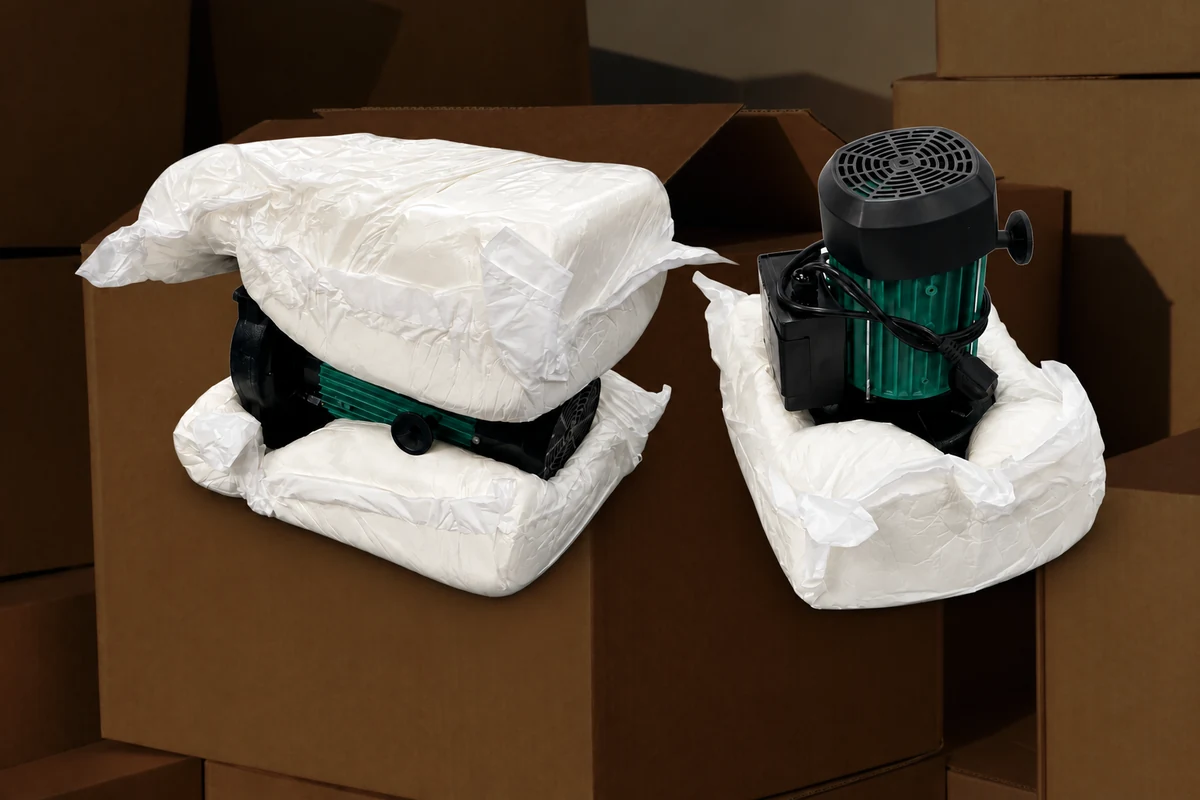
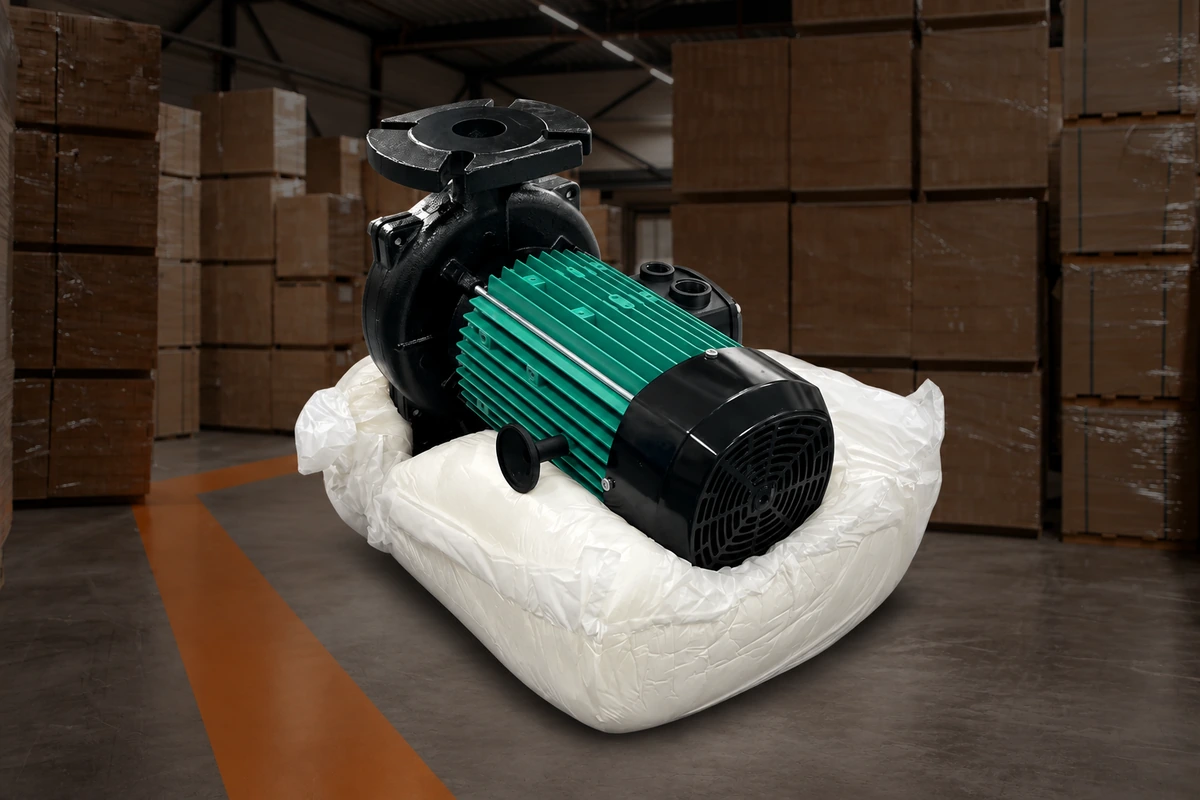
Purchased void fill includes kraft paper, paper cushioning, air pillows, bubble materials, foam products and other protective formats supplied to the facility.
This route separates packaging demand from the site’s cardboard waste stream. The operation orders a defined material, receives it as inventory and replenishes it at the packing area. That simplicity is valuable when packaging demand is intermittent, incoming cardboard is unsuitable or inconsistent, or a product requires a specific protective material.
Purchased materials can also provide more controlled dimensions, cleanliness and presentation. However, those benefits come with continuing material, delivery, receiving, inventory and storage costs. The operation must also manage shortages, price changes, minimum order quantities and lead times.
Purchased void fill is not one uniform category. Paper, air and foam systems perform different packaging functions. Compare a cardboard shredder only with the material that currently performs the same wrapping, layering, separation or void-fill task.
On-Site Cardboard Conversion
A packaging cardboard shredder converts suitable corrugated cardboard into material that can be evaluated for wrapping, layering, separation or filling open space.
This route connects two material flows within the same facility: incoming corrugated cardboard and outbound protective packaging demand. It can reduce purchases when enough usable cardboard is available at the right time and the converted output is approved for the intended packout.
On-site conversion adds its own workflow. Cardboard has to be collected, inspected, prepared, converted, moved to the packing point and placed consistently. The operation also needs appropriate equipment capacity, electrical supply, operating space, maintenance access, trained personnel and a plan for material that cannot be processed or reused.
The machine output is not automatically a replacement for every protective material. Compatibility depends on the cardboard, output type, product, carton, packing method and distribution environment.
Hybrid Use
A hybrid process uses converted cardboard for approved packaging tasks while retaining purchased material for other products or operating conditions.
For example, a site might use converted cardboard for selected wrapping, layering or void-fill applications while keeping purchased material for presentation-sensitive products, clean-room requirements, highly fragile items, customer-mandated packaging or peak periods.
Hybrid use can also provide continuity during maintenance, changes in cardboard supply or seasonal demand. Its disadvantage is that the operation must control two material systems instead of one. Purchasing rules, pack instructions and workstations should clearly identify which route applies to each product or packout.
Build a Complete Cost Comparison
A useful comparison includes every cost that changes when the packaging route changes. It should not treat all current spending as an avoidable saving or assume that existing labor and floor space are free.
Purchased-Material Costs
The purchased route can include:
- Void-fill material and supplier packaging.
- Freight, delivery charges and applicable duties.
- Receiving, inspection and internal movement.
- Inventory administration and replenishment.
- Storage space that has a real operational or capacity cost.
- Material left over after product or packaging changes.
- Emergency purchases, expedited freight or production disruption caused by shortages.
- Disposal or recycling of used packaging material.
- Damage, returns and repacking attributable to the completed pack.
Use invoices and receiving records rather than catalogue prices. The delivered cost can differ significantly from the quoted unit price once freight, order quantities and handling are included.
On-Site Conversion Costs
The on-site route can include:
- Machine purchase price.
- Freight, duties, delivery and installation.
- Electrical work, workbench changes or other site preparation.
- Training and commissioning.
- Cardboard collection, sorting and preparation labor.
- Machine feeding, output collection and movement to packing stations.
- Electricity.
- Routine maintenance, service and replacement parts.
- Package trials, testing and documentation.
- Backup packaging material.
- Downtime and the labor or disruption it creates.
- Disposal or recycling of rejected cardboard and unused output.
- Damage, returns and repacking attributable to the completed pack.
Compare the exact quoted machine configuration. Feed width, permitted cardboard, output type, duty pattern, power requirements and service arrangements vary by model. The current SelectPack cardboard shredder range can be reviewed after the site has defined its material and workflow requirements.
Costs That Are Often Overstated or Missed
Three accounting mistakes frequently distort the result.
First, existing labor is not automatically free. Measure the time spent collecting, inspecting, preparing, converting and moving cardboard. Determine whether that work fits within available capacity or creates overtime, added staffing or displacement of another task.
Second, warehouse space becomes a saving only when the change releases usable capacity or avoids a real expansion or storage cost. Replacing one storage area with equipment, cardboard staging and output staging does not eliminate the entire original space cost.
Third, avoided material purchases should include only the volume that converted cardboard actually replaces. Keep purchased material used for specialized products, peak demand, backup or failed packouts in the cost model.
A practical comparison can use the following structure:
Purchased route cost
Purchased material + delivery + receiving and handling + storage + disposal + attributable disruption and damage costs
On-site conversion cost
Annualized installed equipment cost + labor + electricity + maintenance + testing + backup material + residual disposal + attributable downtime and damage costs
Hybrid route cost
On-site conversion cost + the purchased material and inventory that remain necessary
Compare the routes per accepted shipment or per defined group of accepted shipments. Using finished, acceptable packouts as the comparison unit prevents a low material price from hiding additional labor, rejects or damage.
Check Cardboard Supply Against Packaging Demand
Box count alone is a weak sizing measure. Two facilities processing the same number of cartons can have very different amounts of usable corrugated board because carton dimensions, construction, condition and attachments vary.
Measure the supply that remains after inspection and rejection, not the total cardboard waste generated by the facility.
Record:
- Where the cardboard originates.
- When it becomes available during each shift.
- Board dimensions and construction found in the normal stream.
- Condition changes such as crushing, moisture or contamination.
- Tape, labels, staples, coatings and other attachments observed.
- The proportion accepted or rejected under the machine instructions and site packaging rules.
- Labor required for collection, sorting and preparation.
- Variations between normal and peak operating periods.
Packaging demand should be measured in a compatible unit. Depending on the application, this could be the weight or usable area of material consumed for approved packouts. Record consumption by product group, packing station and shift rather than relying only on a monthly purchasing total.
Then compare supply with demand over time:
- Is suitable cardboard available before the packing operation needs it?
- Does the site have enough material during peak shipping periods?
- Will excess cardboard require temporary storage?
- Will low-supply periods require purchased backup material?
- Can the machine and operator workflow meet peak demand rather than only the daily average?
- Does the required output reach the correct packing stations without excessive handling?
If supply and demand do not align, a hybrid route is often more practical than designing the process around average volume.
Compare Workflow, Labor and Space
Purchased void fill and on-site conversion use different sequences of work.
A purchased-material workflow includes ordering, receiving, storing, replenishing the packing area, using the material and disposing of the used packaging after delivery.
An on-site conversion workflow includes collecting cardboard, inspecting it, preparing permitted input, operating the equipment, collecting the output, moving it to the packing point, completing the pack and diverting rejected material.
Observe the complete process instead of timing only the machine. A quoted cutting speed does not show the labor required to collect, sort, feed, stage and place usable packaging material.
For each route, record:
- Operator minutes per accepted packout.
- Number of material-handling touches.
- Distance between receiving, conversion and packing areas.
- Space used for incoming material, equipment, output and backup stock.
- Work created by material changes, shortages or equipment stops.
- Housekeeping requirements.
- Training, supervision and documentation needed for consistent use.
The preferred route is the one that fits the actual facility flow. Placing a machine far from both the cardboard source and packing stations can erase advantages that appear attractive in a material-only comparison.
Validate Packaging Performance Before Comparing Savings
Converted cardboard should be evaluated with the actual product, carton, packing method and distribution environment. Visual inspection of the output or a successful machine demonstration does not prove transport protection.
Build a representative trial around the products that are candidates for conversion. Include common packouts and legitimate operating boundaries rather than selecting only an easy product.
For each trial, record:
- Product dimensions, weight, fragility and sensitive surfaces.
- Carton dimensions and empty space.
- Cardboard source and condition.
- Machine model, configuration and output type.
- Amount and placement of converted material.
- Packing time and operator steps.
- Product movement inside the closed carton.
- Cleanliness, debris, presentation and unpacking observations.
- Package weight and closure condition.
- Damage, deformation or other acceptance results.
- Conditions that require purchased material instead.
Define pass-and-fail criteria before reviewing the results. “Looks good” or “provides strong protection” is not an acceptance standard.
Where transport testing is required, select the procedure according to the product, package and distribution system. ISTA states that packaged-product tests should be repeated when a change in the product, package or process could affect performance. Replacing the interior packaging material is therefore a change that should be evaluated rather than assumed equivalent. See ISTA’s packaged-product retesting guidance and use the applicable customer, carrier or regulatory requirements.
A controlled machine trial can confirm input handling and output characteristics. SelectPack’s cardboard shredder demo and sample test checklist explains how to document representative samples, operating observations and exclusions before equipment approval.
Compare Sustainability Without Assuming the Outcome
Reusing suitable corrugated cardboard can extend its useful life before it enters recycling or disposal. The U.S. EPA’s non-hazardous materials and waste management hierarchy places source reduction and reuse above recycling, while also stating that no single waste-management method is suitable for every material and circumstance.
That hierarchy supports evaluating internal reuse, but it does not establish a fixed carbon reduction for a specific packaging operation.
A credible environmental comparison should use the same packaging function and define a clear boundary. The GHG Protocol Product Standard identifies raw materials, manufacturing, transportation, storage, use and disposal as relevant product life-cycle stages.
For this decision, the boundary can include:
- Production and delivery of purchased void fill.
- Packaging used to ship that material to the facility.
- Collection and transport of used corrugated cardboard.
- Electricity and maintenance associated with on-site conversion.
- Additional labor or handling equipment where relevant to the assessment.
- Recycling or disposal of rejected cardboard and used packaging.
- Material used for backup or specialized packouts.
- Damage, replacement shipments and repacking caused by packaging performance.
- Local recycling acceptance and the actual end-of-life route.
Use site data and supplier information wherever possible. Do not claim a percentage reduction unless the calculation defines the functional unit, geography, energy source, transport distances, material quantities and end-of-life assumptions.
The most useful sustainability metrics are often operational:
- Purchased packaging material avoided.
- Suitable cardboard reused on site.
- Cardboard rejected from the reuse process.
- Electricity used for conversion.
- Remaining purchased backup material.
- Packaging weight per accepted shipment.
- Damage and reshipment results.
- Final recycling or disposal route.
These measurements show whether the new process changes material use without relying on a broad “paper is always better” claim.
Which Route Fits Your Operation?
Choose Purchased Void Fill When
Purchased material is the stronger route when:
- Packaging demand is low, intermittent or difficult to predict.
- The site has little suitable corrugated cardboard.
- Incoming cardboard quality or availability changes substantially.
- Products require specialized, validated protective materials.
- Cleanliness, appearance or customer packaging specifications are tightly controlled.
- The facility cannot support the required equipment, labor or staging space.
- Supplier inventory provides better continuity than the available cardboard stream.
- The operation is not ready to control and document another material process.
Choose On-Site Cardboard Conversion When
On-site conversion deserves further evaluation when:
- The facility has a reliable supply of cardboard permitted by the proposed machine and site rules.
- Converted material has a clearly defined packaging task.
- Representative packouts meet the operation’s acceptance criteria.
- Cardboard availability and packaging demand align during normal and peak periods.
- The site has suitable power, operating space, material flow and maintenance access.
- Labor requirements have been observed and included in the cost comparison.
- Backup plans cover equipment downtime and cardboard shortages.
- Measured avoidable costs are sufficient to justify the installed and operating cost.
Choose a Hybrid Process When
A hybrid route is appropriate when:
- Only part of the product range suits converted cardboard.
- Packaging demand or cardboard supply is seasonal.
- Fragile, clean or presentation-sensitive products still require purchased material.
- Customer requirements differ by account or destination.
- Purchased material is needed for continuity during maintenance or peak demand.
- The operation wants to validate one product group before expanding the process.
A hybrid route is not a failed compromise. It can provide a controlled way to reduce selected purchases without forcing one material into every packout.
Data to Collect Before Requesting a Recommendation
Before asking a supplier to recommend a cardboard shredder, prepare the following information:
Cardboard supply
- Representative cardboard samples.
- Source departments and availability by shift.
- Measured dimensions, construction and condition.
- Attachments, coatings or contamination observed.
- Estimated usable and rejected quantities.
- Normal and peak supply patterns.
Packaging demand
- Current void-fill material and delivered cost.
- Consumption by product group or packing station.
- Normal and peak demand.
- Required packaging tasks: wrapping, layering, separation or void fill.
- Purchased materials that must remain in the process.
Products and packouts
- Product and carton dimensions.
- Product weight and sensitive surfaces.
- Empty-space pattern inside the carton.
- Current packing instructions.
- Damage, movement, cleanliness and presentation criteria.
- Customer, carrier or test requirements.
Site and workflow
- Available power and site constraints.
- Proposed equipment and staging location.
- Distance from cardboard collection to packing stations.
- Available operators and shifts.
- Maintenance and service expectations.
- Backup-material and downtime plan.
Commercial comparison
- Delivered equipment quotation.
- Installation, training and site-preparation costs.
- Labor and energy assumptions.
- Maintenance and replacement-parts assumptions.
- Testing and approval costs.
- Review period and financial method used by the business.
Conclusion
The cardboard shredder vs buying void fill decision cannot be made from shipment count, machine price or material price alone.
Purchased void fill offers controlled supply and standardized material with limited equipment investment. On-site cardboard conversion connects a suitable cardboard stream with recurring packaging demand, but it adds equipment, labor, process-control and validation requirements. Hybrid use keeps purchased material where it provides necessary performance or continuity while using converted cardboard for approved packouts.
Compare the three routes using the same packaging function, complete cost boundaries and accepted package performance. Measure usable cardboard, peak demand, operator work, space, backup requirements and end-of-life conditions. The preferred route is the one that produces an acceptable pack consistently at a verified total cost and within the facility’s operating constraints.
To evaluate a specific operation, contact SelectPack with representative cardboard samples, packaging-demand data, product and carton information, site constraints and the intended packing task. The team can then review whether a cardboard shredder, continued purchasing or a hybrid workflow is the appropriate next step.