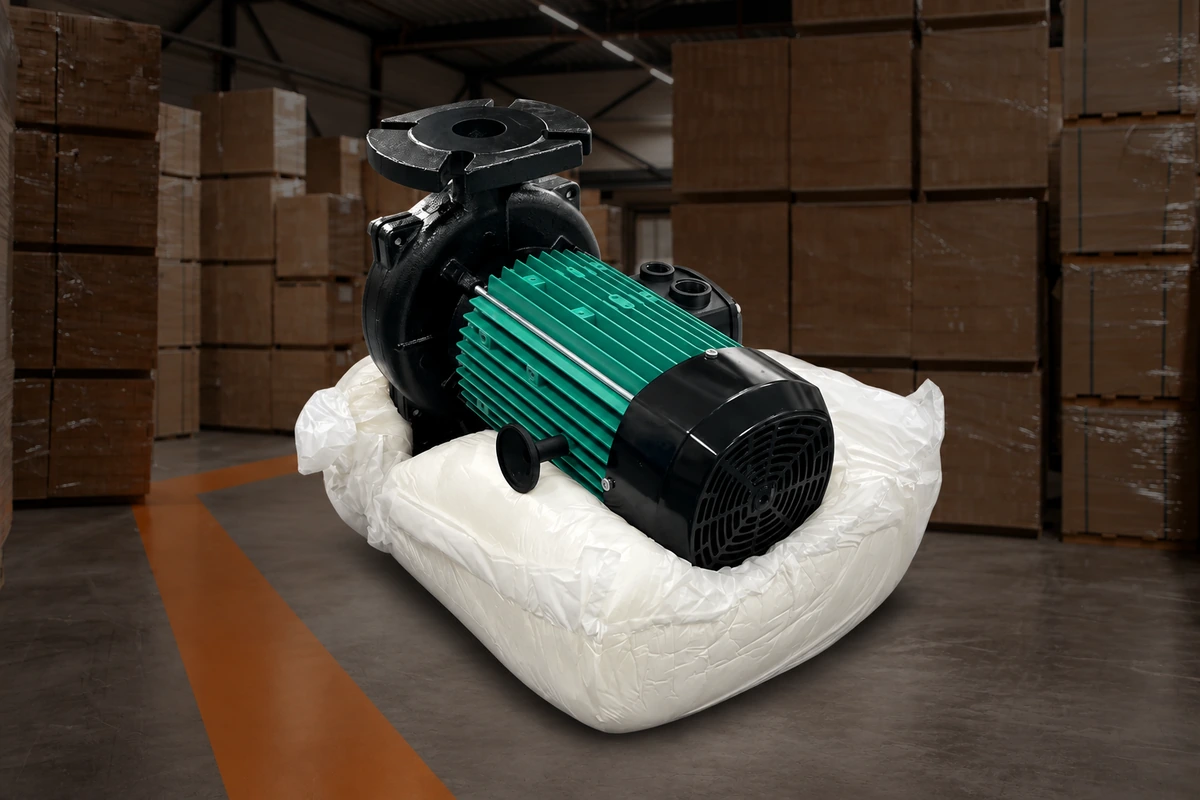
An industrial operation should place a cardboard shredder where the total material flow is easiest to control. A point-of-use setup works when suitable cartons arise near one packing station and the converted material is consumed there. A centralized setup works when several warehouse zones can send accepted cardboard to one controlled processing point and receive converted material through a reliable replenishment route.
Neither layout is automatically more efficient. A tabletop machine beside every bench can create duplicated inspection and maintenance work, while one central machine can create long carries, queues, and oversized output buffers. The right workflow minimizes handling without starving packers or turning cardboard preparation into a competing job.
Choose the workflow first, then confirm the machine. The broader cardboard shredder guide for businesses covers output types, material limits, sizing, installation, cost, and testing. This article stays focused on the warehouse decision between local conversion, central conversion, and a controlled hybrid.
Map the Material Flow Before Comparing Machines
Walk the actual route taken by used cartons and packing material. Record facts from a representative shift and from the busiest realistic period:
- where suitable cardboard becomes available;
- where operators inspect, flatten, and stage it;
- how far it travels before conversion;
- which packing stations consume the output;
- how long cardboard or converted material waits;
- who owns processing, housekeeping, and replenishment; and
- what happens to rejected or excess cardboard.
Do not substitute shipment count or total waste volume for this map. A large warehouse can have one compact, stable material stream, while a smaller operation can have several separated stations and difficult peaks. The decision depends on usable cardboard, approved packaging demand, travel, preparation work, and the time window in which output is required.
Point-of-Use Conversion at a Packing Station
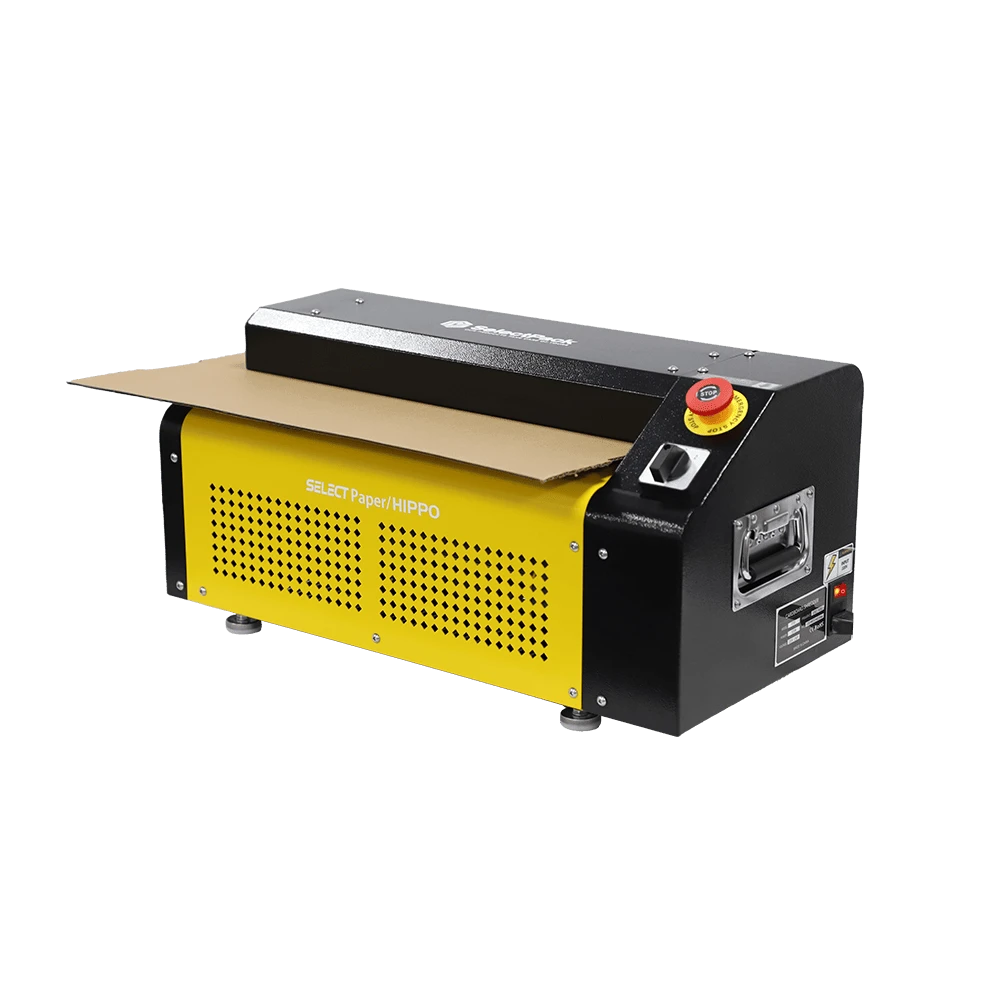
Desktop Cardboard Shredder Hippo P10
Turn small cartons into high-quality void fill—right at your packing bench. The SelectPaper/Hippo P10 is a space-saving cardboard perforator ideal for e-commerce studios, small warehouses, and dispatch counters. With a 350 mm feed width and quiet, plug-and-play design, it’s your entry point to sustainable in-house packaging.

Heavy-duty Cardboard Shredder HippoPlus P50
A compact yet powerful industrial cardboard shredder for packaging stations that demand speed and reliability. With a cutting speed of 18 m/min and 15 mm material capacity, the SelectPaper/HippoPlus P50 is built for continuous operation in dispatch centers and production environments. It turns bulky cartons into clean-cut cushioning in seconds—without clogging or overheating.
A point-of-use workflow keeps conversion close to the packer:
- Suitable cartons arrive near the station or in a small local collection point.
- The assigned operator checks and prepares the material according to the exact model instructions.
- Cardboard is converted as needed or in short planned batches.
- The output moves directly into an identified packing task or a small controlled buffer.
- Rejected material leaves through the site’s normal recycling or waste route.
This layout is worth evaluating when one station or work cell generates and consumes most of the material, local demand is individually manageable, and the operator can process cardboard without repeatedly interrupting outbound packing.
Reconsider it when several stations require separate machines, normal cartons need repeated pre-sizing, the operator must choose between packing and processing, or local output accumulates in walkways and work areas. Adding machines may shorten material travel, but it also creates additional installation, training, inspection, cleaning, and service points.
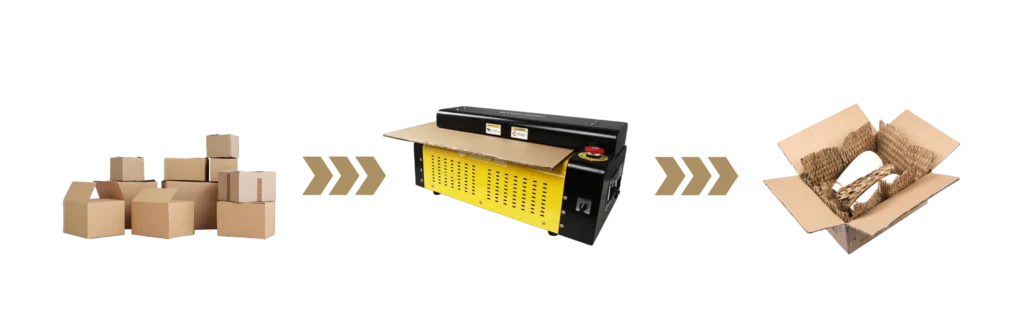
Centralized Conversion for Multiple Warehouse Zones
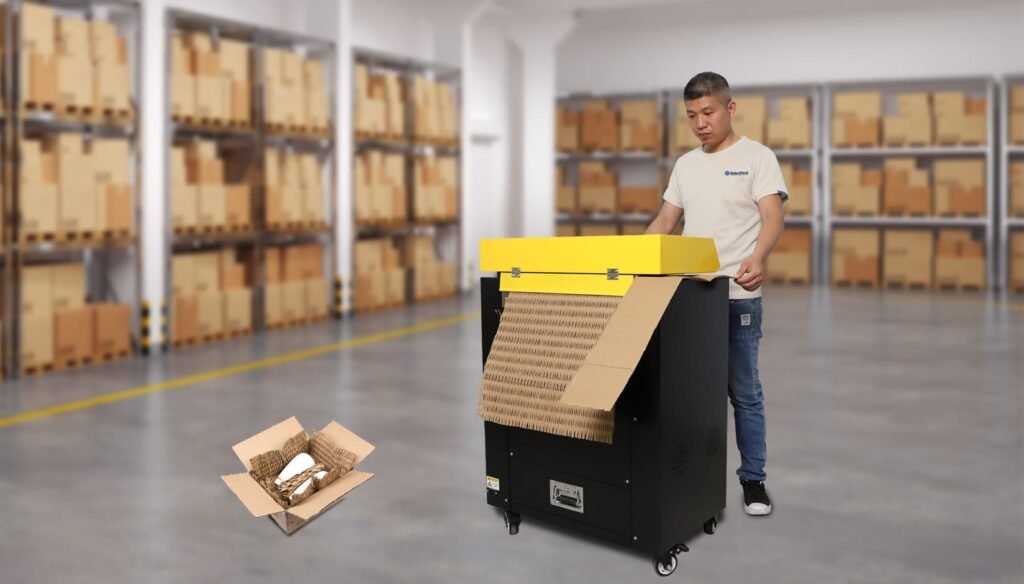
A centralized workflow separates conversion from individual packing benches:
- Receiving, unpacking, or production zones separate candidate corrugated board at the source.
- Material moves to one controlled acceptance and preparation area.
- An assigned operator processes approved cardboard on a defined schedule or against a replenishment signal.
- Converted material enters a labeled output buffer.
- A route, handler, or point-of-use container supplies the packing stations that are approved to use it.
This layout is worth evaluating when cardboard arrives from several nearby sources, one team can own input quality, and the output can reach multiple packing stations without excessive travel or waiting. Central control can also simplify training and maintenance ownership because fewer machines are involved.
Centralization is a poor fit when the collection route crosses busy traffic, flattened cartons require repeated long carries, output containers are bulky or difficult to replenish, or packers repeatedly wait for material. A faster machine does not repair an unreliable collection and distribution system.
The official HippoPlus operating video can help a project team visualize feeding and discharge. It is not evidence of site throughput, duty cycle, labor requirement, or packaged-product performance.
Compare Point-of-Use, Centralized, and Hybrid Layouts
| Decision factor | Point-of-use | Centralized | Hybrid |
|---|---|---|---|
| Cardboard source | Near one station | Several collection zones | Local plus shared sources |
| Processing pattern | As needed or short batches | Scheduled or signal-based | Local top-up plus central supply |
| Material travel | Low locally | Higher before and after conversion | Assigned by material stream |
| Process ownership | Each work cell | One trained team | Split ownership must be explicit |
| Buffer requirement | Small local buffer | Input and output buffers | Central buffer plus local limits |
| Main failure mode | Packer interruption | Queue or replenishment delay | Unclear routing and responsibility |
A hybrid layout can use local conversion for predictable station-level needs and a central point for shared demand, peaks, or larger cartons. It only works when material streams, ownership, and replenishment rules are explicit. Otherwise, the site pays for both systems while still moving material unpredictably.
Map Current SelectPack Models to the Workflow
SelectPack’s current product-page specification tables were checked on 3 August 2026. The values below replace the former 325, 425, 500, HippoPlus 100, and HippoPlus 200 naming used in the old article.
| Current model name | Form | Current published specification |
|---|---|---|
| Desktop Cardboard Shredder Hippo P10 | Desktop | 350 mm feed; 10 mm board; 5 m/min; 370 W; AC 110/220 V |
| Desktop Cardboard Perforator Hippo P20 | Desktop | 450 mm feed; 10 mm board; 5 m/min; 370 W; AC 110/220 V |
| Tabletop Cardboard Converter Hippo P30 | Tabletop | 550 mm feed; 10 mm board; 5 m/min; 400 W; AC 110/220 V |
| Heavy-duty Cardboard Shredder HippoPlus P50 | Floor-standing | 550 mm feed; 15 mm board; 18 m/min; 1,500 W; 110/220/380 V |
| Heavy-duty Cardboard Shredder HippoPlus P80 | Floor-standing | 550 mm feed; 20 mm board; 12 m/min; 2,200 W; 110/220/380 V |
The P10, P20, and P30 are desktop or tabletop starting points for a local conversion study. The HippoPlus P50 and P80 are floor-standing starting points for a centralized or otherwise concentrated processing study. These are routing cues, not workload guarantees.
Do not arrange the models as a simple ladder in which the larger number is always faster. The current P50 specification table publishes 18 m/min, while the P80 table publishes 12 m/min and a higher maximum cardboard thickness and motor power. Linear cutting speed also excludes inspection, flattening, pre-sizing, feeding, interruptions, collection, and replenishment. Confirm the current order-specific data sheet, electrical configuration, input limits, output type, operating pattern, dimensions, weight, and service requirements before purchase.
Control Buffers, Replenishment, and Ownership
The machine should not become an uncontrolled destination for every box in the building. Define five controls before approving the workflow:
- Input acceptance. State which corrugated board is accepted, held for review, or rejected under the exact model instructions and site rules.
- Input buffer. Mark a maximum quantity and location that do not obstruct access, traffic, controls, or housekeeping.
- Processing trigger. Use a schedule, visible minimum level, or replenishment signal based on observed demand.
- Output buffer. Identify the container, maximum level, approved uses, and stations served.
- Ownership and escalation. Name the roles responsible for preparation, normal operation, cleaning, inspection, replenishment, and service escalation.
Measure the full cycle during a representative peak: collect, inspect, prepare, convert, collect output, replenish the packer, and clear rejected material. This observed cycle reveals whether the proposed layout reduces handling or merely moves it to another department.
Choose the Workflow Before Requesting a Model
Approve a point-of-use layout when local supply and demand stay aligned without persistent interruption or excess buffering. Approve a centralized layout when one controlled point can process material from several sources and keep packers supplied through a practical route. Use a hybrid only when the site can state exactly which material and demand belong to each path.
Before requesting a recommendation, provide representative cardboard samples, recurring panel dimensions and thickness, desired output, source locations, packing-station locations, peak observations, proposed buffers, electrical supply, and a simple layout. Ask the supplier to confirm the exact model, input limits, operating conditions, site requirements, and support scope in writing.
Review the current SelectPack cardboard shredder range after the workflow has been mapped. The right model should support the chosen material route, not force the warehouse to reorganize around an untested specification table.