A safe cardboard shredder maintenance schedule must come from the operating and service documents for the exact model and serial configuration. There is no reliable universal interval for lubrication, cutter inspection, bearing work, alignment, electrical checks, or component replacement. If the approved manual does not assign a task, method, interval, and authorized role, the facility should obtain written guidance from the supplier before adding that task to its schedule.
Daily and weekly entries can still support record control without inventing service instructions. In this framework, those labels describe when operating-condition records are captured and when the register is reviewed; they are not universal preventive-maintenance intervals. Internal work, guard removal, cutter or blade access, electrical work, lubrication, adjustments, and maintenance-related jam clearing remain manual-defined tasks for personnel who are qualified and authorized for that equipment.
This framework helps a buyer build ownership and cadence around accurate source documents. It starts where normal operator work ends: a condition has been reported, a manual-defined task is due, or qualified technical review is required. It does not teach operation or troubleshooting, and it does not replace the machine manual, the employer’s safety program, applicable regulations, or instructions from an authorized service provider.
If the equipment configuration has not yet been selected, use the cardboard shredder guide to define the packaging application and operating context before building a model-specific maintenance register.
A Maintenance Schedule Is a Controlled Register, Not a Generic Task List
A list copied from another shredder can create two failures. It may omit a task required for the installed model, or it may direct an employee to perform work that the manufacturer never assigned to that role. Even two machines with a similar feed opening can have different drive systems, cutters, guards, controls, service access, and energy sources. Operator qualification, normal-task limits, and stop-and-escalate decisions belong in a separate cardboard shredder operator training checklist; the maintenance register receives the resulting status or work request without redefining the operator’s authority.
Build one controlled register for each machine. Tie it to the model, serial number, manual revision, and any approved service bulletin. If several identical machines share one master schedule, record configuration differences and service history separately.
The register should answer five questions for every task:
- What exact source authorizes the task?
- What triggers it: calendar time, operating hours, cycles, condition, or an event?
- Which role is authorized to perform it?
- What energy-control and access conditions apply?
- What result proves the task is complete and the machine is ready for release?
If any answer is missing, record it as an information gap rather than filling it with a common interval found online.
Build a Cardboard Shredder Maintenance Schedule From an Evidence Hierarchy
Use sources in a defined order so that a local checklist does not override the manufacturer or the law.
| Source | Extract | Do not assume |
|---|---|---|
| Exact model operating manual | Normal observations, housekeeping, controls, warnings, and stop conditions | Other models use the same instructions |
| Exact model service manual or approved instruction | Task, interval, access, criteria, parts, and qualifications | Operators may perform technician work |
| Manufacturer or supplier bulletin | Serial-specific revisions and corrective actions | Other serial ranges are covered |
| Site safety and energy-control program | Roles, isolation, notification, verification, and release | Control-panel shutdown equals energy isolation |
| Applicable regulations and standards | Minimum guarding, hazardous-energy, training, and inspection duties | A machine-specific maintenance method |
| Site maintenance history | Symptoms, completed work, downtime, and parts traceability | A new interval without manufacturer review |
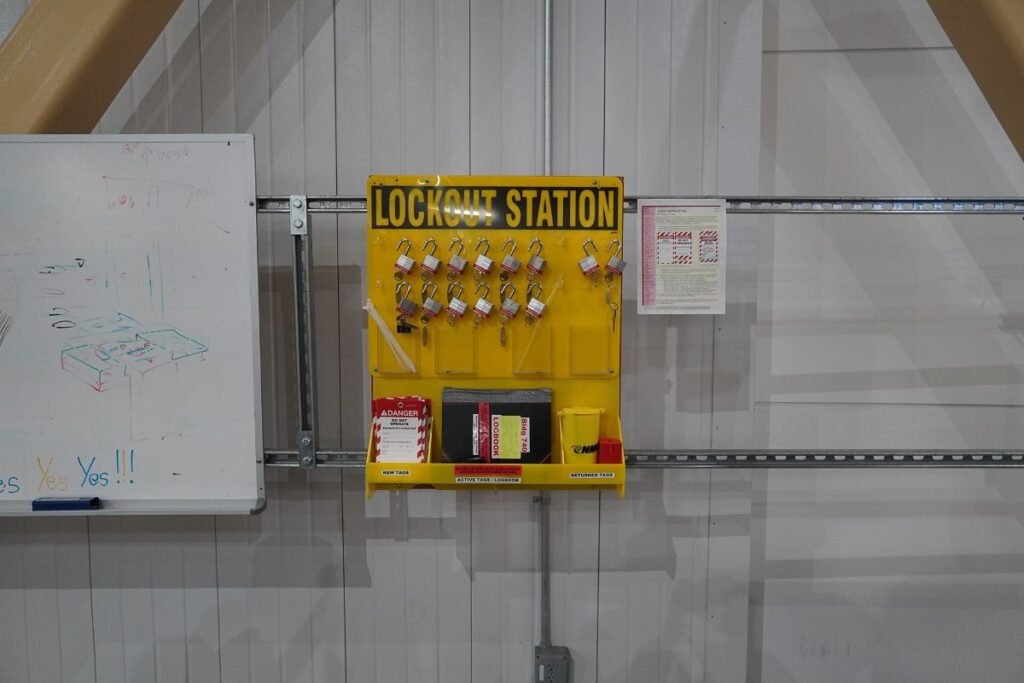
For U.S. general-industry workplaces, OSHA’s Control of Hazardous Energy standard applies when servicing or maintenance exposes employees to unexpected energization, startup, or stored-energy release. The site’s qualified safety owner must determine and control that work. This article does not define a machine-specific isolation procedure, and other locations or sectors may apply different requirements.
Control Maintenance Status, Not Just Frequency
Each maintenance-related event should enter the register with a status, owner, source, and next action. This prevents an observation, a scheduled service task, and a technical diagnosis from being treated as the same type of work.
| Record type | Control required | Closure evidence |
|---|---|---|
| Operating-condition observation | Asset, time, input context, status, and notification | Reviewed disposition or linked work order |
| Scheduled preventive service | Source, trigger, due date, provider, access, and criteria | Signed record, findings, parts or materials, and next due trigger |
| Condition-triggered inspection | Triggering event, equipment status, and technical owner | Authorized finding and disposition |
| Overdue or deferred task | Reason, risk review, approver, controls, and revised due date | Completed task or formal closure under site procedure |
| External service visit | Scope, asset ID, contractor requirements, and deliverables | Service report, open items, recommendations, and handback |
| Return-to-service release | Completed work, required criteria, restrictions, and releasing role | Named approval, date, release basis, and machine status |
OSHA’s general machine-guarding requirements address hazards at points of operation, ingoing nip points, and rotating parts. Register wording should preserve those controls and never turn a record prompt into permission to enter a danger area.
Daily Record Layer: Capture Changes Without Diagnosing Them
The daily layer is a short operating-condition record derived from the exact operator manual and site procedure. It documents the released state and any change seen during approved use; it is not a preventive-service instruction.
Record only fields needed to preserve the maintenance trail:
- asset identity, date, shift, and current status;
- the source checklist or manual revision used;
- the factual condition observed and when it changed;
- the input type or operating event present at that time;
- any existing work-order or service-reference number;
- who was notified and the immediate status assigned; and
- whether follow-up remains open at handover.
Use observable language such as “output appearance changed at 14:20 while processing input lot A.” Do not write “bad bearing,” “dull blade,” or another diagnosis unless the authorized technical record supports it. A condition outside the approved state should follow the site’s equipment-status and notification procedure; the daily form should not tell the recorder how to repair or test the cause.
Input variation belongs in the record because wet, contaminated, oversize, or otherwise incompatible cardboard can be mistaken for an equipment problem. Use the cardboard preparation guide to define a separate input-control process, then record exceptions rather than asking operators to compensate by changing the machine.
At handover, carry forward every open reference and the machine’s current released, restricted, or out-of-service status. Any housekeeping entry must cite the exact permitted method; a generic “clean machine” line must not authorize reaching into the feed path, guard removal, compressed air, chemicals, or enclosure access.
Weekly Register Review: Find Gaps and Overdue Actions
The weekly review is an administrative cadence, not a manufacturer service interval. Its purpose is to reconcile source documents, due dates, work orders, service reports, exceptions, and machine status before gaps become normal practice.
Review the following records together:
- operating-condition observations and status changes;
- repeat inputs associated with poor or inconsistent output;
- open work orders and supplier questions;
- overdue manual-defined service;
- changes in operating pattern or workload;
- status of required manuals and revisions; and
- return-to-service evidence for recently completed work.
The reviewer should look for patterns, not prescribe a mechanical diagnosis. For example, three reports of changing output condition should trigger controlled review by the assigned technical role. It should not trigger an instruction for an operator to adjust cutters.
Document the owner, due date, equipment status, and expected closure evidence for each action. An incomplete work order is not closed merely because the machine is running again; the register must show the approved disposition and release basis.
Manual-Defined and Supplier-Only Layer
Actual preventive maintenance belongs in this layer unless the exact operator manual explicitly assigns a limited task to an operator. The schedule may include headings for the following systems, but the task and interval fields must remain “pending approved source” until documented:
- cutters, blades, shafts, or cutting assemblies;
- bearings, gears, belts, chains, couplings, or drive components;
- motors, wiring, plugs, disconnects, controls, or electrical enclosures;
- guards, covers, interlocks, sensors, and emergency functions;
- lubrication points, lubricant specification, and application method;
- alignment, clearance, tension, torque, or fastener checks;
- internal debris removal or access behind guards;
- wear limits and component replacement criteria; and
- service-related jam clearing or recovery after abnormal events.
Do not convert these headings into instructions. Ask the supplier to identify the authorized role, source document, frequency trigger, isolation requirements, approved parts or materials, acceptance criteria, and documentation expected after service.
When planning a new site, maintenance access and contractor control should be addressed before delivery. The cardboard shredder installation checklist provides a companion framework for service clearance, utilities, documentation, training, and acceptance responsibilities.

Use a Maintenance Register That Can Be Audited
One row per task is more useful than a vague note such as “service weekly.” Recommended fields are:
| Register field | Required entry |
|---|---|
| Asset identity | Model, serial number, location, and configuration |
| Source | Manual title, revision, page, service bulletin, or written supplier instruction |
| Task wording | The approved task description without adding local mechanical steps |
| Trigger | Calendar, operating hours, cycles, condition, or defined event |
| Authorized role | Operator, authorized employee, qualified technician, or named service provider |
| Energy and access control | Reference to the applicable site procedure and manufacturer instruction |
| Completion standard | Observable acceptance criteria from the approved source |
| Record | Date, meter or trigger reading, findings, parts used, person, and evidence |
| Exception route | Stop status, notification path, work order, and supplier escalation |
| Release | Named role, date, and basis for return to service |
Track document revisions as carefully as completed work. If a supplier issues a new instruction, review affected tasks rather than silently replacing the file.
Control Exceptions, Deferrals, and Return to Service
A schedule is incomplete if an overdue task, abnormal condition, or supplier recommendation can remain open without a controlled disposition. Give each exception a reference number, current equipment status, technical owner, decision deadline, and required closure evidence. If the site permits a deferral, record the approved basis, temporary controls, approver, revised due trigger, and review date; absence of parts or service availability is not itself a technical approval to continue operation.
Return to service should close the loop. Link the release to the completed work, the acceptance criteria or tests required by the approved source, any remaining restriction, and the named role permitted to release the asset. Preserve the supplier or technician report with the machine history rather than reducing it to “fixed.”
Request the Maintenance Documentation Pack Before Purchase
Before approving a cardboard shredder, request a documentation pack for the exact quoted configuration: the current operator manual, available service schedule, lubrication table if applicable, wear or replacement criteria, parts-identification method, customer-permitted task boundaries, technician-only tasks, service options, escalation contact, and required service records. Ask which documents are delivered with the machine and which remain controlled by the supplier or authorized service provider.
When reviewing SelectPack’s cardboard shredder and perforator range, use that request to test whether the buyer can populate the register before delivery. The response should identify the source, trigger, authorized service route, completion evidence, and return-to-service documentation for the quoted model without asking the buyer to invent maintenance instructions.
The result should not be a longer maintenance checklist. It should be a shorter, traceable plan in which every task has a source, owner, trigger, safety boundary, completion standard, and escalation route.