Choose reinforced water-activated tape when the carton closure needs a reinforced backing and the specified grade passes the package’s handling requirements. Choose non-reinforced tape when a suitable plain-paper grade provides the required closure without that reinforcement. Box weight alone does not establish which tape is adequate.
Compare the actual tape grades on your carton, using the approved strip width, closure pattern and dispenser. Reinforcement changes the tape structure; it does not correct unsuitable carton surfaces, incomplete adhesive activation or a damaged box.
What changes when water-activated tape is reinforced?
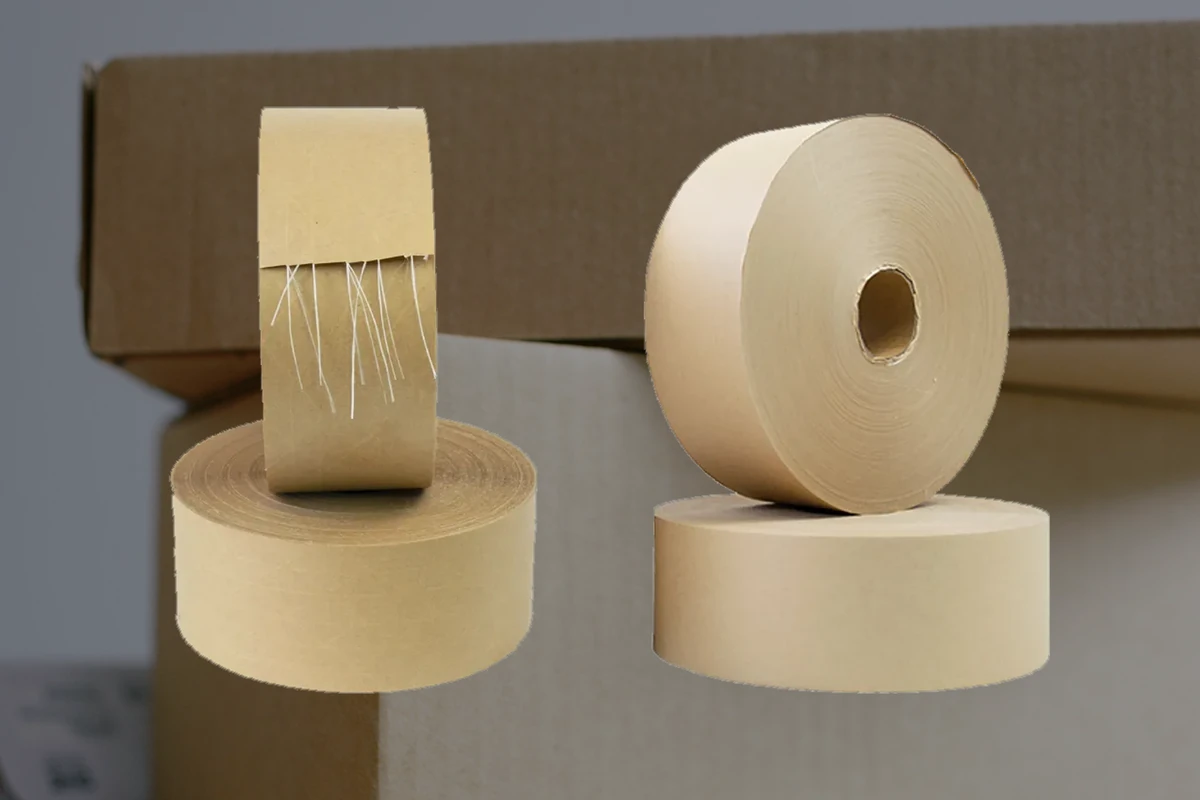
Reinforced water-activated tape contains a reinforcement layer within its paper construction; non-reinforced tape relies on its plain-paper backing. Both require water activation and proper application. The reinforcement specification and the properties of the complete tape determine the relevant performance, not the label alone.
Ask the supplier to identify backing construction, reinforcement material and arrangement, adhesive system, thickness and relevant test properties for the proposed grade. Do not assume every reinforced roll has the same fibers or strength in every direction.
The official abstract for ASTM D5749-24 distinguishes reinforced and plain gummed tapes for fiberboard-box closure and related uses. It also identifies checks for adhesion, tensile strength, elongation, roll construction and dimensions. Those are useful categories for a specification request. The presence of a category in the standard is not proof that a particular tape is certified or that a package passes transport testing.
SelectPack’s reinforced brown gummed paper tape and non-reinforced brown water-activated tape provide the two material routes to discuss. Obtain the current grade specification and sample before treating either route as approved for your carton.
Start with the stress on the closure
The tape decision depends on how the closure is loaded and handled, not simply the mass printed on the shipping label. Record the carton condition, contents and distribution sequence together.
A heavy product that is well supported inside a sound carton presents a different closure task from a lighter product pressing against poorly fitted flaps. A long box, a bulging carton and a box with substantial flap gaps also create different conditions at the seam. Tape selection must accompany a suitable box and packout.
Identify the points that matter for the shipment: lifting and transfers, parcel handling, palletized movement, stacking, storage and any moisture exposure. Use the actual route and customer requirements. Do not convert a general “heavy duty” description into a universal kilogram limit.
| Observed condition | What to evaluate | What reinforcement does not solve |
|---|---|---|
| Tape backing tears during the agreed handling check | Grade properties and reinforcement suitability | A weak or damaged carton |
| Tape releases cleanly from the liner | Adhesive activation, surface and application | Poor bonding at the carton interface |
| Carton flaps push upward | Box fit, contents and closure design | Excess internal pressure from an unsuitable packout |
| Closure performs on one box supplier only | Liner surface and carton specification | Unapproved changes in carton supply |
| Tape feeds or cuts inconsistently | Roll format and machine compatibility | An unsuitable consumable-machine combination |
The table is a way to direct the investigation. A single visible failure is not a complete laboratory diagnosis; retain the sample and compare it with controlled closures before changing the purchase specification.
When is a plain-paper grade worth testing?
Non-reinforced water-activated tape is worth evaluating when the carton, closure pattern and handling requirements do not need the proposed reinforcement. Approval still depends on the actual grade and complete package; plain tape is not defined by a universal “light boxes only” rule.
Build the trial around representative cartons, including the most demanding carton within the intended range. Check that the strip spans the required seam and panel overlap and that the liner accepts the adhesive. Compare closures after the agreed conditioning and handling, rather than selecting from an immediate pull on a freshly applied strip.
If the plain-paper candidate passes every relevant condition, compare its operating fit and consumption with the reinforced candidate. If the plain-paper backing fails while the bonding and carton remain acceptable, evaluate a different grade or reinforced construction. If the adhesive interface fails, increasing backing strength alone does not resolve the problem.
Brown and white appearance belong to the specification when branding or carton presentation matters. Color does not establish tape strength, reinforcement or suitability for a load.
When does reinforced tape merit the extra specification work?
Reinforced tape merits evaluation when the required closure places demands on the backing that a tested plain-paper grade does not meet, or when a customer or package specification expressly requires reinforcement. Choose the specified construction and verify the result on the package.
Request evidence that relates to the proposed grade and test method. A statement that one tape is “stronger” is incomplete without a property, direction and measurement basis. The material’s strength should also be distinguished from adhesion to the carton: a strong strip that releases from the liner is an unsuccessful closure.
Reinforced construction also affects the consumable specification. Confirm that the dispenser accepts the thickness, reinforcement and roll format. Inspect normal feeding and cutting with the actual production roll. Never force a roll through an unapproved machine or treat a short hand-cut sample as proof of dispenser compatibility.
Reinforcement does not authorize fewer strips, reduced seam coverage or a departure from the required package design. Keep the closure pattern fixed during the material comparison unless a revised design is being separately approved.
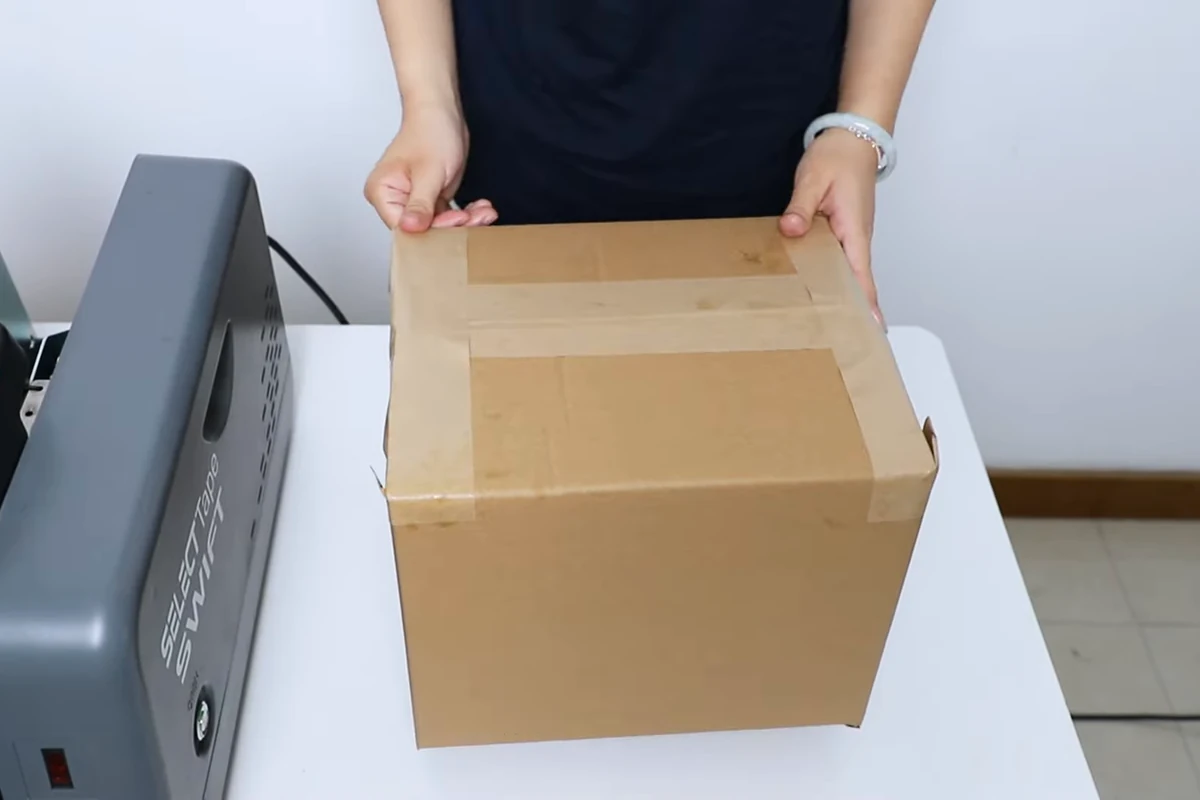
Qualify the tape and dispenser together
Tape approval should include repeatable dispensing and application as well as a satisfactory finished closure. A tape that passes on one carefully prepared box but causes recurring feed or placement problems is not ready for the production station.
Record the tape supplier and grade, roll format, lot, dispenser model and setup. Use the manufacturer’s procedure for activation, loading and permitted adjustments. Include the carton-size changes and replenishment that occur during ordinary work.
The dispenser tape-compatibility guide covers width, full-roll diameter, core format and feed requirements. Confirm those details before ordering a pallet of consumables, especially when replacing a familiar tape with a different reinforced construction.
For package validation, establish acceptance criteria with the person responsible for packaging quality. Include the conditions that the shipment actually encounters and record both passing and failed samples. Hand-peel observations support diagnosis, but they do not supply a universal strength rating or transport guarantee.
Keep the approved grade identifiable at reorder
A repeat order should preserve the material specification that passed the trial. Ordering “brown gummed tape” or “reinforced tape” leaves too many properties open to substitution.
Keep a record of the approved grade, width, thickness, usable roll length, roll dimensions, reinforcement specification and supplier sample reference. Document the carton and dispenser combination for which the approval applies. A change in any of those inputs deserves review rather than an automatic assumption of equivalence.
For branded tape, carry the same material identification into the custom-printed tape order specification. Printing approval and closure approval answer different questions and both should remain traceable.
When requesting samples from SelectPack, provide carton construction, packed weight, contents, closure pattern, handling route and dispenser details. Those inputs support a choice between the available plain and reinforced tape routes without relying on an unsupported weight cutoff.