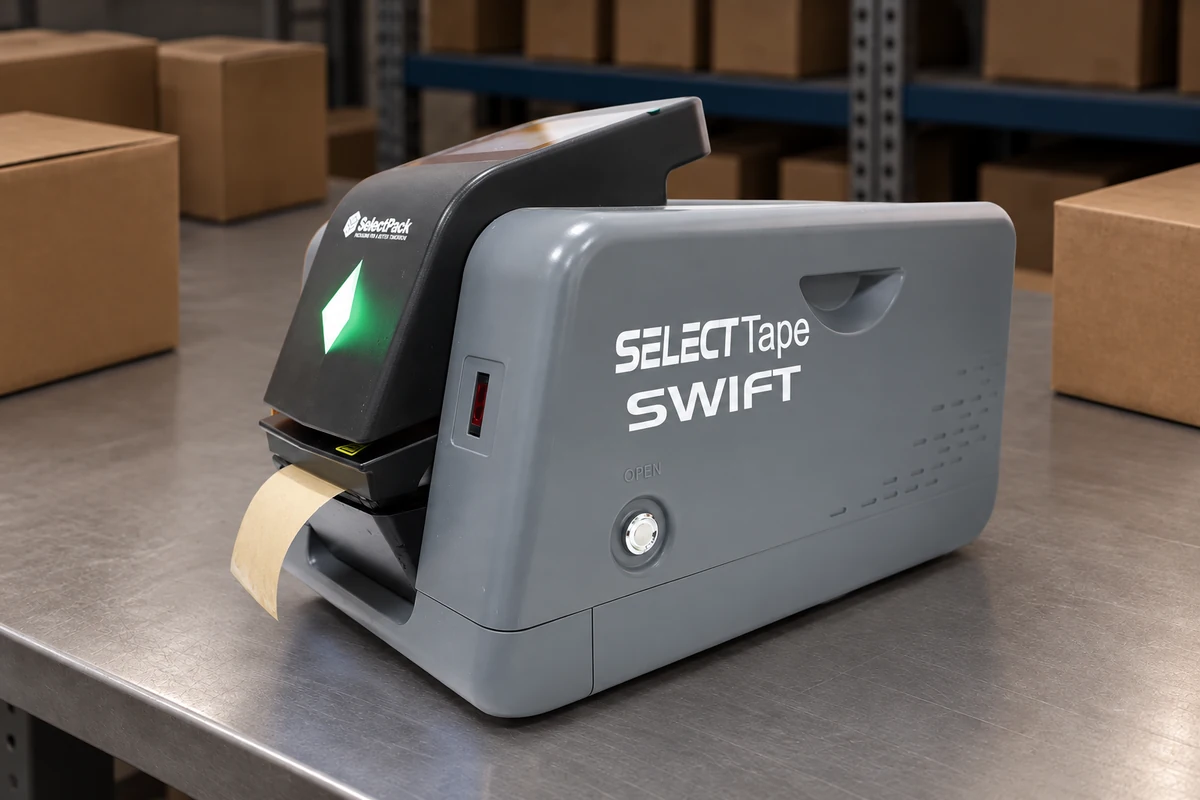
Choose an electric water-activated tape dispenser by matching the carton mix and required tape strips to the machine’s length controls, dispensing sequence and approved roll format. Then test the dispenser at the actual packing station, including the operator’s time to pick up, position and press every strip.
An electric dispenser prepares wetted tape for an operator to apply. It does not close carton flaps, position the tape on the box or replace a carton-sealing line. If automatic application is the requirement, a desktop dispenser alone does not meet the brief.
The useful buying question is therefore: which configuration delivers the right strips in the right order without interrupting the operator? A specification sheet and a short demonstration answer only part of that question.
Start with the cartons and closure pattern
The carton mix determines the required strip lengths and sequence; average order volume alone does not select the dispenser. Record the closure method for each carton family before comparing controls or machine speed.
List the box dimensions, whether the bottom arrives sealed, and which top and bottom seams need tape. Include the required overlap onto adjacent panels. Use the closure pattern approved for the package and shipping route rather than assuming one strip is sufficient for every carton.
Separate repeated box sizes from exceptions. A station sealing one standard carton all day has a different control requirement from a station alternating among several sizes. Very short strips, long cartons and mixed closure patterns belong in the trial, even when those orders represent a small share of volume.
| Station pattern | Selection priority | Demonstration to request |
|---|---|---|
| One carton and repeated strip lengths | Simple repeat dispensing | Run the complete closure sequence repeatedly |
| Several recurring carton sizes | Accessible length presets | Change size without losing the strip sequence |
| Frequent irregular cartons | Clear manual length selection | Produce the shortest and longest required strips |
| Several strips per carton | Suitable trigger and sequencing | Apply every strip before starting the next box |
| Shared equipment between operators | Reach and control access | Test the real positions of both operators |
If the business is still deciding between gummed tape and its existing plastic tape workflow, resolve that choice with a water-activated tape versus pressure-sensitive tape comparison before purchasing equipment around an unapproved material.
Choose controls around the operator’s next action
The best dispensing control is the one that matches when the operator has a hand available and which strip comes next. More buttons or more modes do not automatically make a station easier to run.
A repeated length suits a repeated task. Preset lengths are useful when the operator switches among known carton sizes or strip positions. A sequence of different lengths requires a clear way to select or advance the correct strip without confusing one carton’s program with another.
Ask the supplier to demonstrate the actual trigger arrangement. A button, strip-removal sensor or optional foot control changes how the operator starts dispensing. Confirm which controls are included in the quoted configuration, which are optional, and what happens after an interrupted cycle.
For example, the SelectTape SealPro product page describes preset length controls and dispensing triggered after the preceding strip is removed. Evaluate those features against your strip sequence. A feature description does not establish completed cartons per hour or confirm that every station layout is suitable.
During the demonstration, change carton size, stop midway through a closure and restart. The operator should recognize the next required length without relying on memory or an informal workaround. Also check that the available cut-length range covers both ordinary orders and outliers.
Confirm the entire tape roll, not only its width
A tape roll must fit the dispenser’s mechanical and feeding requirements as well as its nominal width. Obtain written compatibility confirmation for the exact tape grade and machine configuration before committing to bulk consumables.
Supply the tape’s width, full-roll outside diameter, core or coreless construction, thickness, reinforcement type and unwind direction. A roll that fits the width guide can still be unsuitable because it does not sit correctly in the holder or travel through the feed and wetting path as intended.
Use a full production roll in the trial. A small sample strip does not show loading, roll drag, unwinding or roll-change handling. If several tape grades will share the machine, test each grade separately. The tape compatibility guide provides the specification checks for that part of the purchase.
Printed tape adds another consideration: strip length and print repeat determine where the artwork falls. Do not assume an ordinary length preset registers a logo at an exact position on every strip.
Fit the dispenser into the workbench
A dispenser belongs where the operator can collect and apply tape without crossing the carton, blocking inspection or twisting through repeated reaches. Assess the working area with a carton on the bench and a strip ready for pickup, rather than checking the machine footprint alone.
Mark the carton presentation area, tape pickup position, label printer, scanner and completed-box exit. Allow the space needed to handle the longest wetted strip without folding its adhesive surface onto itself. Confirm that the dispenser remains stable during normal use and that controls are visible from the operating position.
Utilities and routine access also belong in the layout. Check the specified electrical supply, cable routing and access for water replenishment. Confirm how the quoted model handles water and whether any heating feature is included. Use the manufacturer’s operating instructions for water settings; a heater is not a universal solution for unsuitable carton surfaces or poor application.
The station should also provide the access needed for approved cleaning, roll replacement and service. Do not place the dispenser where another machine or a full carton prevents those tasks.
Measure accepted cartons through a complete trial
A useful trial measures correctly sealed cartons over a representative run, including normal interruptions. Tape output speed measures one machine action; it does not include carton preparation, strip placement, pressing, inspection or replenishment.
Use your production tape and cartons, with the usual operators and closure instructions. Record:
- Carton sizes and the number and length of strips for each closure.
- Accepted cartons, rejected closures and the reason for each rejection.
- Operator time, including length changes and handling of long strips.
- Discarded strips, repeat dispensing and roll or water replenishment.
- Whether every seam remains closed after the agreed inspection and handling checks.
Compare the candidate configuration with the current station on the same task. Keep setup learning separate from the steady run, but do not hide recurring replenishment or rework. If the carton mix changes during the trial, report results by carton family so a run of small boxes does not mask a difficult large-box operation.
Agree acceptance criteria before the demonstration. A repeatable closure, manageable operator sequence and suitable consumable fit are more useful purchase criteria than a fast strip emerging from an unloaded machine.
Turn the station brief into a configuration request
Send the supplier a concise description of the station and ask for a configuration matched to that task. Include the carton-size range, closure pattern, required strip lengths, current tape grade, shift workload and available bench space. State whether one operator uses the machine or the station is shared.
Ask the quotation to identify included controls, compatible roll requirements, electrical supply, operating documentation, routine care and service arrangements. Confirm unresolved specifications in writing before ordering.
SelectPack’s water-activated tape dispensers and tape range provide a starting point for an equipment-and-consumable discussion. Share your carton mix and a description of the existing sealing sequence so the proposed dispenser can be evaluated against the work the station actually performs.