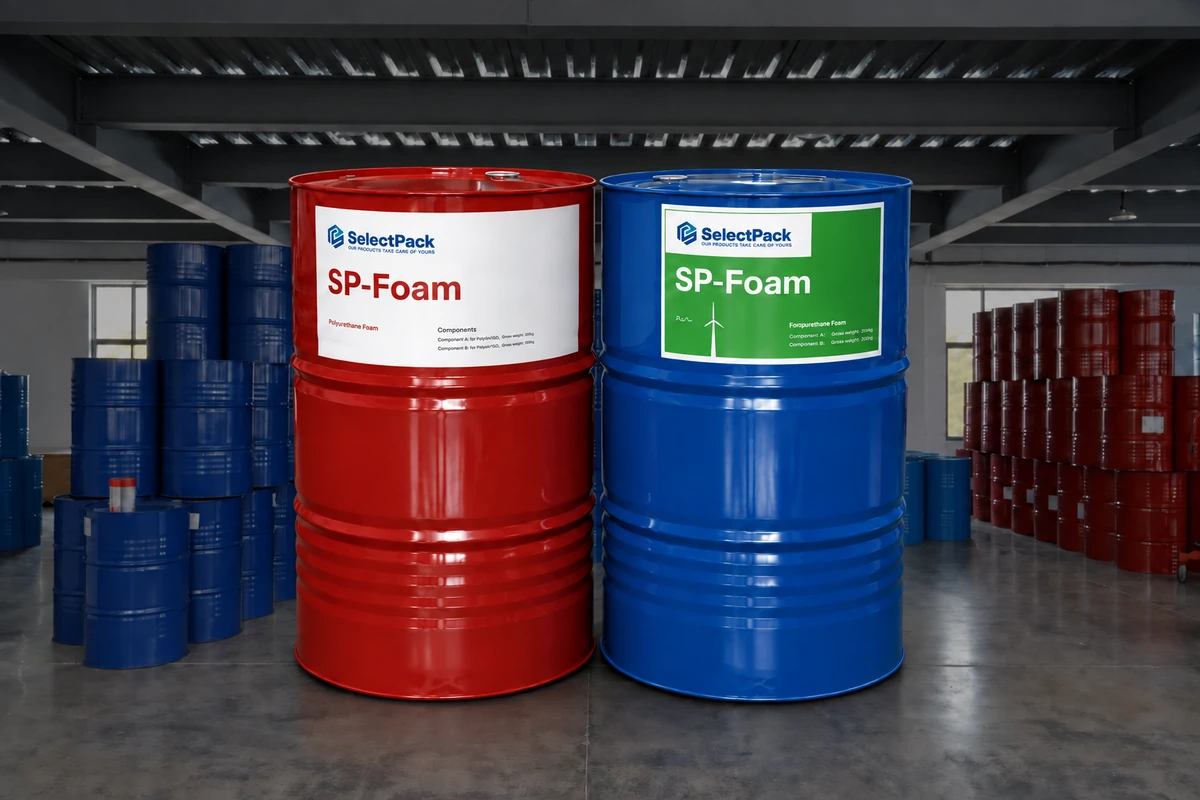
A replacement foam-in-place chemical or film is ready for production only when its suitability for the specified equipment and material combination has been confirmed and the resulting package meets its acceptance criteria. Similar price, nominal density, or roll dimensions do not establish foam-in-place consumable compatibility.
Treat a supplier change as a defined material qualification. Identify the current configuration, document the proposed differences, obtain the relevant manufacturers’ technical confirmation, and approve a controlled trial before deciding which products the replacement can pack.
This review applies to machine-fed chemicals and film. Prefilled expanding bags have their own product-specific instructions and should not be treated as refillable chemical supplies.
Start With the Configuration Already Approved
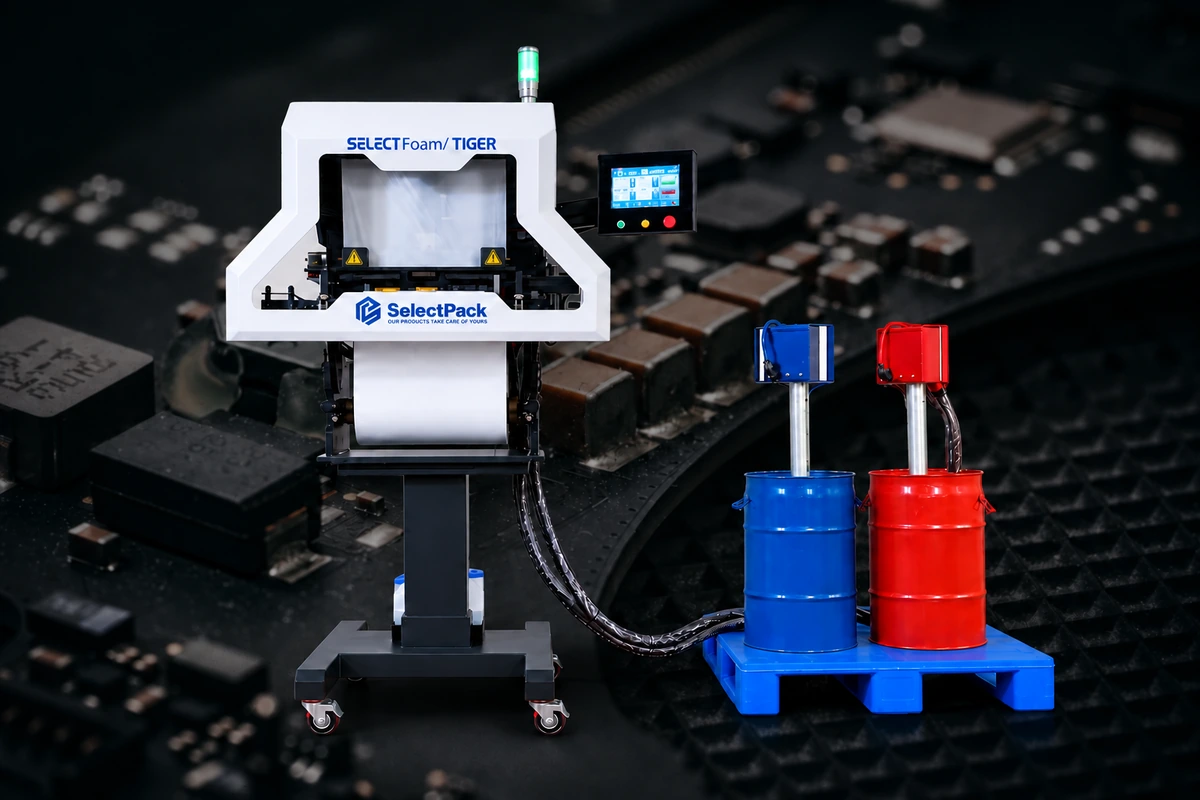
The comparison baseline is the complete approved configuration: machine, paired chemicals, film, production method, and packed product. A purchase order listing only “A/B foam” or “foam film” leaves too much unidentified.
Build the baseline from the equipment records and current material labels. Record:
- Machine manufacturer, model, serial number, and relevant configuration or revision.
- A-side and B-side manufacturer names, product codes, and approved pairing.
- Film product code, construction, dimensions, roll specification, and revision where provided.
- Current operating document or program reference, without copying settings between systems.
- Product family, cushion arrangement, outer package, and acceptance requirements.
Then describe exactly what purchasing wants to change. A new distributor supplying the same verified product code is a different proposal from a new formulation. A film with the same width but a different construction is a material change, even if the purchasing description stays the same.
Keep the existing specification available throughout the assessment. If the current configuration has never been documented, establish that baseline before calling a candidate an equivalent replacement.
Review Chemical and Film Compatibility Separately
Chemical suitability and film suitability require different evidence. Both must also be assessed in the proposed combination, because successful foam formation alone does not establish bag integrity or finished-package protection.
Use the following checks to turn a supplier’s equivalence claim into specific questions:
| Review item | Chemical candidate | Film candidate |
|---|---|---|
| Identity | Exact A/B product codes and intended pairing | Exact film code and construction |
| Equipment fit | Written applicability to the identified system | Machine requirements for feeding, sealing, and cutting |
| Technical data | Current technical data sheets and processing requirements | Width, thickness, tolerances, roll dimensions, core, and winding requirements |
| Material combination | Confirmation of the proposed paired materials | Confirmation for the proposed foam and bag-making process |
| Change implications | Required authorized conversion procedure | Required authorized setup or component changes |
| Technical responsibility | Named contact for application questions | Named contact for film and process questions |
Ask the equipment manufacturer to address the candidate’s applicability to the specific installed configuration, and the consumable manufacturer to substantiate the proposed material use. A distributor’s statement that a product “works with foam machines” does not answer either question.
For chemicals, do not infer interchangeability from an A/B label or a matching density claim. Identify the supplier-approved pair; do not independently combine one candidate component with the remaining incumbent component.
For film, matching width is only an initial dimensional check. Obtain the applicable specification for the actual machine and bag format. Use the manufacturer’s model-specific requirements for thickness, core size, and process setup rather than values taken from another system.
What Does an SDS Prove?
A safety data sheet provides hazard and handling information; an SDS does not certify machine compatibility or cushioning performance. Keep the safety review and the technical qualification connected, with separate evidence for each.
For U.S. workplaces, OSHA’s SDS content requirements identify information on product identity, handling and storage, exposure controls, and stability and reactivity. Have the site’s EHS owner review the candidate documents against the intended work and applicable requirements.
A technical data sheet serves a different purpose. Use it to request clarification of the proposed material’s specified properties and processing conditions. Neither a TDS nor an SDS, by itself, shows that your particular product passed a shipping evaluation.
If the supplier submits documents for a product family rather than the exact candidate, resolve the identification gap before the trial. The label, quotation, and technical documents should refer to the materials actually under review.
Set the Trial Boundaries Before Installing Anything
A qualification trial should have a written scope, acceptance criteria, and authorized implementation method before the candidate enters the machine. The review must also establish whether the trial requires service support or equipment changes.
Define the trial’s product family and retain the actual carton, product orientation, and cushion layout used in the baseline. Record which variables will change. If chemicals and film must change together as a manufacturer-confirmed combination, evaluate that combination and avoid attributing the outcome to only one component.
Assign responsibility for conversion, setup approval, inspection, and disposition of trial packs. Chemical changeover, line cleaning, flushing, and component replacement must follow the equipment and material manufacturers’ applicable procedures through authorized personnel. A purchasing checklist is not a conversion instruction.
Agree how affected material and trial packs will remain identifiable. Also establish the response if the trial fails, including who will decide the next action and whether a return to the previous configuration needs an authorized procedure. Keeping old stock nearby is not, by itself, a rollback plan.
Require Both Production Evidence and Package Evidence
Normal dispensing or a closed bag is an intermediate result. Production release also needs evidence that the resulting pack meets the product’s protection requirements.
Assess two sets of results:
- At the packing station: material identification, formation at the specified inspection stage, bag integrity, feeding and sealing results where applicable, reproducibility, and recorded rejects or interruptions.
- For the finished package: cushion fit, approved support and clearance, carton closure, product surface and functional acceptance, and the validation required for the intended shipment.
Packaging engineering should determine which previous test evidence remains applicable and what additional validation the material change requires. A single attractive sample does not establish repeatability, and visual inspection alone cannot confirm transit performance. Document the trial quantity and test conditions rather than assigning a universal sample count.
If an abnormal result occurs, keep affected packs identifiable and use the foam-in-place packaging problems guide to organize observations for technical support. Do not adjust undocumented settings to make the candidate appear acceptable.
Compare commercial terms after establishing the technical outcome. Include approved-pack material consumption, trial rejects, conversion work, required equipment changes, and support responsibilities. A lower price per drum or roll does not describe the total effect of the change.
Record Exactly What Has Been Released
Approval should identify the material combination and its permitted use. It should not turn a successful trial on one machine and product into permission for every station or SKU.
Use a qualification record that a buyer, engineer, and production supervisor can read without reconstructing the trial:
| Record field | What to capture |
|---|---|
| Original configuration | Machine, chemical pair, film, and pack specification |
| Candidate differences | Exact codes and changed specifications |
| Technical evidence | Manufacturer confirmations and document revisions |
| Trial results | Material lots, conditions, inspections, and validation references |
| Release scope | Approved stations, material combination, products, and methods |
| Decision | Approved, further review required, or rejected; owner and date |
| Open items | Unresolved conditions that prevent or limit release |
Carry the approved codes and scope into purchasing and station records. Request supplier notification of changes that could affect the qualified configuration. Unresolved compatibility or package-performance questions should remain visibly unapproved.
For a SelectPack supply review, send the baseline and candidate requirements with your inquiry about foam-in-place A/B chemicals. If the assessment involves a different equipment or bag-making route, include that requirement when reviewing the SelectFoam systems and consumables. Availability of a material is the starting point for technical review, not evidence of interchangeability with an existing system.