Most teams compare polypropylene strapping and PET strapping after something practical happens: straps loosen during transport, seals fail after a material change, operators complain that the strap is too stiff, or purchasing wants to reduce consumable cost.
For machine strapping, the useful question is not simply “Which strap is stronger?” It is “Which strap matches the load, the machine, the seal method, and the handling route?” A carton packing station, a mixed e-commerce area, and a heavy export pallet line may all need different strap behavior.
Polypropylene Strapping vs PET: Quick Decision Framework
Use polypropylene strapping when the load is light to medium, the carton or bundle is stable, the route is short or controlled, and cost per strap matters. PP is usually easier to run in carton and general packaging workflows because it is flexible and widely available in machine-grade rolls.
Use PET strapping when the load is heavy, dense, sharp-edged, export-bound, or likely to settle after strapping. PET usually offers better retained tension, but it also asks more from the machine, the seal method, and the operator setup.
Do not switch material until the machine specification is checked. Strap width, thickness, core size, tension range, cutter design, and seal method can decide whether the change works.
Compare the Two Materials by Load Behavior
| Factor | PP strapping | PET strapping |
|---|---|---|
| Typical use | Cartons, bundles, light pallets, internal handling | Heavy pallets, dense products, long-distance shipping |
| Handling feel | More flexible and forgiving | Stiffer and more demanding |
| Retained tension | Lower, with more relaxation over time | Higher, better for loads that settle |
| Edge tolerance | Better for low-risk cartons and soft edges | Better for demanding loads, but sharp edges may still need protectors |
| Cost position | Often lower material cost | Often higher material cost |
| Machine sensitivity | Roll quality, width, thickness, and feed path matter | Tension capacity, feed clearance, cutter, and seal method matter |
| Best buyer question | Is the load stable enough for PP after handling? | Does the load need stronger retained tension to arrive safely? |
Weight alone is not enough. Two pallets can weigh the same but behave differently if one is rigid and square while the other contains compressible cartons, uneven product shapes, or sharp contact points.
For formal material evaluation, buyers can also reference nonmetallic strapping standards when discussing breaking strength, elongation, joint performance, and test expectations with suppliers.
Check the Machine Before Changing Strap
Before buying a new strap spec, compare it with the machine manual or supplier specification. If the equipment type is still unclear, start with a broader strapping machine types guide before selecting material.
Check these points:
- Strap width range.
- Strap thickness range.
- Coil outside diameter and core size.
- Feed path clearance.
- Tension range.
- Sealing method.
- Cutter compatibility.
- Strap stiffness or embossing limits.
- Whether the machine is designed for PP only or can run both PP and PET.
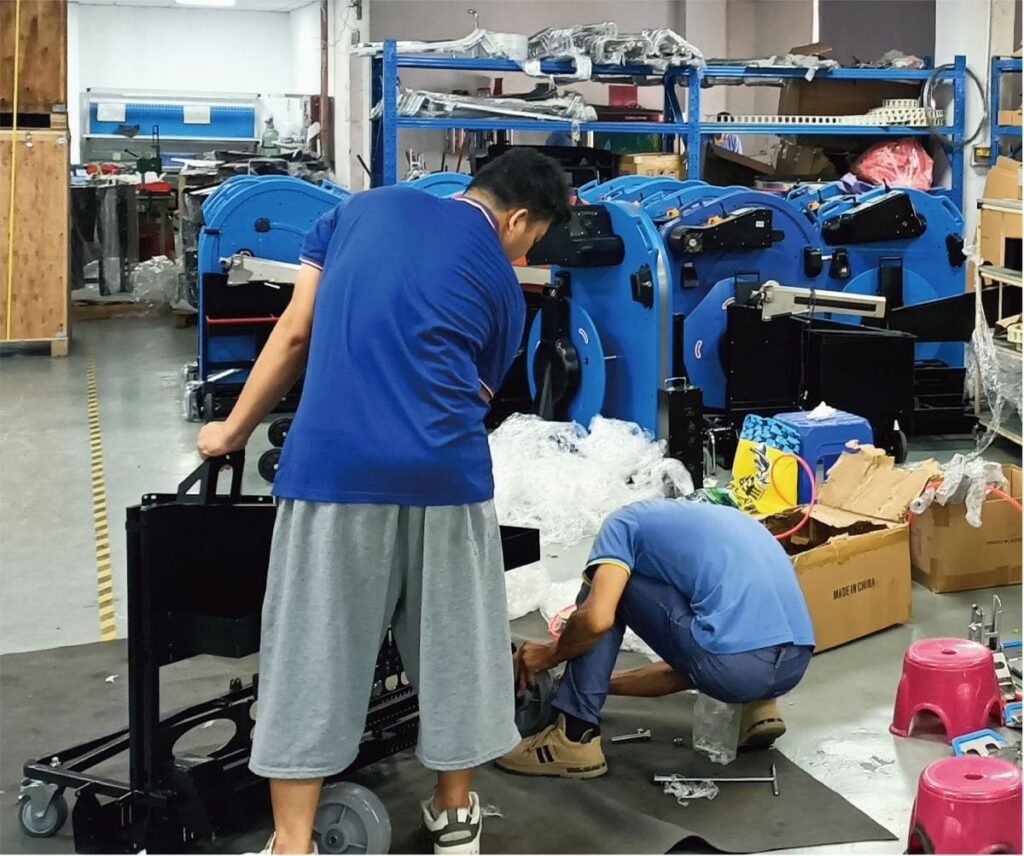
For pallet workflows, a machine such as a mobile semi-auto strapping machine should be checked against the actual strap width, material, and coil core before ordering bulk strap. A strap that looks correct on paper can still feed poorly if the roll quality is inconsistent or the material is too stiff for the path.
Where PP Usually Fits
PP is usually the practical choice when the strap mainly keeps items together rather than restraining a high-risk load.
Good fits include:
- Corrugated cartons.
- Small bundles.
- Printed material packs.
- Light pallets.
- E-commerce or warehouse consolidation cartons.
- Short-distance internal movement.
- Packing stations where speed and material cost matter.
The important detail is quality. For machine use, PP must be consistent in width, thickness, winding, and edge condition. If feed problems start after a supplier change, review the machine grade polypropylene strapping spec before blaming the machine.
Where PET Usually Fits
PET becomes more attractive when strap relaxation creates real cost: damaged goods, loose pallets, rework, customer claims, or unstable handling.
Good fits include:
- Heavy pallets.
- Dense cartons.
- Building materials.
- Metal parts or rigid products.
- Export loads.
- Pallets that settle after strapping.
- Routes with repeated forklift handling or vibration.
PET is not automatically better for every operation. If the load is light, the machine is PP-only, or the product edges are not protected, switching to PET may create feeding, sealing, or product damage problems. For heavier applications, review whether a PET strapping machine for heavy loads is actually needed.
Common Buying Mistakes
Avoid these mistakes when comparing PP and PET:
- Choosing the highest breaking strength without checking machine compatibility.
- Switching to PET while using a machine or tool designed only for lighter PP strap.
- Comparing roll price only, without counting rework, damage, or downtime.
- Ignoring product edges and assuming stronger strap will not be cut or weakened.
- Using PP on pallets that settle heavily after strapping.
- Using PET on light cartons where the extra stiffness and tension are unnecessary.
- Testing one easy load instead of the difficult loads that usually cause problems.
Validate the Strap on Real Loads
Do not choose strap material only from a catalog. Test it on real loads.
For teams that need a more formal validation method, transport packaging test procedures can help frame shipment simulation beyond a simple in-house handling check.
Use a simple validation process:
- Record the current strap width, thickness, material, core size, and supplier.
- Define the problem: loose strap, weak seal, carton damage, slow feeding, high cost, or load shift.
- Test the target PP or PET strap on the actual machine, not a different demo machine.
- Check feed reliability, tension setting, seal consistency, cutting, and strap alignment.
- Let pallet loads sit long enough to show settling or relaxation.
- Move the load through normal warehouse handling, including forklift movement if that is part of the route.
- Inspect strap condition, edge marks, seal quality, and operator feedback.
- Compare the result against the current strap before standardizing.
This gives buyers a practical answer. If PET reduces load movement but creates seal failures, the system is still not right. If PP runs cleanly and the load stays stable, a heavier strap may not improve the operation.
Conclusion
Polypropylene strapping and PET strapping solve different machine strapping problems. PP is usually the better fit for cartons, bundles, light pallets, and cost-sensitive workflows where the load is stable. PET becomes more relevant when retained tension, heavy pallets, settling loads, or transport risk matter more.
The final choice should come from the load, machine specification, seal method, and real handling test. Strap strength is only one part of the decision; the right material is the one that runs consistently through the equipment and keeps the load secure through the actual route.