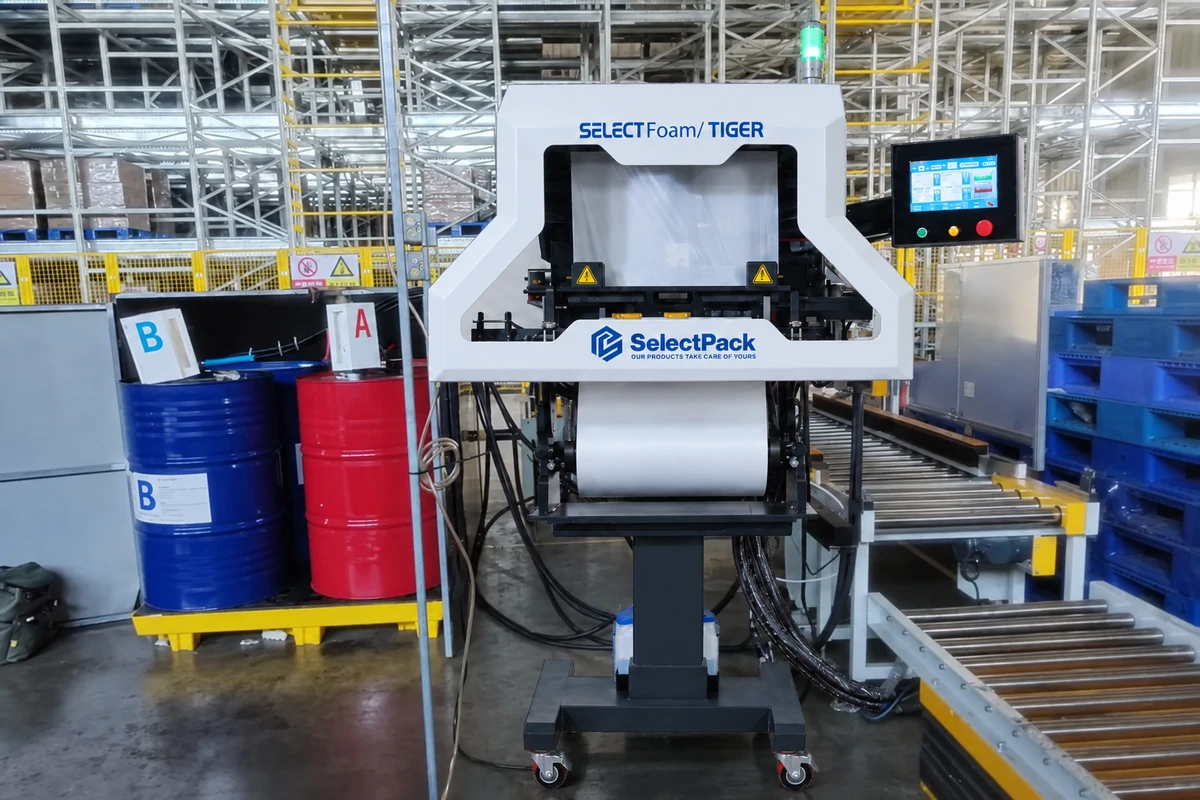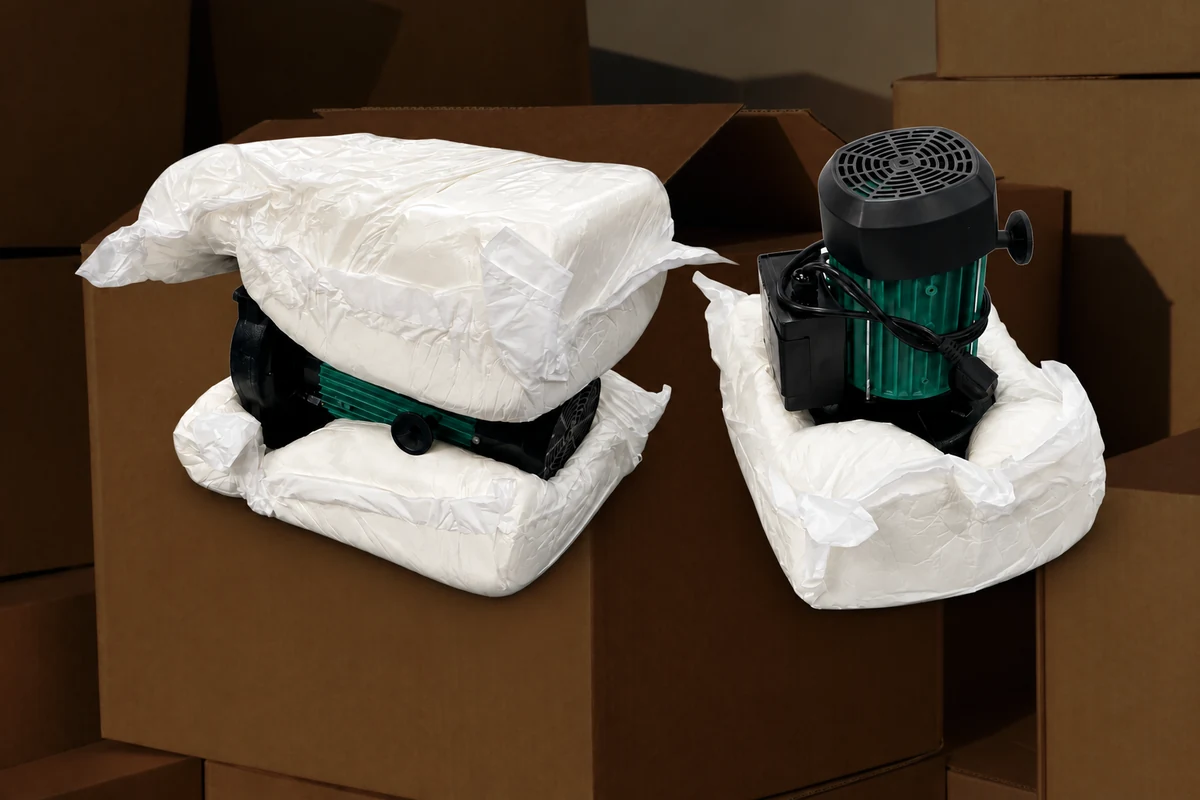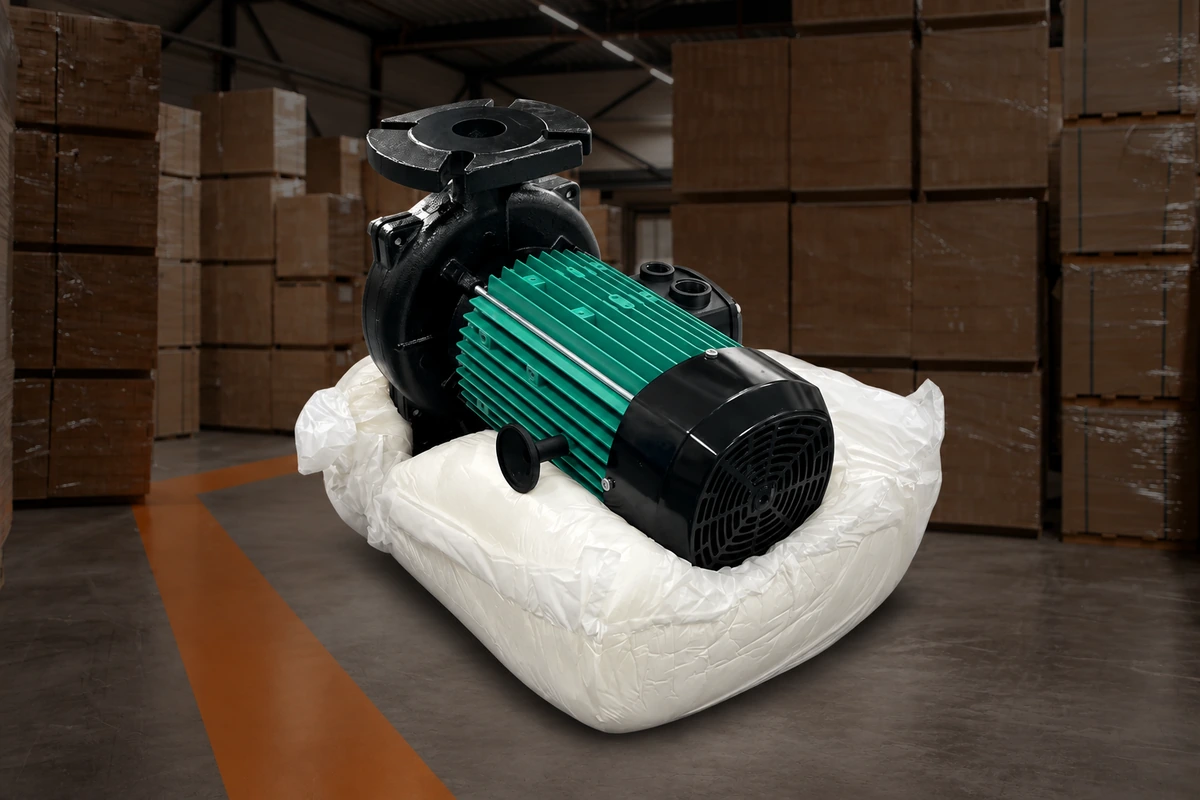
A foam-in-bag packaging system fits operations that need shaped foam cushions in a contained bag format. It is often a better workflow than direct foam-in-place when the team wants cleaner handling, repeatable cushion placement, and a more documentable pack process.
Direct foam-in-place may be better when operators must place foam around highly irregular shapes. Expandable foam bags may be better when volume is low or equipment is not practical. The right choice depends on how the product moves through the packing station.
This article focuses on workflow comparison, not a general foam packaging overview.
Workflow Snapshot
| Workflow | Main operator action | Best operational fit |
|---|---|---|
| Foam-in-bag machine workflow | Produce or dispense a foam bag, place it in the carton, position the product, add top cushion if needed | Repeated products, controlled bag sizes, and stations that need repeatable output. |
| Direct handheld foam-in-place | Dispense foam directly into a lined area or pack position | Mixed shapes, repair parts, or products needing direct placement control. |
| Expandable foam bags | Activate and place a pre-formed bag without a machine | Low-volume, returns, field service, samples, or no-equipment locations. |
For SelectPack buyers, this often means comparing machine shortlisting, no-machine bag use, and protective material fit. Use the foam-in-place packaging machine selection guide for equipment choice and the expanding foam bags for shipping guide for no-machine bag use cases.
Where Foam-in-Bag Wins
Foam-in-bag is usually the cleaner workflow when the cushion can be standardized. The bag format helps separate the foam from the product surface and makes the pack easier to repeat across operators.
It is a strong candidate when:
- Products fit within a known carton and bag-size range.
- The operation needs top and bottom cushioning more than direct foam placement.
- Operators need a simple visual work instruction.
- Multiple people must pack the same product with similar results.
- The product benefits from a film barrier between foam and surface.
The key operational benefit is not only protection. It is process control.
Where Direct Foam-in-Place Wins
Direct handheld foam-in-place can be better when the product shape changes too much for a fixed bag approach.
It deserves review when:
- The item has protrusions, brackets, handles, or uneven geometry.
- Operators need to place foam around specific fragile areas.
- Carton sizes change frequently.
- The pack is built in short runs.
- The product is too irregular for one or two standard cushion positions.
The tradeoff is training. Direct placement gives flexibility, but it also increases the need for clear operator standards.
Where Expandable Foam Bags Are Enough
Expandable bags can solve a simpler version of the same problem. They are most useful when the buyer wants foam-in-bag protection without machine setup.
They fit:
- Small batches.
- Returns.
- Field packing.
- Prototype or sample shipments.
- Occasional high-value shipments.
If usage becomes daily or operators need more consistent bag output, the buyer can move from expandable bags to a machine-based workflow.
Station Flow Comparison
Use the packing station to decide whether the workflow is practical.
| Station question | Why it matters |
|---|---|
| Where is the bag made or activated? | A machine workflow needs space and access; expandable bags need storage and clear activation steps. |
| When does the product enter the carton? | Timing affects whether the cushion forms below, above, or around the product. |
| How often does the carton size change? | Frequent changes may favor handheld control or a broader bag-size plan. |
| Who owns pack quality? | More flexible workflows need stronger operator training. |
| What slows the station today? | Foam output does not help if the real bottleneck is carton setup or product handling. |
This station view keeps the article from becoming a generic equipment comparison. The best foam in bag packaging system is the one that fits the station sequence.
Process-Control Points
For foam-in-bag workflows, document the variables operators can see and repeat:
- Bag size.
- Foam amount or preset.
- Bottom cushion placement.
- Product orientation.
- Top cushion placement.
- Carton closure timing.
- Acceptable finished-pack appearance.
These details matter more than broad claims about protection. A controlled foam-in-bag process should let a new operator understand what to do without relying on guesswork.
Decision Rule
Choose foam-in-bag when the operation needs repeatable, contained cushions. Choose direct foam-in-place when product geometry demands more placement control. Choose expandable foam bags when the volume or site does not justify equipment.
If the buyer is still deciding whether foam is the right protective material at all, start with the protective foam packaging decision guide before comparing machines. If the workflow choice is already down to foam bags, direct dispensing, or automated output, review the SelectFoam workflow options against the station sequence above.