Expanding foam bags for shipping fit best when the buyer needs shaped cushioning without installing a foam machine at every packing point. They are most useful for mixed parts, repair shipments, returns, samples, and lower-volume high-value items where loose fill or air pillows do not hold the product in place.
They are not the right first choice for every carton. If the product is light, low risk, and uniform, paper, air, or carton resizing may be simpler. If the product is heavy freight, foam bags can cushion contact points, but the package still needs structural restraint.
Use this article as a use-case guide for Foamigo expandable foam bags and related SelectFoam bag workflows.
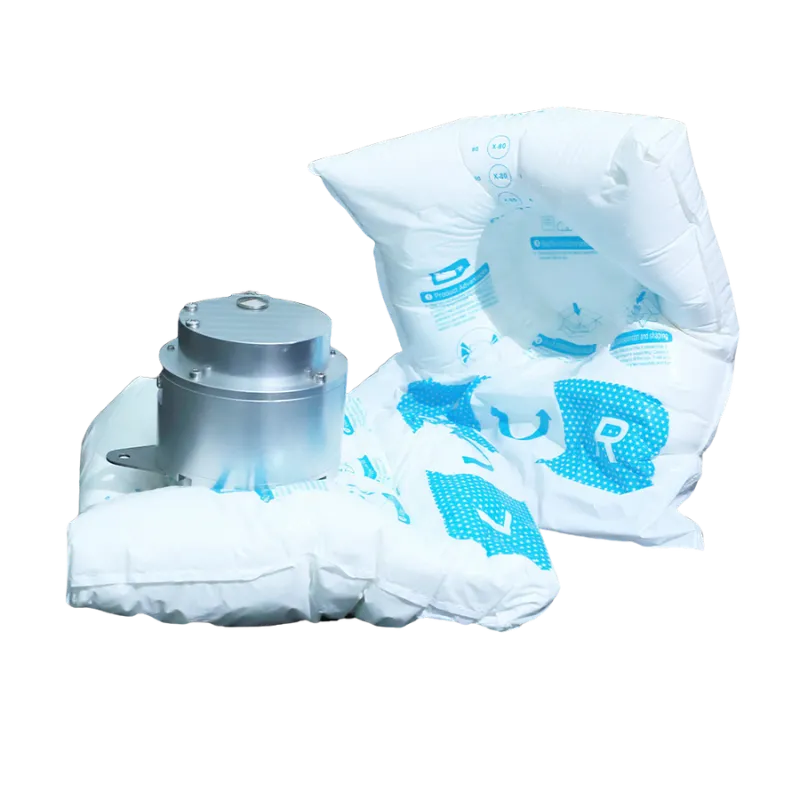
Use Case 1: Mixed Repair Parts and Service Components
Repair parts and service components often vary in shape, weight, and fragility. A warehouse may ship one control module, one housing, and one irregular replacement part from the same packing area. Stocking a custom insert for every item may not be practical.
Expanding foam bags can fit this use case when:
- The product changes often, but the carton range is manageable.
- Damage is caused by shifting, corner impact, or contact with the carton wall.
- Operators need a flexible cushion that can adapt to different shapes.
- The shipment value justifies more than light void fill.
Watch for sharp edges, oily surfaces, and loose accessories. Those may require a sleeve, wrap, divider, or separate compartment before the foam bag is added.
Use Case 2: Returns and Field Service Shipments
Returns and field service shipments need simple instructions because the packer may not be a full-time packaging operator. Expanding foam bags can be useful when the process has to be repeatable with minimal equipment.
The buying question is not only “Will the bag protect the product?” It is also “Can the user activate, place, and close the package correctly?” If the answer depends on careful timing or exact placement, document the pack method before rollout.
For remote or occasional packing, confirm:
- Bag size range.
- Activation steps.
- Storage conditions.
- Whether one or two cushions are needed.
- Whether the customer or field team can unpack the item cleanly.
Use Case 3: Low-Volume High-Value Shipments
Some products do not ship often, but the damage cost is high. In that situation, a no-machine bag workflow can be easier to justify than a dedicated foam-in-place machine.
This use case often includes instruments, samples, prototypes, replacement assemblies, or specialized parts. The bag cost may be acceptable if the alternative is product damage, rework, customer complaints, or a slow custom packing process.
The carton still matters. If the carton is oversized, the bag may waste material. If the carton is too tight, expansion can create pressure on a weak feature.
Use Case 4: Testing Foam Before Buying Equipment
Expanding foam bags can also be a practical first step before a buyer evaluates a machine. If the bag workflow proves that shaped foam solves the damage problem, the next question becomes whether volume justifies automated output.
Move from bags toward equipment when:
- Operators use foam bags every day.
- Bag activation becomes a bottleneck.
- Pack designs become standardized.
- Material usage needs tighter control.
- Multiple stations need the same output.
At that point, compare the current bag workflow with a machine-based workflow. The foam-in-bag packaging system guide can help frame the comparison around volume, labor, consistency, and cost per protected shipment.
Poor-Fit Use Cases
Expanding foam bags are less likely to be the right answer when:
- The product only needs light void fill.
- Damage is caused by carton collapse rather than product movement.
- The product is too heavy for the outer package.
- Sharp metal edges can puncture the bag.
- A clean presentation insert is more important than cushioning.
- A high-speed line cannot absorb manual bag steps.
If several of these are true, solve the carton, insert, or structural packaging problem first.
For large or heavy products, the foam-in-place bags for large equipment packaging guide explains when foam bags can act as cushioning and when the shipment still needs blocking, bracing, a crate, or pallet restraint.
First-Order Details to Confirm
Before ordering, confirm the details that affect bag size and placement:
- Product dimensions, weight, and fragile zones.
- Carton dimensions and internal clearance.
- Whether the product needs bottom, top, side, or corner support.
- Whether one bag or multiple bags are needed.
- Whether a surface barrier is required.
- Monthly or daily shipment volume.
- Storage conditions and shelf-life requirements.
For broader SelectPack foam-in-place options, review the SelectFoam collection page after narrowing the bag use case.