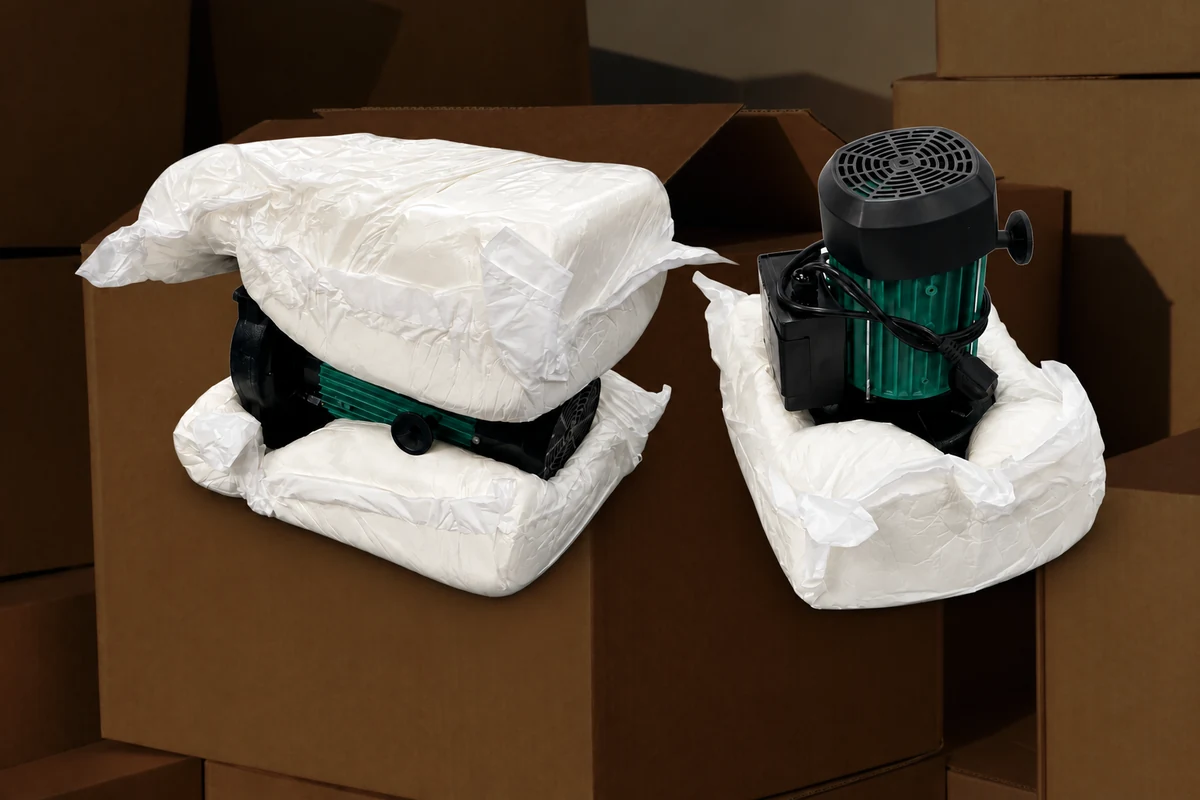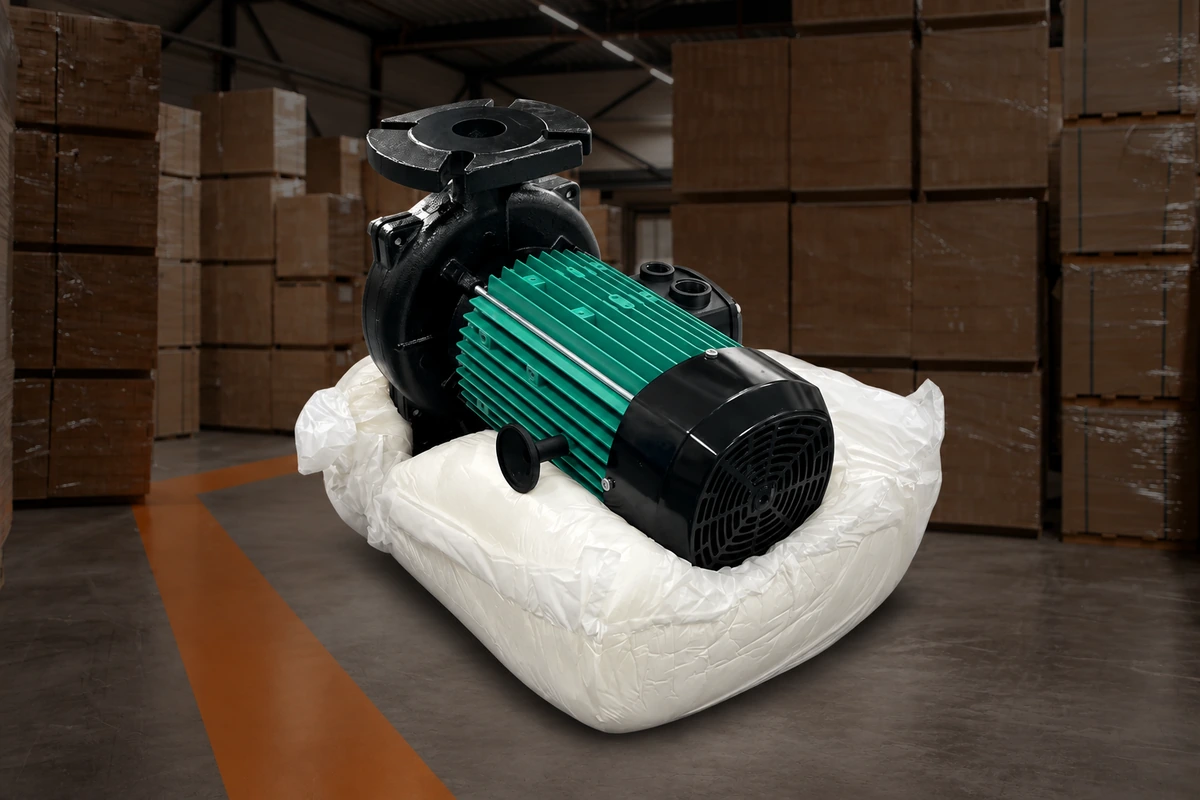
Foam-in-place bags can help protect large equipment when the main packaging problem is contact damage, vibration, shifting inside the outer package, or uneven support around irregular shapes. They work as cushioning, not as structural restraint.
For heavy equipment, the first packaging decision is usually the outer package: carton, case, crate, pallet, blocking, bracing, or bolting. Foam bags can then be evaluated as a protective layer between the equipment and that structure.
This use-case guide is for buyers searching for foam in place bags for protecting equipment, especially industrial parts, repair assemblies, and large irregular products that need more than loose void fill. For the broader material decision, use the protective foam packaging guide.
Separate Cushioning From Restraint
Large equipment packaging fails when cushioning and restraint are confused. Foam cushions impact and contact points. Restraint keeps the product from sliding, tipping, rolling, or breaking through the package.
| Packaging job | Foam-in-place bags can help? | Usually handled by |
|---|---|---|
| Preventing surface contact with carton or crate walls | Yes | Foam bags, liners, sleeves, or other cushioning. |
| Supporting irregular corners or protrusions | Yes, if bag placement is controlled | Foam bags plus edge protection when needed. |
| Preventing a heavy item from sliding | Only as a secondary cushion | Blocking, bracing, bolting, or pallet restraint. |
| Carrying stacking or compression load | No | Carton grade, crate structure, pallet design, or load-bearing dunnage. |
| Keeping sharp edges from puncturing packaging | Sometimes | Edge guards, wrap, inserts, or separate protection before foam. |
If the equipment can move under its own weight, solve restraint first. Then decide where foam bags should cushion contact points.
When Foam in Place Bags Work for Protecting Equipment
Foam-in-place bags are worth testing for:
- Industrial components with housings, brackets, handles, or protrusions.
- Repair modules and service assemblies shipped in short runs.
- Dense parts that crush paper or air cushioning.
- Equipment with fragile corners, panels, fittings, screens, or connectors.
- Irregular products that need top and bottom support but do not justify a molded insert.
They are less likely to fit when the item is so heavy that the outer package is the primary engineering challenge, or when sharp edges cannot be protected before the foam bag is placed.
Package Type Changes the Answer
The same equipment may need different foam decisions depending on the outer package.
| Outer package | Foam bag role | Key buyer question |
|---|---|---|
| Corrugated carton | Cushion and void control | Is the carton strong enough for product weight and stacking? |
| Double-wall or heavy-duty carton | Top, bottom, and corner cushioning | Does the product still need blocking or orientation control? |
| Wood crate or case | Contact protection between equipment and crate structure | Where can foam cushion without interfering with blocking or removal? |
| Palletized shipment | Localized protection only | What actually restrains the load during handling? |
| Returnable case | Replaceable cushion layer | Can the foam bag be placed and removed cleanly without damaging the case or product? |
This is why a supplier needs package details, not only product dimensions.
Details That Matter More for Large Equipment
For large equipment, the usual product-size checklist is not enough. Add these details:
- Center of gravity and whether the product is top-heavy.
- Lift points, handles, feet, brackets, and protruding hardware.
- Edges that can puncture a bag.
- Surfaces that must not be scuffed or compressed.
- Whether the product is lifted by hand, hoist, forklift, or pallet jack.
- Whether accessories ship in the same package.
- Whether the customer must unpack and re-pack the equipment.
- Any existing crate, pallet, or blocking design.
Photos from multiple angles are especially important. A single front photo often hides the features that create packaging risk.
Bag Placement Strategy
Large or irregular equipment rarely needs one generic foam bag dropped into the box. It usually needs a placement strategy.
Common placements include:
- Bottom cushions to absorb vertical shock.
- Side cushions to prevent lateral contact.
- Corner cushions near fragile or protruding areas.
- Top cushions to reduce lift or bounce.
- Localized cushions between the equipment and a crate wall.
- Separate edge protection before foam touches a sharp feature.
Operators should have a visual pack standard showing where each bag goes. If bag placement changes by operator, the protection level changes too.
When to Use Expandable Bags, Machine-Made Bags, or Handheld Foam
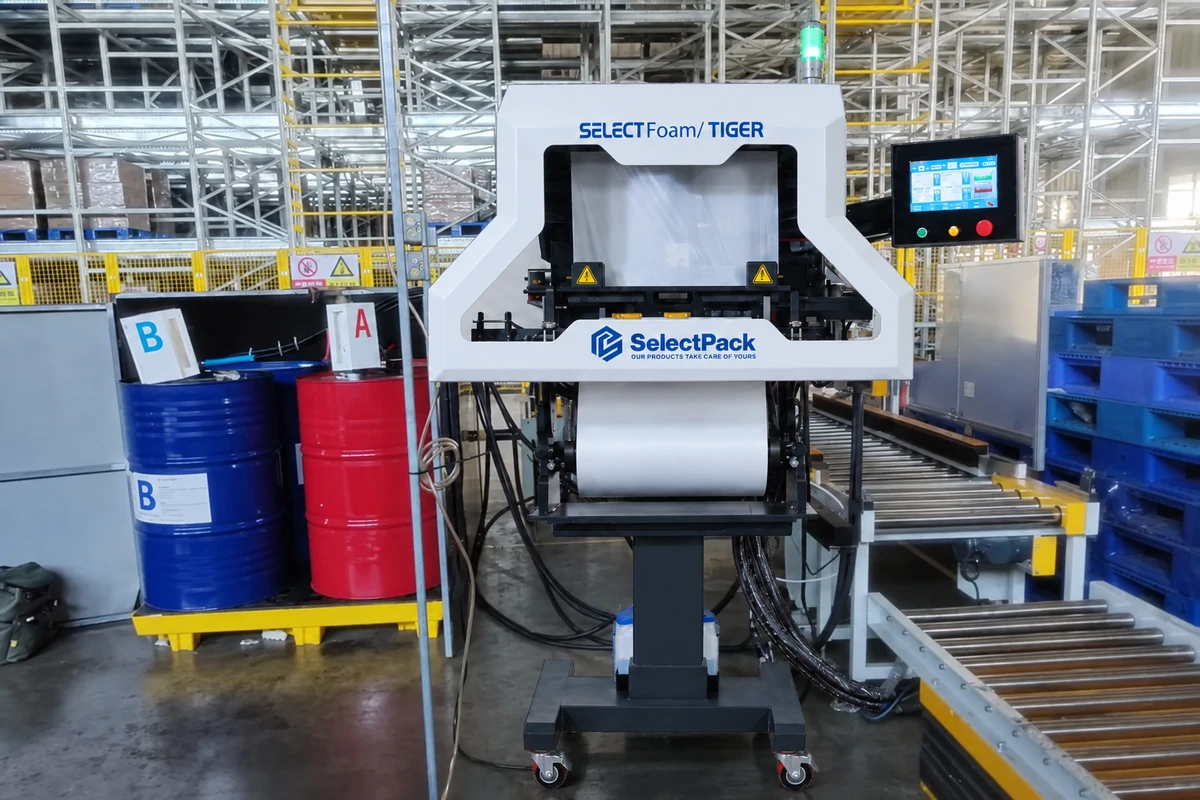
Use expandable foam bags when shipments are occasional, mixed, or handled away from a dedicated foam station; the expanding foam bags for shipping guide covers that bag-use path in more detail. Evaluate automated foam bag output when large equipment packs repeat often enough to justify controlled bag production. Evaluate handheld foam placement when the product geometry changes and operators need to direct foam into specific areas. The SelectFoam equipment and bag options can be reviewed after the restraint plan is clear, and the foam-in-bag packaging system guide can help compare these workflows.
For very heavy equipment, the workflow choice comes after the structural package is defined. Foam should support the pack design, not replace it.
Large Equipment Pack Review
Before approving the pack, review the equipment and package together:
- Place the equipment in the intended carton, case, crate, or pallet setup.
- Mark where the product could contact the outer package.
- Identify which contact points need foam and which need structural restraint.
- Build a sample pack with the proposed bag size and placement.
- Check whether the product can shift, tip, puncture the bag, or create carton bulge.
- Confirm that the customer can unpack the equipment safely.
For high-value, heavy, export-bound, or customer-approved shipments, formal distribution testing may be appropriate. Review ISTA test procedures only after the pack design and shipment route are clear.
Equipment Packaging Brief
Send this brief when asking a supplier about large foam-in-place bags:
| Brief item | What to include |
|---|---|
| Equipment profile | Dimensions, weight, center of gravity, photos, drawings, and fragile areas. |
| Outer package | Carton, crate, case, pallet, internal clearance, and current dunnage. |
| Restraint plan | Blocking, bracing, bolting, pallet restraint, or other structural method. |
| Cushioning target | Contact points, corners, panels, fittings, or surfaces that need foam. |
| Handling route | Parcel, LTL, palletized, export, internal transfer, or return shipment. |
| Packing workflow | Occasional bag use, machine-made bags, or handheld foam placement. |
This brief keeps the discussion focused on whether foam bags are appropriate for the equipment, not just whether a large bag is available.