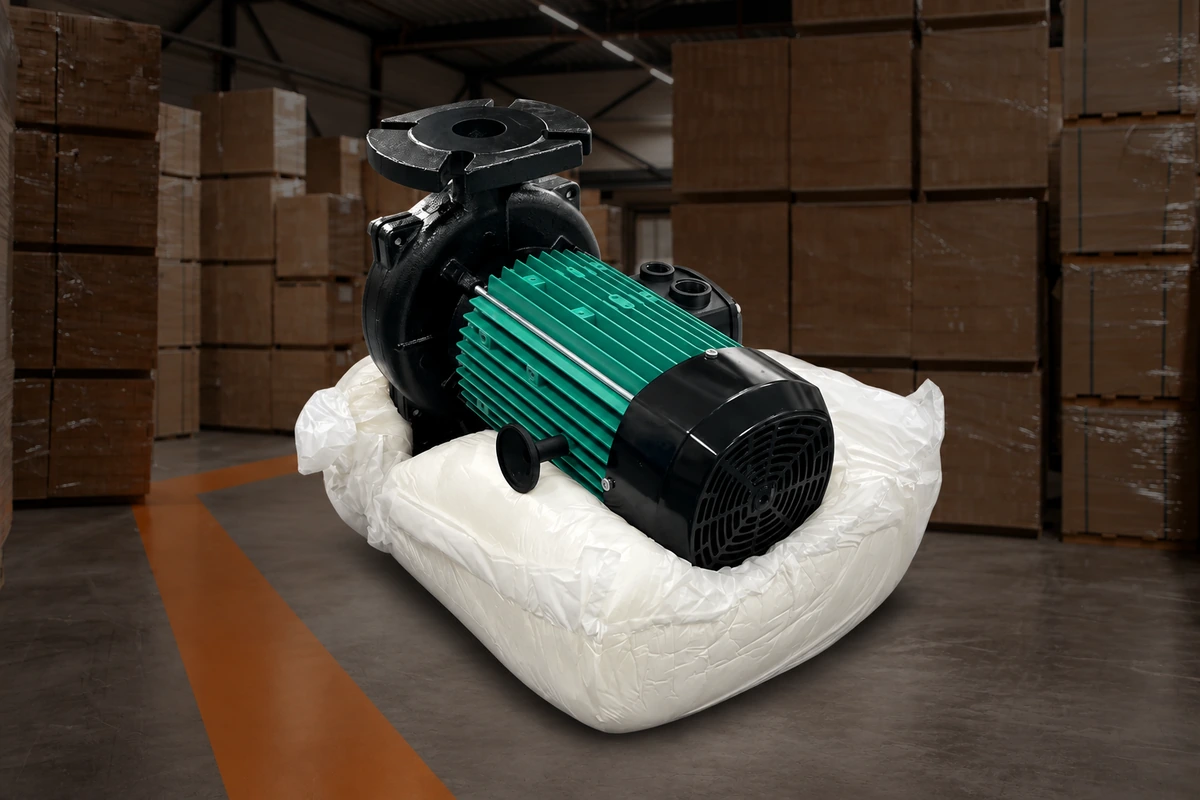
A mobile pallet strapping machine is a practical option for drum pallet strapping when the pallet has an accessible underside channel and the drum arrangement provides a controlled route for the strap. The machine handles the task of feeding strap beneath the pallet and bringing it around the load. Drum-top protection, strap position, and the tensioning tool still need to match the packaging configuration.
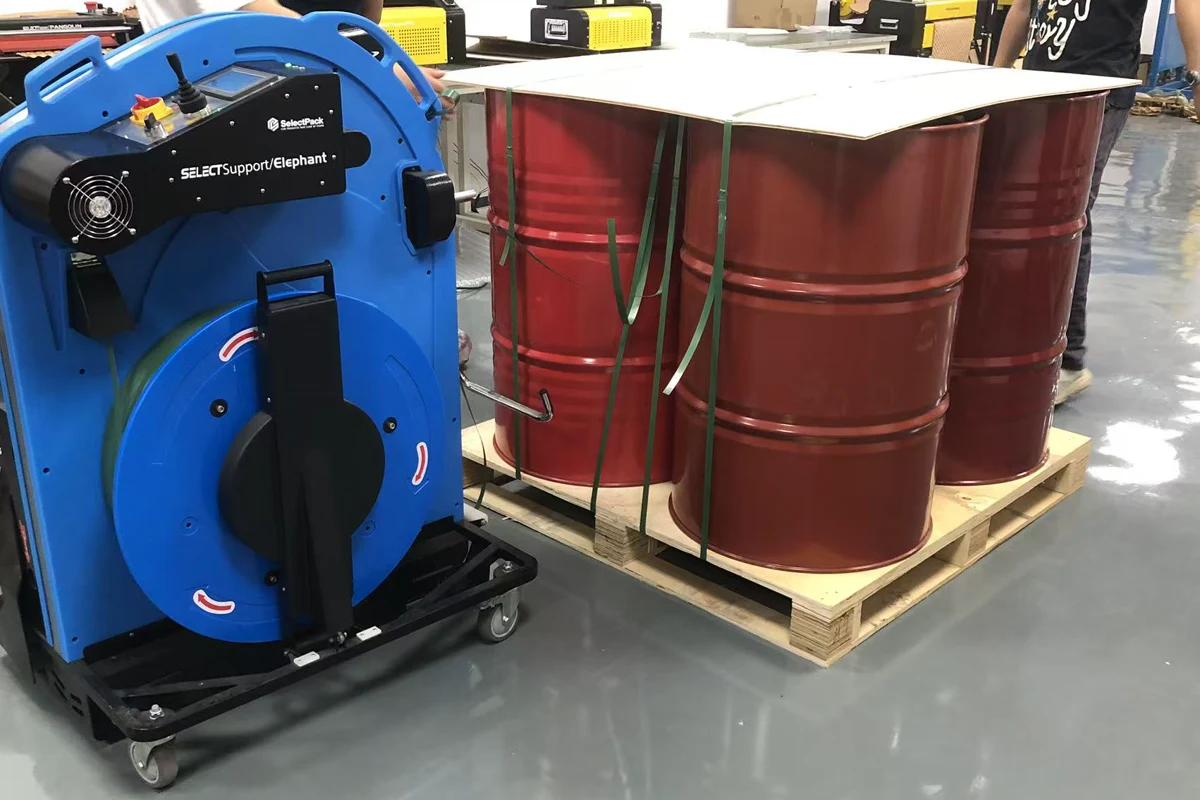
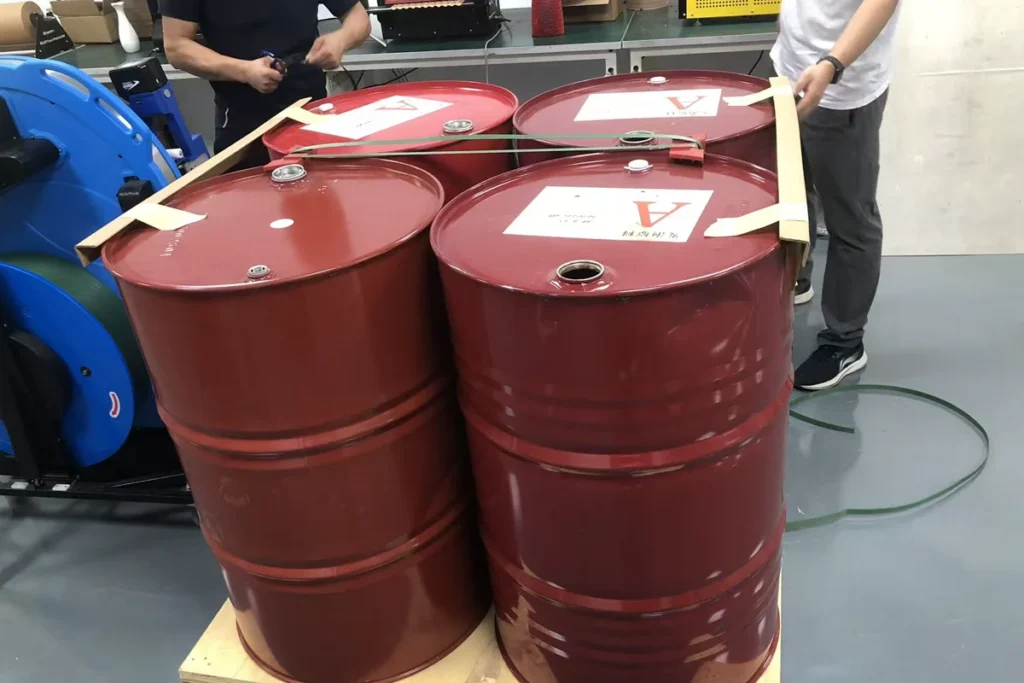
The application behind these SelectPack demonstrations came from a customer producing chemical fuels and using drums to package its products. Four steel drums arranged in a 2 × 2 pattern were paired with an Elephant mobile strapping machine. The setups included narrow edge protectors secured with tape and a flat board spanning the drum tops. These details matter: a machine that passes strap beneath a pallet still needs a workable route across the top of the drums.
For chemical and fuel producers, warehouse supervisors, and dispatch teams handling drum-packed products, the useful question is therefore specific: Will the machine, pallet, drum layout, and top protection work together in the daily packing process?
Where Strapping Fits in Chemical and Fuel Dispatch
For a chemical or fuel producer, pallet strapping belongs in the preparation of filled, closed drums for handling and dispatch. It connects the drum load to its pallet; filling, drum closure, and product identification remain separate parts of the packaging process.
Packaging engineers should review where straps and top protection contact the drums, including clearance around closures and access to product labels. Warehouse supervisors should assess where completed pallets wait for strapping and whether the machine can reach each working position. Procurement teams need a configuration that fits the actual drum and pallet formats used for outgoing orders.
These questions make an application trial more useful than a demonstration with an arbitrary pallet. If different products leave the site in different drum sizes or at different filled weights, include those variations in the assessment. Use the intended dispatch area and its equipment requirements when defining the application; an industry label alone is not enough to select a machine.
What Makes Drum Pallet Strapping Different?
Drum pallet strapping requires attention to the gaps between containers and the contact points around their rims. A group of round drums does not present the same continuous top surface as a rectangular crate.
With four drums on one pallet, the strap route crosses separate drum tops and the spaces between them. Drum closures, raised rims, and the selected protective components affect where the strap and chain lance travel. The operator needs a repeatable position for each strap, without relying on someone to hold the packaging arrangement together throughout the cycle.
There are also two different packaging tasks to distinguish. A horizontal band around the drum group bundles the containers together. A vertical strap passing over the load and beneath the pallet connects the load to its base. The Elephant application discussed here concerns that vertical pallet-strapping workflow; it does not establish automatic horizontal banding capability.
How Elephant Fits the Drum-Strapping Workflow
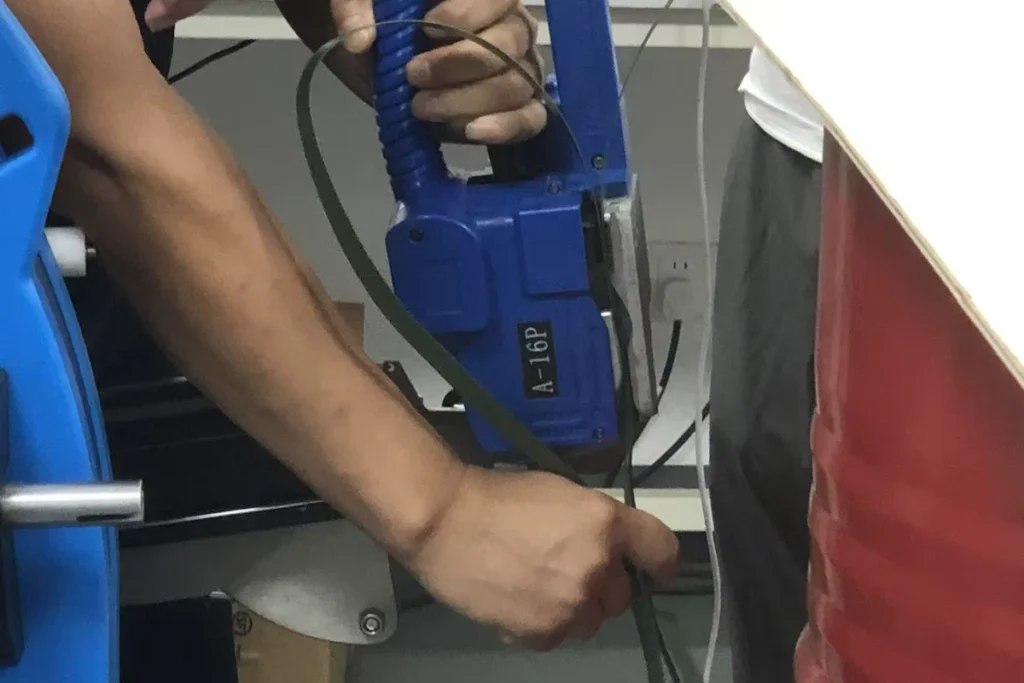
The SelectPack Elephant mobile strapping machine uses a chain-guided feeding system to route strap beneath the pallet and around the load. The operator retrieves and positions the strap, then loads it into the strapping tool for tensioning, sealing, and cutting.
The four-drum demonstrations show both machine-assisted feeding and hands-on operator work. The chain lance travels around the palletized drums, while the operator handles the returning strap and operates the tool beside the load. This is a semi-automatic process with defined manual steps.
That distinction helps buyers identify the right improvement. If repeated manual threading beneath pallets is the problem, a mobile feeding system addresses that part of the job. If most of the delay comes from positioning protectors, adjusting loose straps, or preparing the drums, those tasks also need attention. Changing the feeding method alone will not remove them.
Evaluate the complete sequence: preparing the top protection, positioning the machine, feeding and retrieving the strap, tensioning and sealing, and moving to the next strap position. Measuring only the chain movement misses much of the operator’s work.
Creating a Clear Strap Path Across the Drum Tops
Top protection should give the strap an appropriate contact surface and leave a clear route for the feeding mechanism. The best arrangement is the one that stays correctly positioned through the actual strapping cycle and suits the load’s packaging requirements.
Edge Protectors Secured with Tape
In one SelectPack demonstration setup, narrow edge protectors were positioned along the upper edges of the drum group and held in place with tape. The tape provided a way to retain the protectors during preparation and strapping.
This arrangement adds a preparation task: operators must place and secure the protectors before feeding the strap. During an application trial, check whether the protectors remain aligned as the strap tightens, whether the contact areas stay covered, and how much handling is required for each pallet. Tape used to position a protector is not a substitute for the load’s restraint system.
A Flat Board Across the Four Drums
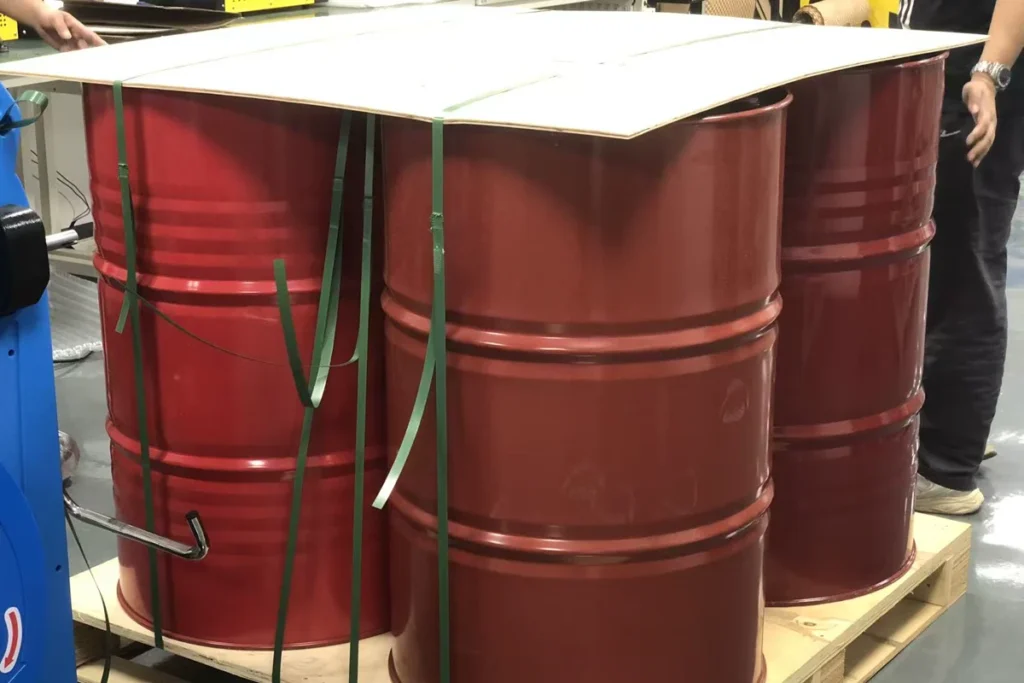
Another setup used a flat board spanning the four drum tops. The board created a continuous surface over the spaces between the drums. In the demonstration, the chain lance passed across this surface and the strap was handled at the machine side of the load.
A top board is worth evaluating when separate drum rims and gaps complicate the route. Check its dimensions, stiffness, support points, and edge condition against the intended load and strap tension. The board must also sit appropriately around the drum closures and remain in position during the process.
The demonstration establishes a workable feeding arrangement for the illustrated setup. Board thickness, load-bearing performance, and the final transport restraint design require their own validation; a smooth feeding pass does not establish those properties.
Purpose-Made Drum Accessories
Purpose-made drum spacers or strap guides deserve consideration where their geometry matches the drum rims and the intended strap route. Evaluate them as part of the complete packaging configuration, including their positioning requirements and compatibility with the machine’s moving chain lance.
Compare the total preparation effort as well as the accessory itself. A component that takes longer to position can change the overall cycle even if strap feeding remains quick. Likewise, a simple board should not be treated as an interchangeable replacement for a specified drum-restraint accessory without checking the resulting packaging design.
Which Drum Pallets Fit a Mobile Strapping Machine?
The strongest candidates have a clear underside passage, accessible working space, and a drum layout that allows repeatable strap placement. Check the pallet and load together rather than selecting a machine by drum count alone.
| Check | What to confirm |
|---|---|
| Pallet underside | Clear opening height, width, and passage through the pallet |
| Load dimensions | Overall width and height, including top protection |
| Drum arrangement | Drum diameter, quantity, spacing, and position on the pallet |
| Top strap route | Clearance around closures, gaps, protectors, and board edges |
| Strap and tool | Material, width, thickness, tool compatibility, and required joint |
| Working area | Machine approach, floor condition, and access to each strap position |
The Elephant product page lists PP and PET strap compatibility. That does not mean either material is suitable for every drum load. Select the strap specification and tool together with the required load restraint; the PP versus PET strapping guide explains the broader material decision.
A blocked pallet passage needs a different approach or a packaging change before the demonstrated workflow can be used. A steel-strap specification also needs separate equipment review rather than an assumption that it fits this PP/PET system. For a continuous production line, assess the required throughput and operator involvement before choosing a mobile station.
From a Feeding Demonstration to a Complete Drum Pack
A successful feeding demonstration confirms that the machine can follow the tested route. A shipping pack must also maintain the required drum and pallet restraint during handling and transport.
FedEx’s guidance for drums and pails considers banding alongside edge protection, stretch wrap, and an appropriate pallet surface. This is useful context for evaluating the complete pack rather than expecting the strapping machine to perform every packaging function.
For your application, check strap position after tensioning, joint quality, contact with the drum surfaces, and the condition of the protective components. Validate the completed pack against its actual handling and distribution conditions. Chemical contents and site requirements must also be identified separately; drum shape alone does not establish product classification or equipment suitability for a particular operating environment.
Arrange a Trial Around Your Actual Drum Configuration
Send SelectPack the drum material, diameter, height, filled weight, and number of drums per pallet, together with pallet dimensions and underside opening measurements. Include the existing strap specification, tool, top protection, strap positions, and any recurring problem such as difficult threading or protector movement.
For chemical and fuel applications, also describe the product category, the proposed strapping location, and the site’s equipment requirements. State whether the work takes place beside the filling operation, in a finished-goods warehouse, or in a dispatch area, and give the expected pallets per shift and range of drum formats. This helps the review address both packaging fit and the intended operating environment.
For the trial, use the intended packaging components and record the full operator sequence. The aim is to confirm a repeatable combination of pallet access, top routing, strap handling, and sealing—not simply to complete one feeding pass.
Contact SelectPack for a drum pallet strapping assessment to review how Elephant fits your existing drum-packaging process and which configuration should be tested.