La mayoría de los equipos comparan las cintas de flejado de polipropileno con las de PET después de que ocurre algún problema práctico: las cintas se aflojan durante el transporte, los precintos fallan tras un cambio de material, los operadores se quejan de que la cinta es demasiado rígida o el departamento de compras quiere reducir el costo de los consumibles.
En el flejado a máquina, la pregunta clave no es simplemente "¿Qué fleje es más resistente?", sino "¿Qué fleje se adapta a la carga, la máquina, el método de sellado y la ruta de manipulación?" Una estación de embalaje de cajas de cartón, un área mixta de comercio electrónico y una línea de paletización para exportación de cargas pesadas pueden requerir flejes con características diferentes.
Flejes de polipropileno frente a PET: Marco de decisión rápida
Utilice flejes de polipropileno cuando la carga sea ligera o media, la caja o el paquete sea estable, el recorrido sea corto o controlado, y el costo por fleje sea importante. El fleje PP suele ser más fácil de usar en procesos de embalaje de cajas y embalajes en general, ya que es flexible y está ampliamente disponible en rollos aptos para máquinas.
Utilice la cinta flejada PET cuando la carga sea pesada, densa, con bordes afilados, destinada a la exportación o propensa a asentarse después del flejado. La fleja PET suele ofrecer una mejor retención de la tensión, pero también exige más de la máquina, del método de sellado y de la configuración del operador.
No cambie el material hasta que se hayan verificado las especificaciones de la máquina. El ancho de la correa, el grosor, el tamaño del núcleo, el rango de tensión, el diseño de la cuchilla y el método de sellado pueden determinar si el cambio es viable.
Comparación de los dos materiales según su comportamiento bajo carga.
| Factor | Fleje PP | Fleje PET |
|---|---|---|
| Uso típico | Cajas de cartón, paquetes, tarimas ligeras, manipulación interna | Tarimas pesadas, productos densos, envíos de larga distancia |
| Sensación de manejo | Más flexible y tolerante | Más rígido y más exigente |
| Tensión retenida | Más bajo, con mayor relajación a lo largo del tiempo. | Más alto, mejor para cargas que se asientan. |
| Tolerancia de borde | Más adecuado para cajas de cartón de bajo riesgo y bordes suaves. | Más adecuado para cargas exigentes, pero los bordes afilados aún pueden necesitar protectores. |
| Posición de costos | A menudo, menor costo de los materiales. | A menudo, mayor costo de los materiales. |
| Sensibilidad de la máquina | La calidad del rollo, el ancho, el grosor y la trayectoria de alimentación son importantes. | La capacidad de tensión, la holgura de alimentación, el cortador y el método de sellado son importantes. |
| Mejor pregunta para el comprador | ¿La carga es lo suficientemente estable para el PP después de la manipulación? | ¿Es necesario que la carga mantenga una tensión de retención mayor para que llegue a su destino de forma segura? |
El peso por sí solo no es suficiente. Dos tarimas pueden pesar lo mismo, pero comportarse de manera diferente si uno es rígido y cuadrado, mientras que el otro contiene cajas compresibles, productos con formas irregulares o puntos de contacto afilados.
Para una evaluación formal del material, los compradores también pueden consultar estándares de flejado no metálico al hablar con los proveedores sobre la resistencia a la rotura, la elongación, el rendimiento de las uniones y las expectativas de las pruebas.
Compruebe la máquina antes de cambiar la correa.
Antes de comprar una nueva correa, compárela con el manual de la máquina o las especificaciones del proveedor. Si el tipo de equipo aún no está claro, comience con una revisión más amplia. Guía de tipos de máquinas flejadoras antes de seleccionar el material.
Compruebe estos puntos:
- Rango de ancho de la correa.
- Rango de grosor de la correa.
- Diámetro exterior de la bobina y tamaño del núcleo.
- Limpieza de la ruta de alimentación.
- Rango de tensión.
- Método de sellado.
- Compatibilidad con cortadoras.
- Límites de rigidez o grabado de la correa.
- Si la máquina está diseñada solo para PP o si puede funcionar tanto con PP como con PET.
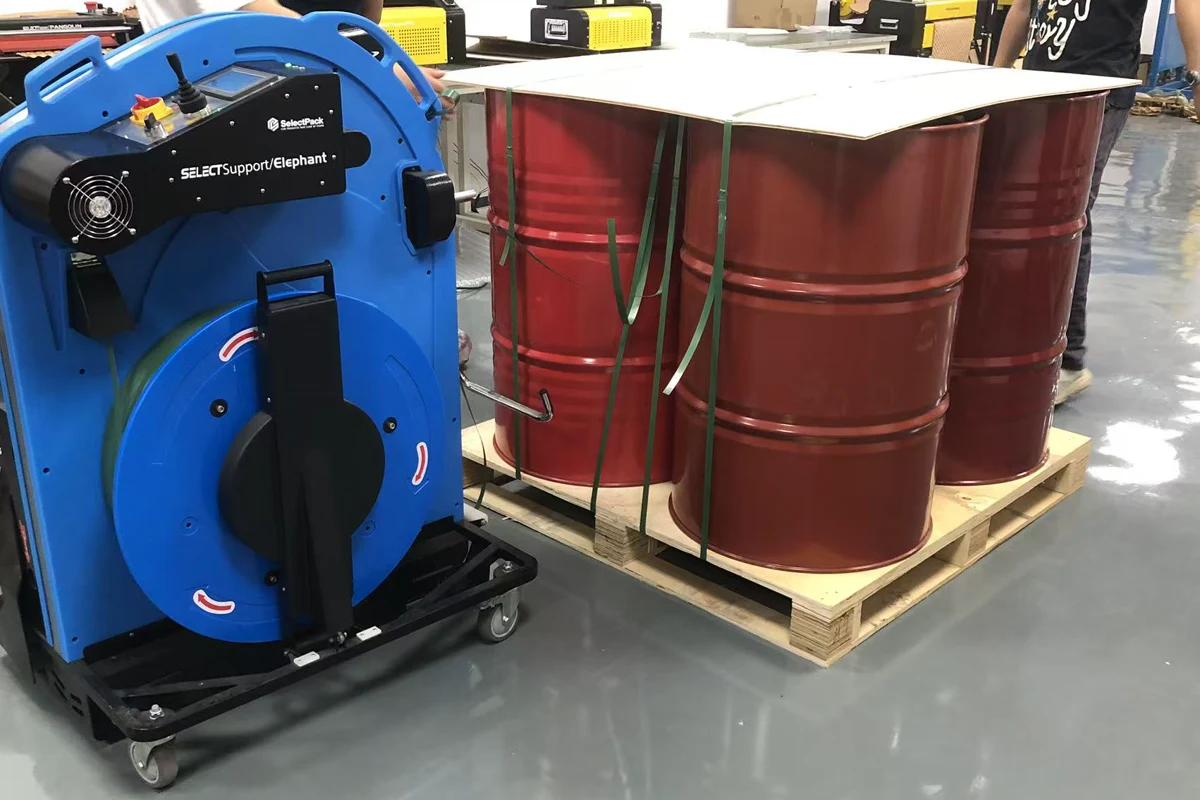
Para los flujos de trabajo de tarimas, una máquina como una máquina flejadora semiautomática móvil Antes de realizar un pedido de fleje a granel, conviene comprobar que el ancho, el material y el núcleo de la bobina sean los correctos. Un fleje que parezca correcto sobre el papel puede alimentarse mal si la calidad del rollo es inconsistente o si el material es demasiado rígido para el recorrido.
Dónde suele encajar el PP
La correa PP suele ser la opción más práctica cuando su función principal es mantener los objetos unidos, en lugar de sujetar una carga de alto riesgo.
Entre los ajustes adecuados se incluyen:
- Cajas de cartón corrugado.
- Paquetes pequeños.
- Paquetes de material impreso.
- Tarimas ligeras.
- Cajas para comercio electrónico o consolidación de almacenes.
- Movimiento interno de corta distancia.
- Estaciones de empaquetado donde la velocidad y el costo de los materiales son importantes.
Lo fundamental es la calidad. Para su uso en máquinas, el fleje PP debe tener un ancho, grosor, bobinado y acabado de bordes uniformes. Si surgen problemas de alimentación tras un cambio de proveedor, revise las especificaciones del fleje de polipropileno para máquinas antes de atribuir la falla a la máquina.
Dónde suele encajar el PET
El modelo PET resulta más atractivo cuando la relajación de las correas genera costos reales: mercancía dañada, tarimas sueltas, retrabajo, reclamaciones de clientes o manipulación inestable.
Entre los ajustes adecuados se incluyen:
- Tarimas pesadas.
- Cajas densas.
- materiales de construcción.
- Piezas metálicas o productos rígidos.
- Cargas de exportación.
- Tarimas que se asientan después de ser flejados.
- Rutas con manipulación repetida de carretillas elevadoras o vibraciones.
La flejadora PET no siempre es la mejor opción. Si la carga es ligera, la máquina solo admite la flejadora PP o los bordes del producto no están protegidos, cambiar a la PET puede generar problemas de alimentación, sellado o daños en el producto. Para aplicaciones más pesadas, conviene evaluar si realmente se necesita una flejadora PET para cargas pesadas.
Errores comunes al comprar
Evite estos errores al comparar PP y PET:
- Elegir la mayor resistencia a la rotura sin comprobar la compatibilidad con la máquina.
- Cambiar a PET mientras se utiliza una máquina o herramienta diseñada solo para la correa PP más ligera.
- Comparando únicamente el precio del rollo, sin tener en cuenta las modificaciones, los daños ni el tiempo de inactividad.
- Ignorar los bordes del producto y asumir que la correa más resistente no se cortará ni se debilitará.
- Utilizar PP en tarimas que se asientan mucho después del flejado.
- Utilizar PET en cajas de cartón ligeras donde la rigidez y la tensión adicionales no son necesarias.
- Probar una carga sencilla en lugar de las cargas difíciles que suelen causar problemas.
Validar la correa con cargas reales
No elija el material de la correa únicamente a partir de un catálogo. Pruébelo con cargas reales.
Para los equipos que necesitan un método de validación más formal, Procedimientos de prueba del embalaje de transporte Puede ayudar a que la simulación de envíos vaya más allá de una simple comprobación de manipulación interna.
Utilice un proceso de validación sencillo:
- Registre el ancho, el grosor, el material, el tamaño del núcleo y el proveedor actuales de la correa.
- Defina el problema: correa suelta, cierre deficiente, daños en la caja, alimentación lenta, alto costo o desplazamiento de la carga.
- Pruebe la correa PP o PET en la máquina real, no en una máquina de demostración diferente.
- Compruebe la confiabilidad de la alimentación, el ajuste de la tensión, la consistencia del sellado, el corte y la alineación de la correa.
- Deje reposar las cargas en tarimas el tiempo suficiente para que se observe un asentamiento o relajación.
- Trasladar la carga siguiendo los procedimientos habituales de manipulación en el almacén, incluyendo el uso de carretillas elevadoras si forma parte de la ruta.
- Inspeccione el estado de la correa, las marcas en los bordes, la calidad del sellado y los comentarios del operador.
- Compare el resultado con la correa actual antes de estandarizar.
Esto ofrece a los compradores una respuesta práctica. Si el sistema PET reduce el movimiento de la carga pero provoca fallas en el sellado, el sistema aún no funciona correctamente. Si el sistema PP funciona sin problemas y la carga se mantiene estable, una correa más resistente podría no mejorar el funcionamiento.
Conclusión
Las cintas de polipropileno y las cintas PET resuelven diferentes problemas de flejado en máquinas. La PP suele ser más adecuada para cajas, paquetes, tarimas ligeras y flujos de trabajo donde el costo es un factor crítico y la carga es estable. La PET resulta más relevante cuando la tensión retenida, las tarimas pesadas, el asentamiento de cargas o el riesgo durante el transporte son factores importantes.
La elección final debe basarse en la carga, las especificaciones de la máquina, el método de sellado y una prueba de manejo real. La resistencia de la correa es solo una parte de la decisión; el material adecuado es aquel que se comporta de manera uniforme en el equipo y mantiene la carga segura durante todo el trayecto.