El fleje de polipropileno para máquinas no es solo un consumible, sino una pieza fundamental del sistema de flejado. Si el fleje es irregular, demasiado estrecho, demasiado grueso, demasiado blando o está mal enrollado, incluso una buena flejadora puede sufrir errores de alimentación, sellados débiles, tensión desigual y tiempos de inactividad evitables.
Para los compradores, el objetivo no es encontrar el rollo PP más barato. El objetivo es elegir una cinta de polipropileno que sea compatible con la máquina, que se desplace sin problemas por el conducto de alimentación, que selle correctamente y que sujete la caja o el palé durante todo el proceso de manipulación.
La cinta de polipropileno de grado máquina debe coincidir con la máquina.
Las cintas de polipropileno para máquinas están diseñadas para ser procesadas con equipos de flejado, no solo para ser tensadas a mano. En comparación con las cintas básicas para uso manual, deben tener dimensiones más uniformes, bordes más limpios, mejor enrollado y rigidez predecible.
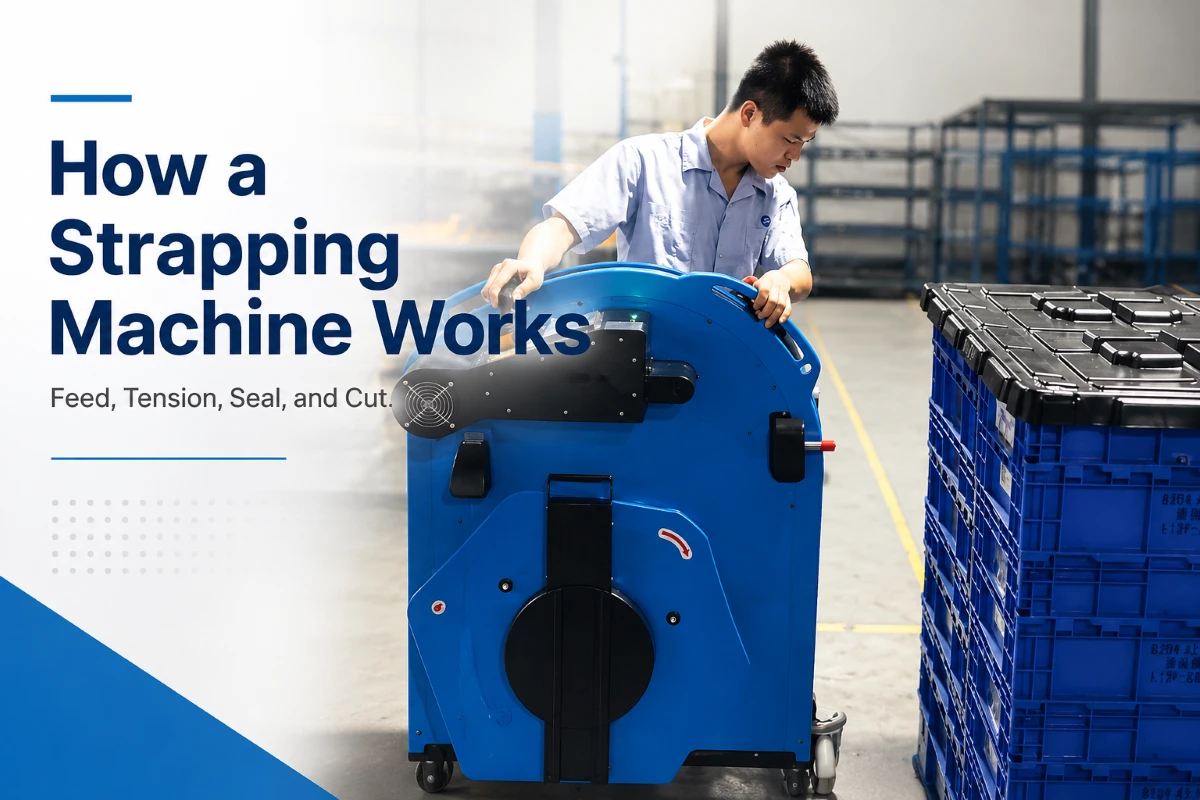
La máquina alimenta, tensa, sella y corta la correa de forma automática o semiautomática. Pequeñas irregularidades que parecen insignificantes en un ciclo pueden convertirse en paradas repetidas durante toda una jornada laboral.
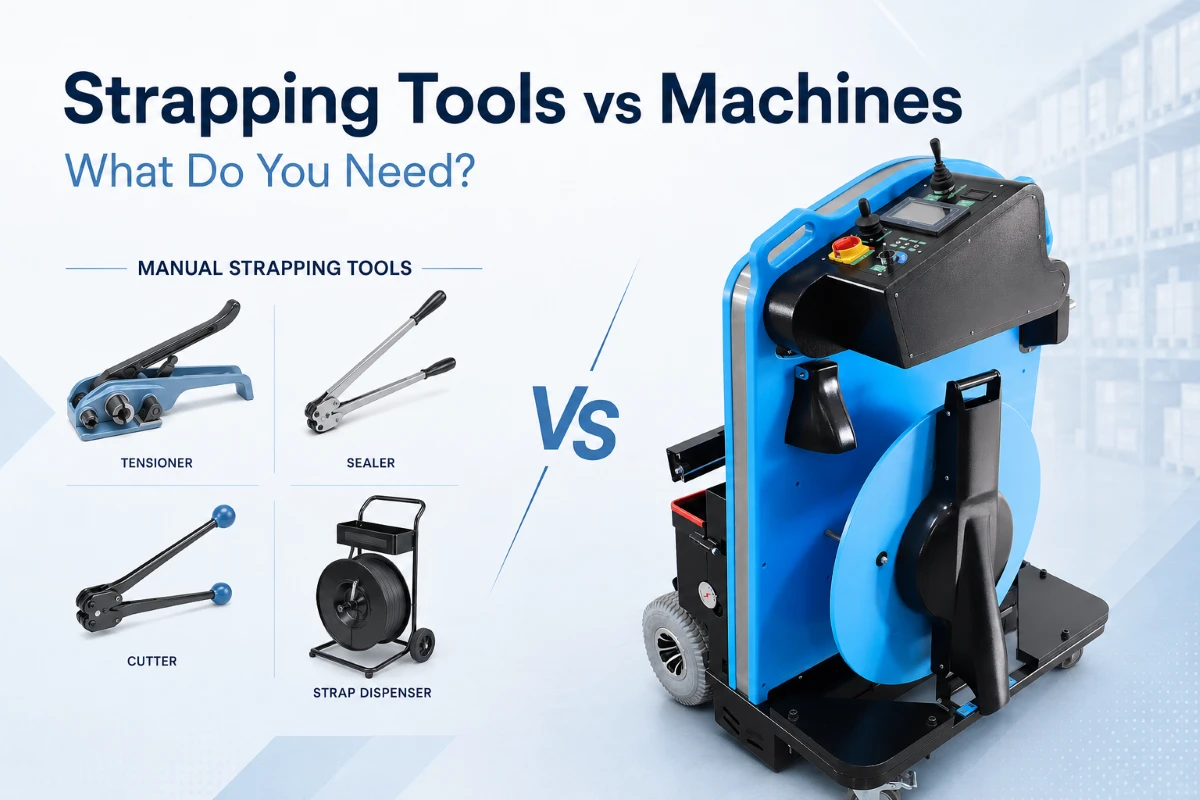
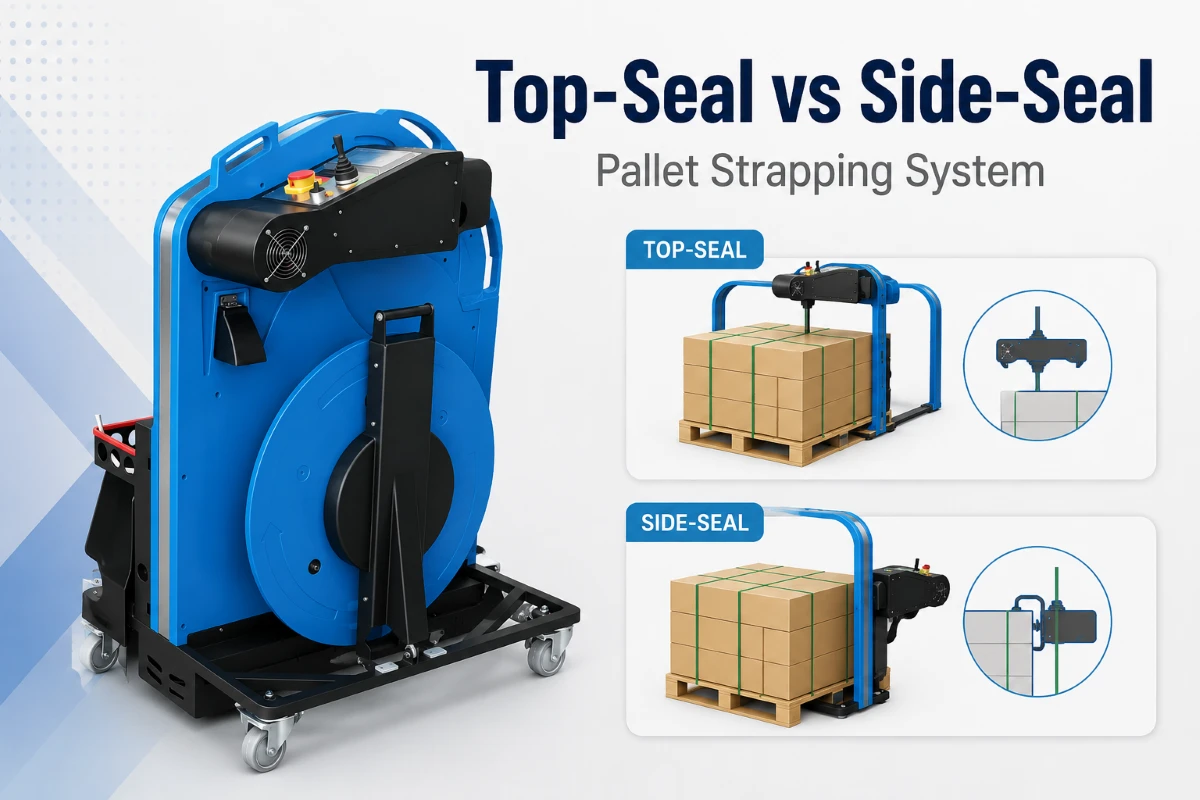
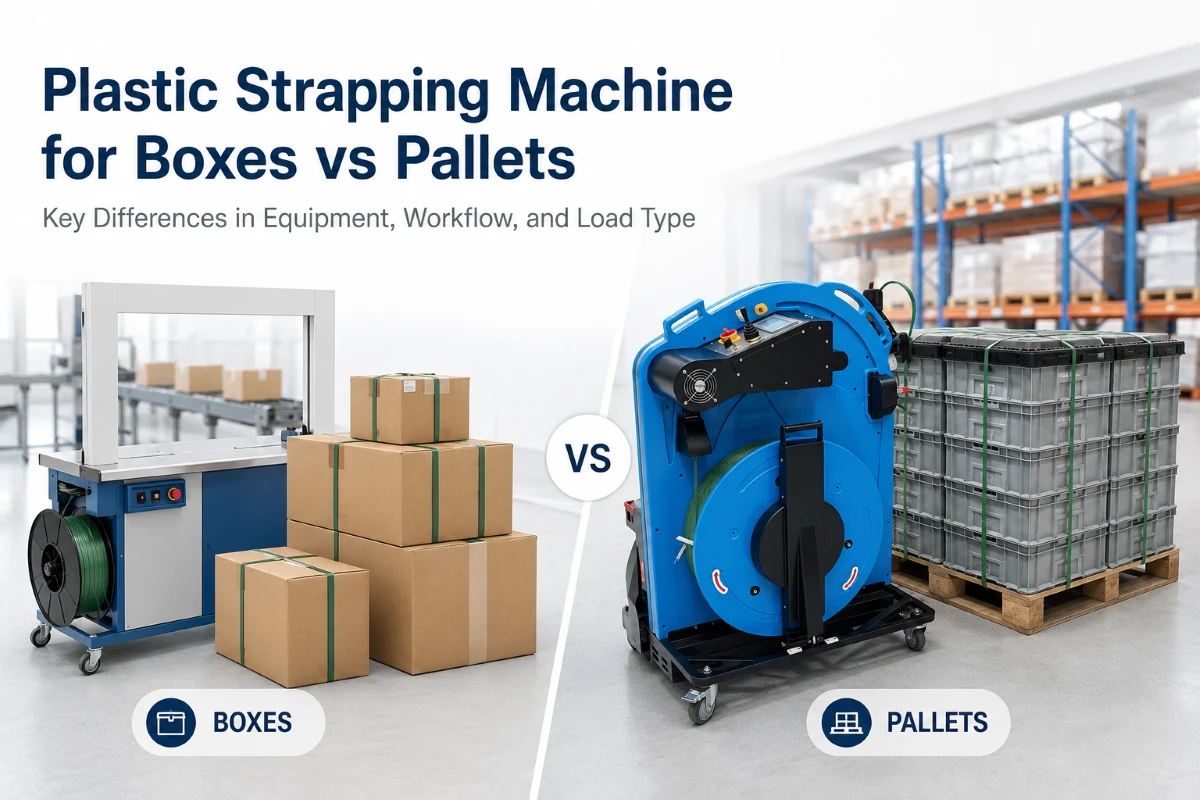
Antes de elegir la correa, confirme el tipo de equipo. Una máquina de cartón de mesa, una máquina de arco, un sistema de flejado de paletas y máquina flejadora semiautomática móvil No siempre se aceptan rollos del mismo tamaño, ancho, grosor o rigidez del material.
Comience con las especificaciones de la máquina.
Comience con las especificaciones de la máquina antes de comparar proveedores. Los puntos importantes incluyen:
- Ancho de la correa.
- Grosor de la correa.
- Tolerancia de ancho y espesor.
- Tamaño del núcleo.
- Diámetro exterior del rollo.
- Resistencia a la rotura.
- Alargamiento.
- Textura de la superficie.
- Calidad del bobinado.
- Requisitos de color o impresión.
- Método de sellado y rango de tensión.
El ancho y el grosor son las medidas más visibles, pero no son las únicas que influyen en la producción. Un rollo con un bobinado deficiente o bordes ásperos puede causar más problemas que una correa ligeramente más cara pero estable.
Para discusiones formales sobre calidad, los compradores pueden consultar la estándar de flejado no metálico al preguntar a los proveedores sobre la resistencia a la rotura, la elongación, la resistencia transversal y la resistencia de la unión.
Si la aplicación aún se está definiendo, revise las opciones de equipo con un fabricante de máquinas flejadoras Antes de bloquear la correa, verifique las especificaciones. La correa debe adaptarse al equipo y a la carga, no al revés.
Flejes de polipropileno de grado industrial de 5 mm frente a 12 mm
Las cintas de flejado estrechas PP, como las de polipropileno de 5 mm de grado industrial, se utilizan a menudo para cajas de cartón más ligeras, materiales impresos, paquetes y trabajos de embalaje de alta velocidad donde el producto no necesita una sujeción excesiva.
Las opciones más anchas, como las cintas de polipropileno de 12 mm de grosor, son más comunes para cajas más pesadas, paquetes grandes y algunas aplicaciones con palés ligeros. Una cinta más ancha distribuye la fuerza sobre una mayor superficie de la caja, pero solo si la máquina está diseñada para trabajar con ese ancho.
No elija el ancho únicamente en función del peso de la carga. Considere también:
- Resistencia del borde del cartón.
- Forma del producto.
- Área de contacto de la correa.
- Limpieza de la ruta de alimentación.
- Tensión requerida.
- Si la correa se utilizará en cajas de cartón, paletas o en ambos.
Para un flujo de trabajo que incluya tanto cajas como palés, el artículo sobre máquinas flejadoras de plástico para cajas frente a palés puede ayudar a definir dónde se debe dividir la especificación de la cinta.
Espesor, rigidez y calidad del sellado
El grosor de la correa afecta la resistencia, la rigidez, la fiabilidad de la alimentación y el rendimiento del sellado. Una correa más gruesa puede parecer más segura, pero puede causar problemas si la máquina no está diseñada para ello.
Si una correa es demasiado gruesa, la máquina puede tener dificultades con:
- Alimentación a través de guías.
- Calentamiento o sellado por fricción de forma constante.
- Corta limpiamente.
- Mantener una tensión repetible.
Si la correa es demasiado delgada, la carga podría no quedar bien sujeta o el sello podría convertirse en el punto débil. El grosor adecuado es aquel que se ajusta tanto a la carga como al rango de tensión de la máquina.
Para los compradores que comparan PP con PET, no asuman que el PP más grueso resuelve todos los problemas. Si la carga necesita una tensión de retención más fuerte, compare la elección del material en el Guía de flejado PP vs PET en lugar de forzar la especificación incorrecta del PP en la máquina.
El bobinado y el tamaño del núcleo afectan al tiempo de inactividad.
Las cintas de fleje para maquinaria deben desenrollarse sin problemas. Un mal enrollado puede provocar torsiones, enganches, tensión desigual o resistencia repentina al avance.
Al evaluar a un proveedor, inspeccione lo siguiente:
- Si el rollo está enrollado de manera uniforme.
- Si los bordes de la correa están limpios.
- Si la correa está deformada o retorcida.
- Si el núcleo es estable.
- Si las dimensiones entre rollos son consistentes.
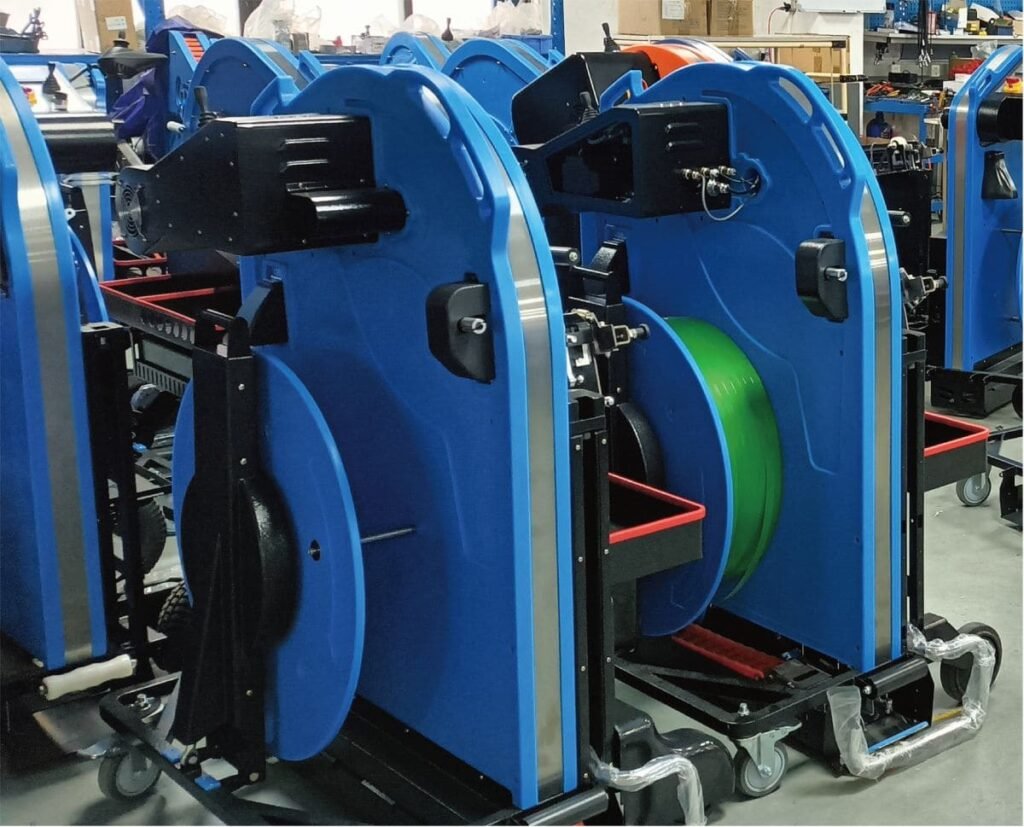
- Si el rollo encaja en el soporte del núcleo y el freno de la máquina.
Un rollo más económico que provoca atascos puede resultar más caro que un rollo estable con un precio unitario ligeramente superior. Esto es especialmente cierto en las zonas de envasado, donde un solo problema de alimentación paraliza toda una estación.
Preguntas de los proveedores antes de realizar pedidos al por mayor
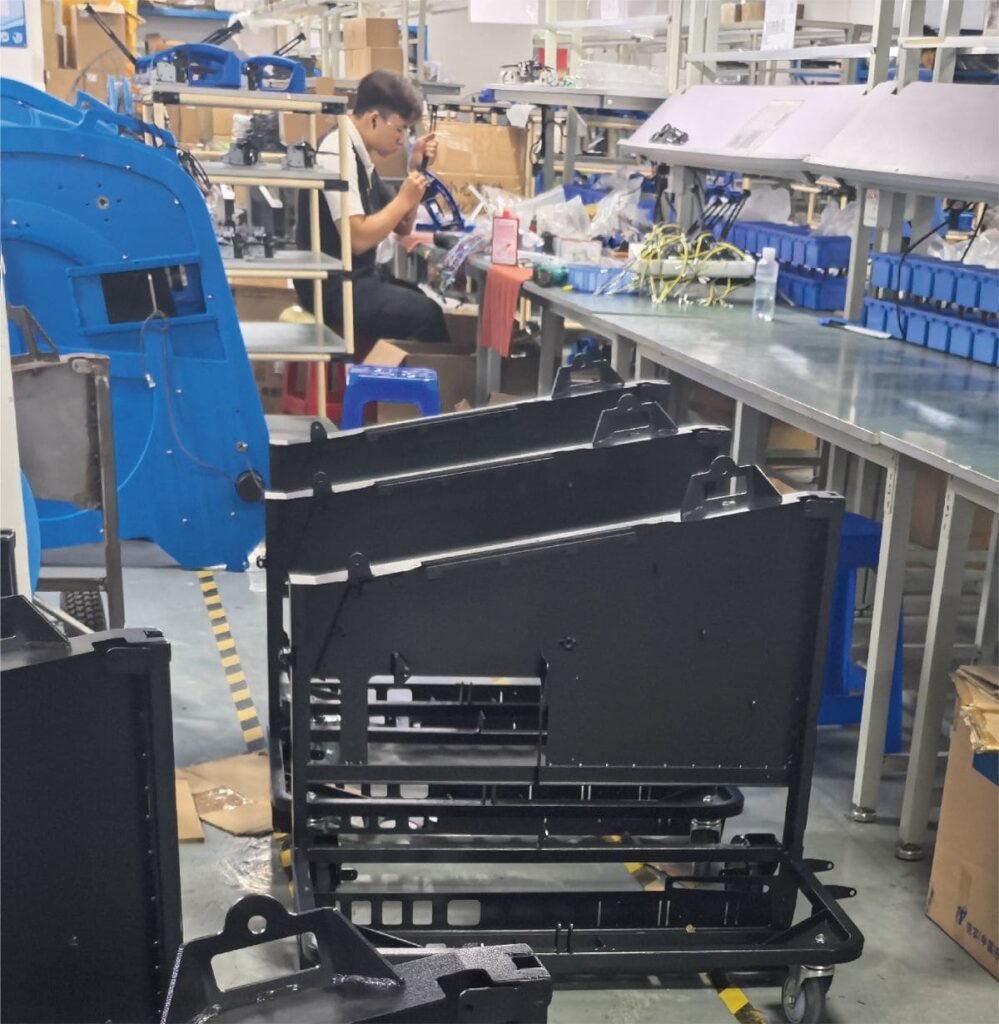
Antes de realizar un pedido grande, haga al proveedor algunas preguntas prácticas:
- ¿La correa está diseñada para uso a máquina o para uso manual?
- ¿Qué tolerancia de ancho y espesor se mantiene?
- ¿Qué tamaños de núcleos están disponibles?
- ¿Qué diámetro exterior de rollo se puede suministrar de forma constante?
- ¿Se ha probado la correa en máquinas similares?
- ¿Se pueden analizar primero muestras del mismo lote de producción?
- ¿Qué ocurre si el bobinado o la calidad de los bordes provocan problemas de alimentación?
La información genérica "fleje PP" no es suficiente para el flejado a máquina. El proveedor debería poder especificar la máquina, el rollo y la carga.
Realice una prueba en línea antes de estandarizar.
Antes de pedir grandes cantidades, pruebe la correa en la máquina real.
Para rutas de envío de mayor riesgo, Procedimientos de prueba del embalaje de transporte puede ayudar a definir un proceso de validación más formal, que vaya más allá de una breve prueba interna con la máquina.
Realice la prueba en condiciones normales de producción:
- Registre el ancho, el grosor, el tamaño del núcleo y el proveedor actuales de la correa.
- Utilice cajas, paquetes o palés reales procedentes de la producción habitual.
- Realice suficientes ciclos para observar el comportamiento de la alimentación, no solo una muestra.
- Comprueba que la correa se deslice sin titubear.
- Inspeccione la uniformidad del sellado y la calidad del corte.
- Esté atento a la presencia de polvo, residuos, desgaste en los bordes o que el cabello se curve.
- Comparar las opiniones de los operadores a lo largo de un turno.
- Verifique la carga después de la manipulación interna o la simulación de envío.
Esto es especialmente importante al cambiar el ancho, el grosor, el proveedor o el color.
¿Cuándo revisar las especificaciones de la correa PP?
Puede que su correa actual sea aceptable, pero debería revisarse si cambian las condiciones del embalaje.
Vuelva a comprobar las especificaciones cuando:
- El tamaño de la caja cambia.
- El peso del palé aumenta.
- Las rutas marítimas se alargan.
- Aumentan las reclamaciones por daños.
- La máquina se reemplaza o se actualiza.
- Los operadores informan de problemas con la alimentación eléctrica.
- Se presenta un nuevo proveedor.
El flejado representa un coste pequeño en comparación con el equipamiento, pero tiene un gran impacto en la fiabilidad de la línea de producción.
Conclusión
Las cintas de polipropileno para maquinaria deben considerarse parte integral del sistema, no un consumible genérico. El ancho, el grosor, la rigidez, el tamaño del núcleo, el bobinado, el comportamiento del sellado y la consistencia del proveedor influyen en si la máquina puede funcionar sin necesidad de intervenciones repetidas.
Para los equipos de embalaje B2B, el flejado fiable PP se caracteriza por una alimentación fluida, un sellado repetible, un corte limpio y una sujeción adecuada de la carga durante todo el proceso de manipulación. La solución práctica consiste en seleccionar la máquina adecuada, realizar pruebas con cargas reales y estandarizar el fleje solo después de comprobar su rendimiento en condiciones normales de producción.