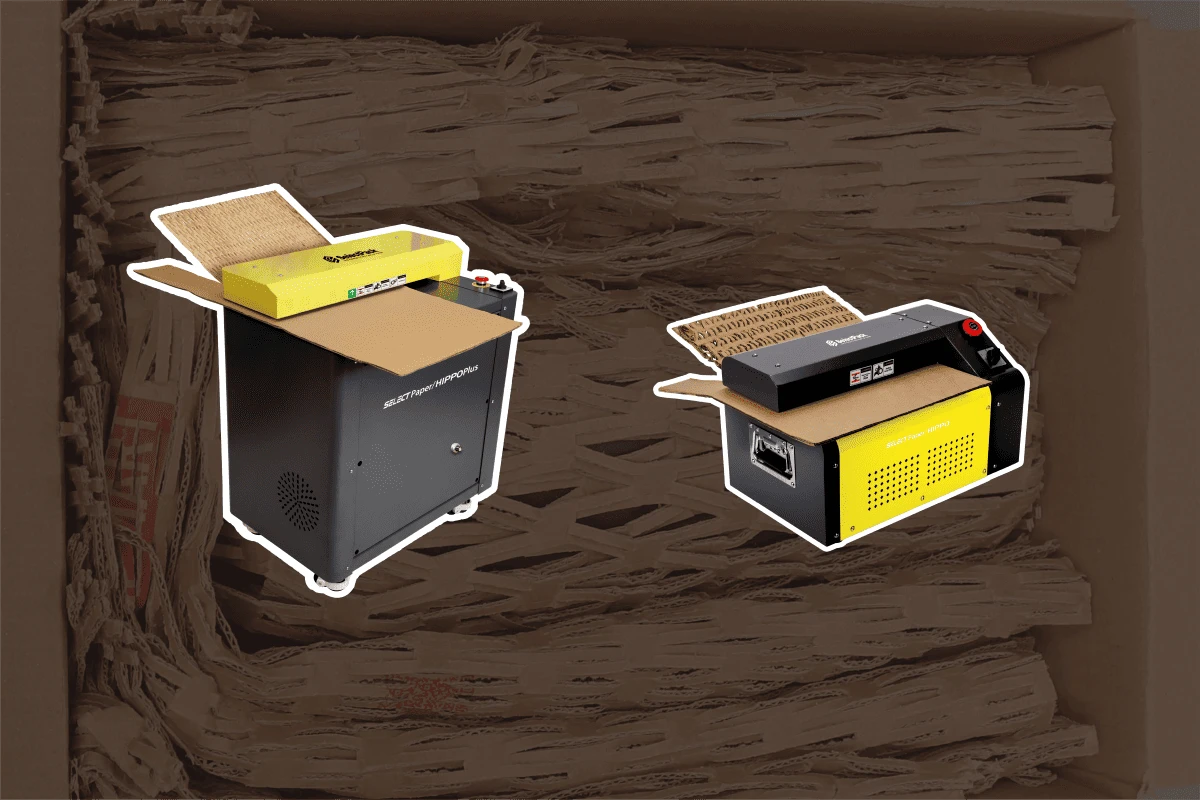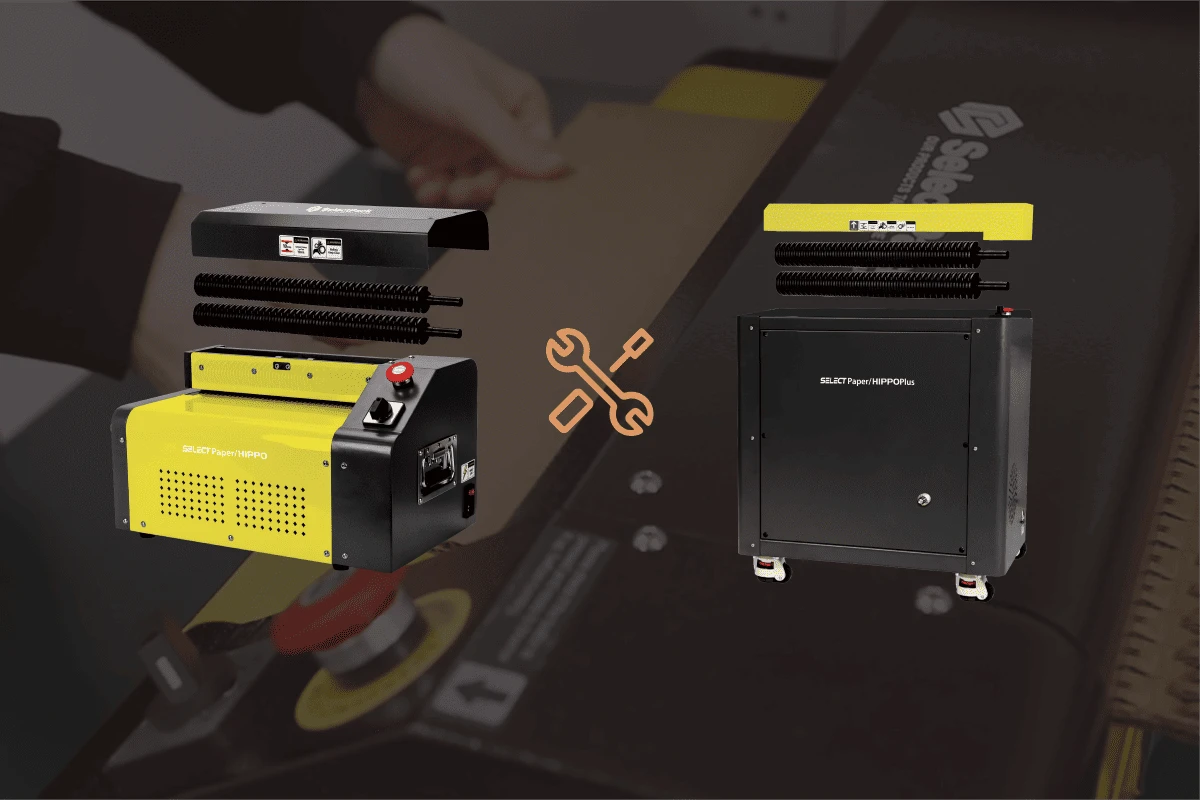
In modern warehouses, fulfillment centers, and manufacturing facilities, a cardboard shredder is often treated as a simple auxiliary machine—something operators expect to “just work.” In reality, a cardboard shredder goes down, the impact is immediate: packing stations slow, operators wait, void fill runs short, and shipping schedules are disrupted.
The most common complaints businesses report include frequent jams, inconsistent output quality, unexpected downtime, and blades wearing out faster than anticipated. These issues are rarely caused by a single defect. More often, they result from a combination of cardboard preparation habits, feeding techniques, maintenance gaps, and mismatches between machine capacity and real-world usage.
This troubleshooting guide is designed for businesses that rely on cardboard shredders as part of their daily packaging workflow. It explains why problems occur, how to prevent them, and how to extend the service life of your machine—without relying on reactive fixes or costly repairs.
Understanding How Cardboard Shredders Fail
Why Jams Happen More Often Than Expected
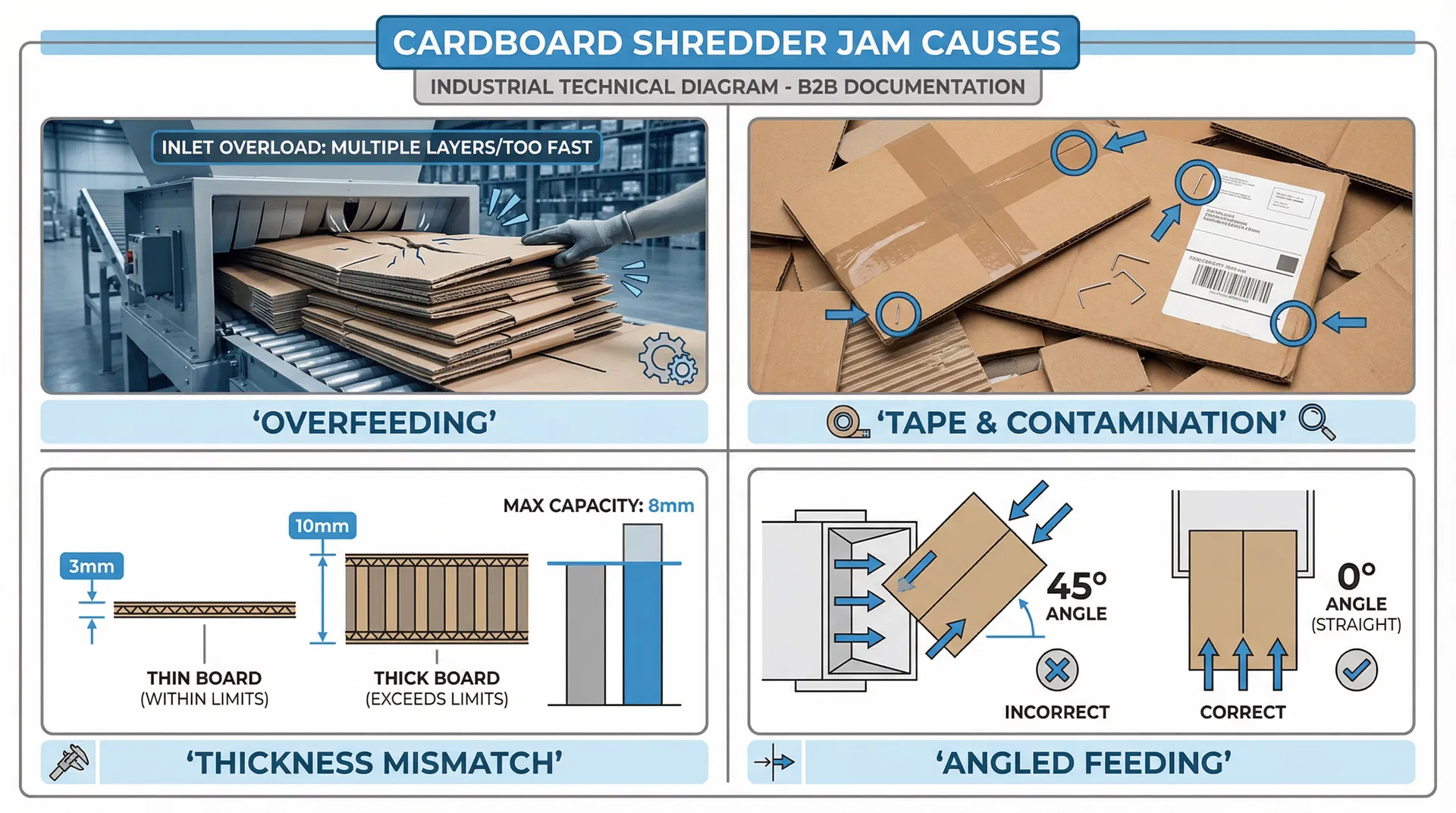
Most cardboard shredder jams are mechanical symptoms of operational stress. One of the primary causes is overfeeding—operators pushing multiple layers or bulky cartons into the cutting zone faster than the machine can process them. Uneven loading, especially feeding cardboard at an angle, can also cause the material to twist and bind between cutting rollers.
Another frequent issue is a mismatch between cardboard thickness and machine capacity. Even industrial cardboard shredders have defined limits for corrugated thickness. Regularly exceeding those limits increases resistance, stresses the motor, and dramatically raises the risk of jams.
Hidden contaminants are another major factor. Tape, plastic labels, stretch wrap, metal staples, and strapping may seem harmless, but they interfere with cutting geometry and accelerate blade wear, often leading to sudden blockages.
Downtime Is Usually a Symptom, Not the Root Cause
When a cardboard shredder stops working, the machine itself is rarely the core problem. Downtime is often the result of operator habits, such as inconsistent feeding or skipping basic checks, combined with insufficient maintenance routines.
In many cases, shredders are also used outside their intended application—for example, light-duty machines running continuously in high-volume environments. These mismatches compound wear and make failures inevitable.
How to Prevent Cardboard Shredder Jams
Proper Cardboard Preparation Before Shredding
Effective troubleshooting starts before cardboard even enters the shredder. All tape, labels, and strapping should be removed whenever possible. While modern shredders are robust, adhesive buildup and plastic residue increase drag and dull blades over time.
Flattening cartons is equally important. Folded or partially collapsed boxes create uneven thickness, which can cause the shredder to grab material unevenly. Oversized cartons should be cut into smaller sections so the shredder processes them smoothly and consistently.
For detailed guidance on cardboard preparation, see our Cardboard Preparation Guide.
Feeding Techniques That Reduce Stress on the Machine
Feeding technique has a direct impact on machine reliability. Single-sheet feeding provides the most consistent results, especially for thicker corrugated board. Batch feeding may be acceptable for thinner material, but only when done gradually.
Cardboard should always be fed straight and centered into the cutting inlet. Angled feeding introduces lateral forces that increase resistance and raise the risk of jamming. Maintaining a steady feed rate—rather than forcing material quickly—allows the shredder to operate within its designed load range.
Match Cardboard Type to Output Style
Not all cardboard behaves the same when shredded. Strip-cut output works well for cushioning and void fill, while perforated or mesh-style output is better suited for wrapping and interleaving.
Single-wall cardboard is generally easier to process than double-wall or triple-wall board. Waxed, laminated, or moisture-resistant cardboard should be avoided altogether, as these materials resist cutting and significantly shorten blade life.
Common Jam Causes: Visual Guide
Diagnosing and Clearing a Jam Safely
Early Warning Signs of an Incoming Jam
Most jams provide warning signs before becoming critical. A noticeable change in motor sound—such as a deeper or strained tone—is often the first indicator. Output may become inconsistent, torn, or irregular, and vibration levels may increase as resistance builds.
Recognizing these signals early allows operators to stop feeding material before a full jam occurs.
Step-by-Step Jam Clearing Procedure
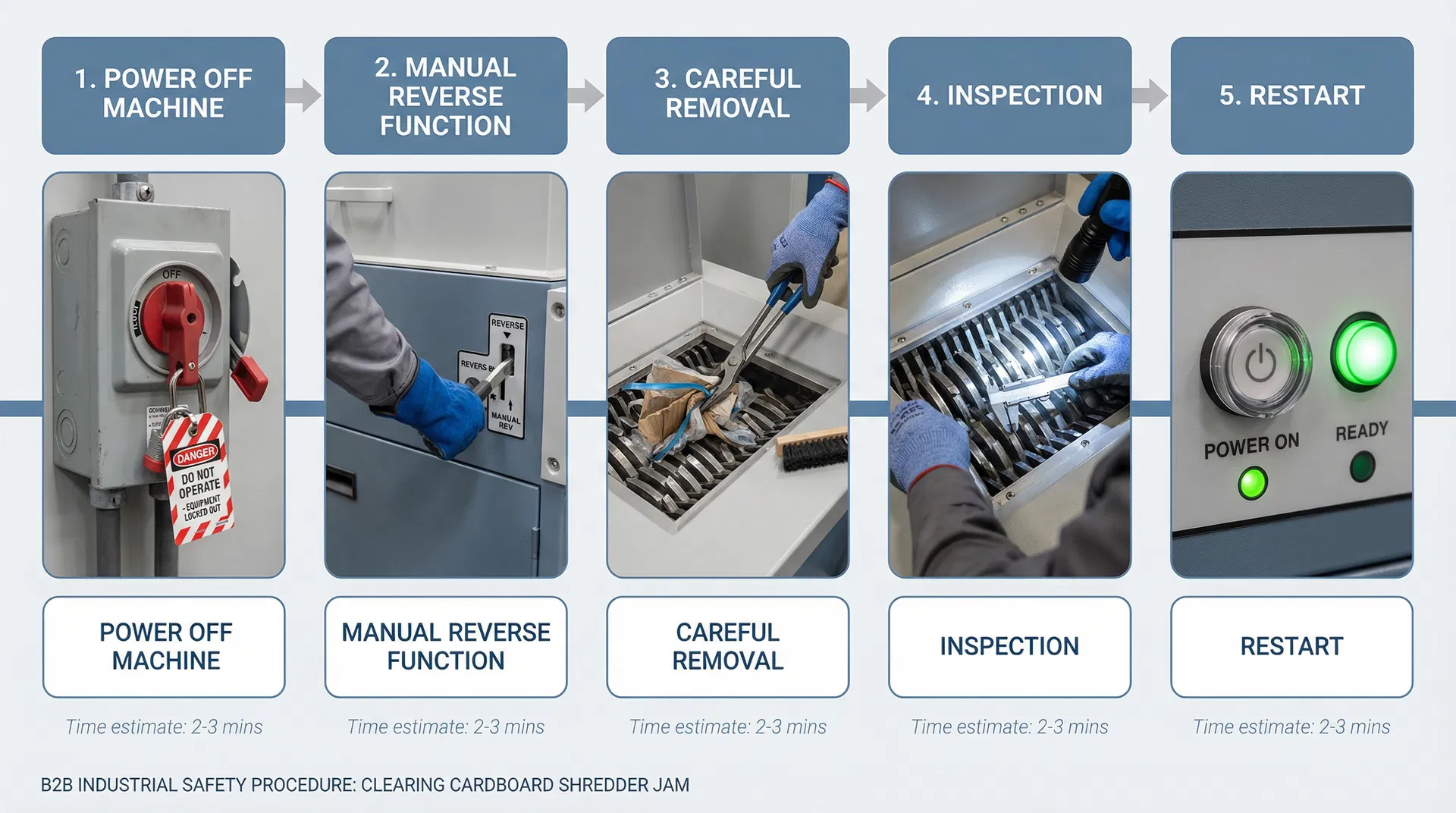
When a jam does occur, safety comes first. Always power off the machine and follow lockout procedures if applicable. Many cardboard shredders include a manual reverse function, which should be used to gently back material out of the cutting zone.
If manual removal is necessary, operators should remove lodged cardboard carefully by hand, ensuring no tools contact the blades or rollers. Once cleared, the cutting area should be inspected before restarting.
What Not to Do During a Jam
Forcing cardboard through a jammed shredder almost always causes further damage. Using screwdrivers, pry bars, or metal tools near blades risks chipping cutting edges and misaligning components. Restarting the machine without inspection can immediately recreate the jam.
Safe Jam Clearing Procedure: Step-by-Step
Reducing Unplanned Downtime
Establishing a Preventive Maintenance Routine
Preventive maintenance is the most effective way to reduce downtime. Daily checks should include visual inspection, listening for abnormal sounds, and removing accumulated dust or debris.
Weekly inspections should focus on rollers, blade edges, and fasteners. Monthly checks can include verifying alignment, tightening bolts, and confirming smooth rotation of cutting components.
Operator Training: The Most Overlooked Factor
Even the best cardboard shredder will fail if operators are not trained properly. Clear standard operating procedures (SOPs) help ensure consistent use across shifts. Common mistakes—such as overfeeding or skipping preparation—should be addressed through training.
Placing quick-reference guides near the machine reinforces good habits and reduces user error.
For comprehensive guidance on machine selection and operation, see How to Choose the Right Cardboard Shredder for Your Business.
Environmental Factors That Affect Performance
Dust accumulation can interfere with moving parts and cooling systems. High humidity increases cardboard moisture content, making material harder to cut and more likely to bind. Machine placement also matters—installing shredders in high-traffic areas increases the risk of misuse and accidental damage.
How to Extend Cardboard Shredder Blade Life
What Actually Wears Down Blades
Blade wear is primarily caused by abrasive contaminants, excessive thickness, and continuous overload operation. Even hardened steel blades degrade rapidly when exposed to tape residue or plastic.
Best Practices for Maximizing Blade Longevity
Staying within the manufacturer’s recommended cardboard thickness is critical. Some machines allow blade rotation or flipping, which can double usable life when done correctly. Keeping cutting components clean prevents residue buildup that accelerates wear.
When Blades Should Be Serviced or Replaced
Torn output, increased noise, and higher resistance are common indicators that blades need service. Visual inspection may reveal rounded or chipped cutting edges. In business environments, blade life varies widely depending on usage intensity and material quality, but proactive replacement prevents unexpected failures.
Common Troubleshooting Scenarios (Quick Fix Guide)
| Problem | Likely Cause | Quick Fix |
| Machine jams frequently | Overfeeding, contamination, or thickness mismatch | Reduce feed rate, remove tape/labels, verify cardboard thickness |
| Output is torn or uneven | Dull blades or misalignment | Inspect blade edges, verify blade alignment, consider blade replacement |
| Increased noise or vibration | Loose fasteners, bearing wear, or blade damage | Tighten all bolts, check bearings, inspect blade condition |
| Motor sounds strained | Overload or blade resistance | Reduce feed rate, check for jams, verify blade sharpness |
| Machine stops unexpectedly | Thermal overload or jam | Allow machine to cool, clear any jams, verify adequate ventilation |
When the Problem Isn’t the Shredder
Sometimes, apparent shredder failures are actually symptoms of upstream or downstream issues:
•Cardboard quality issues: Waxed, laminated, or heavily contaminated cardboard may exceed machine capacity
•Operator error: Improper feeding, overfeeding, or skipping preparation steps
•Inadequate maintenance: Skipped maintenance intervals accelerate wear and failures
•Wrong machine for the job: Light-duty shredders used in high-volume environments will fail prematurely
For guidance on selecting the right machine for your operation, see Industrial Cardboard Shredder ROI.
Choosing the Right Machine for Your Operation
Signs You’ve Outgrown Your Current Shredder
If your operation experiences frequent jams, inconsistent output, or constant downtime despite proper maintenance, you may have outgrown your current machine. Consider upgrading if:
•Daily cardboard volume exceeds the machine’s rated capacity
•You regularly process double-wall or triple-wall corrugated board
•Downtime is affecting production schedules or shipping timelines
•Blade replacement frequency is increasing
SelectPack offers a range of industrial cardboard shredders, including the HippoPlus P50 and Hippo P20, designed to handle high-volume operations with minimal downtime.
Conclusion
Cardboard shredder troubleshooting is fundamentally about prevention. By establishing clear cardboard preparation standards, training operators consistently, and implementing a preventive maintenance routine, businesses can dramatically reduce jams, extend blade life, and maximize equipment uptime.
The most successful operations treat their cardboard shredders as critical infrastructure—not auxiliary equipment. They invest in operator training, maintain preventive schedules, and address warning signs before they become failures.
For personalized guidance on optimizing your cardboard shredder performance or selecting the right equipment for your packaging operation, contact SelectPack’s packaging experts today.
Related Resources
•How to Choose the Right Cardboard Shredder for Your Business
•Cardboard Shredder Output Types: Strip-Cut vs Mesh-Cut Cardboard for Packaging
•Cardboard Shredder vs Buying Void Fill: Cost & Sustainability Comparison
•Industrial Cardboard Shredder ROI: How Long Does It Take to Pay for Itself?
•How to Prepare Cardboard for a Cardboard Shredder