A spray foam packaging machine search usually points to foam-in-place packaging equipment, not construction insulation spray foam. In packaging, buyers are typically looking for a system that dispenses expanding foam to create protective cushions, foam bags, or direct-formed packaging around a product. The best first step is to clarify the workflow you need before comparing equipment.
The word “spray” creates confusion. Some buyers use it because they imagine foam being dispensed from a nozzle. Others are actually looking for a direct foam-in-place machine, a foam-in-bag packaging system, or expandable foam bags for shipping. If the supplier hears only “spray foam,” the conversation can drift toward the wrong product category.
For packaging applications, define whether the job needs direct dispensing, bagged foam, or a simpler expandable bag workflow before asking for equipment.
First, Separate Packaging Foam From Construction Spray Foam
Construction spray foam and packaging foam-in-place are different buying problems. Construction foam is usually discussed in the context of insulation, building cavities, air sealing, and contractors. Packaging foam is discussed in the context of product protection, shipping damage, carton fit, operator workflow, and pack repeatability.
If your goal is to protect parts, instruments, components, electronics, assemblies, or service items during shipment, use packaging language when contacting suppliers:
- Foam-in-place packaging system.
- Foam packaging equipment.
- Foam-in-bag packaging.
- Expanding foam bags for shipping.
- Direct dispensing foam packaging.
These terms help the supplier understand that the application is protective packaging, not building insulation.
The shared word “foam” should not make buyers treat all polyurethane foam applications as the same purchasing problem. For construction spray polyurethane foam background, EPA’s health concerns about spray polyurethane foam page is a more relevant reference than packaging equipment pages; the SelectPack equipment discussion still needs to stay focused on protective packaging.
Spray Foam Packaging Machine Workflow Options Hidden Behind the Search Term
“Spray foam packaging machine” can hide three different workflows.
| Workflow | What the buyer may be picturing | When it may fit |
|---|---|---|
| Direct foam-in-place dispensing | Operator dispenses foam into the pack area and positions the product | Irregular products, mixed shapes, or jobs needing operator control. |
| Foam-in-bag packaging | Equipment creates foam cushions or bags used inside the carton | Repeatable products, cleaner handling, and controlled bag placement. |
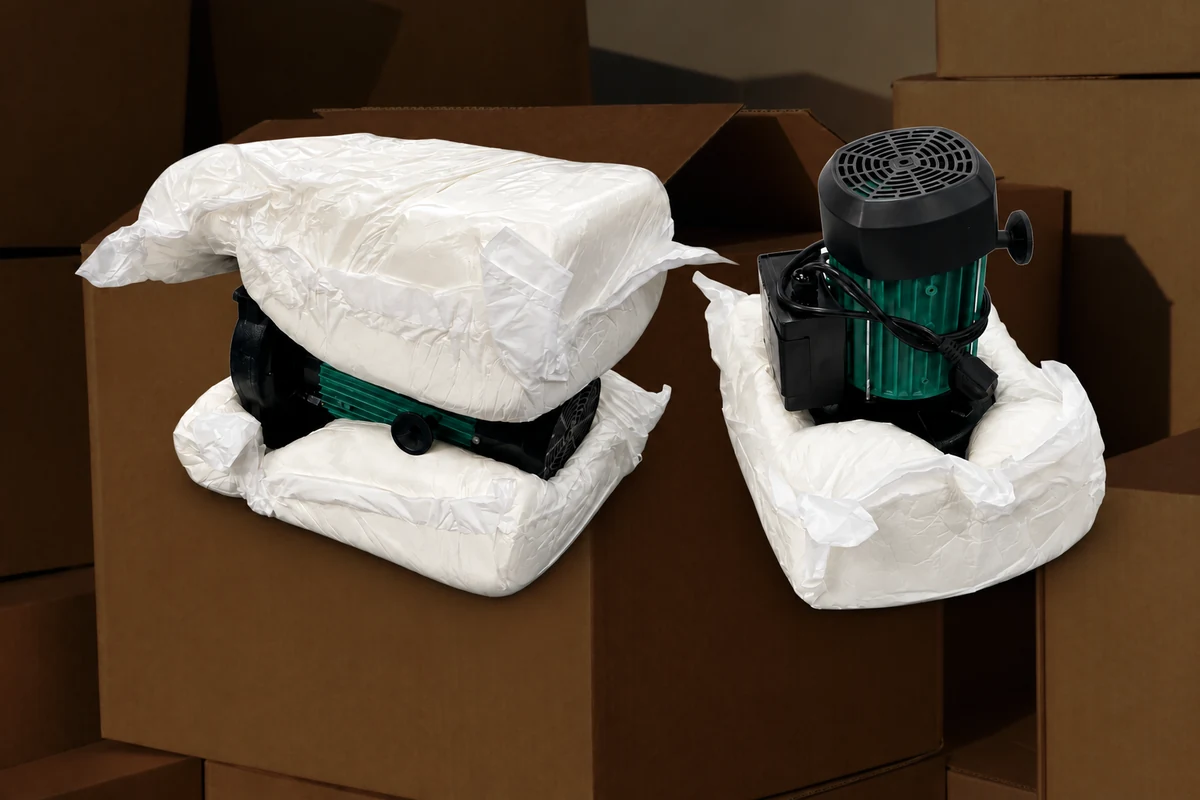
| Expandable foam bags | Preformed bags expand after activation | Lower-volume use, trial shipments, repair parts, or field service packs. |
These workflows can all use expanding foam, but they do not feel the same at the packing station. The right choice depends on volume, SKU mix, product sensitivity, operator skill, and how much control the package needs.
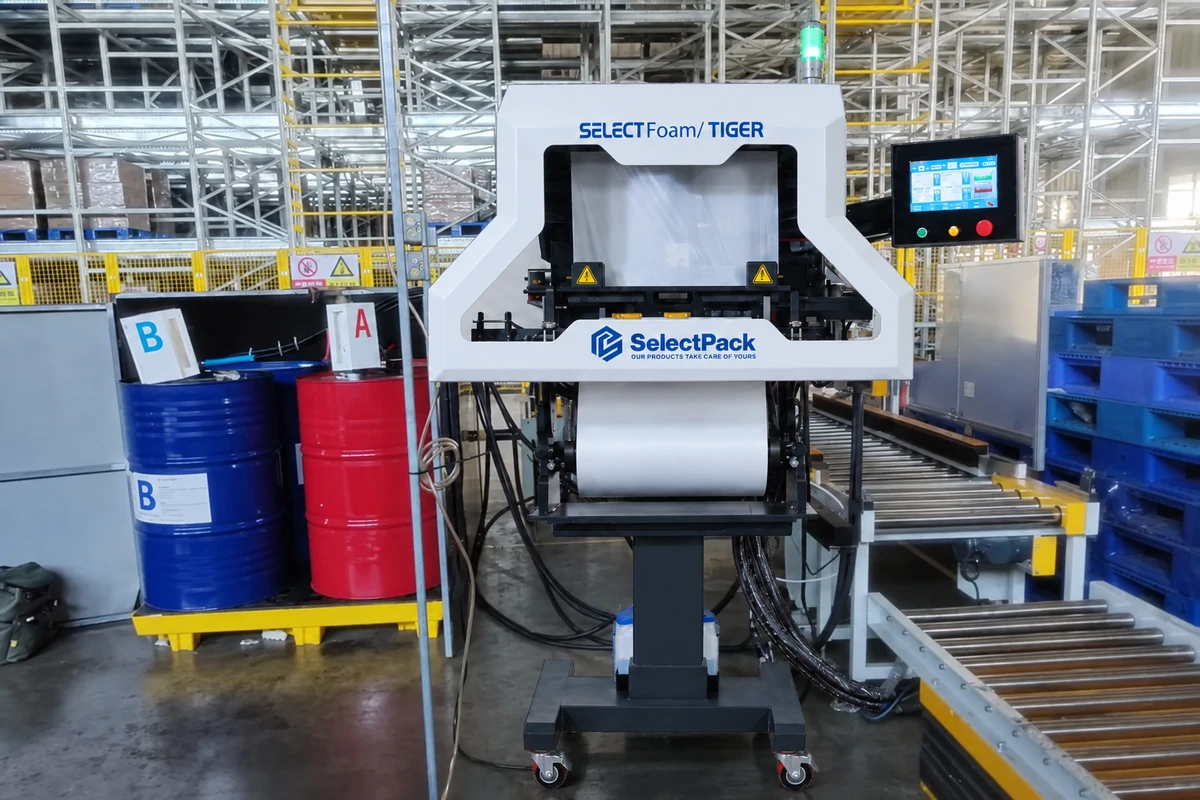
The SelectFoam foam-in-place packaging range is the relevant SelectPack product family context for these packaging workflows. It is not a construction spray foam category.
Packaging Requirements That Change the Answer
The same product can lead to different recommendations depending on the packaging requirement. A fragile part that ships once a month may be better tested with expandable bags. A repeat SKU moving through the same station every day may justify a more controlled foam-in-bag process. A large irregular component may need direct dispensing, but only after the outer package and restraint method are reviewed.
Clarify these requirements before asking for a spray foam packaging machine:
- Is the product fragile because of shock, surface abrasion, corner impact, or internal movement?
- Does the pack need a clean presentation, or is functional transport protection enough?
- Does the receiver need to unpack the product quickly without tools?
- Will the same operator pack the item each time, or will the process be shared across shifts?
- Is the carton size fixed, or does it change by order?
- Does the product require a liner, bag, or wrap before foam is added?
These questions turn a vague spray foam search into a packaging engineering discussion.
When Direct Dispensing Makes Sense
Direct dispensing is often considered when the product has an irregular shape or when the operator needs to control where the foam is placed. It can help when standard cushions leave gaps, when the product changes often, or when the package needs a custom-formed bottom and top cushion.
If the team is specifically evaluating operator-controlled dispensing, the handheld foam-in-place packaging guide gives a narrower checklist for training, station control, and trial boundaries.
It is not automatically better than a bag workflow. Direct dispensing usually requires a clear process, trained operators, and attention to timing and product placement. The buyer should ask:
- Who controls the amount and position of foam?
- How will operators avoid overpacking or underpacking?
- How will product surfaces be protected if direct contact is a concern?
- How will the team document a repeatable pack method for recurring SKUs?
If the process cannot be repeated consistently, the packaging may vary too much from shipment to shipment.
When Foam-in-Bag or Expandable Bags Fit Better
Foam-in-bag systems can be a better fit when the team wants more controlled cushion placement and cleaner handling. The operator can place foam cushions around the product without dispensing loose foam directly into the carton area.
When bag output is the likely route, compare the operating questions in the foam-in-bag packaging system guide before treating a direct spray-style machine as the default.
Expandable foam bags can be useful when volume is lower, equipment investment is not yet justified, or the buyer wants to test whether expanding foam solves the protection problem before building a full station.
If the need is mainly lower-volume shipping protection without a full equipment step, the expanding foam bags for shipping guide is the closer buyer path.
These alternatives matter because the buyer searching for a spray foam packaging system may not actually need a direct dispensing machine. They may need a bag workflow that gives enough protection with less process complexity.
Terms to Use When Talking to Suppliers
When you contact a supplier, replace broad spray foam language with a clearer description:
- “We need foam-in-place packaging for irregular metal parts.”
- “We want to compare direct dispensing and foam-in-bag workflows.”
- “We ship high-value service parts and want to test expandable foam bags.”
- “Our damage issue is product movement inside the carton, not simple void fill.”
- “We need the supplier to review carton size, product weight, and unpacking requirements.”
These statements give the supplier more useful information than “best spray foam packaging system.”
Search Term Disambiguation Map
If your team uses the spray foam wording internally, translate it before requesting a quote. The map below keeps the inquiry in the packaging lane.
| If the team says | It may actually mean | Ask this next |
|---|---|---|
| Spray foam packaging machine | Direct foam-in-place dispensing | Does the operator need to control where foam is placed? |
| Spray foam packaging system | Foam-in-place workflow | Is the target direct dispensing, foam-in-bag, or expandable bags? |
| Spray foam for packing | Protective packaging foam | What product, carton, and damage mode are being solved? |
| Best spray foam packaging system | Workflow comparison | What makes a system “best” for this product: repeatability, flexibility, speed, or surface protection? |
| Spray foam equipment | Possibly non-packaging equipment | Is this packaging protection, or construction/manufacturing foam use? |
After this screen, the buyer should be able to state the product type, damage mode, package route, preferred workflow if known, and whether the next step is a sample pack, workflow comparison, or quote.
Search Intent Red Flags
The search may point to the wrong solution if the buyer is trying to solve a problem that foam alone cannot solve. Watch for these red flags:
- The outer carton crushes before the cushioning can perform.
- The shipment needs pallet blocking, bracing, or structural restraint.
- The product finish requires a clean surface barrier or non-contact packaging.
- The goods are light, low-risk, and only need simple void fill.
- The buyer wants one machine recommendation without sample testing.
In those cases, foam-in-place may still be part of the answer, but it should not replace package design, outer packaging, or transit testing. The search term should be narrowed until the supplier can map the packaging workflow, not just respond to the word “spray.”