Packaging materials are a necessary part of modern logistics and e-commerce operations. Every product shipped must be protected from vibration, impact, and handling damage during transportation. For warehouses, fulfillment centers, and manufacturers, cushioning materials such as bubble wrap have long been the standard solution to prevent shipping damage.
However, as order volumes grow, packaging costs are becoming a more significant operational concern. Businesses shipping hundreds or thousands of orders per day can spend $50,000-$200,000 annually on cushioning materials alone. At the same time, new packaging technologies are changing how companies approach cushioning production.
A paper bubble machine converts kraft paper rolls into embossed paper cushioning that performs similar protective functions to traditional bubble wrap. Instead of purchasing large quantities of pre-made cushioning materials, companies generate protective paper bubbles directly at the packing station using kraft paper rolls. Understanding how these machines work is essential for evaluating this alternative.
This article provides a comprehensive cost comparison between paper bubble machines and traditional bubble wrap, examining not only material costs but also storage requirements, logistics efficiency, and operational factors.
Understanding the Real Cost of Plastic Bubble Wrap
While bubble wrap appears inexpensive on a per-roll basis, the total cost of ownership extends far beyond the material purchase price. Many warehouses are switching to paper bubble machines specifically because they recognize these hidden costs.
Material Purchase Costs
Most companies purchase bubble wrap in large rolls or pre-cut sheets. Prices vary depending on bubble size, film thickness, roll width, and supplier contracts.
While the cost per roll may appear reasonable, warehouses and fulfillment centers that ship hundreds or thousands of orders per day can consume large amounts of cushioning material. Frequent reordering becomes necessary to maintain supply.
Over time, the cumulative cost of these materials can represent a significant portion of the overall packaging budget.
Typical bubble wrap costs:
•Small bubbles (1/4″): $0.30-$0.50 per roll
•Large bubbles (1/2″): $0.25-$0.40 per roll
•Pre-cut sheets: $0.40-$0.80 per package
Storage and Warehouse Space
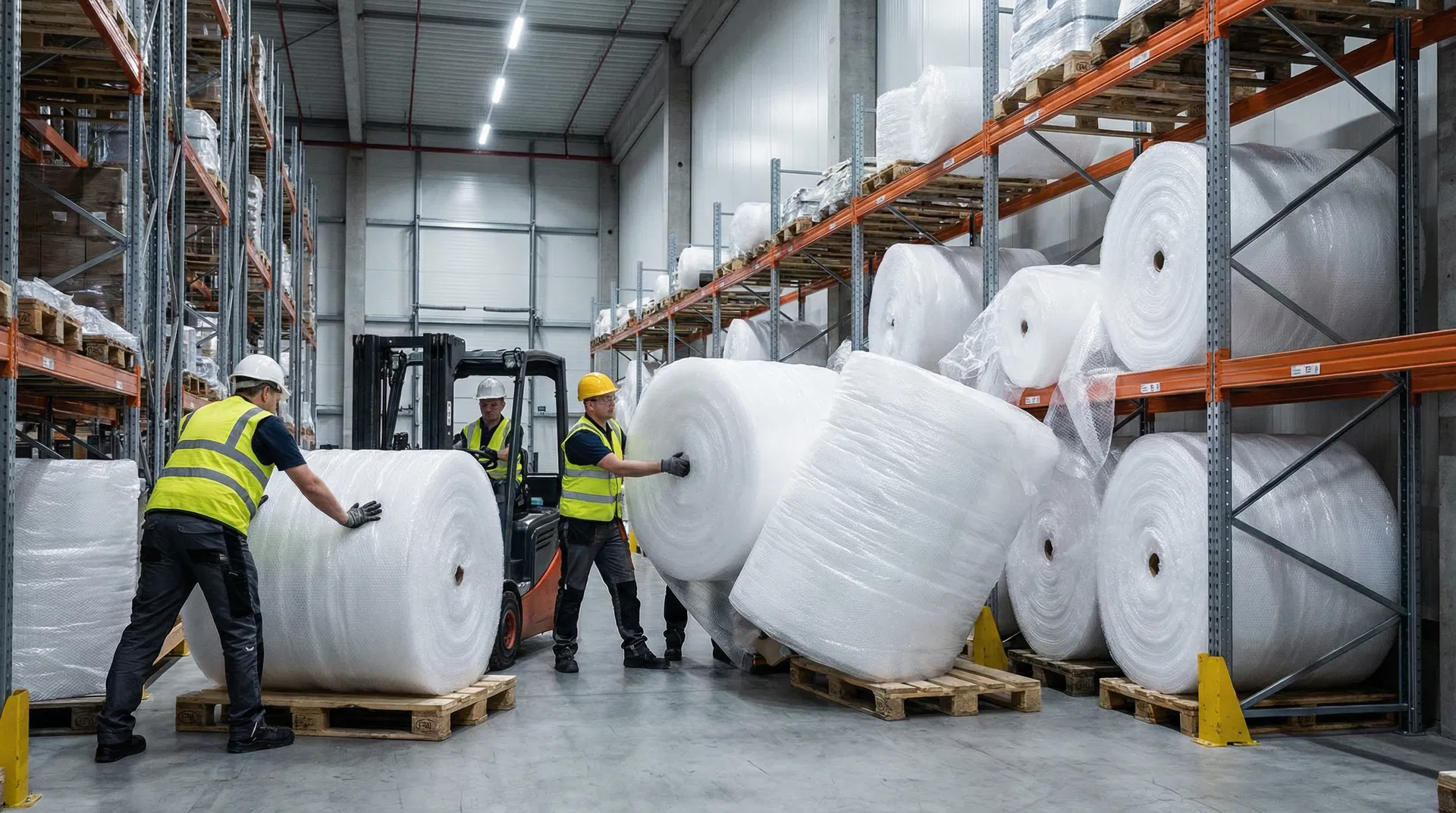
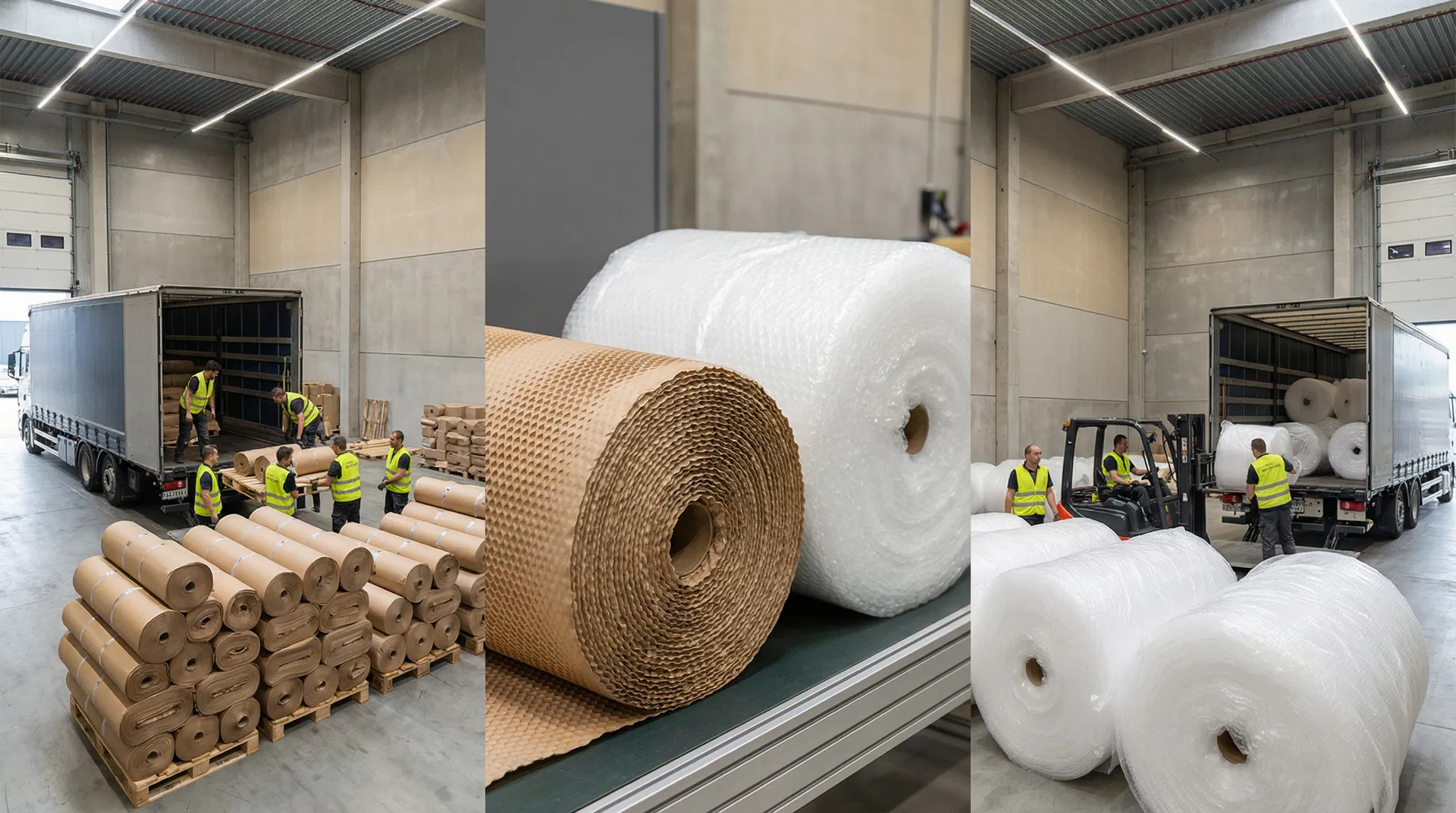
Plastic bubble wrap rolls are bulky compared with many other packaging materials. Even when compressed for shipping, they occupy considerable warehouse space.
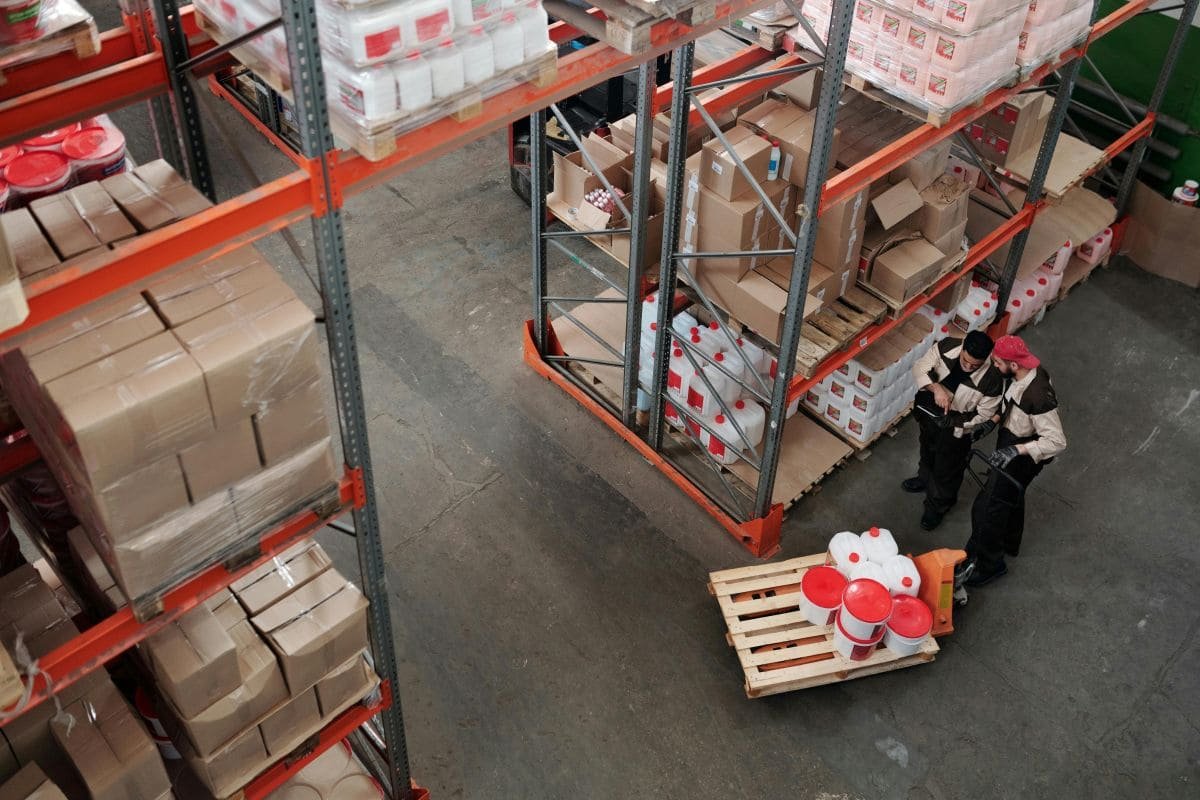
Many facilities dedicate shelving or pallet storage areas specifically for cushioning materials. As packaging volume increases, storing multiple pallets of bubble wrap can reduce space available for inventory or packing stations.
This issue is especially important in urban fulfillment centers where warehouse space is limited and expensive.
Logistics and Shipping Costs
Although bubble wrap is lightweight, it is physically large. Because of its volume, transportation efficiency is relatively low when shipping these materials from suppliers to warehouses.
Companies often require frequent deliveries to maintain sufficient stock levels. These logistics requirements increase transportation costs and add complexity to supply planning.
Packaging Waste and Disposal
Another often overlooked cost is packaging waste. Bubble wrap frequently needs to be cut or trimmed to fit different products, which can generate unused material.
Over time, these off-cuts accumulate as waste. In some regions, companies must pay disposal or recycling fees for plastic packaging materials. Even when recycling options exist, handling plastic film waste can be inconvenient compared with paper-based materials. On-demand paper bubble production significantly reduces this waste.
Cost Structure of a Paper Bubble Machine Packaging System
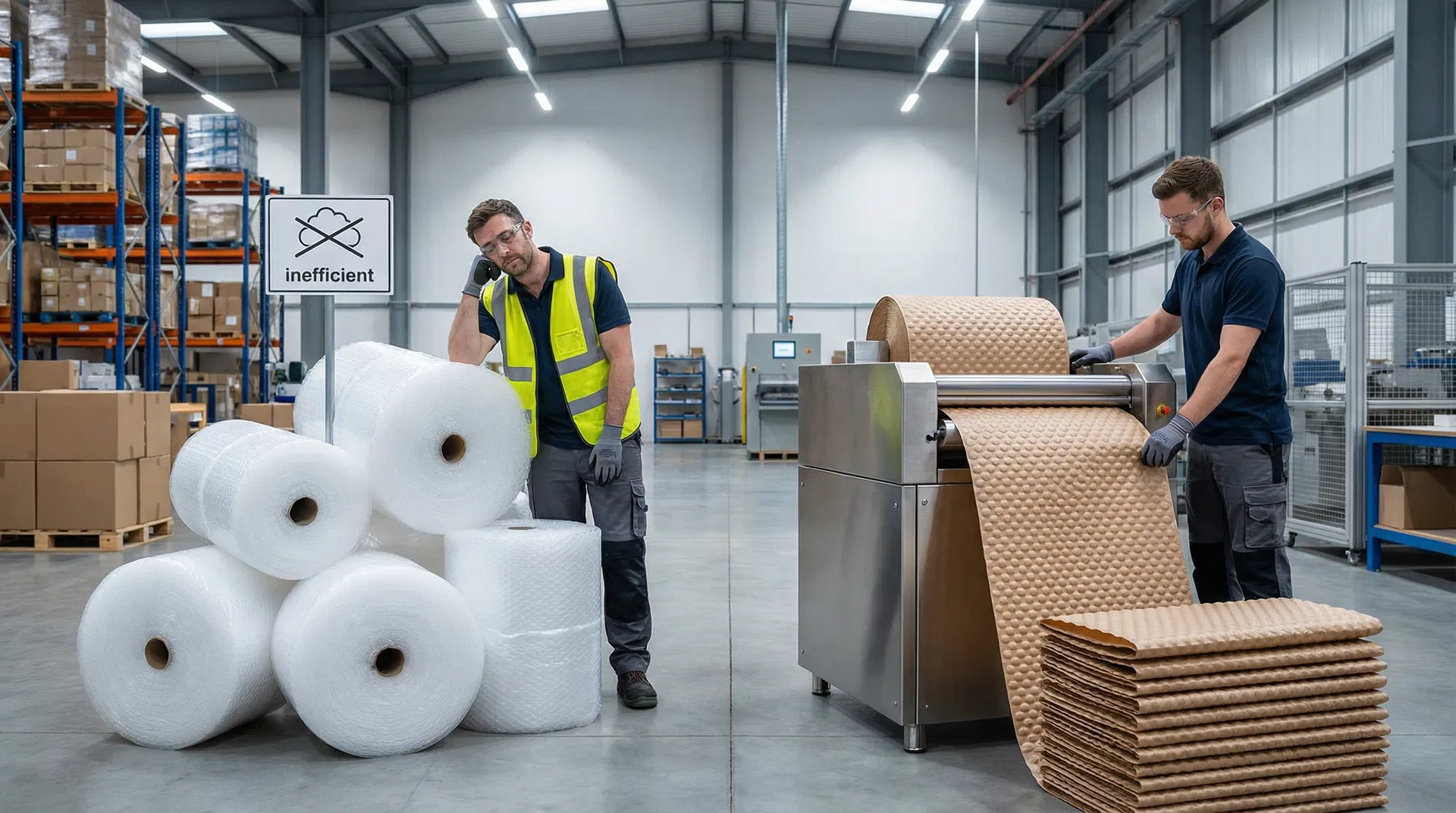
Unlike traditional bubble wrap, a paper bubble machine produces cushioning material on demand using kraft paper rolls. Instead of storing large volumes of finished packaging material, businesses generate protective paper bubbles directly at the packing station.
This approach changes the overall cost structure of packaging operations. Rather than relying solely on ongoing material purchases, companies combine an initial equipment investment with relatively simple paper consumables.
Initial Equipment Investment
A paper bubble machine requires an upfront investment in packaging equipment. Prices vary depending on machine size, production capacity, and features.
Some machines are compact desktop models designed for small packing operations, while larger systems are built for high-volume warehouses.
Although the initial purchase cost may appear higher than simply buying packaging materials, packaging equipment is typically used for several years. The cost can therefore be distributed across thousands or even millions of shipments.
Paper Material Costs
Paper bubble machines use kraft paper rolls instead of plastic film. Kraft paper is widely available and generally more compact to transport and store than bulky bubble wrap rolls.
Because the cushioning material is produced only when needed, businesses can maintain a simple inventory of paper rolls instead of storing large volumes of finished packaging materials.
In many cases, kraft paper is also easier to recycle within standard paper recycling streams.
On-Demand Production Advantages
A major advantage of a paper bubble machine is on-demand production. Operators can generate the exact amount of cushioning needed for each package.
This flexibility reduces unnecessary material use and helps prevent over-packing products. In high-volume operations, even small improvements in material efficiency can lead to noticeable cost savings. For e-commerce fulfillment centers, this efficiency is particularly valuable.
Reduced Storage Requirements
Kraft paper rolls are typically more compact than plastic bubble wrap rolls. A single pallet of paper rolls can produce a large amount of cushioning material once converted by the machine.
Because cushioning is generated directly at the packing station, businesses no longer need to store bulky finished packaging materials. This can free up valuable warehouse space for inventory or additional packing stations.
Direct Cost Comparison: Paper Bubble Machine vs Bubble Wrap
When comparing paper bubble machines with traditional bubble wrap, it is important to look beyond the initial purchase price. The true cost of packaging also includes material consumption, storage requirements, logistics efficiency, and operational factors.
Both plastic bubble wrap and paper bubble cushioning serve the same purpose—protecting products during transportation—but they differ in how they are produced, stored, and used. For a detailed ROI analysis, consider all these factors together.
Material Cost Per Package
Cost per package is one of the most important metrics for packaging operations. While bubble wrap may seem inexpensive per roll, high consumption rates can increase overall expenses.
Paper bubble cushioning produced by a machine often uses kraft paper rolls efficiently. Because the cushioning structure is created during the packing process, similar protection can sometimes be achieved with less material volume.
Across thousands of shipments, even small differences in cost per package can significantly affect annual packaging costs.
Cost comparison:
•Bubble wrap: $0.40-$0.80 per package
•Paper bubble machine: $0.15-$0.35 per package
Storage and Handling Costs
Bubble wrap requires dedicated storage space and frequent restocking. Managing these materials can increase warehouse handling time and space requirements.
Paper bubble machines allow businesses to store compact kraft paper rolls instead of bulky finished cushioning materials. This simplified storage approach can improve warehouse organization and reduce packaging inventory management.
Supply Chain Efficiency
Packaging materials must always be available to avoid shipping disruptions. Businesses using bubble wrap must regularly monitor inventory and schedule deliveries from suppliers.
With a paper bubble machine, companies mainly manage supplies of kraft paper rolls. Because these rolls are compact and easy to store, inventory management becomes simpler and more predictable. Understanding how to choose the right paper bubble machine includes evaluating supply chain implications.
| Factor | Bubble Wrap | Paper Bubble Machine |
| Material Format | Pre-made plastic rolls | On-demand paper cushioning |
| Storage Needs | High | Lower |
| Supply Management | Frequent restocking | Compact paper roll inventory |
| Waste Handling | Plastic waste | Paper-based waste |
| Long-Term Cost Potential | Higher at scale | Often lower at scale |
Operational Efficiency and Labor Considerations
Beyond material costs, packaging efficiency significantly affects shipping operations. The speed and simplicity of packing can influence labor productivity and daily throughput.
Traditional packing stations often store bubble wrap on large rolls that must be manually pulled, cut, and wrapped around products. While simple, this process can slow packing operations when volumes increase.
A paper bubble machine produces cushioning material directly at the packing station. Operators can generate the required amount instantly while packing the box. This integrated process can streamline workflows and reduce preparation time.
Additionally, packing stations using on-demand cushioning tend to remain more organized. Instead of storing large rolls of bubble wrap around the workstation, operators produce cushioning only when needed, improving workspace efficiency. For operations handling large daily order volumes, these workflow improvements can also contribute to lower labor costs over time.
Sustainability and Environmental Cost Factors
Sustainability is becoming an important factor in packaging decisions. Many companies are reviewing their materials as part of broader environmental initiatives aimed at reducing plastic use.
Governments and organizations in many regions are encouraging companies to adopt recyclable or paper-based packaging materials. As a result, businesses are reconsidering their reliance on plastic cushioning.
Paper bubble cushioning is typically made from kraft paper, which can often be recycled together with cardboard and other paper packaging waste. Compared with plastic bubble wrap, this can simplify recycling for both businesses and end customers.
In addition, environmentally responsible packaging can improve brand perception. Many consumers prefer packaging that reduces plastic waste, making paper-based cushioning an attractive option for sustainability-focused brands.
When Paper Bubble Machines Save the Most
Although paper bubble machines offer several advantages, they provide the greatest financial benefits in certain packaging environments.
High-Volume Operations
Businesses that ship large volumes of packages each day often gain the most value. In these operations, even small improvements in packaging efficiency or cost per package can produce significant savings over time.
A business shipping 1,000 packages daily with a $0.20 per-package cost advantage saves $200 daily or $50,000 annually—often exceeding the initial equipment investment within 3-6 months.
Space-Constrained Facilities
Companies with limited warehouse space can benefit significantly from on-demand packaging systems. Replacing bulky bubble wrap rolls with compact kraft paper rolls helps optimize storage space and improve warehouse organization.
In expensive urban markets where warehouse space costs $20-$40 per square meter annually, the space savings alone can justify the equipment investment.
Sustainability-Focused Brands
Businesses with strong sustainability goals may find that paper bubble machines support both environmental objectives and operational efficiency by reducing plastic usage. This can also provide marketing advantages and improved brand perception.
Conclusion
Both bubble wrap and paper bubble cushioning can effectively protect products during transportation, but their overall packaging costs can differ significantly depending on how they are used. However, when businesses evaluate the total cost of packaging, several factors must be considered, including material usage, storage space, logistics, labor efficiency, and sustainability.
Paper bubble machines offer a different approach by producing cushioning material on demand from kraft paper rolls. This system can reduce storage needs, simplify supply management, and improve packing station efficiency.
For companies with high shipping volumes, limited storage space, or sustainability goals, paper bubble machines can provide a practical and cost-effective alternative to traditional bubble wrap. As packaging demands continue to grow, investing in a paper bubble machine is becoming a more strategic long-term decision for many warehouses and fulfillment centers.
FAQ
Q: Is paper bubble machine material as protective as bubble wrap?
A: Yes. Paper bubble cushioning provides comparable protection to plastic bubble wrap when properly sized for the product. The embossed bubble structure provides similar shock absorption and impact protection.
Q: What happens if I need to switch back to bubble wrap?
A: You can maintain both systems during a transition period. Many businesses gradually shift to paper bubble machines while maintaining bubble wrap for specific applications.
Q: Are there products that require bubble wrap instead of paper bubbles?
A: Most products can be protected with paper bubble cushioning. However, certain applications like moisture-sensitive items may benefit from plastic bubble wrap’s moisture resistance.
Q: How does the cost compare for small businesses?
A: Even small businesses shipping 100-200 packages daily typically achieve positive ROI within 6-12 months due to material cost savings.
Q: Can I use paper bubble machines for international shipping?
A: Yes. Paper bubble cushioning meets international shipping requirements and is often preferred for its recyclability and sustainability profile.
Related Articles
For more information about paper bubble machines and cost analysis:
•How to Choose the Right Paper Bubble Machine
•Paper Bubble Machine ROI: Cost Savings Analysis
•What Is a Paper Bubble Machine?
•How Paper Bubble Machines Work
•Why Warehouses Are Switching to Paper Bubble Machines
•On-Demand Paper Bubble vs Pre-Made Cushioning Rolls
External Resources
Learn more about packaging costs and industry standards:
•EPA Sustainable Materials Management
•Packaging Dive: Cost Analysis and Trends
•American Packaging Association
Compare Your Costs Today
Ready to calculate your specific cost savings? Our team can help you analyze your current bubble wrap expenses and project your savings with a paper bubble machine.