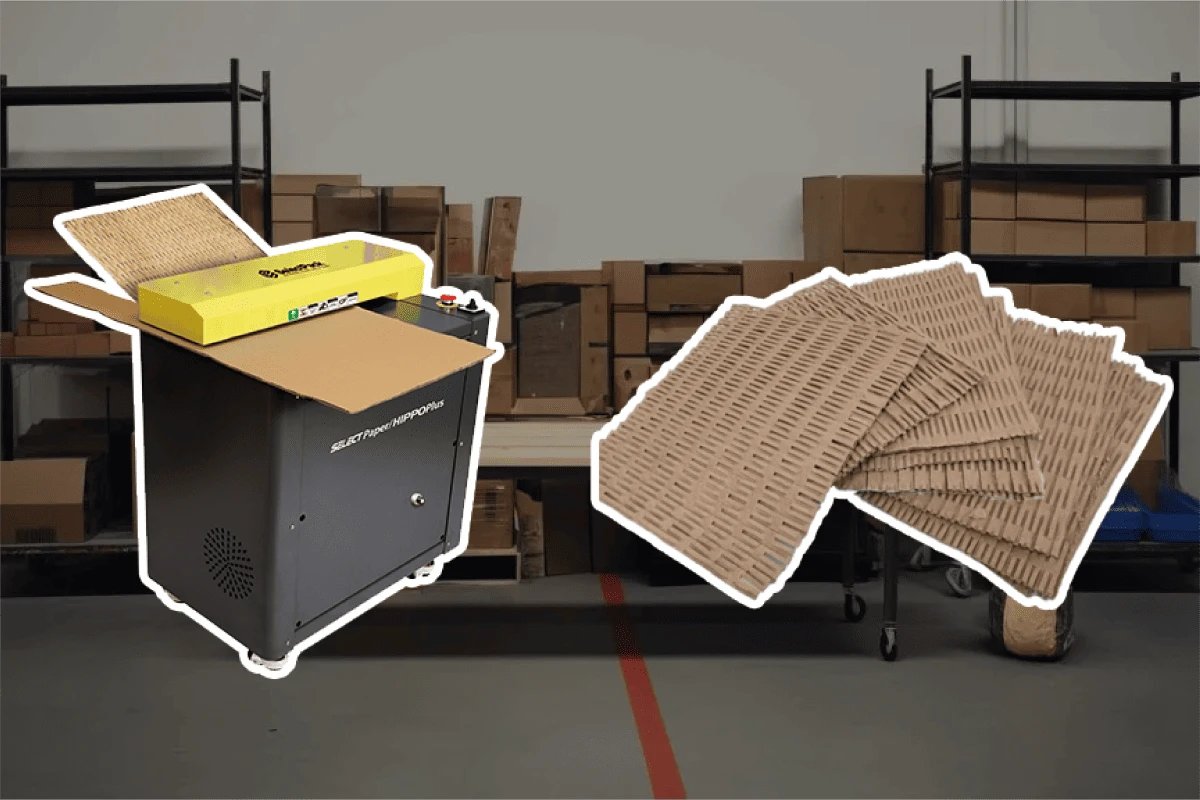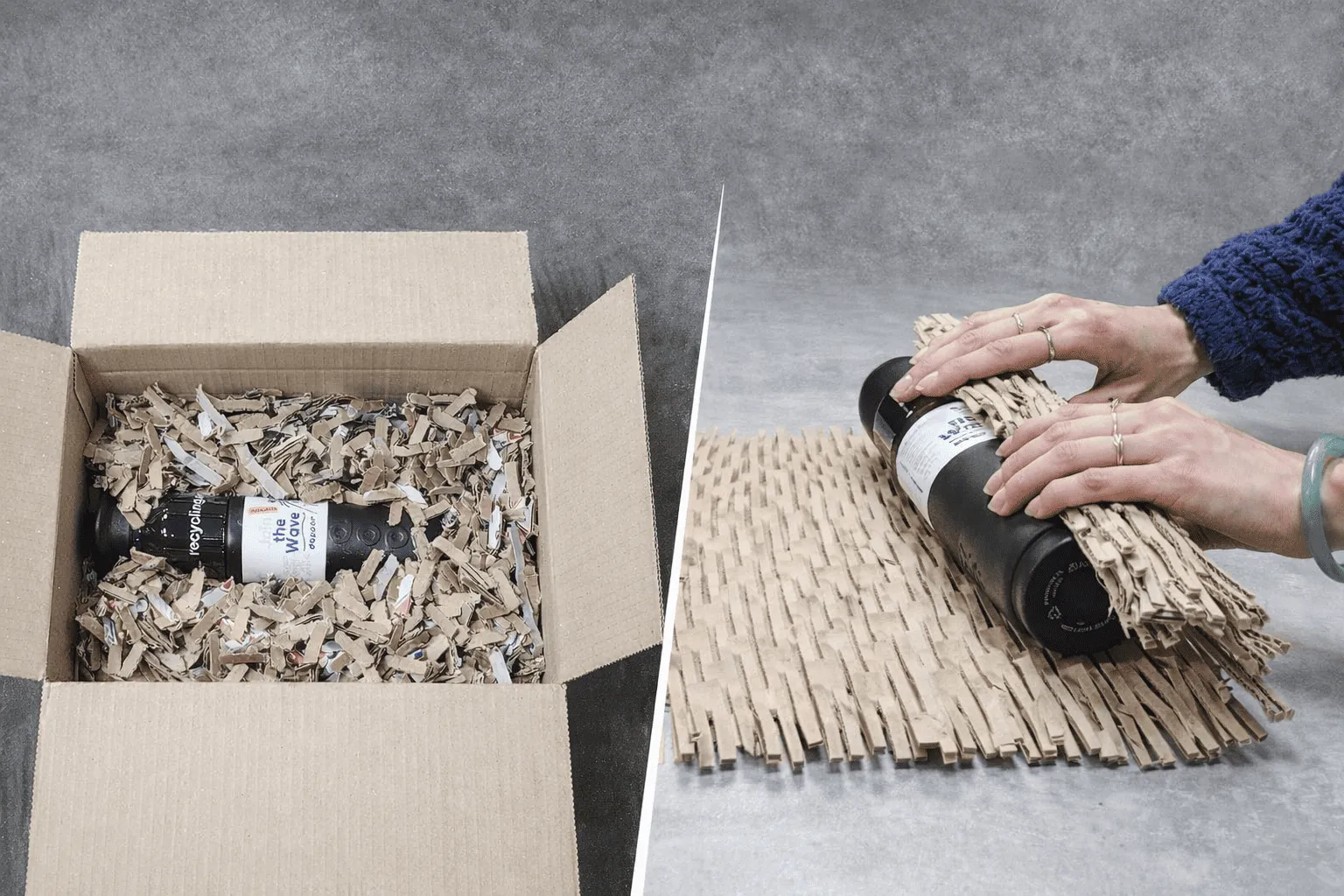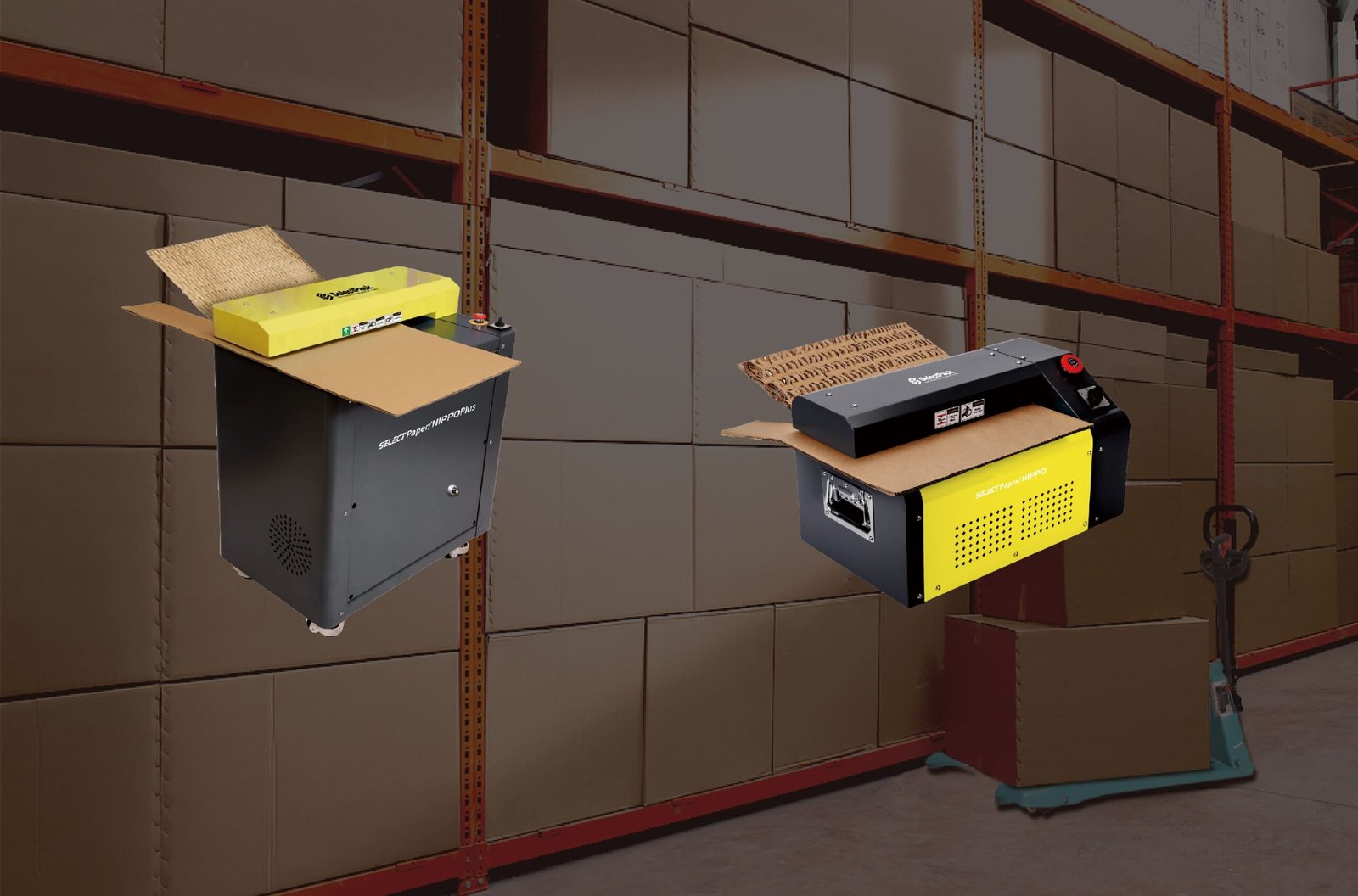
When your warehouse ships 500 orders a day, a single desktop paper bubble machine does the job. When you’re processing 5,000 orders — or 50,000 — the conversation shifts entirely. You’re no longer asking “which machine should I buy?” You’re asking “how do I build a packaging system that keeps pace with my operation without breaking down, running out of material, or creating bottlenecks?”
That’s what this guide is about. We’ll cover what separates an industrial-grade paper bubble machine from an entry-level unit, how to calculate the throughput you actually need, how to deploy multiple machines across a warehouse floor, and what specific industries need to think about before committing to a setup. If you’re still in the early stages of evaluating paper bubble wrap technology, we recommend starting with our complete guide to paper bubble machines first, then coming back here.
What Makes a Paper Bubble Machine “Industrial Grade”?
Not all paper bubble machines are built for the same environment. Entry-level units are designed for low-to-medium volume packing stations — they’re compact, easy to set up, and ideal for businesses shipping a few hundred packages per shift. Industrial-grade machines are a different category entirely.
The distinction comes down to four factors: output speed, paper width, duty cycle, and integration capability.
| Specification | Entry-Level | Industrial Grade |
| Output speed | 5–10 m/min | 15–20+ m/min |
| Paper width | 25–30 cm | 40–66 cm |
| Duty cycle | Light intermittent use | Continuous multi-shift operation |
| Paper roll capacity | Small rolls (standard) | Large industrial rolls |
| Cutter integration | Optional add-on | Built-in automatic cutter |
| Station integration | Standalone | Conveyor-compatible, floor-stand mountable |
| Voltage | 100–240V standard | Industrial power configurations |
SelectPack’s Pangolin series covers this range — from the compact YA10C for lighter workloads to the wider-format YA40C designed for higher-volume stations. The key difference at the industrial end is not just speed, but the ability to run continuously across multiple shifts without performance degradation.
Calculating the Throughput You Actually Need
One of the most common mistakes operations managers make is buying machines based on catalog specs rather than actual production math. Here’s a straightforward framework we use when helping clients size their paper bubble machine deployment.
Step 1: Determine your daily order volume. Start with your peak-day shipment count, not your average. Packaging equipment should be sized for your busiest periods.
Step 2: Estimate cushioning material per order. This varies significantly by product type. A typical e-commerce order might use 0.5–1.5 meters of paper bubble wrap. A fragile electronics shipment might use 2–4 meters. A heavy industrial component could require 5+ meters.
Step 3: Calculate total daily output required. Multiply orders by average material per order. If you ship 3,000 orders per day with an average of 1.5 meters each, you need 4,500 meters of paper bubble wrap per day.
Step 4: Factor in your shift structure. A single machine running at 15 m/min over an 8-hour shift (with realistic downtime for roll changes, breaks, and minor adjustments — roughly 85% efficiency) produces approximately 6,120 meters. That single machine could theoretically cover your 4,500-meter requirement with capacity to spare.
Step 5: Add redundancy. In high-volume operations, you never want a single point of failure. A machine that goes down during peak season is a costly problem. We generally recommend sizing for 70–80% utilization across your machine fleet, leaving headroom for demand spikes and maintenance windows.
This math changes dramatically when you account for multiple SKUs, variable cushioning requirements, or seasonal peaks. The paper bubble machine ROI analysis we’ve published covers the cost side of this equation in detail.
Multi-Station Deployment: Building a Scalable Packaging Floor
Scaling from one machine to many isn’t just a matter of buying more units. The physical layout of your packing floor, the flow of materials, and the way stations interact with your broader logistics operation all matter. Here’s how high-volume operations typically approach this.
Parallel station deployment is the most common model. Multiple machines run simultaneously at separate packing stations, each fed by its own kraft paper roll. This approach is simple to manage, easy to expand, and eliminates single points of failure — if one machine needs a roll change or a brief maintenance stop, the others keep running. This is the configuration most e-commerce fulfillment centers use, and it scales linearly: double the stations, roughly double the output.
Zone-based deployment works well in larger facilities where different product categories have different cushioning requirements. Electronics might be packed at stations configured for narrower, more precise wrapping. Larger industrial goods might use wider-format machines with heavier kraft paper. Grouping machines by product zone reduces the time packers spend adjusting settings and switching between material formats.
Integration with conveyor systems is the next level. In fully automated or semi-automated facilities, paper bubble machines can be positioned along conveyor lines so that cushioning material is produced and applied as part of a continuous flow. This requires machines with consistent output speeds and reliable automatic cutters, but it significantly reduces the labor required per package.
One consideration that often gets overlooked in multi-station deployments is paper roll logistics. Industrial machines consume paper rolls quickly. A well-designed deployment plan accounts for how rolls are stored near stations, how frequently they need to be changed, and how operators signal when a roll is running low. In very high-volume operations, a dedicated material handler responsible for roll replenishment across multiple stations can prevent the small delays that compound into significant throughput losses over a shift.
Industry-Specific Considerations
Different industries bring different requirements to high-volume paper bubble machine deployments. The machine itself may be the same, but the operational context varies considerably.
E-commerce and 3PL fulfillment centers deal with enormous SKU variety and unpredictable order profiles. The priority here is flexibility and speed. Machines need to produce material quickly on demand, and packers need to be able to cut to length without slowing down. Automatic cutters and foot-pedal activation are particularly valuable in these environments. For a detailed look at how paper bubble machines fit into fulfillment center workflows, see our e-commerce packaging applications guide.
Electronics manufacturers and distributors shipping sensitive components have additional concerns around static discharge. Standard kraft paper is not inherently anti-static, so operations handling ESD-sensitive components typically use paper bubble wrap as an outer protective layer rather than direct contact cushioning, or pair it with appropriate inner packaging materials.
Automotive parts suppliers often deal with heavy, irregularly shaped components. Paper bubble wrap is well-suited for wrapping and surface protection, but the cushioning requirements for heavy parts may call for thicker material or multiple wrapping passes. The wider-format machines in the Pangolin series are particularly useful here, as they produce broader sheets that can cover larger components more efficiently.
Pharmaceutical and medical device distributors operate under strict cleanliness and documentation requirements. Paper-based cushioning is generally preferred over plastic in these environments due to its cleaner disposal profile and compatibility with sustainability reporting requirements. The key operational consideration is ensuring that paper rolls are stored in clean, dry conditions to prevent moisture absorption that can affect material performance.
The Compliance Angle: Why Industrial Operations Are Accelerating the Switch
For large-scale operations, the shift to paper-based cushioning isn’t just about preference — it’s increasingly about regulatory compliance and supply chain requirements. The UK Plastic Packaging Tax, which came into force in April 2022, applies to plastic packaging that contains less than 30% recycled content. The EU Single-Use Plastics Directive continues to expand restrictions on plastic packaging materials across member states.
For 3PL providers and contract manufacturers serving European markets, the ability to demonstrate paper-based or recyclable packaging across their operations is becoming a procurement requirement from brand clients, not just a sustainability aspiration. Industrial paper bubble machines — which produce 100% recyclable, FSC-certifiable kraft paper cushioning — directly address this requirement at scale.
SelectPack’s commitment to sustainable sourcing is documented in our FSC certification overview, which covers the chain-of-custody standards that apply to the kraft paper rolls used in our machines.
Maintenance and Uptime at Scale
In high-volume operations, machine uptime is a direct revenue variable. A paper bubble machine that goes down for two hours during a peak shift doesn’t just delay packaging — it creates a cascade of downstream delays that can affect same-day shipping commitments.
Industrial-grade paper bubble machines are designed for continuous operation, but they still require regular maintenance. The most common issues in high-volume deployments are paper jams (usually caused by incorrect paper tension or damaged roll edges), gear wear from continuous operation, and cutter blade dullness. Establishing a preventive maintenance schedule — rather than waiting for problems to occur — is the single most effective way to protect uptime.
Practically, this means training multiple operators on basic troubleshooting procedures, keeping spare cutter blades and common wear parts on hand, and scheduling brief maintenance windows during shift changes rather than waiting for machines to fail during production. The cardboard shredder troubleshooting guide we’ve published covers many of the same principles that apply to paper bubble machines — the approach to preventive maintenance translates directly.
Choosing the Right Configuration for Your Operation
If you’re evaluating industrial paper bubble machines for a high-volume operation, the decision framework comes down to three questions.
First, what is your realistic peak daily output requirement, and how many machines do you need to meet it with appropriate redundancy? Use the throughput calculation outlined above as your starting point.
Second, what are the specific requirements of your product mix? Wide-format machines offer more flexibility for larger items, while narrower machines may be more appropriate for standardized small-parcel operations where space efficiency matters.
Third, how does the machine need to integrate with your existing workflow? Standalone units work well for most packing station configurations, but if you’re building toward a more automated operation, it’s worth evaluating machines with conveyor compatibility and automatic cutter features from the outset.
The how to choose the right paper bubble machine guide covers the selection criteria in detail. For operations at the industrial scale, we recommend speaking directly with our team — the right configuration depends on specifics that a general guide can’t fully address. Contact SelectPack to discuss your requirements.
FAQ
Q: How many paper bubble machines do I need for a 10,000-order-per-day operation?
The answer depends on your average material consumption per order and your shift structure. Using the throughput framework above: if your average order uses 1.5 meters of paper bubble wrap, you need 15,000 meters per day. A machine running at 15 m/min over a 16-hour operation (two shifts) at 85% efficiency produces approximately 12,240 meters. You’d need at least two machines, with a third recommended for redundancy. For operations of this scale, we strongly recommend a direct consultation to account for your specific product mix and operational constraints.
Q: Can industrial paper bubble machines run 24/7?
Industrial-grade machines are designed for continuous multi-shift operation, but 24/7 continuous running without maintenance windows is not recommended. Most high-volume operations structure 20–22 hours of production with 2–4 hours allocated to preventive maintenance, cleaning, and roll preparation. This approach consistently outperforms running machines to failure.
Q: What paper roll specifications work best for high-volume operations?
Larger rolls reduce the frequency of changeovers, which is a meaningful efficiency gain in high-volume settings. Industrial operations typically use the largest roll diameter that their machine and floor stand can accommodate. Kraft paper weight (gsm) should be matched to your product’s cushioning requirements — heavier paper provides more protection but consumes faster by weight. Our team can advise on the optimal paper specification for your product mix.
Q: How does paper bubble wrap compare to air cushion packaging at industrial scale?
Both are viable at high volume, and many large operations use both — paper bubble wrap for wrapping and surface protection, air cushion systems for void fill. The primary differences are storage footprint (air cushion film stores flat and inflates on demand, similar to paper), material cost per unit of protection, and sustainability profile. Paper is generally preferred where recyclability documentation is required for compliance purposes. See our air cushion packaging overview for a direct comparison.
References
- UK Government. Plastic Packaging Tax: Overview. HM Revenue & Customs, 2022. https://www.gov.uk/guidance/check-if-you-need-to-register-for-plastic-packaging-tax ↩
- European Commission. Single-Use Plastics. Environment Directorate-General, 2021. https://environment.ec.europa.eu/topics/plastics/single-use-plastics_en ↩