In modern industrial production and e-commerce fulfillment, packaging efficiency and consistency directly impact operational costs and customer satisfaction. With the increasing variety and volume of orders, relying solely on manual packaging is no longer sufficient. Bagging machines provide a reliable solution, improving efficiency while maintaining consistent quality.
Different application scenarios demand different bagging machine capabilities. Industrial small parts and hardware components require precision and durability, while high-volume e-commerce orders require flexibility and fast changeover. Choosing the right bagging machine helps businesses streamline their packaging operations, reduce labor costs, and protect products during shipping.
This article explores the types, functions, and selection strategies of bagging machines based on real-world applications, helping companies make informed decisions for industrial and e-commerce packaging.
Types of Bagging Machines and Core Functions
Bagging machines can be broadly divided based on automation level:
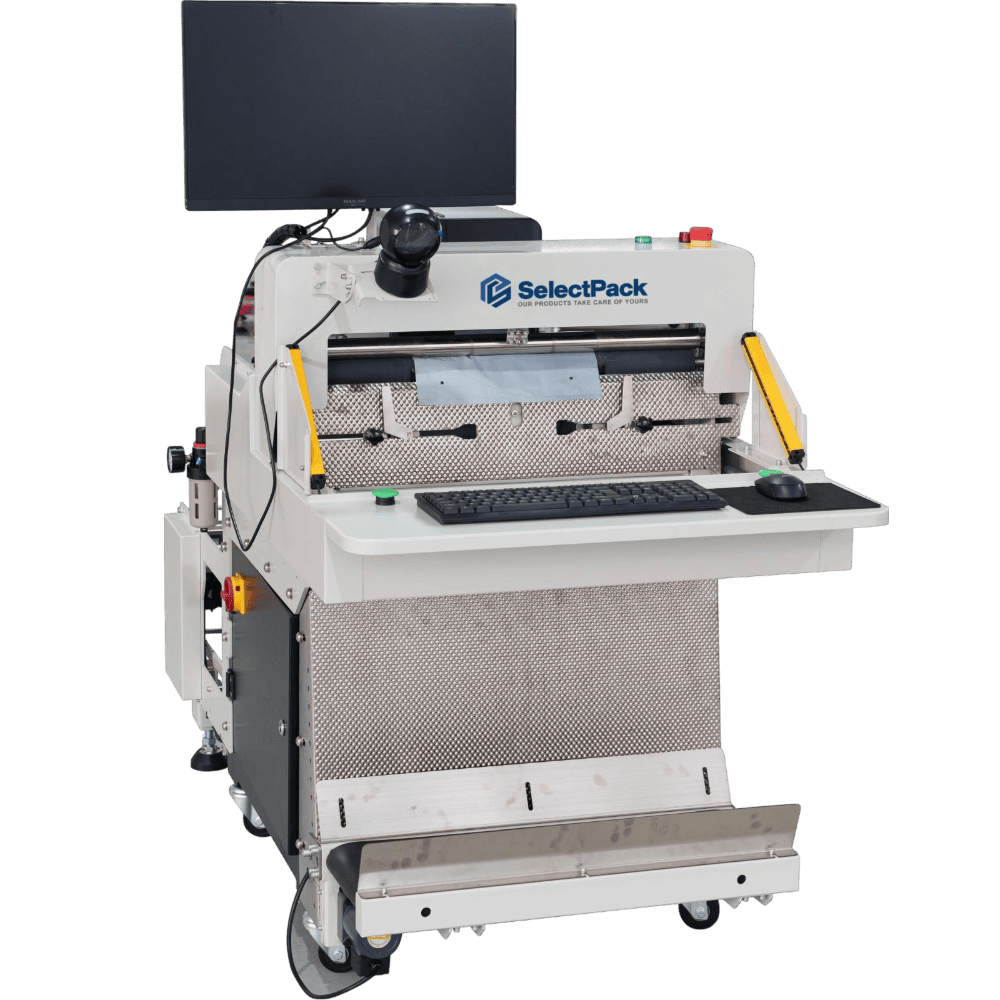
- Fully Automatic Bagging Machines: Handle the entire process, including bag opening, filling, sealing, and optional labeling. Ideal for high-volume production or peak e-commerce periods, they reduce labor requirements and ensure consistent packaging.
- Semi-Automatic Bagging Machines: Require some manual involvement, such as placing products in the bag or initiating operations, but still offer rapid sealing and standardized packaging. Suitable for medium-sized batches or lower-budget applications.
Core functions include:
- Bag Opening: Automatically expands the bag, eliminating manual handling.
- Filling: Works with conveyors or sorting systems to quickly load products into bags.
- Sealing: Heat sealing, compression, or adhesive sealing to ensure packaging integrity.
- Printing/Labeling (Optional): Prints barcodes, serial numbers, or batch information for tracking and inventory management.
Bag compatibility is critical. Common materials include PE roll bags, composite bags, inner/outer bags, and some biodegradable options. Different bag types affect machine structure and function.
Key Factors to Consider When Selecting a Bagging Machine
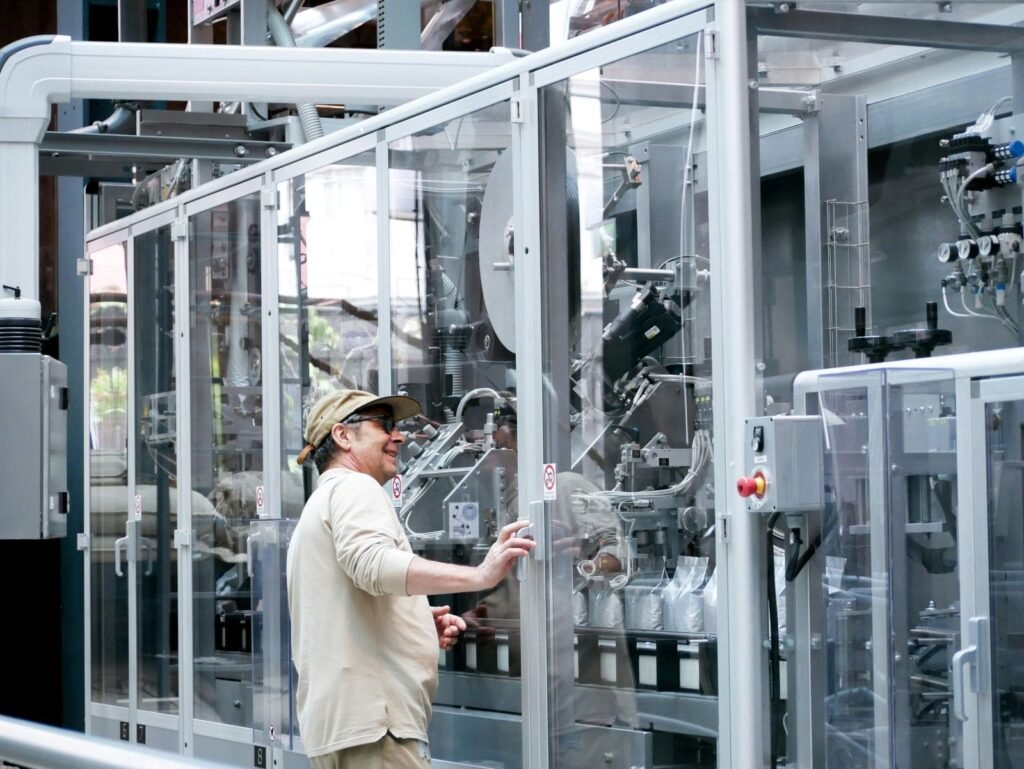
Selecting the right bagging machine requires evaluating the specific packaging requirements and operational environment:
- Product Characteristics: Size, weight, fragility, and shape complexity determine machine load capacity and bag opening method.
- Throughput Requirements: Units per minute or hour dictate whether a fully automatic or semi-automatic machine is appropriate.
- Sealing Precision: Products requiring dust-proof, moisture-proof, or contamination-proof packaging need higher sealing accuracy.
- Additional Functions: Label printing, barcode scanning, or ERP/WMS integration may be necessary.
- Operational Environment: Warehouse space, operator count, and ease of maintenance affect the choice of machine.
Clearly defining these factors narrows the selection to the most suitable bagging machines, avoiding unnecessary expenditure.
Industrial and Hardware Packaging Applications
Packaging small hardware parts, machinery components, and electronic parts has specific requirements:
- Small Bag Portions: Each bag holds a limited quantity for production or shipping convenience.
- Reliable Sealing: Prevents parts from spilling or moisture damage.
- Easy Management: Reusable zipper or tear-open bags simplify inventory tracking.
Recommended machines for these scenarios include high-precision fully automatic or semi-automatic bagging machines:
- Automatic bag opening and sealing increases throughput and reduces labor.
- Adjustable bag length and width accommodate different part sizes.
- Optional label printing supports batch or QR code tracking.
E-commerce Fulfillment and Small-Item Packaging
E-commerce packaging is characterized by high order variety and fluctuating volumes, with requirements including:
- Diverse SKUs: Warehouses handle many product types simultaneously.
- On-Demand Packaging: Each order may only include a few items, requiring rapid bag changeover.
- Labeling Accuracy: Each package must display unique barcodes or shipping information.
Recommended solutions:
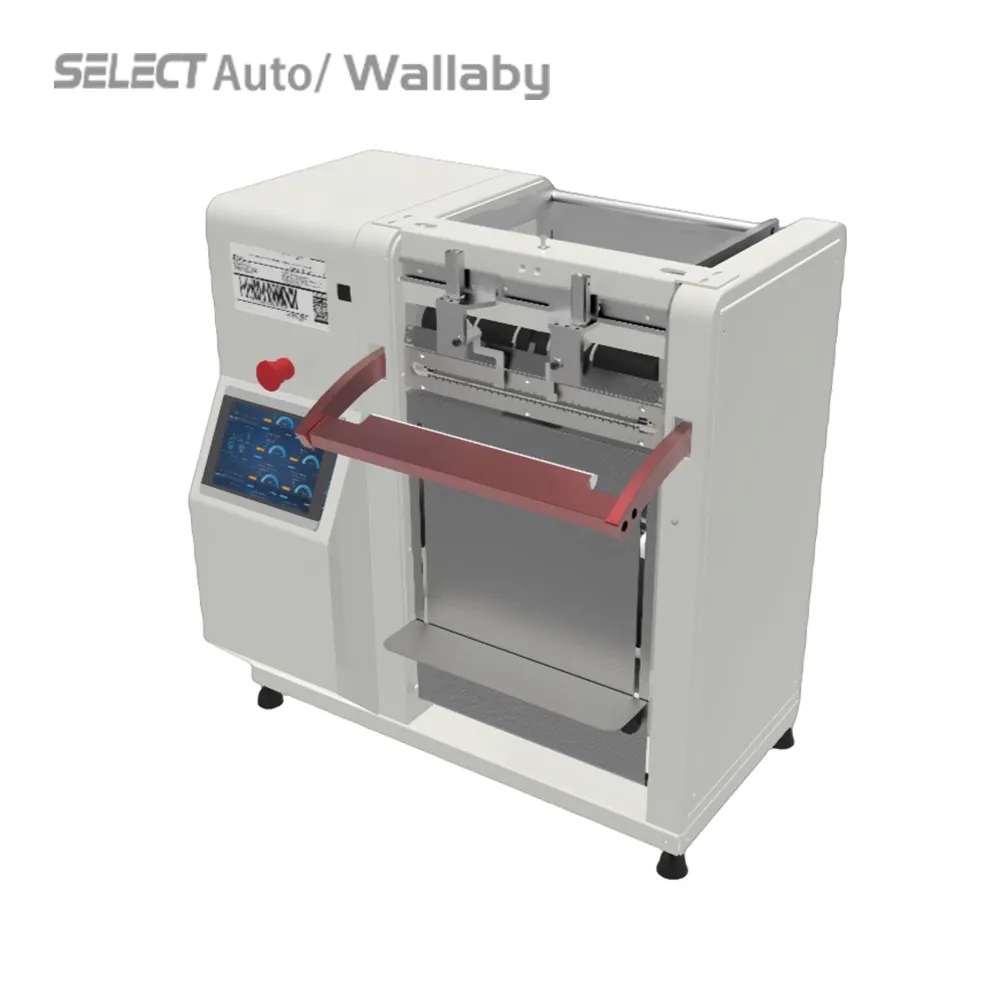
- Fully automatic bagging machines with integrated labeling: Handle multiple order types efficiently.
- System integration: ERP/WMS connectivity reduces manual errors.
- Flexible throughput and bag adjustment: Adapts to peak seasons and promotions.
Multi-Purpose and Specialized Applications
Beyond industrial and e-commerce use, bagging machines can support:
- Large Parts or Bulk Materials: Machines with high-capacity bags and robust sealing.
- Custom Packaging: Includes protective inserts for fragile or precision components.
- Special Industries: Chemical or sensitive tools require moisture-proof, leak-proof sealing.
For multi-purpose applications, focus on machine compatibility and flexibility, such as quick mold changeover or adjustable bag size.
Bagging Machine Selection Process
Companies can follow a structured process:
- Identify the application scenario: Industrial small parts, e-commerce items, or specialized packaging.
- Determine throughput requirements: Calculate average and peak order volume.
- Evaluate bag compatibility: Material, size, and thickness adaptability.
- Consider additional functions: Printing, barcode scanning, ERP/WMS integration.
- Assess budget and ROI: Factor in equipment cost, labor savings, and efficiency gains.
- Check after-sales support: Choose suppliers offering training, installation, and maintenance.
Creating a comparison chart or scoring matrix can make it easier to select the best bagging machine.
Conclusion and Recommendations
Choosing the right bagging machine is critical to improving packaging efficiency, reducing costs, and ensuring product quality:
- Match the machine to the scenario: Industrial parts need precision and durability; e-commerce small items need flexibility and fast changeover.
- Automation level affects efficiency: Fully automatic machines suit high volume and complex orders; semi-automatic machines are better for smaller batches.
- Additional features improve operations: Printing, barcode scanning, and ERP/WMS integration reduce errors and simplify tracking.
By aligning machine features with business needs, throughput requirements, and budget constraints, companies can optimize their packaging operations and achieve measurable efficiency gains.
FAQ
Q1: What types of bags can a bagging machine handle?
A: PE roll bags, composite bags, inner/outer bags, and optional biodegradable, zipper, or paper bags.
Q2: Can the same bagging machine handle industrial parts and e-commerce items?
A: Yes, as long as the machine supports quick bag type and size changeover.
Q3: How to choose between semi-automatic and fully automatic bagging machines?
A: Fully automatic is recommended for high volume or complex orders; semi-automatic suits medium batches or limited budgets.
Q4: Is maintenance expensive?
A: Maintenance depends on machine type and usage, typically including cleaning, mold replacement, and minor part replacement.
Q5: Can a bagging machine integrate with warehouse systems?
A: Most fully automatic machines support ERP/WMS integration for order synchronization and batch tracking.