Selecting the right paper bubble machine is a critical business decision that affects your packaging efficiency, operational costs, and product protection quality. Unlike purchasing pre-made cushioning materials, investing in a paper bubble machine requires careful evaluation of your specific business needs, production volume, and long-term goals.
The wrong choice can lead to underutilization of equipment, insufficient production capacity, or unnecessary operational complexity. Conversely, choosing the right machine can streamline your packing operations, reduce material costs, and improve your sustainability profile.
Why Choosing the Right Paper Bubble Machine Matters
Selecting the right paper bubble machine is a critical business decision that affects your packaging efficiency, operational costs, and product protection quality. Unlike purchasing pre-made cushioning materials, investing in a paper bubble machine requires careful evaluation of your specific business needs, production volume, and long-term goals.
The wrong choice can lead to underutilization of equipment, insufficient production capacity, or unnecessary operational complexity. Conversely, choosing the right machine can streamline your packing operations, reduce material costs, and improve your sustainability profile.
Assessing Your Business Needs
Before evaluating specific machine models, you must first understand your business requirements. This assessment forms the foundation for all subsequent decisions.
Daily Packaging Volume
Start by calculating your average daily packaging volume. How many orders do you ship per day? How many items per order require cushioning? This metric directly determines the machine capacity you need.
Small businesses shipping 50-200 packages daily typically require compact desktop models. Medium-sized operations handling 200-1,000 packages daily may benefit from floor-standing models. High-volume fulfillment centers processing 1,000+ packages daily require industrial-scale machines with continuous production capabilities.
Product Types and Sizes
Different products require different cushioning approaches. Fragile electronics need different protection than clothing or small items. Consider:
•Average product dimensions
•Fragility level of typical items
•Variety of product sizes you ship
•Special packaging requirements (hazardous materials, temperature-sensitive items, etc.)
Current Packing Station Layout
Evaluate your existing packing station setup. Do you have dedicated space for new equipment? What are your power and utility requirements? Can you integrate a paper bubble machine into your current workflow without major restructuring?
Understanding Machine Capacity and Output
Machine capacity is measured in several ways, and understanding these metrics helps you choose equipment that matches your needs.
Production Speed
Paper bubble machines are rated by output speed, typically measured in meters per minute or sheets per hour. Desktop models generally produce 5-15 meters per minute, while industrial machines can exceed 30 meters per minute.
Calculate your required output: If you ship 500 packages daily and each package requires an average of 2 meters of cushioning material, you need at least 1,000 meters of daily production. Divided across an 8-hour shift, this requires approximately 125 meters per hour, or about 2 meters per minute—well within desktop model capabilities.
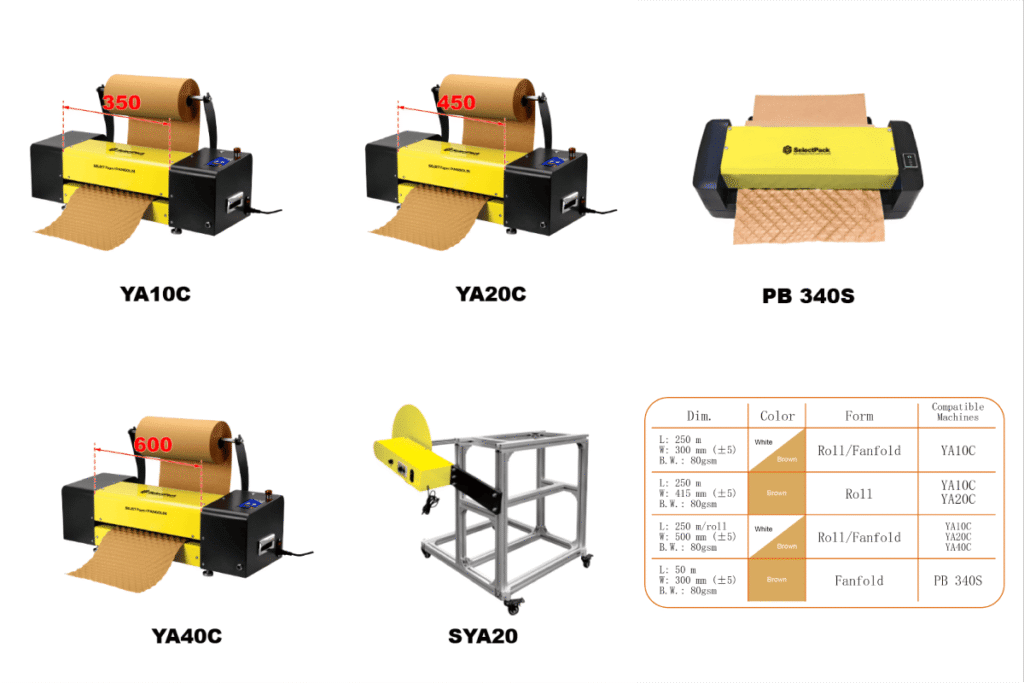
Kraft Paper Roll Compatibility
Different machines accept different kraft paper roll widths and thicknesses. Verify that your chosen machine is compatible with readily available paper roll sizes in your region. This affects material costs and supply chain flexibility.
Embossing Pattern Options
Some machines offer adjustable embossing patterns, allowing you to customize bubble size and density. Consider whether this flexibility is important for your product protection needs.
Key Features to Look For
Beyond basic capacity, several features distinguish quality paper bubble machines from basic models.
Cutting Mechanism
Precision cutting ensures clean edges and reduces material waste. Look for machines with automatic cutting features that activate at specified intervals or on-demand. Manual cutting requires operator intervention and can slow packing operations.
Tension Control
Consistent paper tension throughout the embossing process ensures uniform bubble formation. Machines with automatic tension adjustment maintain consistent quality across varying paper thicknesses and humidity conditions.
Ease of Operation
User-friendly controls reduce training time and operational errors. Intuitive interfaces with clear status indicators help operators quickly identify and resolve issues.
Maintenance and Support
Consider the availability of replacement parts, technical support, and maintenance services. Machines from established manufacturers typically offer better long-term support.
Safety Features
Automatic shut-off mechanisms, emergency stops, and protective guards are essential for operator safety and workplace compliance.
Integration into Your Packing Station
A paper bubble machine must integrate seamlessly into your existing packing workflow.
Space Requirements
Measure your available packing station space. Desktop models typically occupy 0.5-1 square meter, while floor-standing models require 1-2 square meters. Consider not only the machine footprint but also space for kraft paper roll storage and material output.
Workflow Positioning
Position the machine for optimal operator access. The machine should be positioned so operators can easily feed kraft paper rolls, access the output material, and integrate it into the packing process without unnecessary movement.
Power and Utilities
Verify electrical requirements. Most machines operate on standard 110V or 220V power. Some industrial models may require three-phase power. Ensure your packing station has adequate electrical capacity.
Material Flow
Consider how the output material flows from the machine to the packing area. Smooth material handling reduces operator fatigue and improves packing speed.
Cost Analysis and ROI
Evaluating the financial aspects of your paper bubble machine investment is crucial for making a sound business decision.
Initial Equipment Investment
Paper bubble machine prices vary significantly based on capacity and features. Desktop models typically range from $3,000-$8,000, while industrial machines can cost $15,000-$50,000 or more. This initial investment is spread across the machine’s operational lifetime, typically 5-10 years.
Material Costs
Compare the cost of kraft paper rolls to your current cushioning material expenses. Kraft paper is generally competitively priced compared to plastic bubble wrap, especially when accounting for storage and logistics efficiency.
Operational Savings
Calculate savings from:
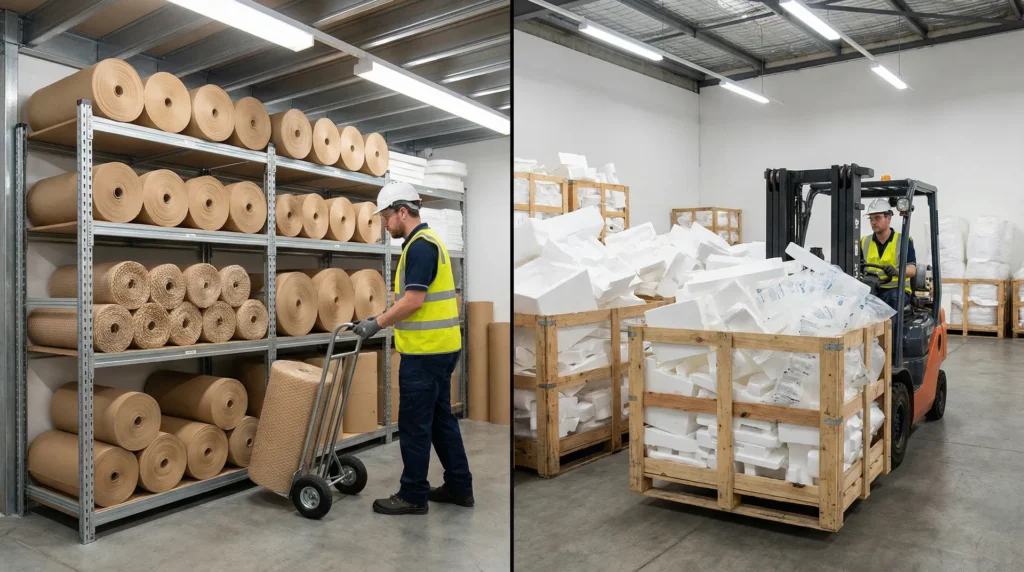
•Reduced storage space — Compact kraft paper rolls require significantly less warehouse space than bulky cushioning materials
•Improved material efficiency — On-demand production reduces waste compared to pre-made materials
•Labor efficiency — Streamlined packing workflows can reduce labor time per shipment
•Reduced logistics costs — Compact paper rolls are more efficient to transport than bulky cushioning materials
Return on Investment Timeline
For many businesses, the ROI period is 12-24 months. A business shipping 500 packages daily with average cushioning costs of $0.50 per package currently spends $250 daily or approximately $75,000 annually on cushioning materials. A paper bubble machine costing $8,000 with annual material costs of $40,000 could save $35,000 annually, achieving ROI in approximately 3-4 months.
Comparing Desktop vs Industrial Models
Understanding the differences between machine types helps you select the right scale for your operation.
| Feature | Desktop Model | Industrial Model |
| Daily Capacity | 100-500 packages | 500-5,000+ packages |
| Output Speed | 5-15 m/min | 20-40+ m/min |
| Footprint | 0.5-1 m² | 1-3 m² |
| Initial Cost | $3,000-$8,000 | $15,000-$50,000+ |
| Annual Material Cost | $15,000-$30,000 | $40,000-$100,000+ |
| Maintenance | Minimal | Regular |
| Best For | Small-medium businesses | Large fulfillment centers |
Desktop models are ideal for small to medium businesses with limited space and moderate packaging volumes. They offer simplicity, affordability, and easy integration into existing packing stations.
Industrial models are designed for high-volume operations requiring continuous production. They offer superior speed, reliability, and advanced features but require more space, maintenance, and operator training.
Making Your Final Decision
After evaluating all factors, follow this decision-making framework:
1.Confirm your daily packaging volume — Ensure the machine capacity exceeds your peak daily requirements by at least 20%
2.Verify space availability — Confirm the machine footprint fits your packing station layout
3.Calculate ROI — Ensure the financial benefits justify the investment
4.Evaluate support options — Choose a manufacturer with strong technical support and parts availability
5.Consider future growth — Select a machine that can accommodate your anticipated business growth over the next 3-5 years
6.Request demonstrations — Ask manufacturers for on-site demonstrations or trial periods
7.Check references — Contact existing customers to understand real-world performance and satisfaction
FAQ
Q: How long does it take to install a paper bubble machine?
A: Desktop models typically require 1-2 hours for installation and setup. Industrial models may require 4-8 hours or professional installation services. Most manufacturers provide installation support.
Q: What training do operators need?
A: Basic training typically takes 30 minutes to 2 hours. Most machines feature intuitive controls that operators can master quickly. Manufacturers usually provide comprehensive training materials and support.
Q: Can I upgrade my machine later?
A: Many manufacturers offer upgrade paths, allowing you to add features or increase capacity as your business grows. Discuss upgrade options when selecting your initial machine.
Q: What is the typical machine lifespan?
A: Well-maintained paper bubble machines typically operate reliably for 5-10 years. Regular maintenance and timely replacement of wear parts extend operational lifespan.
Q: How do I handle seasonal volume fluctuations?
A: Desktop machines can be easily repositioned or stored during low-volume periods. Industrial machines are typically kept operational year-round due to their higher utilization rates.
Related Articles
For more information about paper bubble machines and packaging solutions, explore these related resources:
•What Is a Paper Bubble Machine?
•How Paper Bubble Machines Work: Technical Guide
•Paper Bubble Machine ROI: Cost Savings Analysis
•Paper Bubble vs Plastic Bubble Wrap: Cost Comparison
•Paper Bubble Machines in E-commerce Fulfillment
•Why Warehouses Are Switching to Paper Bubble Machines
•On-Demand Paper Bubble vs Pre-Made Cushioning Rolls
•Paper Bubble Machine Maintenance and Troubleshooting
External Resources
Learn more about sustainable packaging and industry standards:
•EPA Sustainable Materials Management Guide
•Packaging Dive: Industry Trends and Analysis
•American Packaging Association
Ready to Choose Your Paper Bubble Machine?
SelectPack offers a range of paper bubble machines designed for businesses of all sizes. Our experienced team can help you evaluate your needs and select the perfect machine for your operation.
Request a Quote Today or Contact Our Specialists to discuss your packaging requirements.