The best foam-in-place packaging machine is not the biggest machine or the most automated machine. It is the system that fits the way your products vary, how many packs you make, where operators need control, and what the packing station can physically support.
Use this selection order: first sort by product variation, then by pack volume, then by operator control, and only then by equipment features. That keeps the decision tied to the packaging job instead of turning “best” into a generic machine comparison.
Once the product pattern is clear, use the SelectFoam product range to map the job to a realistic workflow: automated foam-in-bag output, handheld foam-in-place dispensing, or expandable foam bags.
If the team is still deciding whether foam belongs in the pack at all, start with the foam-in-place packaging guide before shortlisting machines.
Step 1: Sort by Product Variation
Start with how predictable the product is. Product variation determines how much control the packing method needs.
| Product pattern | Better starting point | Reason |
|---|---|---|
| Same product, same carton, repeated daily | Automated foam-in-bag machine | Repetition makes controlled bag output valuable. |
| Product families with a few carton sizes | Automated system or handheld system | The choice depends on volume and how often operators adjust the pack. |
| Many SKUs with changing shapes | Handheld foam-in-place system | Operators may need to place foam around specific product features. |
| Occasional shipments, samples, returns, or field packing | Expandable foam bags | A no-machine workflow may be more practical than equipment. |
| Large or irregular industrial parts | Handheld system or large bag workflow | The pack may need direct placement, multiple cushion points, or structural packaging support. |
If product variation is high, do not start by comparing output speed. Start by proving that the system can create the right cushion around the hardest products.
Step 2: Sort by Pack Volume
After product variation, look at actual foam-protected pack volume. Do not use total warehouse orders if only a small share needs foam.
Use these volume questions:
- How many products truly need foam protection per shift?
- How many are repeated packs versus one-off packs?
- What is the peak day or peak season volume?
- How much time does the current pack take?
- Is the bottleneck foam output, carton setup, product handling, or final sealing?
Higher volume pushes the decision toward controlled output and repeatable settings. Lower volume may justify a simpler workflow if damage risk is high but daily usage is limited.
For budget review, connect these volume assumptions to the foam packaging machine price factors instead of comparing machine price alone.

Step 3: Decide How Much Operator Control Is Needed
Operator control is where many machine decisions become clear.
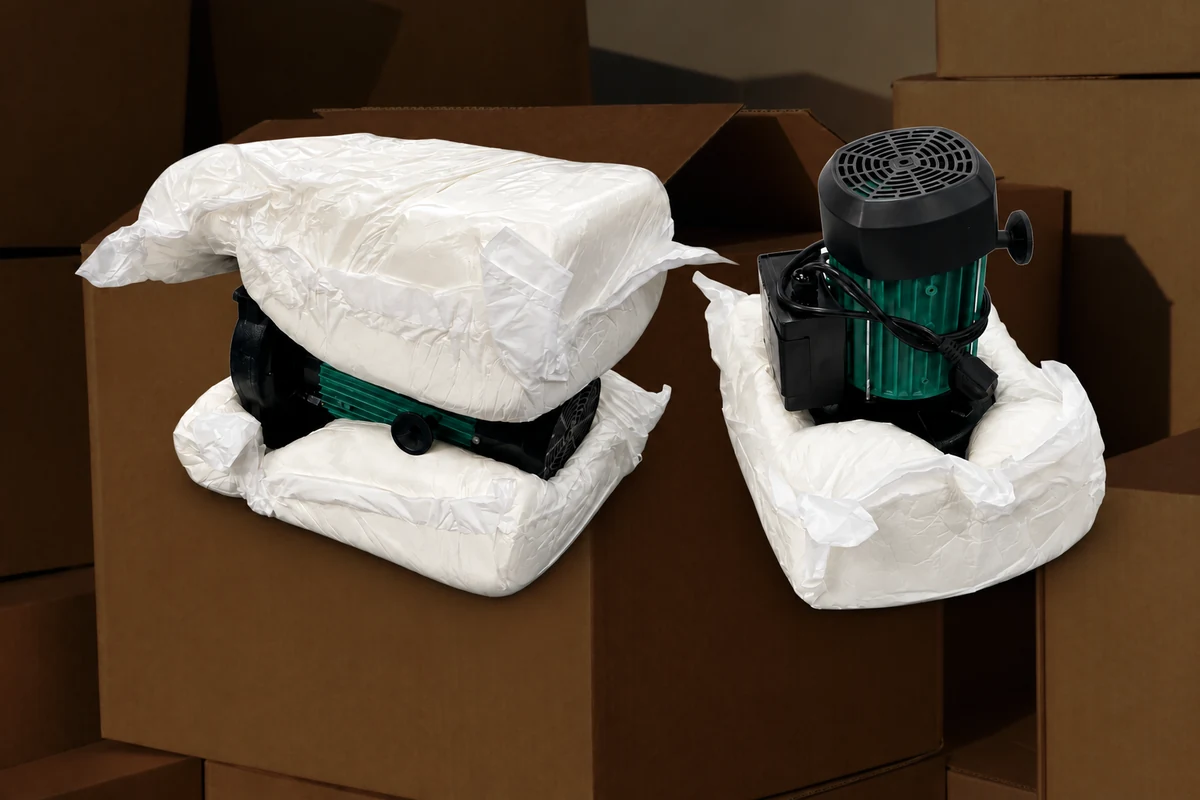
Choose an automated foam-in-bag workflow when the operator mainly needs to place a consistent cushion into a known carton. Choose a handheld workflow when the operator must direct foam around protrusions, uneven shapes, or changing product positions. Choose expandable foam bags when the operation needs shaped cushioning but does not need a dedicated machine at the station.
This is the practical difference between:
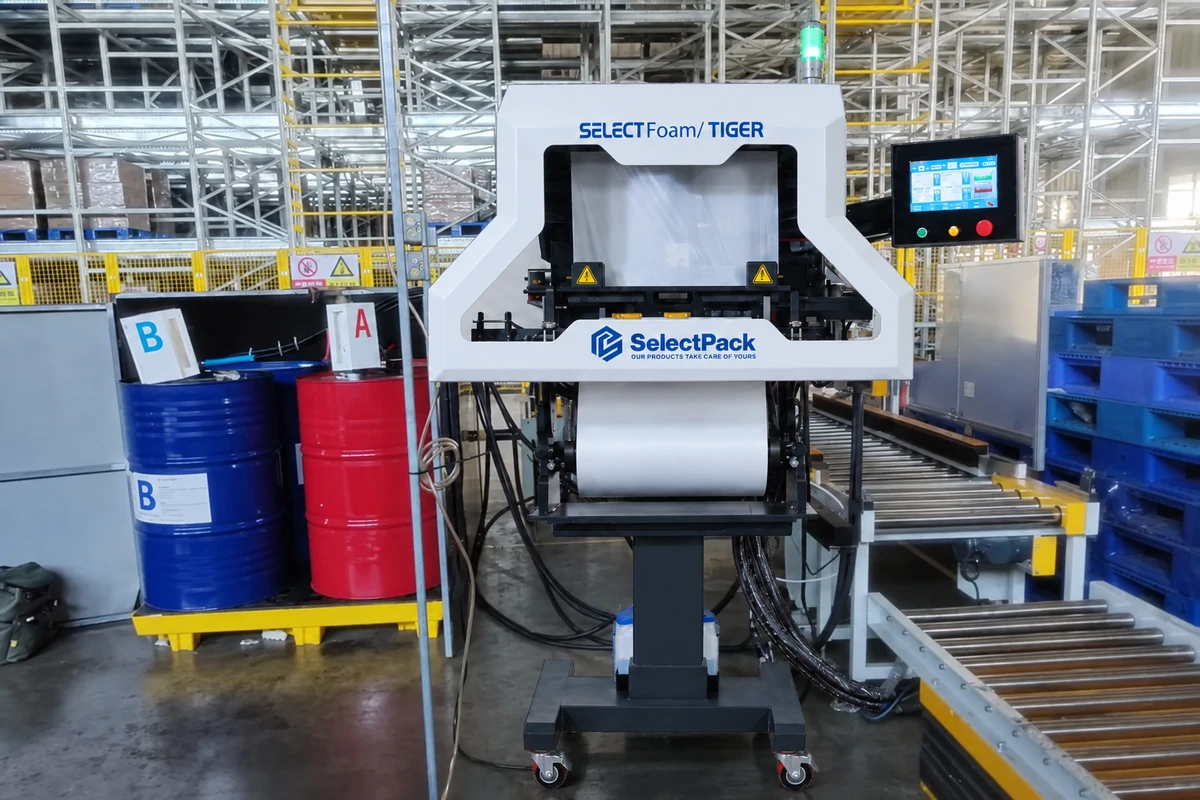
- SelectFoam/Tiger expanding foam packaging machine for repeatable bag output.
- SelectFoam/Jaguar handheld foam-in-place machine for flexible direct dispensing.
- Foamigo expandable foam bags for lower-volume or no-equipment foam bag use.
For a deeper comparison of these operating paths, use the foam-in-bag packaging system guide.
Step 4: Check the Packing Station Before Shortlisting
A technically suitable machine can still fail if the station layout is wrong. Before shortlisting, walk the packing area and answer:
- Where will cartons be opened, filled, closed, and staged?
- Can the operator reach the product and foam output without twisting or lifting awkwardly?
- Is there room for the machine, chemicals, bags, film, and maintenance access?
- Will the system serve one product cell or multiple workstations?
- Who will restart, clean, and troubleshoot the system?
- Can the station handle peak volume without blocked aisles or staged cartons piling up?
This step often separates a realistic machine choice from a spec-sheet choice.
Selection Map
| If your operation looks like this | Start with this option | What to prove before buying |
|---|---|---|
| Repeated fragile products, similar cartons, daily foam use | Tiger-style automated foam-in-bag output | Bag size range, output rate, station fit, consumable use per pack. |
| Mixed repair parts, industrial components, or changing geometry | Jaguar-style handheld foam-in-place dispensing | Operator training, hose reach, foam placement consistency, maintenance routine. |
| Low-volume shipments, sample packs, returns, or field service | Foamigo-style expandable foam bags | Bag size fit, activation process, storage conditions, and cost per shipment. |
| Heavy or large equipment | Foam bags or handheld foam as cushioning only | Outer packaging, blocking, bracing, pallet or crate design, and safe handling. |
| High-speed ecommerce parcels with low damage risk | Usually not foam-in-place first | Compare paper, air, corrugated retention, or another simpler material. |
This map is not a product ranking. It is a way to eliminate poor-fit options before requesting a quote.
Shortlist Trial: What to Test
Once the likely workflow is clear, run a small trial around the hardest products. A useful trial should answer:
- Does the cushion hold the product without carton bulge?
- Does the process protect fragile corners, protrusions, finishes, or connectors?
- Can two operators make the same pack without guesswork?
- Does the foam amount look controlled rather than excessive?
- Can the customer unpack the product without damage?
- Does the workflow keep pace with the station?
The trial should use real cartons and real product samples whenever possible. If the trial requires a different carton or outer package, treat that as part of the machine decision.
What Not to Use as the Main Selection Rule
Avoid choosing the machine primarily by:
- Highest possible output speed when your products are highly variable.
- Lowest equipment price when consumable use and damage risk are unknown.
- Most automated option when operators still need placement control.
- Smallest footprint when maintenance access becomes difficult.
- A supplier’s broad “best system” claim without sample pack evidence.
The best foam-in-place packaging system should make the packaging process more repeatable for your products, not just look stronger in a comparison table.