Strapping machine troubleshooting works best when you identify which step failed first: feed, position, tension, seal, cut, or reset. A jam is not always a machine defect, a loose strap is not always a tension problem, and a weak seal is not always fixed by turning up the heat. The machine, strap, load, operator steps, and maintenance condition have to be checked as one system.
Start with the simplest controlled checks: confirm the strap width, thickness, material, roll core, and winding quality; clean the feed, seal, and cut areas; return settings to a known baseline; then test the machine on both a standard load and the problem load. Random adjustments often create a second problem before the first one is understood.
Before clearing jams, opening guards, cleaning sealing areas, or replacing wear parts, follow the site’s machine safety and energy-control procedure. HSE’s guidance on safe work equipment maintenance is a useful reference for maintenance work where unexpected startup, stored energy, or unsafe access could expose workers to risk.
Quick Symptom Map for Strapping Machine Troubleshooting
Use the symptom to narrow the first inspection. Do not replace parts until the strap, setup, and load have been checked.
| Symptom | Check first | Common root causes |
|---|---|---|
| Strap will not feed | Roll winding, strap twist, guides, dispenser drag, feed path debris | Wrong strap size, damaged roll, dirty guides, tight roll brake, blocked arch or pallet path |
| Strap feeds partway then jams | Strap edge condition, arch alignment, rollers, pallet opening | Warped strap, burrs, dust, collapsed coil, damaged pallet, low clearance |
| Seal or weld breaks | Strap material, seal temperature or weld setting, sealing surface, tension before sealing | Wrong strap for the machine, contamination, worn heater or friction parts, poor joint pressure |
| Strap is loose after cycle | Tension setting, retained tension, load settling, strap position | Low tension, PP relaxation on settling loads, compressible cartons, unstable pallet stack |
| Carton corners are crushed | Tension setting, strap width, carton strength, strap location | Over-tensioning, narrow strap on weak board, unsupported edges, wrong load family setting |
| Strap does not cut cleanly | Cutter blade, strap thickness, residue, cutter alignment | Dull blade, heavy strap outside spec, strap dust buildup, worn cutter parts |
| Machine works on one load but not another | Load size, shape, pallet condition, strap path, edge protection | Product-specific issue, not a general machine fault |
If the failure point is unclear, review the full feed-tension-seal-cut cycle in how a strapping machine works before changing settings.
Feed Problems: Strap Hesitates, Twists, or Jams
Feed problems are often blamed on the machine, but many begin with the strap roll or the path between the roll and the sealing head. Machine-grade strap has to unwind evenly and move through guides without curling, splitting, or dragging.
Check these items in order:
- Strap width and thickness match the machine specification.
- PP, PET, or another material is approved for the machine and seal method.
- Roll core size and outside diameter fit the holder or dispenser.
- The roll is not collapsed, telescoped, wet, cracked, or badly wound.
- Strap edges are clean, not burred or feathered.
- The strap is not twisted before it enters the machine.
- The dispenser brake or roll holder is not creating excessive drag.
- Guides, rollers, arch channels, and under-pallet paths are clean.
- No broken strap pieces or dust are trapped near sensors or guides.
If feed problems start after changing strap suppliers, put the previous strap back into the same machine and run a short comparison. A cheaper roll can increase downtime if width tolerance, edge quality, stiffness, or winding is inconsistent. For PP applications, the machine grade polypropylene strapping guide explains the roll-quality checks that matter most for machine use.
For pallet machines, also inspect the pallet itself. Broken deck boards, blocked fork openings, very low bottom clearance, overhanging product, and loose stretch film can all stop the strap even when the machine is feeding correctly.
Seal Failure: The Joint Opens or Looks Inconsistent
A strapping seal is the weakest point if the strap ends do not join correctly. A load can leave the machine looking secure and still fail during forklift handling if the joint is contaminated, overheated, underheated, or stressed by the wrong tension.
Review these causes:
- Strap material does not match the machine’s seal method.
- Strap thickness is outside the heater, friction-weld, or sealing range.
- Seal temperature, cooling time, weld time, or pressure is wrong for the strap.
- Dust, moisture, oil, or strap flakes are on the sealing surface.
- Heater blade, gripper, friction element, anvil, or sealing jaw is worn.
- Tension is too high before sealing and overloads the joint.
- Tension is too low and lets the strap shift before the seal forms.
- Operators are removing or moving the load before the joint has stabilized.
Do not compensate for a weak seal by only increasing strap tension. That can crush cartons, mark products, or make the joint fail faster. First confirm material compatibility, clean the sealing area, inspect wear parts, and return the seal setting to the supplier’s recommended range.
For nonmetallic strapping, ASTM D3950 gives buyers a more precise reference for discussing strap properties, joint performance, and test expectations with suppliers. The standard will not diagnose your machine, but it helps avoid vague conversations about “stronger strap” when the real issue is seal consistency.
Loose Straps: The Cycle Finishes but the Load Is Not Secure
Loose straps can come from low machine tension, but they can also come from load behavior after the cycle. This is common when cartons compress, pallets settle, or the strap material relaxes during storage and handling.
Check:
- The tension setting for that specific load family.
- Whether the strap is PP or PET and how much retained tension the route needs.
- Whether the load settles after sitting for several minutes or after forklift movement.
- Whether the strap is placed on a stable load section or a weak corner.
- Whether the pallet stack is leaning, loosely built, or missing edge support.
- Whether the operator moves the load before the strap has settled into position.
PP strapping is often practical for cartons, bundles, and lighter pallet work. PET is often reviewed when heavy, dense, sharp-edged, or settling loads need stronger retained tension. The material decision should be based on the load and machine compatibility, not only on roll price. The PP vs PET strapping guide covers those tradeoffs in more detail.
If the strap loosens only after transport, test the package through the actual handling route instead of only checking it at the machine. For higher-risk shipments, ISTA transport packaging test procedures can help frame a more disciplined validation process.
Over-Tension: Cartons Crush or Product Packaging Is Damaged
More tension is not automatically safer. Excessive tension can damage the package, overload the seal, and create customer claims even when the machine cycle looks successful.
Reduce or segment tension settings when you see:
- Crushed carton corners.
- Strap cutting into corrugated board.
- Distorted bundles.
- Product pressure marks.
- Cracked trays or edge damage.
- Strap whitening, stretching, or breaking during application.
- Operators quietly lowering settings to avoid damage.
The fix may be a lower tension value, a wider strap, better strap position, edge protectors, stronger cartons, or a separate setting for fragile SKUs. One global setting for every carton and pallet usually creates either loose straps on heavy loads or damage on lighter packages.
Cutting and Reset Problems: Long Tails, Frayed Ends, or Re-Threading
Cutting faults often show up as feed faults on the next cycle. If the strap tail is too long, frayed, melted unevenly, or bent, it may not enter the path cleanly.
Inspect:
- Cutter blade sharpness.
- Cutter alignment.
- Strap thickness and stiffness against machine limits.
- Residue or strap dust near the knife.
- Whether the strap is being pulled during the cut.
- Reset position after the cut.
- Any guide or roller damage immediately after the cutter.
Do not ignore small tails or rough cut ends. They can increase re-threading, operator intervention, and sensor errors over a shift.
Load-Specific Problems: The Machine Works on One Product but Not Another
If a machine runs cleanly on standard cartons but fails on a certain pallet, the product or workflow is probably part of the fault. Troubleshooting should move from the machine to the application.
Document the loads that fail:
- Product dimensions and weight.
- Carton board strength or bundle rigidity.
- Pallet style, bottom opening, and damage condition.
- Strap position and number of straps.
- Sharp corners or abrasive edges.
- Soft, compressible, or settling contents.
- Stretch film, labels, corner boards, or dunnage in the strap path.
- Forklift, conveyor, or dock handling after strapping.
A strapping machine cannot fix a poorly stacked or unstable pallet by itself. If the load is leaning, settling, or cutting the strap at the edges, improve the load build, add edge protection, change the strap material, or revise the handling test before blaming the machine.
When the Problem Is Equipment Fit, Not a Repair Issue
Some recurring failures mean the machine category does not match the work. A semi-automatic carton machine may be right for repeated bench-level box strapping but wrong for pallets that need under-pallet feeding. A manual tool may be flexible but inconsistent if operators strap many pallets per shift. A PET-compatible pallet setup may be needed when heavy loads exceed a light PP machine’s practical range.
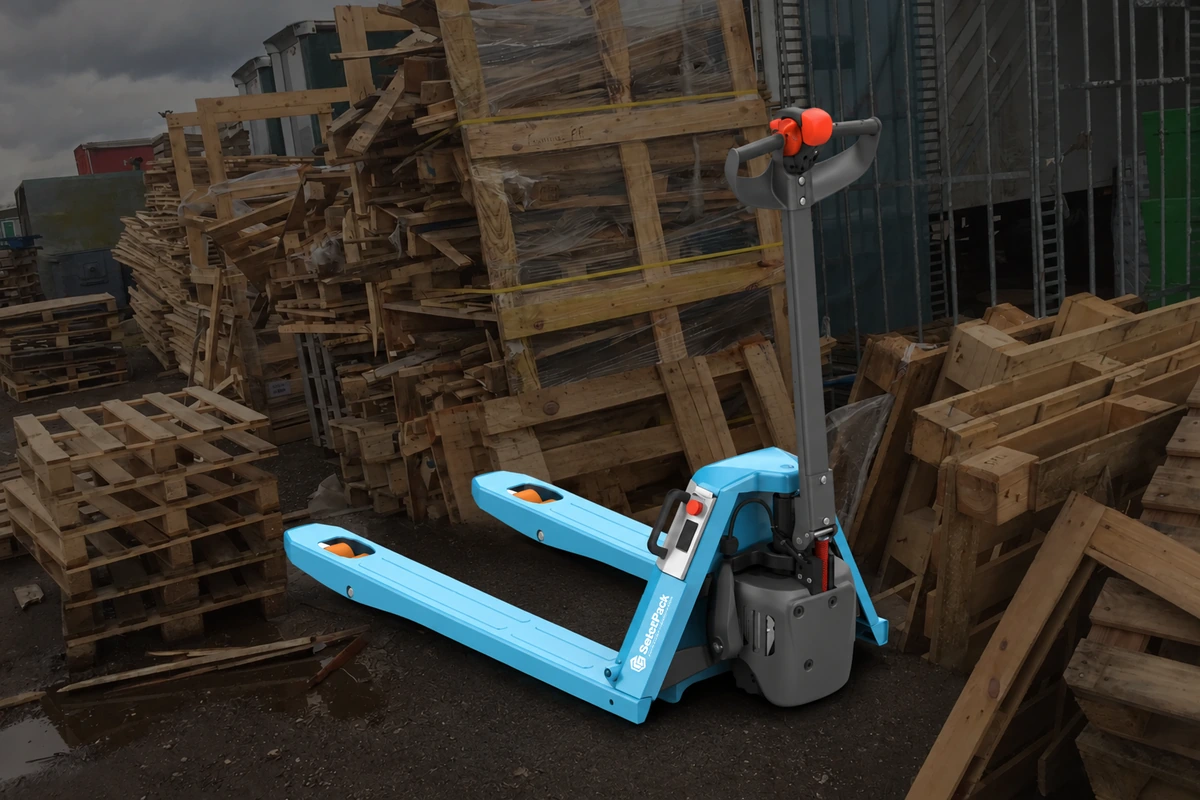
SelectPack’s mobile semi-auto strapping machine is most relevant when the hard step is feeding plastic strap under or around palletized loads in more than one warehouse zone. It can be a practical option when operators currently bend, kneel, walk around pallets, or move pallets only to reach a fixed strapping station.
It is not the first choice when the work is mainly small cartons at a packing bench, when steel strapping is required, when pallet bottoms are blocked or closed, or when the only issue is a worn sealing part on an otherwise suitable process. Buyers can review the mobile semi-auto strapping machine after confirming that the bottleneck is pallet strap feeding rather than carton sealing, strap quality, or load preparation.
A Practical Diagnostic Sequence Before Calling Service
Use a controlled sequence so the team can identify what changed.
- Stop the machine safely and follow the site’s procedure before clearing jams or accessing internal parts.
- Record the symptom, machine setting, strap spec, load type, operator, and time.
- Check strap width, thickness, material, core size, roll condition, and supplier.
- Inspect the feed path from roll to seal head, including dispenser drag and guide alignment.
- Clean feed, seal, cut, and sensor areas.
- Return tension, seal, and feed settings to a known baseline.
- Run several cycles on a standard load that normally works.
- Run the same number of cycles on the problem load.
- Inspect seal appearance, cut quality, strap position, and load damage after handling.
- Check wear parts only after strap, setup, cleaning, and load variables are controlled.
- Record the result before making another adjustment.
This process prevents “setting drift,” where every shift changes the machine slightly and no one knows which adjustment helped or hurt.
Maintenance Checks That Prevent Repeat Problems
Routine strapping machine maintenance should focus on the parts that affect feed, seal, tension, and cut reliability.
| Frequency | Check |
|---|---|
| Each shift | Remove strap dust, confirm roll condition, check strap path, inspect visible seal and cut quality |
| Daily | Clean feed guides, sealing area, cutter area, and sensors according to the machine manual |
| Weekly | Inspect rollers, grippers, heater or weld parts, cutter condition, brakes, and guide alignment |
| After strap change | Confirm width, thickness, core size, winding quality, seal setting, and tension setting |
| After repeated failures | Compare a known-good strap and standard load before replacing parts |
Maintenance should be simple enough for the actual operators and technicians to repeat. If the only maintenance plan is “call service when it stops,” the machine will keep producing avoidable downtime.
What to Send a Supplier or Service Team
When asking for troubleshooting help, provide enough detail to avoid generic advice.
Send:
- Machine model and serial number.
- Strap material, width, thickness, core size, and supplier.
- Photos of the roll, feed path, seal, cut end, and failed load.
- A short video showing one successful cycle and one failed cycle.
- Current tension, seal, feed, and cooling settings if available.
- Load dimensions, weight, pallet type, and strap position.
- When the issue started and what changed before it started.
- Cleaning and wear-part history.
This information helps the supplier decide whether the likely cause is consumable quality, setup, wear parts, machine limits, or the load itself.
Conclusion
Strapping machine troubleshooting should not begin with random setting changes. Start by identifying the failed step, then check strap quality, feed path cleanliness, seal condition, tension, cutting, load behavior, and operator workflow in a controlled order.
The right fix may be cleaning, a wear part, a corrected strap spec, better load preparation, a different tension setting, or a different equipment category. Treating the machine, strap, and load as one system reduces downtime and helps buyers avoid replacing equipment when the real issue is material, maintenance, or application fit.