Protective packaging is essential for modern e-commerce and shipping operations. Even small online stores and warehouses need reliable cushioning materials to prevent damage during transportation. As order volumes grow, many small businesses are looking for packaging solutions that are efficient, practical, and cost-effective.
Plastic bubble wrap has long been the most common cushioning material. While it provides good protection, it also has significant limitations for small operations. Large rolls take up considerable storage space, and handling can slow down workflows. In addition, many companies are now searching for ways to reduce plastic packaging.
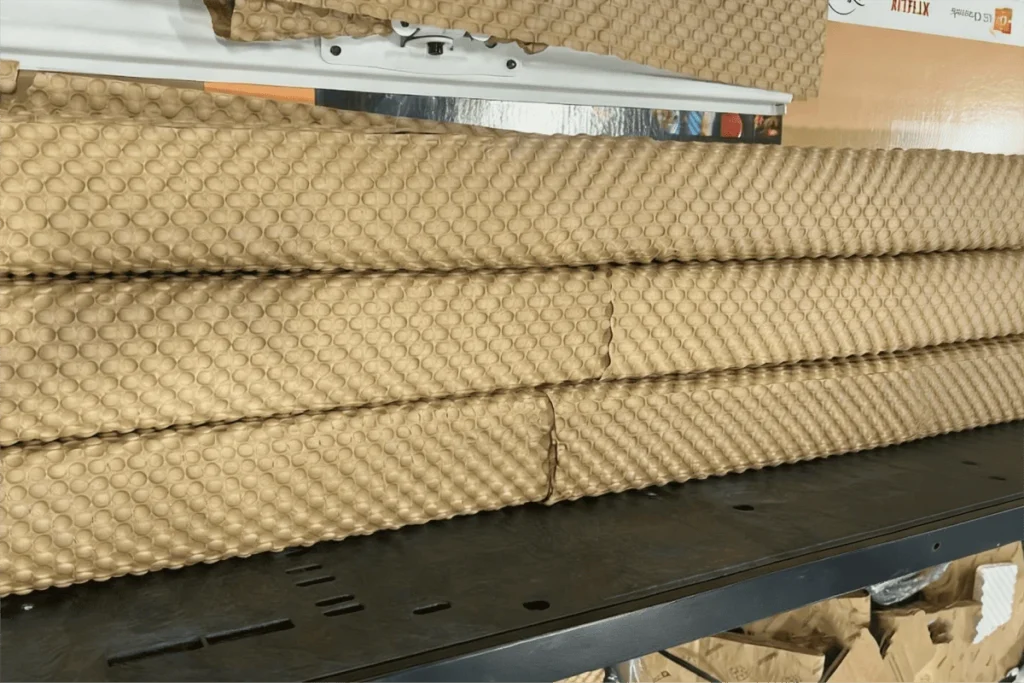
As a result, paper-based cushioning solutions are becoming increasingly popular. Paper bubble machines allow businesses to produce protective paper cushioning directly at the packing station using kraft paper rolls.
Instead of storing large quantities of pre-made packaging materials, small businesses can generate cushioning on demand. This helps improve packaging efficiency, reduce storage requirements, and support more sustainable shipping practices.
Why Paper Bubble Machines Are Ideal for Small Businesses
Small businesses face unique packaging challenges. Limited warehouse space, tight budgets, and smaller order volumes mean that equipment must be both practical and cost-effective.

Reduce Packaging Material Storage
One of the biggest advantages of a paper bubble machine is the dramatic reduction in storage requirements. Instead of stocking multiple SKUs of pre-made bubble wrap in different sizes, small businesses only need to store compact kraft paper rolls.
A single paper roll occupies a fraction of the space required for equivalent amounts of plastic bubble wrap. For small packing stations with limited storage, this space savings can be significant.
Improve Packing Efficiency
When cushioning material is produced on demand, workers can generate exactly the right amount needed for each shipment. This eliminates the need to cut, measure, or search for pre-made materials.
The result is a more streamlined packing process that reduces handling time and improves overall efficiency.
Support Sustainable Packaging Goals
Many small businesses and their customers now prioritize sustainable packaging. Paper bubble cushioning is made from kraft paper—a recyclable, biodegradable material. Using a paper bubble machine demonstrates a commitment to environmental responsibility, which can strengthen brand reputation and customer loyalty.
Reduce Packaging Material Waste
Because cushioning is produced on demand, there is minimal waste. Workers generate only the amount needed for each package, eliminating excess material that would otherwise be discarded.
Key Factors to Consider When Choosing a Paper Bubble Machine
Not all paper bubble machines are designed for the same packaging environments. Understanding the key selection factors can help small businesses choose equipment that fits their packaging workflow and order volume.
Production Speed and Output Capacity
Production speed is one of the most important considerations. The machine should be able to produce cushioning fast enough to support the packing process without creating bottlenecks.
For small businesses, extremely high-capacity industrial machines are often unnecessary. Machines with moderate output speeds are typically sufficient to support daily packaging operations. Desktop models often produce 5-10 meters of cushioning per minute, which is adequate for small packing stations.
Machine Size and Workspace Requirements
Workspace limitations are common in small warehouses and packing areas. Some paper bubble machines are designed as compact desktop units that can be placed directly on a packing table.
These smaller machines are often ideal for small packing stations. Larger industrial machines are typically intended for high-volume fulfillment centers and require more space.
Paper Compatibility and Material Options
Paper bubble machines use kraft paper as the main material, but machines may support different paper widths or thicknesses.
Businesses should confirm which types of paper rolls are compatible with the equipment. The thickness and structure of the paper can influence the cushioning performance of the finished material. Most small business machines are compatible with standard kraft paper rolls available from packaging suppliers.
Ease of Operation
Packaging equipment used by small teams should be easy to operate. Machines with complicated controls may slow down operations and increase the risk of errors.
Most modern paper bubble machines are designed with simple controls and quick paper loading systems, allowing workers to operate them with minimal training.
Maintenance and Reliability
Reliability is also important for daily packaging operations. Machines with durable components and stable feeding systems are less likely to experience downtime.
Routine maintenance usually involves basic cleaning and checking that paper feeds smoothly through the rollers. Many manufacturers provide maintenance guides and customer support to help small businesses keep equipment running smoothly.
Recommended Machine Capacity for Small Businesses
Finally, businesses should select a machine that matches their packaging volume. Small operations rarely need large industrial equipment designed for high-volume fulfillment centers.
Entry-level machines are often suitable for low-volume packing stations, while growing e-commerce businesses may benefit from mid-capacity machines that provide higher output speeds.
Cost Considerations for Small Businesses
Understanding the financial aspects of a paper bubble machine investment is crucial for small business decision-making.
Equipment Investment
Desktop paper bubble machines for small businesses typically range from $2,000 to $8,000 depending on features and output capacity. This is a reasonable investment for equipment that will be used daily in packaging operations.
Mid-range machines suitable for growing businesses may cost $8,000 to $15,000. While this is a larger upfront investment, the long-term benefits often justify the cost.
Packaging Material Costs
Kraft paper rolls are significantly less expensive than pre-made plastic bubble wrap. A single roll of kraft paper can produce a large quantity of cushioning material, reducing per-unit packaging costs.
Additionally, because material is produced on demand, there is minimal waste compared to pre-made cushioning that may expire or become damaged in storage.
Long-Term Operating Efficiency
The real cost savings come from improved efficiency. By reducing storage space requirements and streamlining the packing process, small businesses can lower their overall packaging costs and improve profitability.
Return on Investment
For most small businesses, a paper bubble machine pays for itself within 6-12 months through reduced material costs and improved efficiency. After the initial investment is recovered, the ongoing savings contribute directly to the bottom line.
Paper Bubble Machine vs Plastic Bubble Wrap for Small Businesses
Comparing paper bubble machines to traditional plastic bubble wrap reveals significant advantages for small operations.
Paper bubble cushioning is produced on demand, eliminating the need to stock multiple sizes and quantities. Plastic bubble wrap requires advance ordering and storage of large quantities.
Paper is also more sustainable and recyclable, aligning with modern consumer expectations for environmentally responsible packaging. Many small businesses find that using paper cushioning strengthens their brand positioning in the market.
How to Set Up a Paper Bubble Machine in a Small Packing Station
Successful implementation of a paper bubble machine requires thoughtful planning and workflow integration.
Workspace Planning
Identify a dedicated location for the machine that is easily accessible to packing staff. The machine should be positioned near the packing table to minimize material handling and improve efficiency.
Workflow Integration
Integrate the machine into your existing packing process. Train staff on proper operation, paper loading, and material handling. Most operators become proficient with minimal training.
Material Supply Chain
Establish a reliable supply of kraft paper rolls. Maintain adequate inventory to avoid production interruptions, but avoid overstocking which would negate storage space benefits.
Conclusion: Choosing the Right Paper Bubble Machine for Your Business
For small businesses looking to improve packaging efficiency and reduce costs, a paper bubble machine is an excellent investment.
By carefully considering production speed, workspace requirements, ease of operation, and cost factors, small business owners can select equipment that perfectly matches their packaging needs.
The combination of reduced storage requirements, improved efficiency, lower material costs, and sustainable packaging practices makes paper bubble machines an ideal solution for modern small businesses.
Whether you’re an e-commerce startup or an established small business looking to optimize your packaging operations, a paper bubble machine can help you achieve your efficiency and sustainability goals.
FAQ About Paper Bubble Machines for Small Businesses
Q: How much space does a desktop paper bubble machine require?
A: Most desktop models require only 2-3 square feet of floor space, making them ideal for small packing stations with limited workspace.
Q: Can I use any kraft paper with a small business paper bubble machine?
A: Most machines are compatible with standard kraft paper rolls, but check with your manufacturer to confirm specific compatibility requirements.
Q: How long does it take to train staff to operate a paper bubble machine?
A: Most operators become proficient within 1-2 hours of hands-on training. The machines are designed for simplicity and ease of use.
Q: What is the typical payback period for a paper bubble machine investment?
A: For most small businesses, a paper bubble machine pays for itself within 6-12 months through reduced material costs and improved efficiency.
Q: Can a small business paper bubble machine handle high-volume orders?
A: Desktop models are suitable for small to medium order volumes. If your business experiences significant growth, you can upgrade to a mid-range machine.
Q: Is maintenance difficult for small business operators?
A: No, routine maintenance is simple and typically involves basic cleaning and paper feed checks. Most manufacturers provide detailed maintenance guides.
Q: How does paper bubble cushioning compare to plastic bubble wrap in terms of protection?
A: Paper bubble cushioning provides excellent protection for most products. For extremely fragile items, you may want to use multiple layers or combine with other cushioning methods.
Q: What are the environmental benefits of using a paper bubble machine?
A: Paper cushioning is recyclable and biodegradable, reducing landfill waste. It also eliminates the need for plastic bubble wrap, supporting your sustainability goals.
Related Articles
•What Is a Paper Bubble Machine and How Does It Work?
•How Does a Paper Bubble Machine Work?
•Paper Bubble vs Plastic Bubble Wrap: Complete Comparison
•Paper Bubble Machine Applications in E-commerce and Fulfillment
•Paper Bubble Machine Output Speed: How Fast Can It Produce?
•Paper Bubble Machine Maintenance and Troubleshooting Guide
•Paper Bubble Machine vs Honeycomb Paper Machine: Which Is Better?
•Industrial Paper Bubble Machines for High-Volume Operations
External Resources
•EPA Sustainable Materials Management Guide
•Packaging Dive: Industry News and Trends
•American Packaging Association: Standards and Best Practices