Buying a plastic strapping machine only by the phrase “plastic strapping machine” can lead to the wrong choice. A machine that works well for cartons at a packing bench may not solve a pallet strapping problem on a busy warehouse floor.
Boxes and pallets may both use PP or PET strap, but the working method is different. Cartons usually move through a packing station. Pallets are heavier, taller, and often stay in a staging lane while the operator or equipment moves around the load.
That difference changes the machine layout, operator reach, strap path, cycle speed, and the level of automation that makes sense.
Box and Carton Strapping Starts at the Packing Station
Box strapping is usually a packing station problem. The carton is small enough to lift, rotate, or push across a table, so the machine can stay in one fixed location while products move to it.
Cycle Speed and Carton Size Range
For cartons, start with output and package variation:
- How many cartons must be strapped per hour?
- What carton size range must pass through the machine?
- Is seal consistency strong enough for daily output?
- Does the machine footprint leave enough space for cartons before and after strapping?
Table Height, Reach, and Conveyor Fit
Then confirm the station is comfortable enough for repeated use:
- Does the table height match the operator and upstream packing bench?
- Can the operator reach the strap position without twisting or overreaching?
- Will the machine sit beside a packing table or connect to a conveyor?
A carton-focused setup should reduce small delays. The operator should be able to position the box, strap it, check the seal, and move the carton forward without changing posture every cycle. When cartons are consistent in size, a fixed semi-auto or automatic carton station can improve throughput and repeatability.
Pallet Strapping Starts With the Load Path
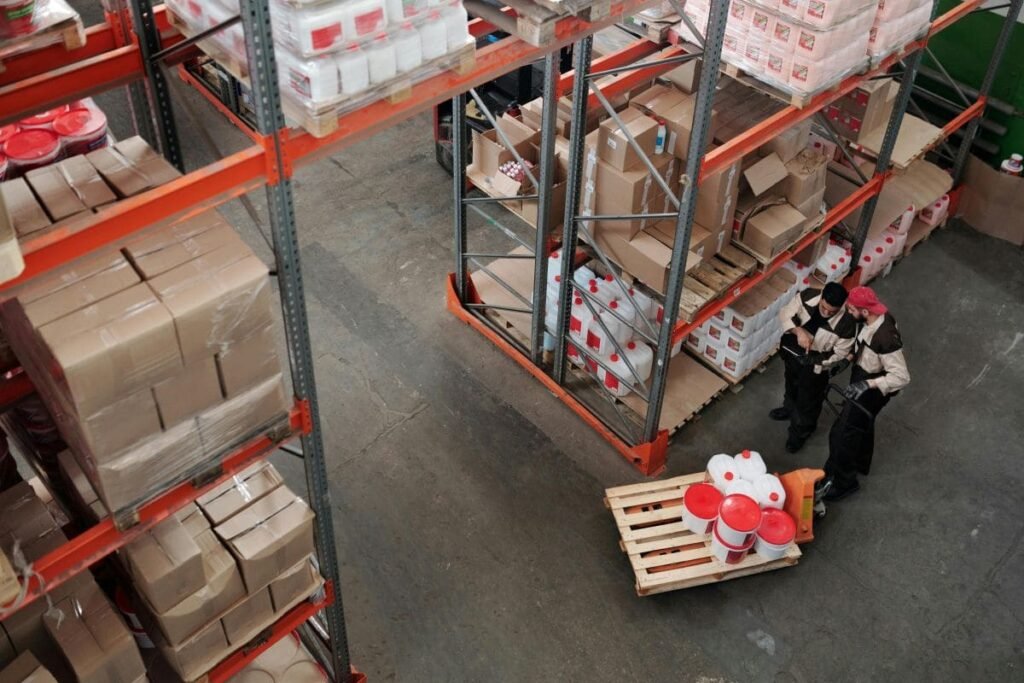
Pallet strapping is a load movement problem. The pallet may already be wrapped, staged, or waiting for forklift pickup. Moving that pallet to a fixed machine can add congestion, especially when the warehouse has narrow lanes or high forklift traffic.
Pallet Opening and Under-Pallet Strap Path
First confirm how the strap needs to travel around the load:
- Whether the strap must pass through the pallet opening or under the pallet.
- Whether the load height blocks visibility or reach.
- Whether the machine can apply consistent tension across larger loads.
Forklift Traffic and Mobile Layouts
Then check whether the warehouse flow supports a fixed station or needs a mobile process:
- How much bending the operator must do during each strap cycle.
- Whether forklift traffic allows a fixed strapping location.
- Whether pallets can queue safely before and after strapping.
- Whether the strapping process should be mobile or fixed.
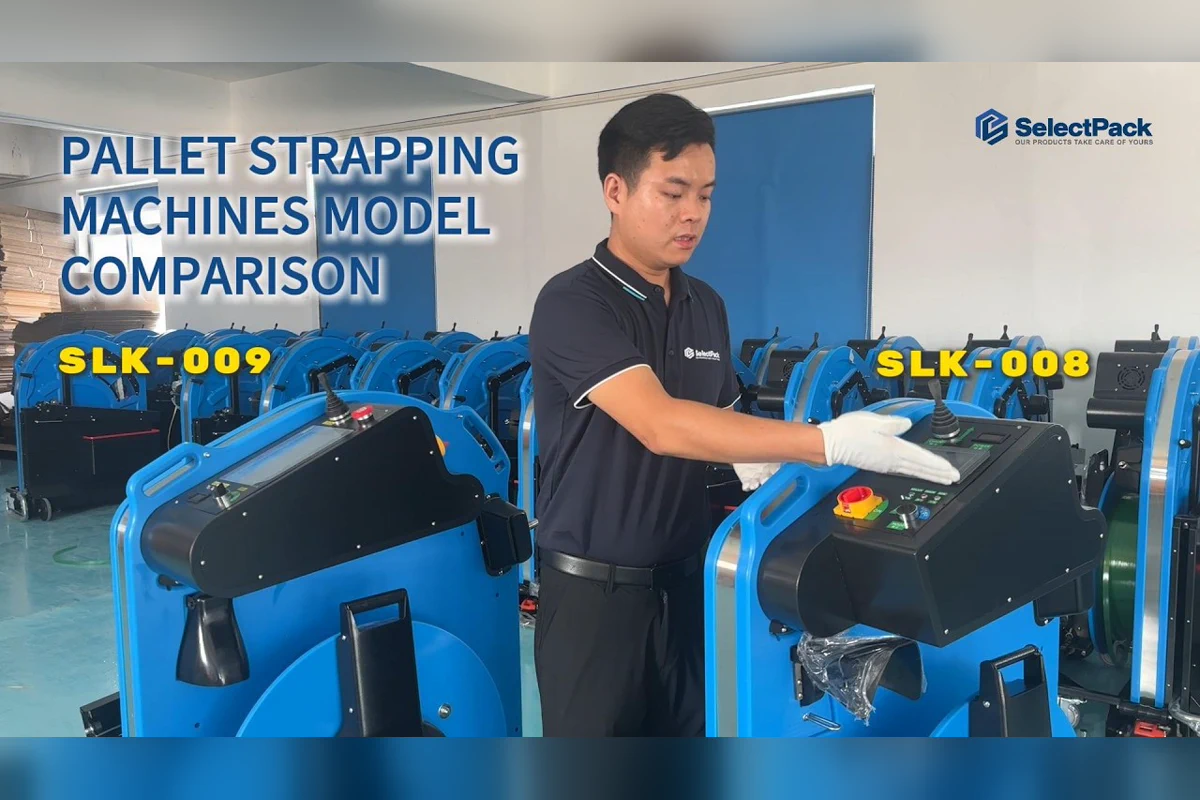
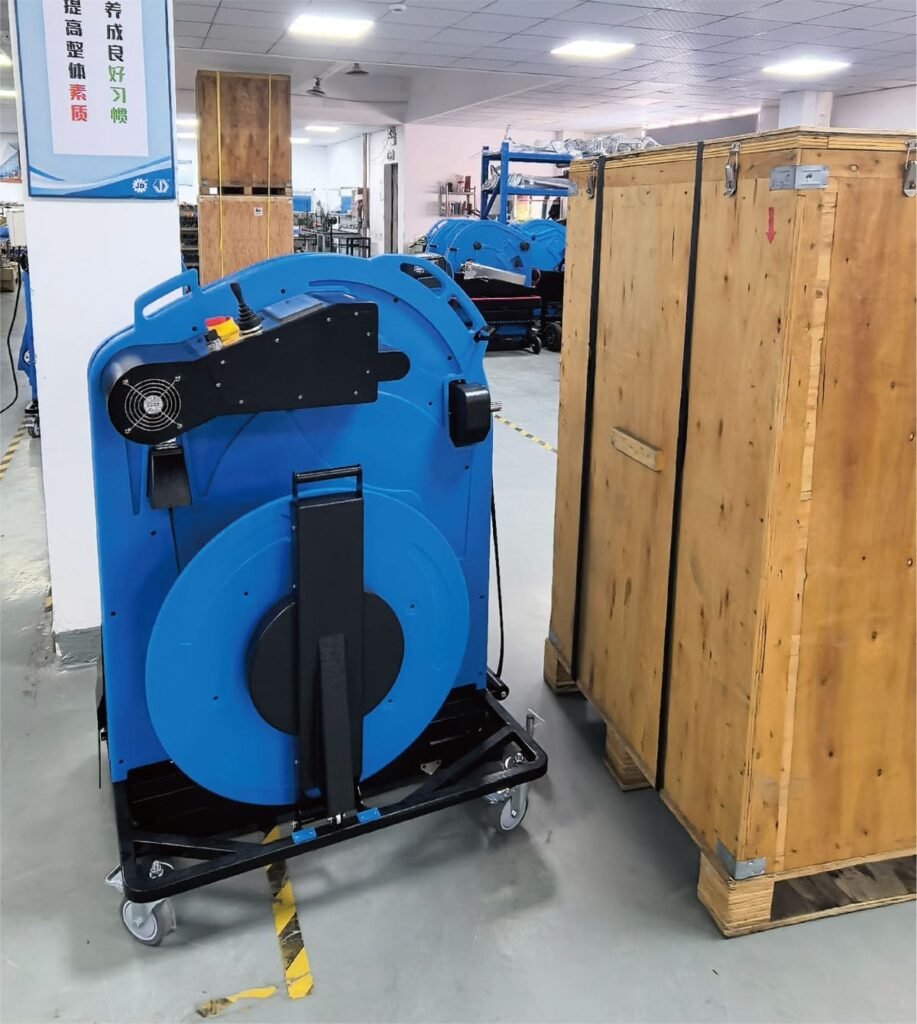
In pallet workflows, the machine often needs to move to the load instead of forcing every load to move to the machine. That is why a mobile semi-auto pallet strapping machine can be a better fit when operators are currently walking straps around pallets or pushing strap manually under the load.
Side-by-Side Workflow Differences
| Factor | Box strapping | Pallet strapping |
|---|---|---|
| Main working area | Packing bench, carton line, or shipping table | Staging lane, pallet area, dock, or end of line |
| Product movement | Carton moves to the machine | Machine or operator may move to the pallet |
| Strap path | Around a carton, box, or bundle | Around the load, through the pallet opening, or under the pallet |
| Operator concern | Reach, table height, cycle rhythm, seal check | Bending, walking distance, forklift flow, load height |
| Throughput risk | Slow cycle time or repeated repositioning | Pallet queue, traffic congestion, inconsistent strap placement |
| Equipment fit | Fixed semi-auto or automatic carton station | Mobile, semi-auto, or integrated pallet strapping process |
Understanding this difference prevents a common mistake: buying a box-focused machine and expecting it to solve a pallet workflow problem.
Tension Settings Should Follow the Product
Boxes often need enough tension to hold flaps, bundles, or cartons together without crushing the product. Pallets need retained tension that keeps the load stable during handling, storage, and transport.
Too much tension on a carton can deform corners or damage lighter packaging. Too little tension on a pallet can allow the load to shift after forklift handling. The machine should allow practical tension adjustment by product type, strap width, and load stability requirement.
Material Choice Follows the Load
Many carton applications use PP strapping because it is flexible and cost-effective for light to medium packages. Pallet applications may use PP or PET depending on load weight, transport distance, storage time, and how much tension retention is required.
Before choosing a machine and strap material, confirm:
- Machine compatibility.
- Carton or pallet weight.
- Product compressibility.
- Strap width and thickness range.
- Edge protection needs.
- Shipping route.
- Storage conditions.
The strap should match both the product and the equipment. A supplier that understands both carton and pallet workflows can help avoid a mismatch between strap material, machine capability, and the real packing process. For broader equipment selection, SelectPack’s strapping machine manufacturer page gives a useful starting point for comparing machine categories.
When a Carton Strapping Machine Is the Better Fit
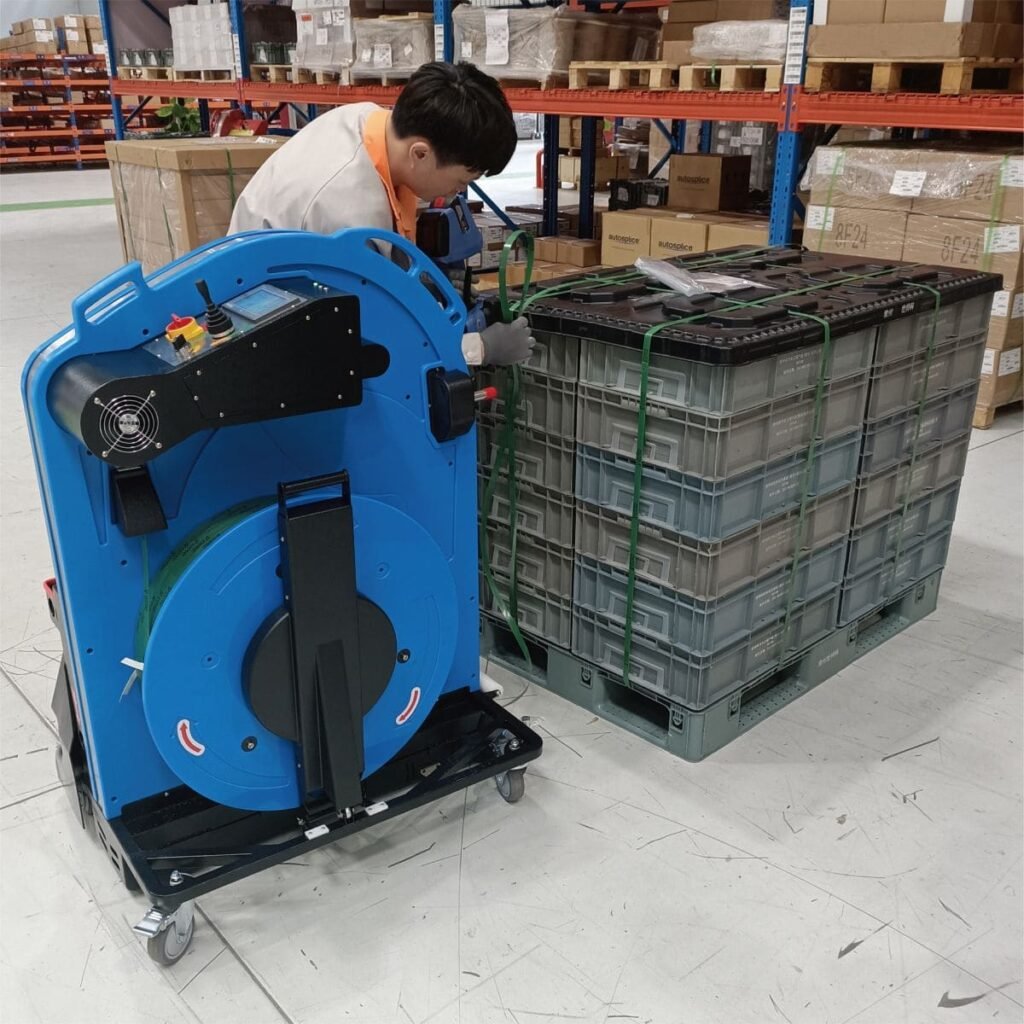
A carton strapping machine is usually the better fit when the main unit is a box, printed bundle, tray, or small package. It can improve repeatability, reduce manual sealing steps, and support a cleaner outbound packing process.
This direction is especially strong when:
- Cartons flow through a defined packing station.
- Operators can place or slide the carton into position easily.
- The carton size range is predictable.
- The business needs fast repeatable cycles.
- Conveyor connection may be needed later.
- The main problem is output speed, not pallet handling.
In this case, buying for station ergonomics, seal consistency, and cycle rhythm is more important than buying for mobility.
When a Pallet Strapping Process Is the Better Fit
A pallet strapping process is usually the better fit when the main problem is heavy load handling. If operators walk straps around pallets, bend repeatedly, push strap under the pallet, or move pallets only to strap them, the workflow needs pallet-focused equipment.
This direction is especially strong when:
- Pallets are already staged before strapping.
- Loads are too heavy or awkward to move to a small fixed station.
- Forklift lanes are part of the workflow.
- Operators need to reduce bending and walking.
- The strap path must pass through or under the pallet.
- Load height and pallet type vary from order to order.
For these cases, a mobile or dedicated pallet strapping setup can reduce unnecessary movement and make strap placement more consistent.
Mixed Box and Pallet Workflows
Some warehouses strap both cartons and pallets. The right answer is not always one machine for everything.
When One Machine Can Work
A shared machine may work when carton volume is low, pallet volume is low, and operators can move products without creating delays. This can be acceptable in a small warehouse where strapping is occasional and the team values flexibility over speed.
When to Split the Workflow
A split setup is usually better when cartons move through a regular packing station and pallets are staged separately for shipping. In that situation, a carton station can protect packing speed while a pallet process can reduce handling effort in the warehouse area.
The practical test is simple: if using one machine forces cartons to wait behind pallets, or pallets to move across the warehouse just to be strapped, the workflow is asking for two different processes.
Conclusion
Boxes and pallets create different strapping problems even when both use plastic strap. Cartons are usually about packing station speed, seal consistency, carton size range, and light handling. Pallets are about load stability, under-pallet strap path, operator bending, forklift traffic, and warehouse flow.
The equipment decision should start with the unit being strapped and the path it follows through the facility. A carton machine should support the packing station. A pallet solution should reduce handling friction and keep larger loads stable through movement.