Introduction: A Noticeable Shift in Warehouse Packaging
For decades, plastic bubble wrap has been the default cushioning material in warehouses, fulfillment centers, and distribution hubs. It is lightweight, flexible, and widely available, making it a convenient solution for protecting products during transit. Many packing stations are built around this material, and entire inventory systems are structured to support it.
However, warehouse packaging operations are undergoing a structural shift. Rising environmental regulations, corporate sustainability goals, storage limitations, and cost pressures are forcing operations managers to rethink traditional materials. What once seemed like a simple packaging choice has now become a strategic operational decision.
As a result, interest in paper-based cushioning systems has grown significantly. Instead of relying on petroleum-based plastic materials, warehouses are increasingly exploring paper bubble machines that convert kraft paper into protective cushioning on demand. This growing adoption of paper bubble machines signals a broader transformation in warehouse packaging strategy.
The question is no longer whether paper alternatives exist. The real question is: why are more warehouses switching to paper bubble machines—and does it make operational sense?
Growing Pressure to Reduce Plastic in Packaging Operations
Regulatory and Compliance Factors
Across North America and Europe, governments are tightening regulations related to plastic packaging waste. Policies targeting single-use plastics, recycling mandates, and extended producer responsibility (EPR) programs are placing new compliance burdens on businesses.
Under EPR frameworks, companies are increasingly held financially responsible for the packaging materials they introduce into the market. Plastic packaging often carries higher environmental fees and more complex reporting requirements compared to recyclable paper materials.
Additionally, packaging taxes and waste disposal regulations continue to evolve. For warehouse operators managing high shipment volumes, even small regulatory changes can translate into significant cost increases over time. As compliance becomes more complex, switching to recyclable paper-based cushioning becomes not only an environmental decision but also a risk-management strategy.
Retailer and Marketplace Sustainability Requirements
Large retailers and e-commerce marketplaces are also influencing packaging decisions. Many global platforms now encourage or require sellers to use recyclable or reduced-plastic packaging materials.
Brands that supply these marketplaces must align their packaging strategies with broader sustainability standards. This often means reducing plastic void fill and transitioning toward recyclable alternatives.
Warehouse operations, as a result, are adapting. The packaging material used at the packing station directly affects brand compliance, supplier approval, and marketplace reputation. Paper bubble machines offer a way to maintain protective performance while aligning with retailer sustainability initiatives.
Changing Customer Expectations
End customers are more aware of packaging waste than ever before. Excessive plastic packaging is frequently criticized on social media and in product reviews. Even when products arrive undamaged, the unboxing experience can influence brand perception.
Paper-based cushioning often communicates environmental responsibility more effectively than plastic materials. Recyclable kraft paper is easier for consumers to dispose of, and in many regions it can be placed directly into standard recycling streams.
For warehouses shipping directly to consumers, packaging is no longer just about protection—it is part of the brand experience. This shift in perception is accelerating the move away from plastic bubble wrap.
Operational Limitations of Traditional Plastic Bubble Wrap
While plastic bubble wrap has long been considered convenient, it presents several operational challenges in modern warehouse environments.
Bulky Storage and Inventory Complexity
Plastic bubble wrap is typically supplied in large rolls that require significant storage space. Warehouses handling multiple product categories often need several roll sizes or thicknesses, adding complexity to inventory management.
As warehouse space becomes more valuable—especially in high-cost regions—allocating large areas to bulky plastic rolls is increasingly inefficient. Managing multiple SKUs of plastic cushioning also increases handling time and restocking frequency.
In high-volume operations, these inefficiencies compound quickly. In contrast, a paper bubble machine allows warehouses to centralize cushioning production while minimizing storage complexity.
Disposal and Waste Handling Costs
Plastic cushioning generates waste both at the warehouse and at the end customer’s location. Internally, scrap material, damaged rolls, and packaging overruns contribute to plastic waste streams that may require specialized handling.
Externally, plastic materials often end up in general waste rather than recycling systems. In regions where waste disposal fees are rising, the long-term cost impact becomes more visible.
Warehouses focused on operational efficiency are beginning to account for these hidden costs, not just the per-roll purchase price.
Material Price Volatility
Plastic bubble wrap is derived from petroleum-based raw materials. As a result, its pricing is influenced by fluctuations in global oil markets and supply chain disruptions.
Over the past several years, volatility in raw material prices has made cost forecasting more difficult for procurement teams. Paper-based materials, while not immune to price changes, are generally perceived as less exposed to petroleum market instability.
For warehouses operating on tight margins, pricing predictability plays an important role in long-term planning.
How Paper Bubble Machines Transforms Warehouse Workflows
Switching to a paper bubble machine is not simply about replacing one material with another. It changes how cushioning is produced, stored, and integrated into daily operations.
On-Demand Cushioning at the Packing Station
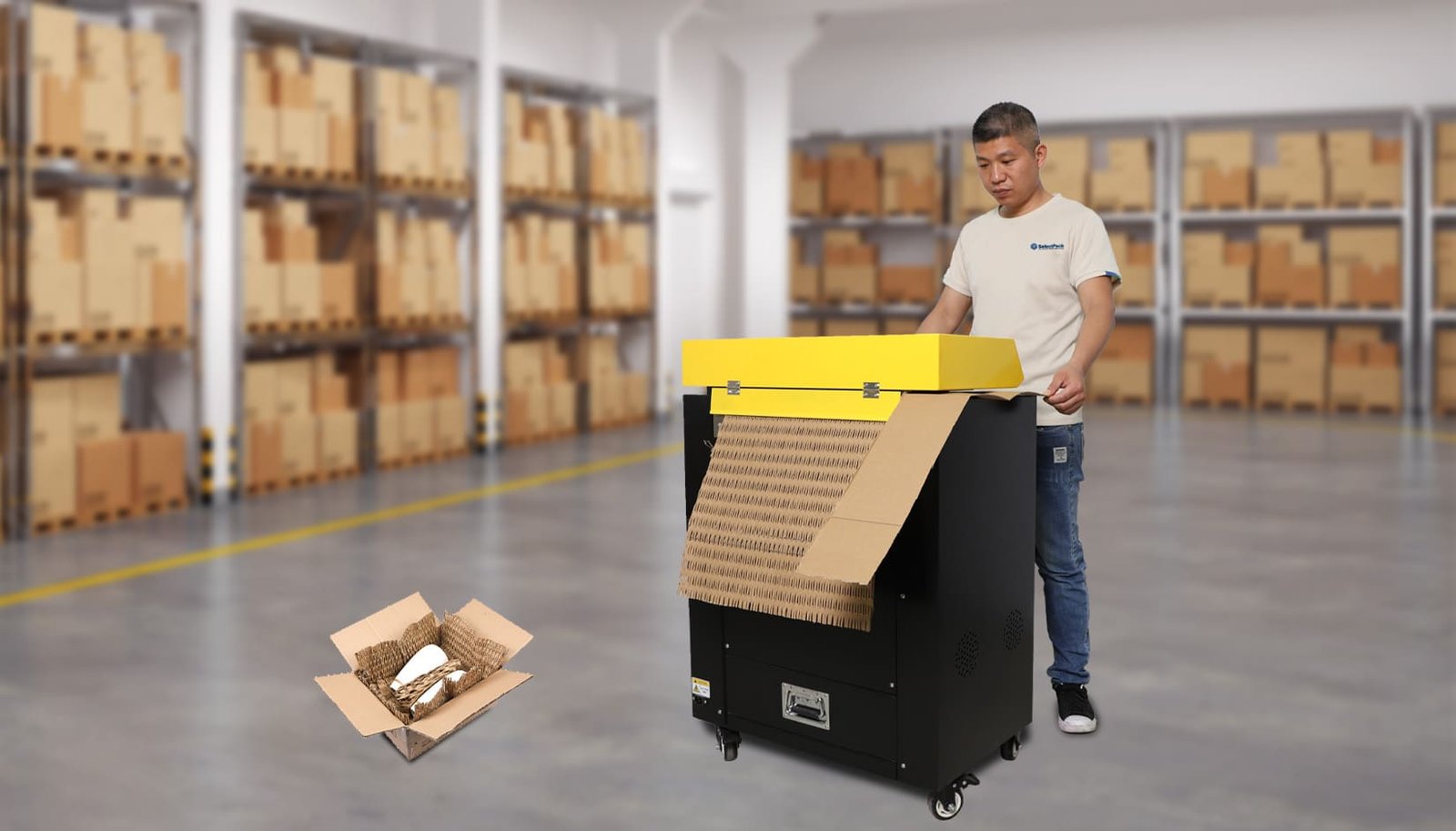
A paper bubble machine—also referred to as a paper bubble packaging machine—converts flat kraft paper rolls into embossed cushioning material directly at the packing bench. Instead of storing finished bubble wrap, warehouses produce cushioning as needed.
This on-demand production reduces dependency on pre-manufactured plastic rolls and allows packers to generate the exact amount required for each shipment. Overproduction and material waste are minimized.
The result is a more flexible and responsive packing workflow. In a warehouse shipping 800 to 1,200 parcels per day, even small reductions in plastic usage and storage space can translate into measurable operational savings.
Compact Kraft Paper Roll Storage
Kraft paper rolls are typically more compact than bulky plastic bubble wrap rolls. Because cushioning is created through mechanical embossing, warehouses store flat paper rather than air-filled plastic material.
This significantly reduces storage footprint and simplifies restocking. Inventory planning becomes easier, particularly for operations handling diverse shipment sizes.
For warehouses facing space constraints, this change alone can improve layout efficiency.
Streamlined Packing Operations
Modern paper bubble machines are designed to integrate into existing packing stations without major infrastructure changes. Many models are compact and can be placed directly on packing tables or mounted on mobile stands.
Operators can produce consistent cushioning material quickly, adjusting length as needed. The workflow remains simple, while material sourcing becomes more sustainable.
Over time, this integration supports both operational consistency and environmental objectives.
Cost Analysis: Is Switching Financially Justified?
One of the most common concerns warehouse managers have is cost. While sustainability is important, operational decisions must be financially viable.
Comparing Material Costs
At first glance, plastic bubble wrap may appear inexpensive on a per-roll basis. However, evaluating cost per shipment provides a clearer picture.
Paper bubble material can offer competitive per-package costs when used efficiently. Because it is produced on demand, there is less overuse and fewer unused remnants compared to pre-cut plastic sheets.
Warehouse managers evaluating a paper bubble machine should focus on total cushioning cost per shipment rather than per-roll pricing. The strategic question is not whether paper cushioning costs slightly more per roll, but whether it reduces total packaging dependency over time.
Hidden Operational Savings
Beyond material price, several indirect savings often emerge:
- Reduced storage footprint
- Lower disposal and waste handling costs
- Simplified compliance documentation
- More organized packing stations
These operational efficiencies contribute to total cost reduction, even if the per-unit material price appears similar.
Environmental and ESG Advantages
Beyond operational efficiency and cost considerations, environmental impact has become a measurable performance indicator for many warehouse operators.
Recyclability and Circular Packaging
Kraft paper used in paper bubble machines is widely recyclable in most municipal recycling systems. Unlike plastic bubble wrap, which often requires specialized recycling streams and is frequently discarded as general waste, paper cushioning can typically enter existing paper recycling flows.
This supports circular packaging models, where materials are reused, repurposed, and reprocessed rather than disposed of after a single use. For warehouses aiming to align with circular economy principles, paper-based cushioning simplifies material recovery at the end of the product lifecycle.
Recyclability is not just a marketing claim—it affects measurable waste diversion rates and sustainability reporting metrics.
Supporting Corporate Sustainability Goals
Many organizations now publish formal ESG (Environmental, Social, and Governance) reports. These reports often include targets related to reducing plastic usage, increasing recyclable material percentages, and lowering carbon intensity in logistics operations.
Packaging choices directly influence these metrics.
By transitioning from plastic bubble wrap to paper-based cushioning, warehouses can demonstrate tangible progress toward reducing single-use plastic consumption. This shift can also support supplier audits, investor disclosures, and customer sustainability assessments.
In practical terms, switching materials may be one of the more straightforward operational changes that contributes to broader ESG commitments.
Brand and Market Positioning
For businesses shipping directly to consumers, packaging serves as a physical representation of brand values. Customers increasingly notice whether packaging materials are recyclable or plastic-heavy.
Paper-based cushioning often communicates environmental responsibility more clearly. It aligns with eco-conscious branding and helps reduce negative customer feedback related to excessive plastic packaging.
In competitive markets, even subtle improvements in packaging sustainability can strengthen brand differentiation and customer trust.
Conclusion: A Structural Packaging Transition in Modern Warehousing
The shift toward paper bubble machines is not driven by a single factor. It is the result of converging pressures: regulatory compliance, rising disposal costs, operational efficiency needs, sustainability reporting, and evolving customer expectations.
Plastic bubble wrap once represented the simplest solution for protective packaging. Today, simplicity is being redefined. On-demand paper cushioning offers warehouses a way to reduce plastic dependency, optimize storage space, and align packaging practices with long-term environmental and financial goals.
For many operations, the transition is less about replacing a material and more about modernizing the entire cushioning workflow.
Warehouse managers evaluating their packaging strategy should consider current plastic consumption, storage allocation, waste handling costs, and sustainability targets. In many cases, integrating a paper bubble machine is not merely an alternative—it is a structural upgrade designed for the next phase of warehouse operations. Warehouses that proactively evaluate alternative cushioning systems today will be better positioned to manage regulatory risk and cost volatility in the years ahead.