Here’s a number that should get your attention: 91% of plastic-based packaging — including the bubble wrap your warehouse uses every day — ends up in a landfill, ocean, or natural ecosystem. Only 2% of film and flexible plastic packaging is actually recycled each year.
For warehouse managers and operations directors, that statistic is no longer just an environmental concern. It’s a business risk. Plastic packaging regulations are tightening across the US, UK, and EU. Consumer expectations around sustainable shipping are rising sharply. And the cost of doing nothing is starting to show up in compliance fees, brand perception surveys, and supplier scorecards.
The good news? There’s a practical, operationally sound path forward — and it doesn’t require overhauling your entire packaging line. Paper bubble machines let warehouses switch from plastic bubble wrap to on-demand kraft paper cushioning, one packing station at a time. This article explains exactly how that transition works, what the numbers look like, and how to build a credible plastic reduction strategy around it.
The Plastic Problem in Warehouse Packaging
Before we get into solutions, it helps to understand the scale of what we’re dealing with.
Plastic bubble wrap is made from low-density polyethylene (LDPE), a material that can take hundreds of years to decompose in a landfill. Its production contributes to the roughly 1.8 billion tonnes of carbon emissions generated by plastic packaging globally each year. Around 46% of the 14 million tonnes of new plastic waste entering oceans annually comes from thin flexible plastics — the same category as bubble wrap and poly bags.
From a warehouse operations standpoint, the problem compounds in three specific ways.
Storage inefficiency. Pre-made plastic bubble rolls are shipped and stored in their expanded, air-filled state. That means you’re paying to store and transport a product that is mostly air. A single pallet of expanded plastic bubble rolls covers a fraction of the linear footage that a flat-stored paper roll of equivalent protective capacity can provide.
Waste accumulation. Warehouses that pack hundreds or thousands of orders per day generate significant volumes of plastic packaging waste. Disposing of that waste — whether through landfill fees, recycling logistics, or third-party waste removal — adds operational cost that rarely appears in packaging budget line items.
Regulatory exposure. The UK’s Plastic Packaging Tax, now at £223.69 per tonne as of April 2025, applies to plastic packaging components that contain less than 30% recycled content. In the EU, the Packaging and Packaging Waste Regulation (PPWR) is pushing similar requirements across member states. For businesses shipping into these markets, plastic bubble wrap increasingly represents a compliance liability.
What a Paper Bubble Machine Actually Does
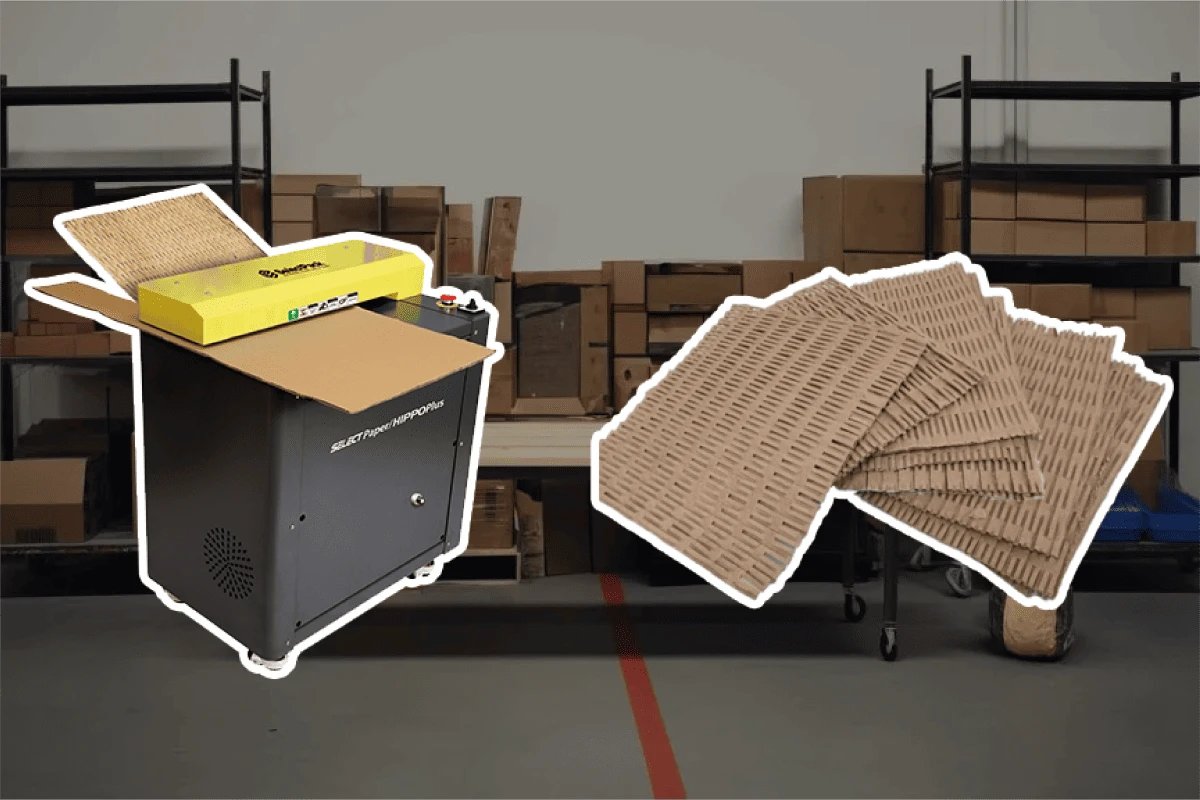
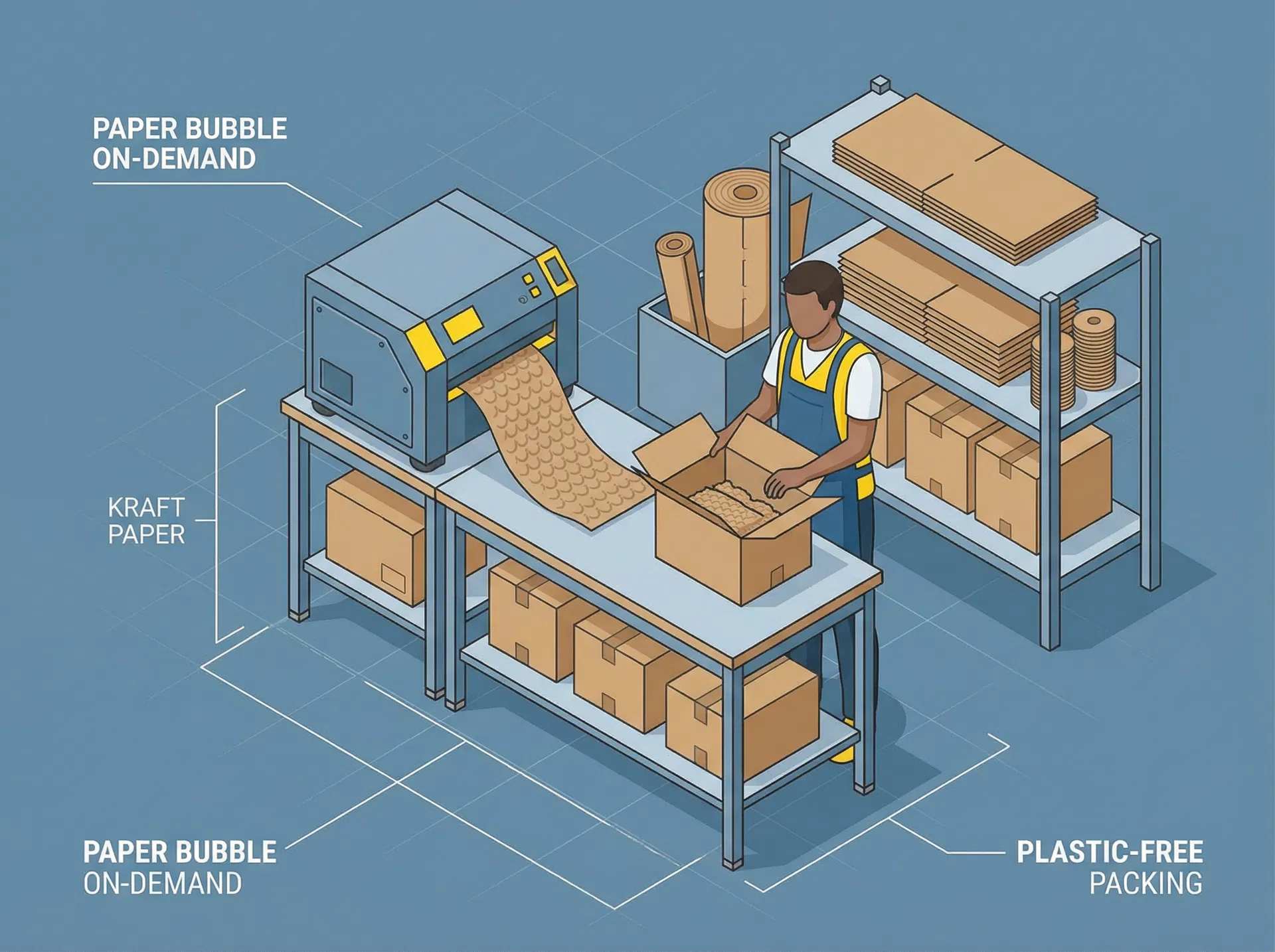
A paper bubble machine is a compact, workstation-mounted device that converts flat kraft paper rolls into structured bubble-pattern cushioning material on demand. The machine embosses the paper into a three-dimensional bubble or honeycomb profile, creating air pockets within the paper structure itself — no plastic film, no inflation equipment, no pre-made rolls to store.
The key operational advantage is on-demand production. Rather than ordering, receiving, storing, and dispensing pre-manufactured plastic bubble rolls, your packing team pulls paper cushioning from the machine as needed — in the exact length required for each order. There is no over-use, no leftover material, and no expanded plastic rolls taking up shelf space.
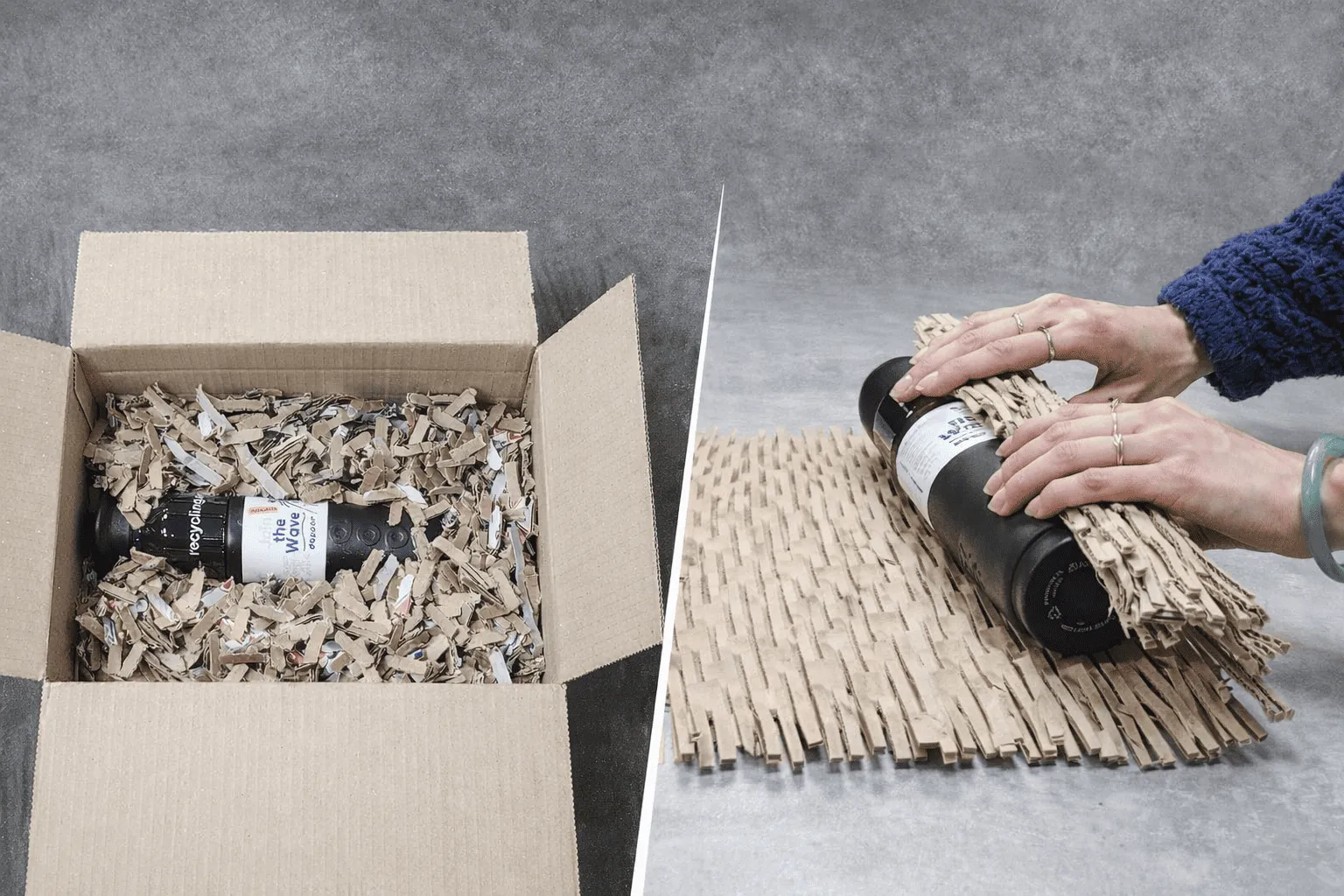
From a material standpoint, the kraft paper used in these machines is sourced from sustainably managed forests, is fully recyclable through standard paper recycling streams, and is biodegradable. Unlike LDPE plastic, it does not produce microplastics and does not require specialized recycling infrastructure. Customers can place it directly in their household paper recycling bin — a detail that matters increasingly to B2C brands tracking unboxing experience and customer satisfaction.
For a deeper look at how the machine converts flat paper into protective cushioning, see our guide on how a paper bubble machine works.
Five Ways Paper Bubble Machines Reduce Plastic in Your Warehouse
1. Direct Material Substitution at the Packing Station
The most immediate impact is the simplest: paper replaces plastic, one station at a time. A paper bubble machine installed at a packing workstation eliminates the need for plastic bubble roll at that station entirely. For warehouses running multiple packing stations, a phased rollout — starting with highest-volume stations — allows you to track plastic reduction in real time and build an internal business case for full deployment.
The protective performance of paper bubble cushioning is comparable to standard plastic bubble wrap for the majority of common e-commerce and B2B shipping applications, including consumer electronics, glassware, ceramics, and general merchandise. For very heavy items or extreme-impact scenarios, layered paper cushioning or a combination with honeycomb paper provides additional protection. You can explore the full comparison in our article on paper cushioning vs bubble wrap vs foam.
2. Eliminating Pre-Made Plastic Inventory
Every roll of plastic bubble wrap that sits on your warehouse shelving represents two problems: space consumed and plastic already in your supply chain. Paper bubble machines use compact flat paper rolls (or fanfold paper stacks) as feedstock. These store flat, take up significantly less space per unit of protective output, and can be ordered in larger quantities without the storage penalty that comes with expanded plastic rolls.
One practical benchmark: a single pallet of flat kraft paper rolls can yield the equivalent protective coverage of up to 9.8 pallets of expanded plastic bubble rolls. For warehouses with constrained storage footprints — a common challenge in urban fulfillment centers — this ratio alone can justify the switch.
3. Reducing Packaging Waste Volume
Because paper bubble cushioning is produced on demand in the exact length needed, over-use is structurally reduced. Packers are not tearing off a pre-cut section of plastic roll and trimming the excess; they are producing precisely what the order requires. This reduces both material consumption per order and the volume of packaging offcuts that end up in waste bins.
Paper waste is also significantly easier and cheaper to manage than plastic film waste. Most commercial paper recycling programs accept kraft paper packaging material. Plastic film, by contrast, requires drop-off at specialized collection points and is rejected by most curbside recycling programs — meaning it typically ends up in landfill regardless of intent.
4. Supporting Measurable ESG Reporting
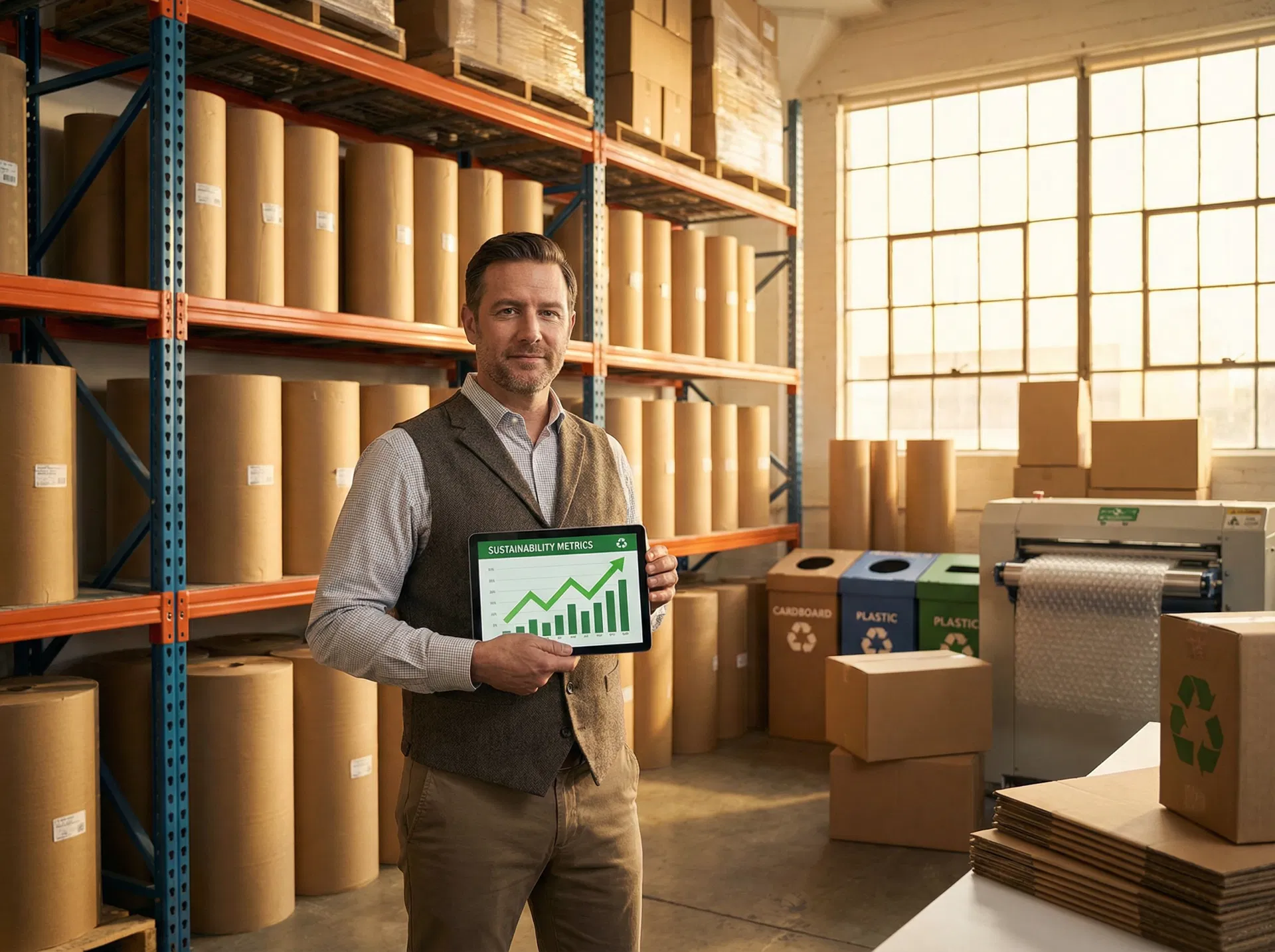
Sustainability reporting has moved from a voluntary exercise to a business requirement for many mid-size and enterprise companies. Customers, investors, and procurement teams increasingly require suppliers to document their environmental performance. Switching from plastic bubble wrap to paper cushioning provides a clear, auditable reduction in plastic packaging volume — a metric that maps directly onto Scope 3 emissions reporting, supplier sustainability scorecards, and ESG disclosure frameworks.
For UK-based operations, switching to paper cushioning directly reduces the volume of plastic packaging subject to the Plastic Packaging Tax. For EU-facing businesses, it supports compliance with the PPWR’s requirements on recyclable packaging content. These are not hypothetical future savings — they are quantifiable reductions in current compliance costs.
5. Improving Customer Perception of Your Brand
The end customer sees your packaging. A growing body of consumer research confirms that packaging sustainability influences purchasing decisions and brand loyalty. According to a 2025 survey by Shorr Packaging, 54% of consumers reported deliberately choosing products with sustainable packaging in the past six months 4.
Paper bubble cushioning signals environmental responsibility in a way that plastic bubble wrap does not. It is visually distinct, tactilely different, and carries an implicit message about your brand’s values. For B2C brands in competitive categories — home goods, beauty, electronics accessories, specialty food — this perception difference is a meaningful differentiator.
Building a Plastic Reduction Roadmap for Your Warehouse
Switching to paper bubble machines is most effective when treated as a structured operational project rather than a one-off equipment purchase. Here is a practical framework for building a credible plastic reduction roadmap.
Step 1: Baseline your current plastic packaging volume. Before making any changes, document how much plastic bubble wrap your warehouse consumes per month, per station, and per order category. This baseline is essential for measuring progress and building the ROI case for leadership approval.
Step 2: Identify high-volume packing stations. Not all stations pack the same volume or product types. Start with the stations that consume the most plastic bubble wrap — typically those handling fragile or high-value items — and pilot paper bubble machines at those locations first.
Step 3: Run a parallel trial. For four to six weeks, run paper bubble cushioning alongside plastic bubble wrap at the pilot stations. Track packaging time per order, material consumption, damage rates, and packer feedback. This data will inform your full rollout decision and give you real numbers for your business case.
Step 4: Calculate your compliance cost reduction. If you ship into the UK or EU, calculate the annual plastic packaging tax liability associated with your current bubble wrap consumption. This figure often surprises operations teams and accelerates internal approval for the switch.
Step 5: Phase out plastic across all stations. Once the pilot data is positive, roll out paper bubble machines to remaining packing stations on a defined schedule. Set a target date for eliminating plastic bubble wrap from your packaging operation entirely.
For warehouses running high daily order volumes, see our detailed guide on industrial paper bubble machines for high-volume packaging operations for machine selection criteria and throughput planning.
What to Look for in a Paper Bubble Machine
Not all paper bubble machines are equal in terms of output quality, paper compatibility, and operational reliability. When evaluating options for your warehouse, the SelectPack team recommends focusing on four criteria.
| Evaluation Criterion | What to Look For |
| Output speed | Minimum 10 m/min for standard e-commerce; 15–20 m/min for high-volume operations |
| Paper compatibility | Supports both roll and fanfold formats; accepts 80–120 gsm kraft paper |
| Footprint | Compact enough to fit existing packing station dimensions without workflow disruption |
| Reliability | Jam-resistant feed mechanism; low maintenance intervals; local technical support availability |
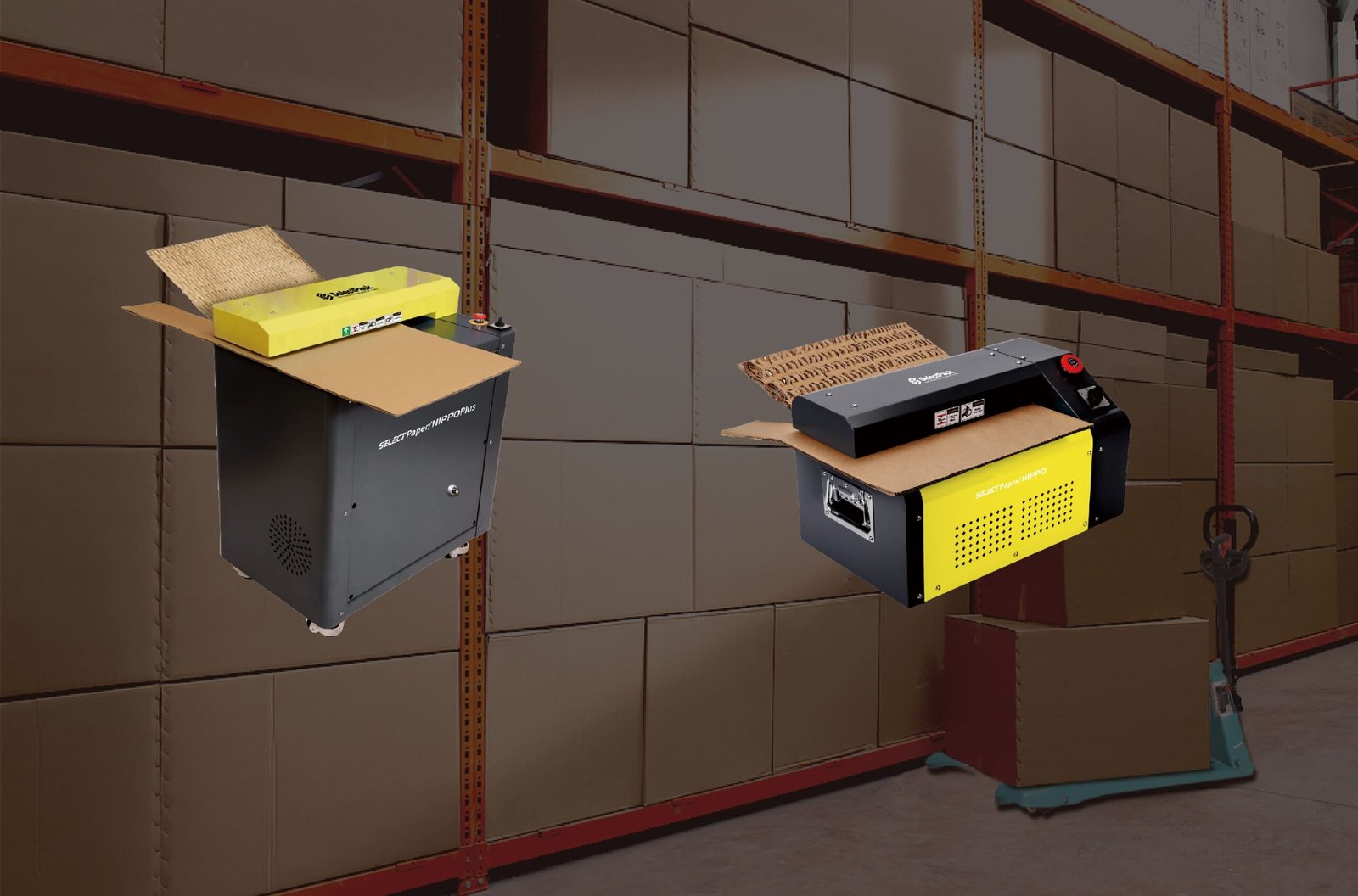
SelectPack’s range of paper bubble machines is designed specifically for warehouse and fulfillment environments, with models suited to everything from small-business packing stations to multi-station industrial operations. You can explore the full product range on our paper bubble machine product page.
Frequently Asked Questions
Is paper bubble cushioning as protective as plastic bubble wrap?
For the majority of standard e-commerce and B2B shipping applications — including consumer electronics, glassware, ceramics, and general merchandise — paper bubble cushioning provides comparable protection to standard plastic bubble wrap. For very heavy items or high-impact scenarios, layered paper cushioning or a combination with honeycomb paper is recommended. The key advantage of paper is that its structure does not deflate over time, unlike plastic air bubbles that can lose pressure during transit.
How much plastic can a single paper bubble machine eliminate?
This depends on your current bubble wrap consumption. A warehouse packing 500 orders per day, using an average of 30 cm of bubble wrap per order, consumes approximately 150 meters of plastic bubble roll daily. A single paper bubble machine at that station can replace 100% of that plastic consumption with recyclable kraft paper cushioning.
Does switching to paper packaging affect packaging speed?
Modern paper bubble machines produce cushioning at speeds of 10–20 meters per minute, which is comparable to or faster than manually dispensing plastic bubble roll. Most warehouses that have made the switch report no meaningful change in packaging throughput, and some report improvements due to the elimination of roll-changing downtime and material waste.
How does paper bubble cushioning affect the customer unboxing experience?
Paper bubble cushioning is generally perceived positively by end customers. It signals environmental responsibility, has a premium tactile quality compared to plastic, and can be placed directly in household paper recycling. For brands that invest in unboxing experience, paper cushioning reinforces a sustainability narrative that plastic bubble wrap cannot.
The Bottom Line
The case for switching from plastic bubble wrap to paper bubble cushioning has never been stronger. The environmental data is clear. The regulatory direction is set. Consumer preferences are shifting. And the operational path — paper bubble machines installed at packing stations, producing on-demand recyclable cushioning — is proven, practical, and scalable.
The question for most warehouse managers is not whether to make the switch, but how to sequence it. Starting with a pilot at your highest-volume stations, measuring the results, and building a phased rollout plan is the lowest-risk approach to a transition that will pay dividends in compliance cost reduction, ESG reporting, and brand differentiation.
If you’re ready to explore what a plastic reduction roadmap looks like for your specific operation, the SelectPack team is available to help. Contact us for a consultation, or browse our paper bubble machine range to find the right model for your packing station configuration.
References
1.Woola. (2025). 40+ Bubble Wrap Statistics Showing Packaging Market Trends. Retrieved from https://www.woola.io/blog/bubble-wrap-statistics
2.BDO UK. (2025 ). Plastic Packaging Tax — Current Rates and Thresholds. Retrieved from https://www.bdo.co.uk/en-gb/services/tax/vat-and-indirect-taxes/plastic-packaging-tax
3.Ranpak. (2023 ). Why Paper Material is Replacing Plastic Bubbles. Retrieved from https://www.ranpak.com/blog/2023/05/02/paper-packaging-replacing-plastic/
4.Shorr Packaging. (2025 ). The 2025 Sustainable Packaging Consumer Report. Retrieved from https://www.shorr.com/resources/blog/sustainable-packaging-consumer-report/