The PPWR packaging requirements do not make paper, plastic or any other packaging material automatically compliant. A useful buyer audit starts by identifying the legally responsible operator, separating each packaging format, and checking the applicable requirements for substances, minimisation, empty space, recyclability, recycled content, labelling, re-use and technical documentation.
Equipment and material changes should come after that scope is clear. A smaller box, a different cushioning material or tighter dispensing control may improve one part of the pack, but none of those changes proves compliance for the complete packaging format. Product protection, supplier evidence and the route by which packaging is placed on the EU market still have to be documented.
This article is an operational buyer guide, not legal advice. It focuses on packaging design, procurement evidence and packing operations; it is not a complete audit of extended producer responsibility, waste-management duties or Member State registration and reporting. Regulation (EU) 2025/40 applies different obligations and dates according to the packaging format, economic-operator role and market arrangement. Businesses should confirm their specific interpretation with qualified EU regulatory counsel.
PPWR Packaging Requirements Follow More Than One Date
Regulation (EU) 2025/40 entered into force on 11 February 2025 and generally applies from 12 August 2026. That general application date is not a single deadline for every requirement. Several provisions apply later or depend on implementing or delegated acts.
| Date or phase | What a packaging buyer should check |
|---|---|
| 12 August 2026 | PPWR generally applies; Article 5 PFAS limits for food-contact packaging begin. |
| 12 February 2028 | Minimise sales-packaging empty space; Article 24 methodology is due. |
| Labelling phase | Composition label: 12 August 2028 or 24 months after the implementing acts, whichever is later. |
| 2030 phase | Minimisation, recyclability, selected recycled-content, format and re-use rules begin, subject to applicable conditions. |
| Article 24 threshold | 50% maximum empty space: 1 January 2030 or three years after the implementing acts, whichever is later. |
| 2035 and 2038 | Recycled-at-scale and stricter recyclability-grade requirements follow. |
The European Commission’s 2026 PPWR guidance explains selected provisions but does not replace or amend the Regulation. Buyers should check the Regulation, current guidance and any applicable secondary legislation before treating a date or exemption as final for a particular format.
Identify the Responsible Operator Before Requesting Documents
The company that physically makes an empty box or film is not automatically the only manufacturer for every PPWR obligation. Under the PPWR definition, the manufacturer is generally the natural or legal person that has packaging or a packaged product designed or manufactured under its own name or trademark. Specific rules apply to micro-enterprises, suppliers in the same Member State, importers or distributors using their own name or trademark, and changes that may affect compliance.
The Commission’s 2026 guidance states that the manufacturer bears legal responsibility for compliance with the applicable sustainability and labelling requirements. The manufacturer must ensure that the conformity assessment is carried out and that the technical documentation and EU declaration of conformity are prepared. A supplier, laboratory or authorised representative may provide information or perform defined work, but that does not by itself transfer the manufacturer’s legal responsibility.
Other roles still matter. Importers and distributors have role-specific verification and corrective duties. Suppliers must provide the manufacturer with the information and documentation needed to demonstrate conformity. The operator filling sales, grouped, transport or e-commerce packaging may carry separate empty-space obligations under Article 24. Re-use targets may fall on the operator using specified transport packaging.
Map the legal role and the operational role separately for every market route:
- Who has the packaging or packaged product designed or manufactured under its name or trademark?
- Who first places the packaging or packaged product on the EU market?
- Is an importer or distributor changing the packaging or selling it under its own name?
- Who selects and fills the sales, grouped, transport or e-commerce packaging?
- Who holds the technical documentation and signed EU declaration of conformity?
- Who controls the packing station, transport route and any re-use system?
Do not resolve these questions by simply assigning an internal owner. Record the factual arrangement, compare it with the PPWR definitions and document any legal interpretation used.
Build the Audit at Packaging-Format Level

Start by separating sales, grouped, transport and e-commerce packaging. Packaging with the same external dimensions may still represent different formats when the board grade, film structure, coating, adhesive, label, closure, insert or intended function changes.
At minimum, record:
| Audit field | Why it matters |
|---|---|
| Packaging format and function | Sets applicable duties, dates and exemptions. |
| Complete component list | Shows mixed materials and recycling constraints. |
| Empty and filled dimensions | Supports minimisation and empty-space checks. |
| Empty packaging weight | Provides the material baseline. |
| Product size, weight and fragility | Defines protection needs. |
| Cushioning type and quantity | Exposes oversizing and operator variation. |
| Supplier, grade and revision | Links the specification to evidence and change control. |
| EU route and operators | Identifies the responsible operator. |
| Food-contact status and use | Triggers substance, hygiene and safety checks. |
| Label and claim | Defines the evidence required. |
| Annex V screening | Flags Article 25 restrictions or exemptions. |
The register should connect one approved packaging specification to the product family, supplier revision, test evidence and EU market route for which it was assessed.
Article 10 and Article 24 Require Separate Checks
The two provisions address related but different problems. Passing one check does not establish compliance with the other.
| Requirement | Main question | Responsible party and timing |
|---|---|---|
| Article 10: minimisation | Is weight and volume limited to what functionality requires? | Manufacturer or importer; from 1 January 2030; document in the conformity assessment. |
| Article 24: sales packaging | Is empty space minimised without compromising protection? | Filler; by 12 February 2028; no universal percentage cap. |
| Article 24: grouped, transport and e-commerce packaging | Is empty space no more than 50% under the official method? | Filler or user; later of 1 January 2030 or three years after the implementing acts. |
For Article 24, space occupied by paper cuttings, air cushions, bubble wrap, sponge fillers, foam fillers, wood wool and loose polystyrene is treated as empty space. Replacing a plastic air cushion with a paper filler can change the material profile, but it does not correct an oversized outer pack.
The Commission must establish the calculation methodology for the 50% ratio. Until it is available, a company can measure operational baselines, but it should not present an unofficial spreadsheet as the final compliance method. Useful inputs include outer-pack internal dimensions, the volume of sales packages contained inside, cushioning use, box assortment, material per order, operator variation, damage and returns.
Product Protection Still Has to Be Demonstrated
Packaging functionality includes protection. Article 24 requires the future methodology to account for characteristics such as irregular shapes, mixed products, liquids, easily damaged contents, small products that could be damaged by larger items and space needed for shipping labels.
For fragile or high-value products, use controlled trials:
- Group SKUs by dimensions, mass, fragility and damage mode.
- Define the necessary clearance, restraint, wrapping, blocking or cushioning function.
- Test a smaller outer pack, revised SKU-to-box rule or different protective method.
- Use handling or distribution tests that reflect the actual route and load.
- Compare damage, pack time, material use and operator repeatability with the current pack.
- Approve and document the revised packaging specification only after the acceptance criteria are met.
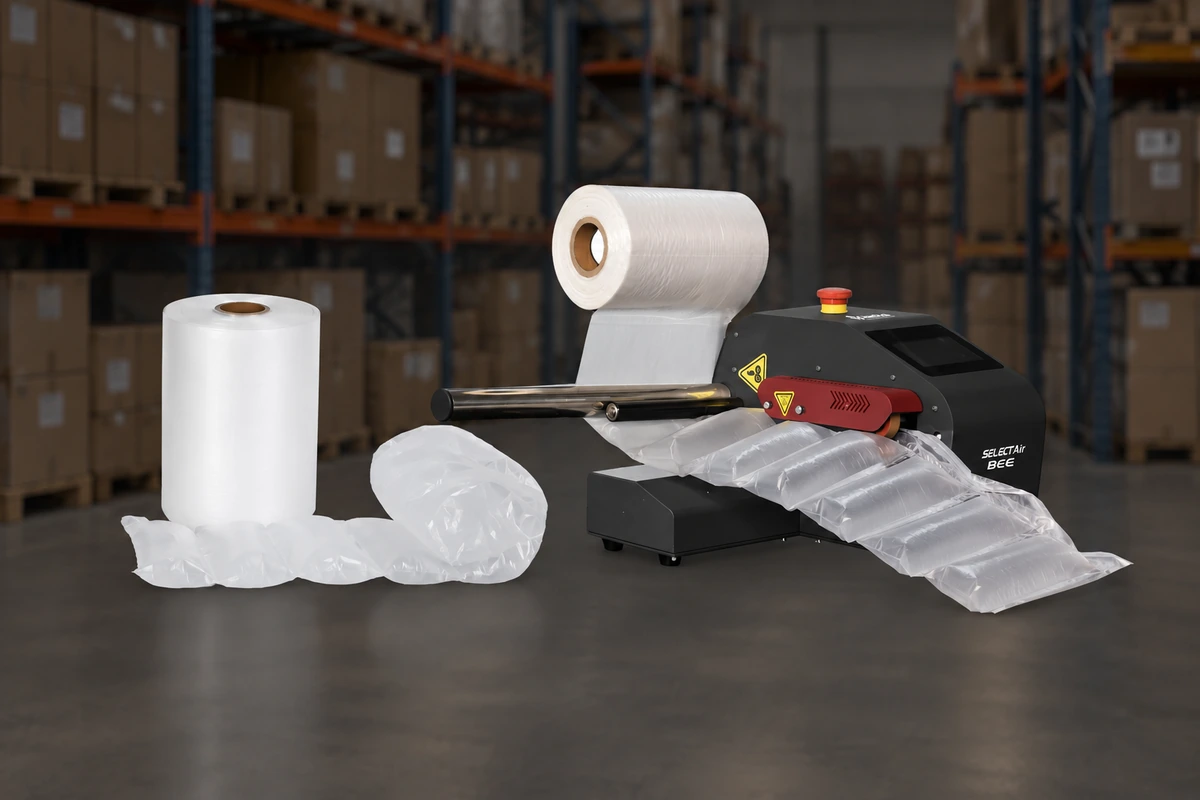
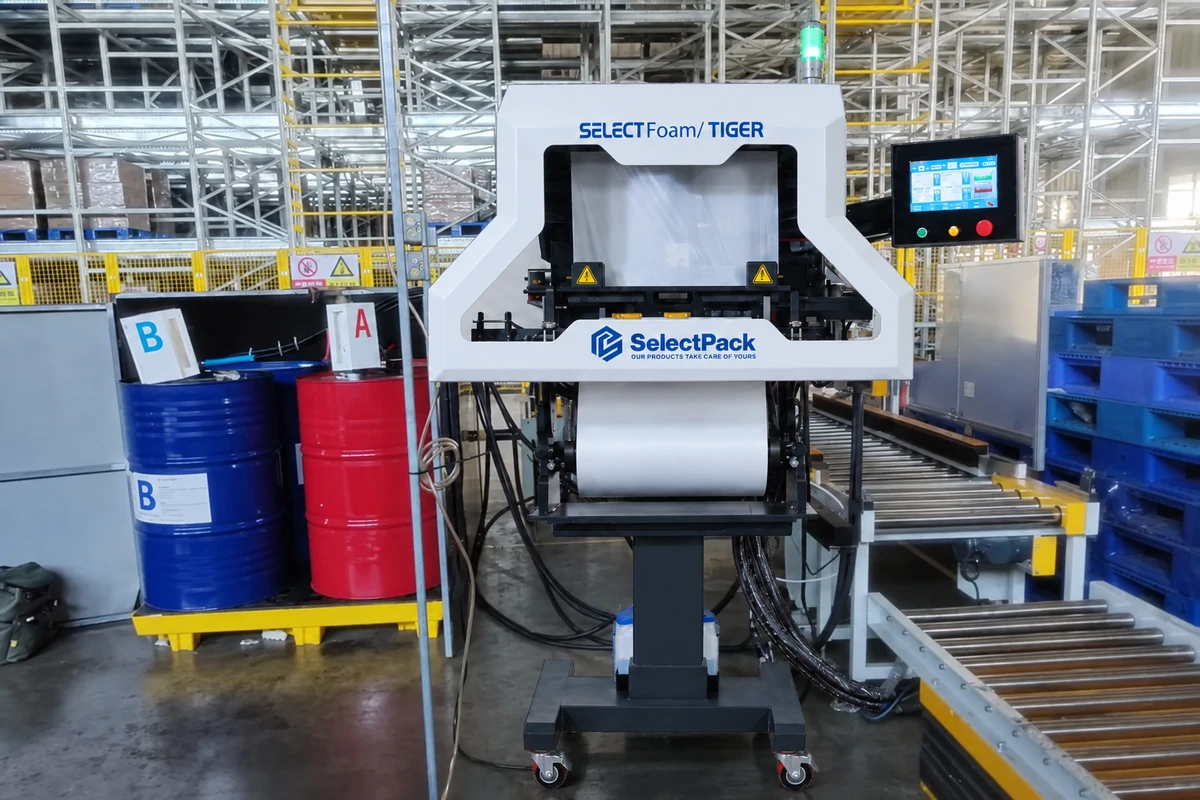
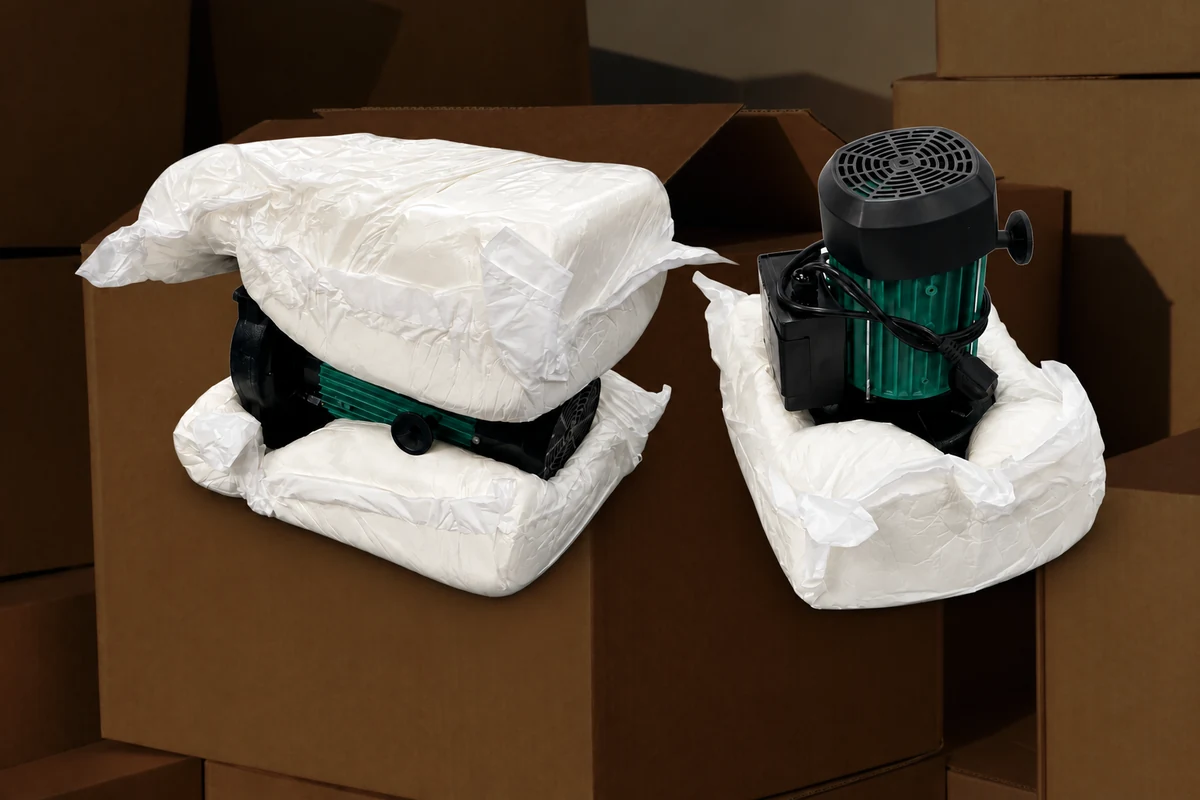
On-demand paper cushioning systems may help a packing station control the length or quantity dispensed. Air systems may suit lightweight void fill or wrapping. Other protective methods may be required for products needing greater conformity or restraint. These are performance and workflow choices, not PPWR compliance classifications; the complete packaging format still requires assessment.
Audit Material Claims, Substances and Labels Separately
Terms such as recyclable, recycled content, paper-based, compostable and reusable do not describe the same requirement.
| Claim or requirement | Evidence to request |
|---|---|
| Designed for recycling | Category, full-pack assessment, method and grade. |
| Recycled at scale | Evidence under the applicable PPWR method and date. |
| Recycled content | Polymer, format, PCR percentage, boundary, plant and verification. |
| Paper-based | Fibre grade and all non-fibre components. |
| Compostable | Format, rule or standard, collection route and processing conditions. |
| Reusable | Rotation-ready design plus return, inspection, reconditioning and tracking. |
Design-for-recycling requirements apply from 1 January 2030 or 24 months after the relevant delegated acts enter into force, whichever is later. The recycled-at-scale condition follows a later timetable. Minimum recycled-content requirements for relevant plastic packaging apply from 1 January 2030 or three years after the relevant implementing act enters into force, whichever is later, with percentages and exemptions varying by packaging type and format.
A material substitution therefore needs format-specific evidence. A structured paper bubble versus plastic bubble wrap comparison can help identify performance questions, but the buyer must still verify the actual specification, components, intended waste route and protective performance.

Food-Contact Packaging Requires a PFAS Check
Article 5 also limits the combined concentration of lead, cadmium, mercury and hexavalent chromium in packaging or packaging components to 100 mg/kg, without prejudice to other applicable EU chemical and food-contact rules. Include the applicable declaration or test basis in the evidence file.
Article 5 sets limits for PFAS in food-contact packaging from 12 August 2026, subject to the conditions in the Regulation and other applicable EU legislation. The limits cover individually targeted PFAS, the sum of targeted PFAS and PFAS including polymeric PFAS at different thresholds. The Commission’s 2026 guidance also notes that there is currently no single harmonised analytical method for PFAS in food-contact packaging.
Buyers of food-contact packaging should therefore obtain a format-specific declaration, the materials and components covered, the test or evidence method, the measured units and results, and confirmation of how other applicable food-contact and chemicals legislation was considered. A generic statement that a material is “PFAS-free” is not a substitute for a documented assessment.
Labelling Has Its Own Timetable
Article 12 introduces a harmonised material-composition label from 12 August 2028 or 24 months after the relevant implementing acts enter into force, whichever is later. Reusable packaging, deposit-and-return packaging and voluntary recycled-content or biobased-content labels have separate provisions.
Before changing artwork or ordering a long print run, confirm which label is mandatory, which is voluntary, the applicable date, whether a digital element is permitted or required and whether current national markings can remain. Keep the approved artwork revision in the packaging evidence file.
Apply Re-Use Targets Only to the Correct Packaging and Route
Article 29 does not impose one re-use percentage on every shipment. From 1 January 2030, the 40% target applies to specified transport packaging and sales packaging used for transporting products within the Union, including listed rigid and flexible formats, subject to exemptions such as those for cardboard boxes and specified uses. The 10% grouped-packaging target is narrower: it applies to grouped packaging in the form of boxes, excluding cardboard, used outside sales packaging to create a stock-keeping or distribution unit.
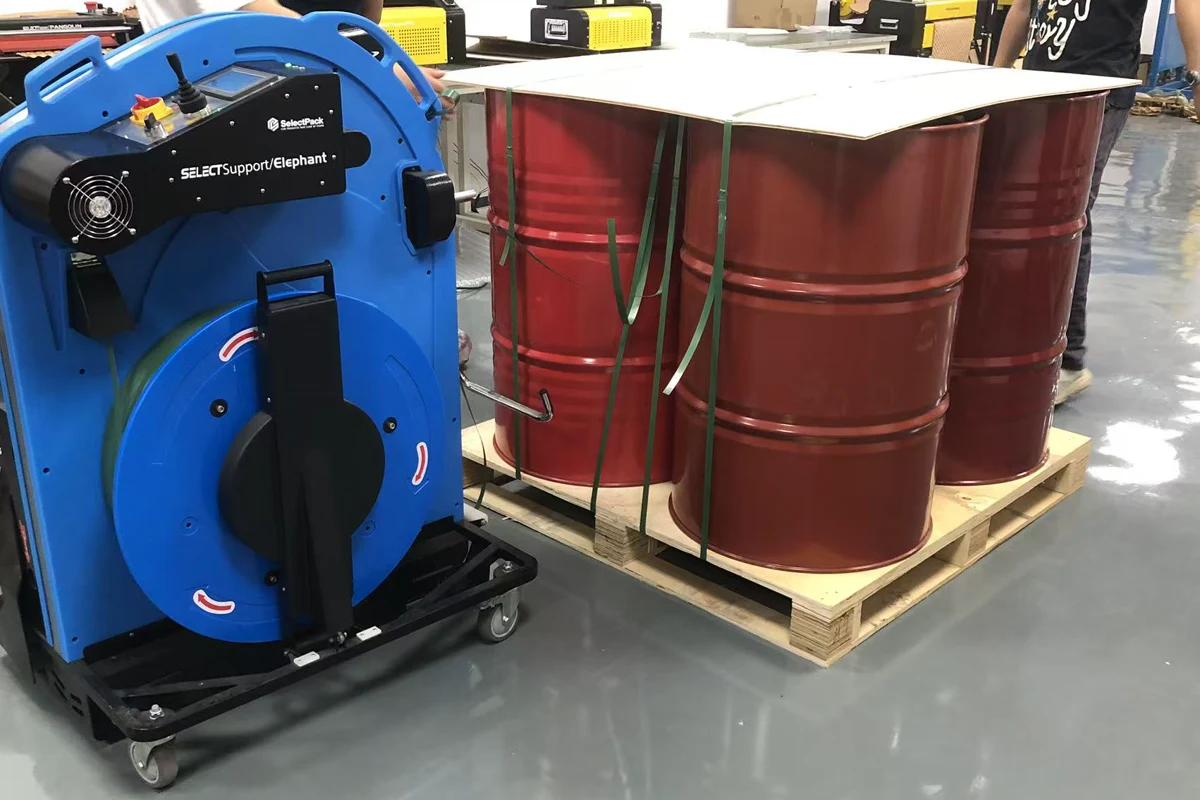
Different rules apply to certain movements between an operator’s own sites or linked or partner enterprises and to deliveries to another economic operator within the same Member State. Those situations can carry a 100% re-use requirement for the listed transport formats, subject to the Regulation and applicable exemptions. Commission Delegated Decision (EU) 2026/429 exempts pallet wrappings and straps from the 100% requirements in Article 29(2) and (3); it does not remove those formats from the separate 40% target in Article 29(1). The Commission’s 2026 guidance also explains how the transport-packaging targets apply to imported goods after they are placed on the EU market and move onward from the first EU warehouse.
Operational difficulty does not create an automatic exemption. Before selecting reusable packaging, map:
- the packaging format and Article 29 category;
- the origin, first EU warehouse and final destination;
- whether the movement is within one business, between linked businesses or within one Member State;
- the operator responsible for using the transport packaging;
- ownership, return logistics and pooling arrangements;
- inspection, cleaning, repair and rejection criteria;
- rotation and loss records;
- product-protection performance over repeated use;
- format-specific exemptions and the latest secondary legislation.
Closed B2B routes may make a re-use system easier to operate, while dispersed routes may require a different network or service model. Feasibility affects the solution design, but the legal scope must be checked independently.
Using incoming corrugated board as cushioning is a separate material-flow decision. A cardboard perforator or shredder workflow can reduce purchased void-fill demand in suitable applications, but it does not create an Article 29 re-use system. When the processed board is used as filling material, the space it occupies still counts as empty space under Article 24.
Build a Format-Specific Evidence File
For each approved packaging format, procurement should request and control:
- packaging drawing, empty dimensions and filled configuration;
- material and component declaration;
- packaging weight and measurement basis;
- intended use, food-contact status and applicable substances evidence;
- recycled-content declaration where applicable;
- design-for-recycling or recyclability information;
- approved label and artwork revision;
- test results, methods, conditions and acceptance criteria;
- supplier quality controls and specification tolerances;
- revision history and change-notification commitment;
- information supplied for the conformity assessment;
- the identified manufacturer and the entity holding the technical documentation and EU declaration of conformity.
Supplier evidence must match the approved material grade and packaging format. A declaration for one film thickness, resin, coating, adhesive or manufacturing site should not automatically be extended to another. Define which changes trigger document review, new testing or a new conformity assessment.
Packaging performance evidence belongs in the same controlled record. Note the product family, packed weight, configuration, route, test method and results so that a material-reduction decision remains connected to product protection.
A Packaging Audit Before Equipment or Material Changes
The audit is an internal implementation workflow, not a PPWR-mandated schedule.
Establish the Scope and Baseline
- Separate packaging by function, format, material specification and EU market route.
- Determine the relevant legal and operational roles using the PPWR definitions.
- Record dimensions, weight, components, cushioning use and supplier revision.
- Prioritise high-volume, high-material, high-empty-space and high-damage SKU families.
Identify Regulatory and Performance Gaps
- Check Article 10 minimisation and Article 24 empty space separately.
- Flag missing composition, substances, recycled-content, recyclability, label and conformity evidence.
- Identify mixed-material formats, oversized packs and uncontrolled operator variation.
- Map transport packaging against the Article 29 route and format rules.
- Separate necessary protection space from avoidable space using documented product risks.
Validate and Control the Change
- Test revised outer packaging, pack rules or protective methods with representative products and routes.
- Track material per pack, packing time, damage, returns and operator repeatability.
- Review the supplier evidence and legal role before approving the specification.
- Record the approved configuration and train the packing team to reproduce it.
- Escalate interpretations, exemptions and conformity questions to qualified EU regulatory counsel.
The outputs should be a controlled packaging-format register, a prioritised gap list and approved trial records. These documents help procurement define an RFQ without treating an equipment purchase as a substitute for packaging design or legal compliance.
What to Give a Packaging Equipment Supplier
A useful equipment discussion begins with operating facts, not a request for a “PPWR-compliant machine.” Prepare:
- product dimensions, weight, shape and fragility;
- SKU count, order mix and variation;
- current outer-pack dimensions and box assortment;
- material specifications and consumption per pack;
- typical, peak and target throughput;
- damage modes and distribution routes;
- station space, power, air and integration constraints;
- the dispensing or operator variation that needs to be controlled;
- the material documents and trial records required from the supplier.
SelectPack can help evaluate cushioning and packing-station workflows against these inputs. It cannot determine the buyer’s legal role, issue the buyer’s EU declaration of conformity or make a complete packaging format compliant through equipment selection alone. Final responsibility and evidence depend on the applicable economic operators, packaging format and EU market route.
A defensible PPWR programme connects product risk, packaging design, supplier evidence, operational control and documented results. Audit that chain first, then change the material or equipment where the evidence identifies a real gap.