A strapping sealer tool is usually the better choice when your team only needs to close straps in a flexible manual process, the daily volume is low, and the main problem is the joint. A strapping machine makes more sense when the whole cycle is repeated often enough that feeding, tensioning, sealing, cutting, walking, bending, or operator variation becomes the real cost.
The practical question is not “Which option is more advanced?” It is “Where does the current strapping process fail?” If straps slip at the seal but the rest of the workflow is acceptable, review the sealer, seal size, strap material, and operator technique first. If the work is slow, tiring, inconsistent, or difficult around pallets, a machine or mobile pallet strapping solution may solve more than a new hand sealer.
Before requesting a quote, document the strap material, strap width and thickness, seal method, load type, number of straps per shift, pallet access, failed-strap history, and operator movement. Those details decide whether a strapping sealer tool is enough or whether the operation needs machine-level control.
Quick Decision Table: Sealer Tool or Machine?
| Situation | Better starting point | Why |
|---|---|---|
| Occasional cartons, bundles, or light pallets | Strapping sealer tool with manual tensioner and cutter | Low volume does not justify machine complexity |
| Seal slips, crimp is uneven, or operators struggle to close the joint | Correct sealer, seal type, or powered hand tool | The weak point is the joint, not the full process |
| Strap roll tangles or moves around the floor | Dispenser or strapping cart before a machine | Roll control may be the bottleneck |
| Cartons are strapped repeatedly at one packing station | Semi-automatic or automatic carton strapping machine | Repeated feed, tension, seal, and cut steps can be standardized |
| Pallets require bending, walking, or pushing strap under the pallet | Mobile pallet strapping machine | The pain is pallet access and operator movement |
| Loads loosen in transport even when operators work carefully | Machine-level control plus correct strap specification | Tension, seal, material, and testing all need review |
| Product changes constantly and strapping is occasional | Manual tools may remain better | Flexibility matters more than cycle control |
Use this table as a first filter. The final answer should come from observing the current cycle with real operators and real loads.
What a Strapping Sealer Tool Actually Solves
A strapping sealer tool closes the strap after it has been wrapped and tensioned. In a common manual setup, the operator pulls strap around the load, tightens it with a tensioner, closes the joint with a sealer and seal, then cuts the strap tail. Some powered tools combine tensioning and sealing, but a basic sealer tool is mainly responsible for the joint.
It fits well when:
- Strapping volume is low or irregular.
- Loads are handled in several locations.
- Carton, bundle, or pallet sizes vary widely.
- Operators already have enough access to the load.
- The team needs a low-cost and flexible setup.
- The main failure is seal quality, not the full workflow.
- The strap material, width, thickness, and seal type are stable.
The limit is repeatability. Manual sealing depends on operator technique, handle force, tool wear, seal quality, strap condition, and whether the operator can work in a good posture. A better sealer can improve the joint, but it will not fix a weak tensioning step, a damaged strap roll, poor pallet clearance, or a layout that forces operators to walk around every load.
When the Sealer Is the Real Problem
Focus on the sealer when the failure starts at the joint. A strong strap with a weak joint still creates a weak package.
Common signs include:
- The strap slips through or out of the seal.
- Metal seals crimp unevenly.
- Operators need excessive hand force.
- Seal quality changes between operators.
- Failures appear after changing strap width, thickness, or supplier.
- The strap breaks or tears near the joint.
- Rework starts at the sealed area rather than along the strap path.
Before buying a different machine, check whether the sealer matches the strap. A poly strapping sealer for one width or seal style may not work correctly with another strap thickness, material, or seal. PP, PET, steel, composite, and woven strap can require different tools and closure methods.
For nonmetallic strap discussions, buyers can reference ASTM D3950 when asking suppliers about strap properties, joining methods, breaking strength, elongation, and joint strength. The standard does not choose your equipment for you, but it gives purchasing and engineering teams a more precise vocabulary than “strong strap” or “good seal.”
When a Strapping Machine Is the Better Fit
A strapping machine controls more of the cycle. Depending on the equipment type, it may feed, tension, seal, and cut the strap with less manual work and more consistent settings.
Machines become more relevant when:
- Strapping happens many times per shift.
- Operators repeat the same carton or pallet work.
- Tension and seal quality vary too much by operator.
- Loose straps, failed joints, or rework have become measurable.
- Operators lose time walking, bending, or feeding strap manually.
- Training new operators is difficult because technique matters too much.
- The operation needs a standard process across shifts or sites.
This upgrade is not only about speed. It is about cycle control. If every strap depends on a different operator’s reach, strength, angle, and memory, a machine can reduce variation. The value is strongest when the load, strap, and workflow are repeatable enough for the machine to control them.
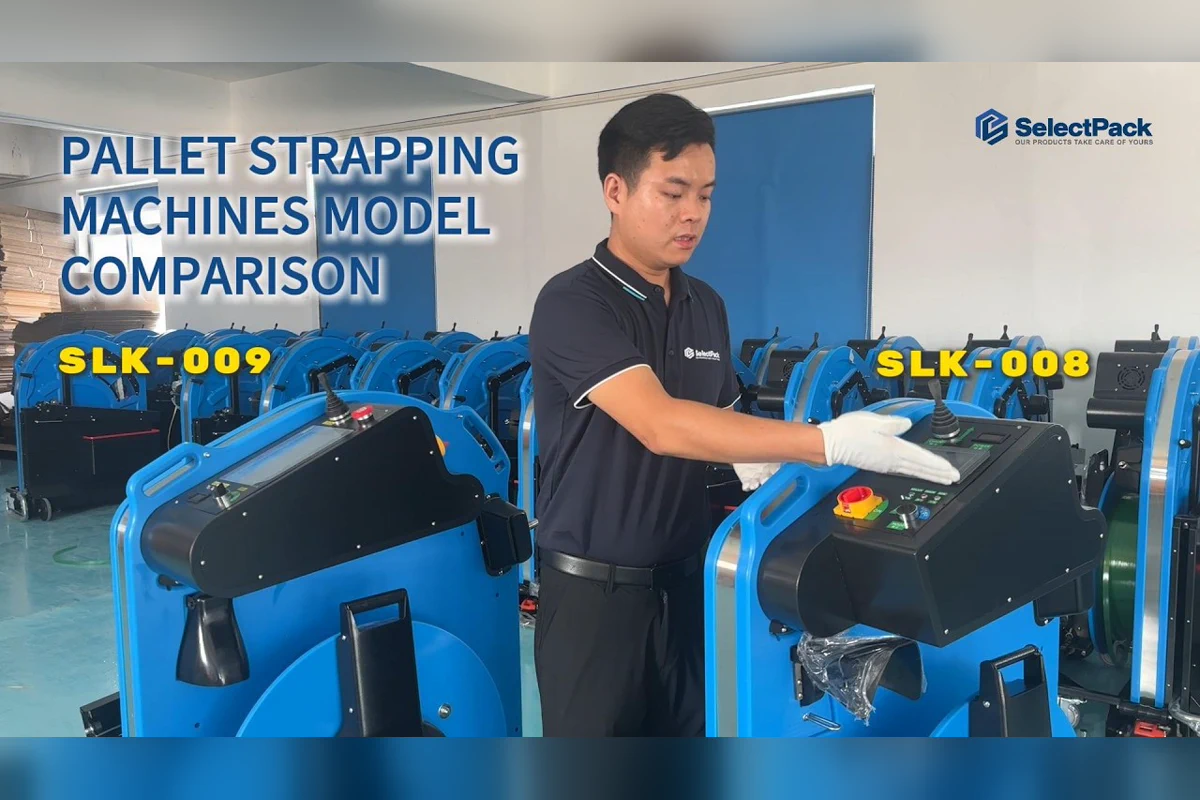
For a broader view of semi-automatic, automatic, and mobile options, review the strapping machine types guide before comparing specific models.
Carton Strapping and Pallet Strapping Need Different Decisions
Carton strapping is usually a station problem. The carton can often be brought to a bench or machine, so the key questions are carton size range, table height, strap tension, sealing consistency, and whether the process connects to a packing line.
A sealer tool may be enough for cartons when volume is low, sizes change often, and the team does not lose much time per cycle. A carton strapping machine may be better when boxes are strapped repeatedly at one station and operators are spending too much time feeding, pulling, sealing, and cutting.
Pallet strapping is usually a movement problem. Operators may need to bend, walk around the load, pass strap through a pallet opening, work near forklift traffic, and repeat the same motions. In that situation, the sealer tool is only one part of the decision.
For pallet work, ask:
- Can the strap pass cleanly under or around the pallet?
- Does the pallet have enough bottom clearance?
- Are operators bending below knee height?
- How far do operators walk for each strap?
- Are pallets strapped in one fixed zone or several staging areas?
- Does forklift movement make a fixed station difficult?
- Are the loads stable enough before strapping?
If pallet access is the bottleneck, a new hand sealer may not change much. A mobile semi-auto strapping machine may be more relevant when the load is already palletized and the difficult step is feeding strap under or around the pallet.
Manual Tools Still Make Sense in the Right Use Case
Manual tools are not automatically outdated. A strapping sealer tool can be the right choice when the operation needs flexibility more than standardization.
Keep the manual setup when:
- Strapping is occasional.
- Loads are too variable for one fixed machine setup.
- The site has no clear strapping station.
- The current problem is limited to seal quality.
- Operators can work safely without excessive bending or reaching.
- The cost of a failed strap is low and failures are rare.
- A dispenser or tool upgrade would solve the current friction.
Manual tools also work well as backup equipment. Even warehouses with machines may keep hand tools for exceptions, rework, oversized loads, or temporary work areas.
For a wider comparison of tensioners, sealers, cutters, dispensers, and machines, use the manual tools vs strapping machines guide to separate single-step problems from full workflow problems.
Where Manual Sealing Starts to Break Down
Manual sealing often becomes a problem gradually. The tool may still work, but the process becomes harder to control as volume, product mix, and labor pressure increase.
Watch for these signals:
- Operators apply different tension levels to similar loads.
- Seal quality changes from shift to shift.
- The same load type needs frequent restrapping.
- Operators skip ideal strap placement because the process is tiring.
- Pallets move only so they can be strapped.
- The team needs extra labor at the end of outbound shifts.
- Supervisors cannot identify whether failures come from strap, tool, operator, or load movement.
At that point, buying another sealer may only move the problem. A structured plastic strapping equipment checklist can help review the load, strap, equipment level, operator effort, maintenance, and testing as one system.
Strap Material and Seal Method Must Match
Do not choose the tool before confirming the strap. A sealer, seal, tensioner, and machine must all match the material and size being used.
Check these details:
- Strap material: PP, PET, steel, composite, or woven.
- Strap width and thickness.
- Roll size and core size if a machine or dispenser is involved.
- Seal type and seal size.
- Whether the joint is crimped, buckled, heat sealed, friction welded, or closed another way.
- Required tension range.
- Whether the product is crush-sensitive.
- Whether the load settles after strapping.
A common buying mistake is treating “plastic strapping” as one category. PP and PET can behave differently in tension retention, stiffness, edge contact, and machine compatibility. If the load is heavy or export-bound, confirm whether the current sealer and strap material are still appropriate before standardizing the process.
Ergonomics Can Decide the Real Cost
The purchase price of a strapping sealer tool is easy to compare. The hidden cost is often repeated motion: gripping, squeezing, bending, reaching, walking, feeding strap, and cutting tails across a shift.
Review:
- How many straps each operator applies per shift.
- Whether sealing requires high hand force.
- Whether the wrist bends sharply during sealing.
- Whether the operator works below knee height or above shoulder height.
- Whether pallets force awkward reach.
- Whether the tool weight is acceptable for repeated use.
- Whether gloves change grip or trigger access.
General OSHA ergonomics guidance is useful when reviewing repetitive warehouse tasks, and hand tool ergonomics guidance from CCOHS can help buyers think about grip, posture, force, and repeated use before choosing a manual tool.
This does not mean every warehouse should automate. It means the sealer-vs-machine decision should include operator effort, not only tool cost.
Where SelectPack’s Mobile Pallet Solution Fits
SelectPack’s mobile semi-auto strapping machine is most relevant when the load is already palletized and operators spend too much effort feeding strap under or around pallets. It is not a general replacement for every strapping sealer tool.
It may fit when:
- Pallets are strapped in multiple warehouse zones.
- A fixed strapping station would create extra forklift movement.
- Operators currently bend, walk, or feed strap manually for each pallet.
- PP or PET plastic strapping is used.
- The pallet bottom has enough clearance for strap feeding.
- The team wants more consistent pallet strapping without installing a conveyorized line.
It may not be the right first choice when:
- The job is mostly light carton strapping at a bench.
- The main problem is only a weak seal in an otherwise acceptable manual process.
- Pallets have closed decks, blocked openings, or very low bottom clearance.
- Steel strapping is required.
- Loads are unstable before strapping and need better stacking, edge protection, stretch wrapping, or packaging redesign first.
The correct boundary matters. A mobile pallet solution addresses pallet workflow. A sealer tool addresses the joint. A fixed carton machine addresses repeated station work. Choosing between them starts with identifying which problem is actually costing time or causing failures.
What to Send a Supplier Before Requesting a Quote
A useful recommendation needs process details, not only a product name. Before asking for a strapping sealer tool or strapping machine, prepare:
- Load type: carton, bundle, pallet, tray, or mixed loads.
- Product dimensions, weight, and crush-sensitive areas.
- Strap material, width, thickness, roll diameter, and core size.
- Current seal type and closure method.
- Photos of good and failed seals.
- Number of straps applied per shift.
- Number of operators involved in each cycle.
- Current cycle steps from picking up the strap to cutting the tail.
- Where the work happens: bench, packing line, receiving area, or pallet staging zone.
- Pallet type and bottom clearance if pallet strapping is involved.
- Common failures: loose straps, broken seals, product damage, rework, or operator fatigue.
- Whether the process must move between zones.
If a supplier recommends a machine without asking about strap material, load access, and failure mode, the quote may be based on equipment category rather than application fit.
Test Before Standardizing
Do not approve a tool or machine only from a catalog description. Test it with the actual strap, actual loads, and normal operators.
During the test, check:
- Does the sealer create a repeatable joint?
- Can operators reach the seal position safely?
- Is the tension consistent enough for the load?
- Does the strap damage the carton or product edge?
- Does the machine feed, tension, seal, and cut without hesitation?
- Can operators clear jams and replace wear parts?
- Does the process still work during the busiest shift?
- Do the heaviest, tallest, most unstable, and most awkward loads pass the same test?
If the sealer improves the joint but the cycle is still slow and tiring, continue evaluating the workflow. If the machine runs well only on ideal samples, test more difficult loads before standardizing.
Common Buying Mistakes
Avoid these mistakes:
- Buying a new sealer when the actual problem is poor tensioning.
- Buying a machine when a correct seal and dispenser would solve the issue.
- Choosing a sealer without checking strap width, thickness, and seal size.
- Using a carton-focused machine to solve a pallet-access problem.
- Ignoring pallet bottom clearance before choosing a mobile strap-feeding solution.
- Assuming stronger strap will fix an unstable load.
- Comparing purchase price without counting rework, labor time, and damaged goods.
- Testing only one easy sample instead of normal production loads.
The wrong upgrade can make the process more expensive without removing the bottleneck.
FAQ
Is a strapping sealer tool the same as a strapping machine?
No. A strapping sealer tool mainly closes the joint after the strap has been tensioned. A strapping machine controls more of the cycle, which may include feeding, tensioning, sealing, and cutting.
Can a better sealer fix loose straps?
Only if the looseness comes from the joint slipping. If the strap is loose because tension is inconsistent, the load settles, the strap material is wrong, or operators cannot reach the pallet properly, the sealer alone will not solve the problem.
When should a warehouse move from a sealer tool to a machine?
Consider a machine when strapping is repeated many times per shift, seal and tension quality vary by operator, rework is measurable, or operators spend too much time bending, walking, and feeding strap manually.
Is a mobile pallet strapping machine better than a hand sealer?
It is better only for the right problem. A mobile pallet strapping machine helps when pallet access and under-pallet strap feeding are the main pain points. If the only problem is a weak joint, the correct sealer or seal method may be enough.
How to Make the Final Choice
Choose a strapping sealer tool when the process is flexible, volume is low, and the main need is a reliable joint in a manual setup. Choose a strapping machine when repeated cycles, inconsistent tension, operator fatigue, or pallet handling friction have become more important than the cost of the equipment.
The best decision comes from the bottleneck. If the seal fails, fix the sealing system. If the full strapping cycle slows the shift or creates variation, compare machine options using real loads, real operators, and the actual warehouse layout.