During the peak e-commerce fulfillment season, an unexpected equipment failure doesn’t just stop the line—it erodes your profit margins through order backlogs, delayed shipments, and negative customer reviews. In a high-volume 3PL warehouse, a single hour of downtime can cost thousands of dollars in lost productivity. Effectively troubleshooting bagging machine problems requires more than just a toolbox; it demands a systematic approach to distinguish between a sudden mechanical failure and a gradual decline in performance.
As a trusted packaging equipment expert serving over 500 e-commerce brands globally, SelectPack understands that consistent throughput is the lifeblood of your operation. Whether you are running a tabletop rollbag system or a fully integrated auto bagger, this guide provides the practical diagnostic steps you need to eliminate downtime. We will explore how to resolve seal integrity issues, fix bag feeding jams, and establish a preventative maintenance routine that keeps your packaging line running at peak efficiency.
Key Takeaways:
- Learn to identify and fix the most common sealing failures in auto bagging machines used for poly mailers and e-commerce packaging.
- Master the diagnostic steps for resolving film feeding jams, sensor errors, and pneumatic pressure drops.
- Use our quick reference fault table to resolve issues on the warehouse floor in minutes.
- Implement a structured daily, weekly, and monthly maintenance schedule to prevent unplanned downtime.
- Understand when it makes more financial sense to upgrade your bagging system rather than continue repairing it.
Why Is My Auto Bagger Not Sealing Properly?
Seal integrity is the foundation of reliable e-commerce packaging. When using poly mailers to protect products during transit, a weak seal leads to damaged goods, costly returns, and eroded customer trust. Conversely, an overheated seal can burn through the bag entirely, wasting material and halting production. When troubleshooting bagging machine problems related to sealing, you must evaluate both the mechanical components and the thermal settings systematically.
Worn Teflon Tape and Heating Elements
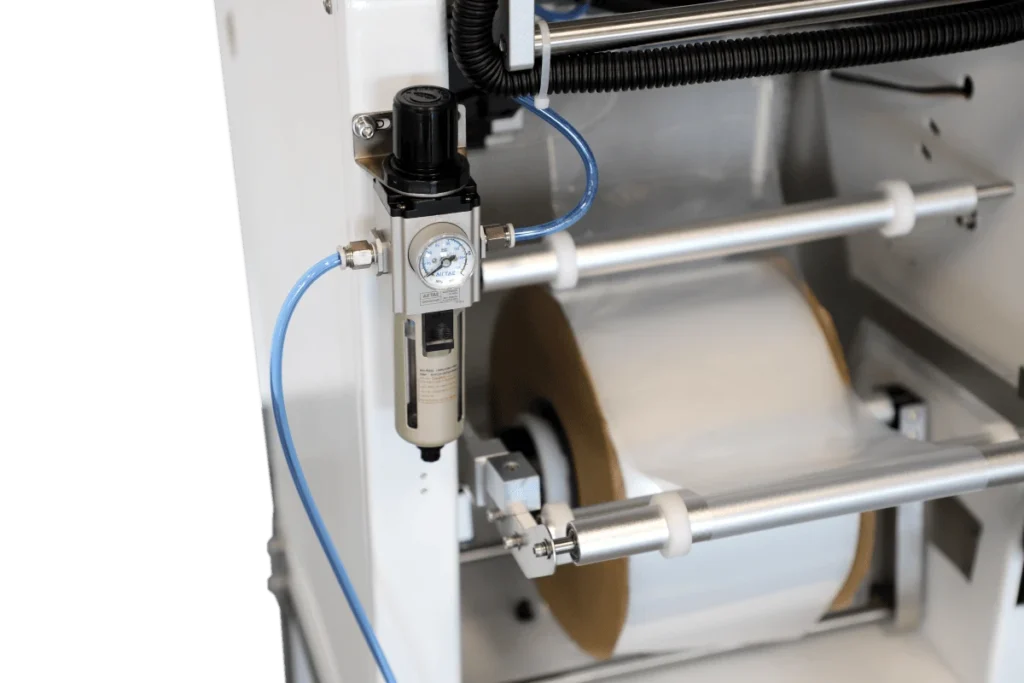
The most common cause of a poor seal is degraded Teflon tape over the heating element. The Teflon barrier serves as a non-stick surface that prevents the poly mailer from melting directly onto the metal heating bar. If you notice the seal is wrinkled, inconsistent, or if the bag sticks to the jaw after sealing, inspect the Teflon tape immediately. A burnt or torn section of tape will cause uneven heat distribution across the seal width, resulting in areas that are either under-sealed or over-sealed.
Similarly, the heating element itself degrades over time through repeated thermal cycling. If the seal is consistently weak despite correct temperature settings, the nichrome heating wire may have developed a hot spot or a partial break in the circuit. These micro-failures create temperature inconsistencies that are invisible to the naked eye but immediately apparent in seal quality. Replacing the Teflon tape every 2-4 weeks (depending on volume) and inspecting the heating element monthly should be your first protocol in maintaining seal quality.
Incorrect Temperature Calibration for Different Materials
Different bag materials require specific thermal profiles to achieve optimal seal strength. A heavy-duty 3-mil poly mailer requires a significantly higher sealing temperature (around 300-350°F) and a longer dwell time compared to a standard 2-mil lightweight bag (250-280°F). If you recently switched packaging materials—for example, transitioning from standard polyethylene to recyclable paper-poly hybrid mailers—without adjusting the machine’s settings, you will almost certainly experience sealing failures.
To fix this, consult your auto bagger’s material specification chart. Adjust the temperature in small increments of 5 to 10 degrees until you achieve a clean, airtight seal without any wrinkling or burn marks. Run a test batch of 10-15 bags and perform a manual pull test on each seal to verify consistency. SelectPack’s advanced auto bagging machines feature self-calibrating temperature controls that automatically detect film thickness and adjust thermal profiles in real time, significantly reducing the need for manual intervention and trial-and-error calibration.
Cooling System Issues
An often-overlooked factor in seal quality is the cooling mechanism. After the heating element creates the seal, the cooling bar must solidify the bond before the bag advances. If the cooling time is too short, the seal will appear fine initially but will peel apart under stress during shipping. Check that the cooling bar is making full contact with the sealed area and that the dwell timer is set correctly. In high-speed operations exceeding 30 bags per minute, inadequate cooling is responsible for approximately 15% of all seal-related failures.
How to Fix Bag Feeding and Jamming Issues?
A smooth bag feeding process is essential for maintaining high throughput in any automated packaging operation. When an auto bagger fails to advance the film correctly or struggles to open the bag mouth, the entire packaging line stalls. In a busy e-commerce fulfillment center processing thousands of orders per shift, even a 5-minute jam can create a significant backlog. Resolving these feeding issues often involves checking three key systems: the film tension mechanism, the pneumatic bag-opening system, and the optical sensor alignment.
Film Tracking and Tension Control
If the rollbag film is drifting to one side or feeding unevenly, the tension control system is likely out of balance. Improper tension causes the bags to misalign with the sealing jaws, resulting in crooked seals, off-center cuts, or complete jams that require manual intervention to clear.
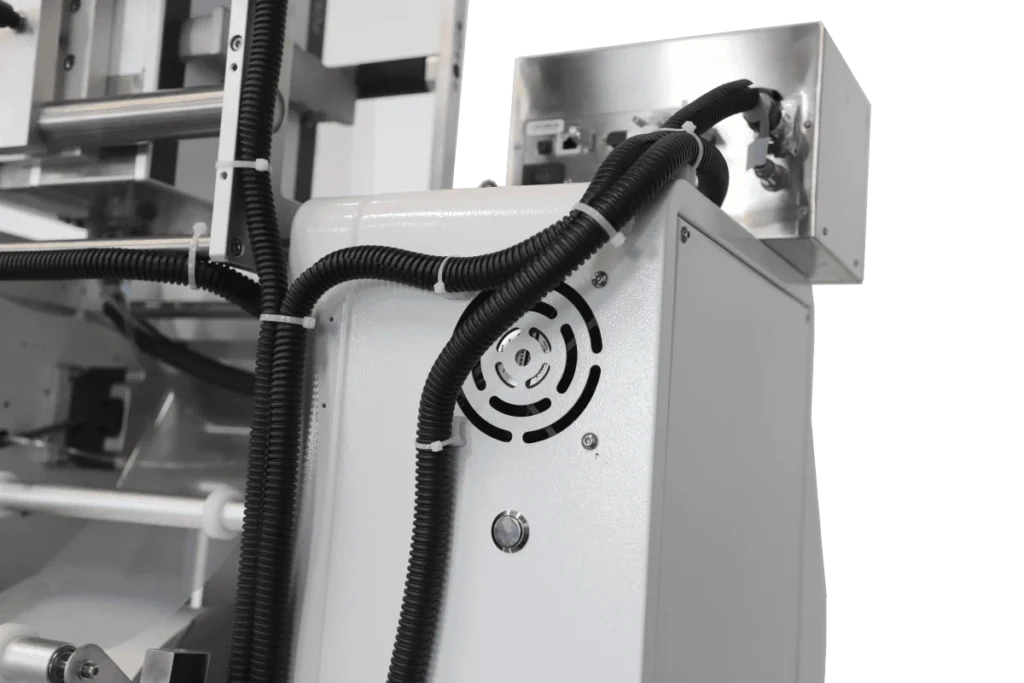
Start by verifying that the film roll is seated correctly on the spindle—even a 2mm offset can cause progressive drift over hundreds of cycles. Check that the dancer rollers are moving freely without any binding or flat spots. Adjust the tension brake to ensure the film unwinds smoothly without excessive resistance (which causes stretching) or excessive slack (which causes bunching). If your machine uses a pre-opened bags-on-a-roll system, ensure the perforations are aligned with the separation mechanism.
Blocked Air Nozzles and Low Pneumatic Pressure
Auto baggers rely on a precisely timed burst of compressed air to blow the bag open before the product is inserted. If the bag only opens partially, flutters without fully inflating, or fails to open at all, the pneumatic system is the primary suspect. In dusty warehouse environments—particularly those handling textiles, paper products, or small parts—fine particulate matter can easily accumulate inside the small opening of the air nozzle over the course of a single shift.
First, clean the nozzle thoroughly with a soft brush or a burst of clean, dry air from a separate source. Next, check the pneumatic pressure gauge at the machine’s inlet. If the system pressure drops below the manufacturer’s recommended range (typically 60-80 PSI for standard e-commerce baggers), the air burst will lack the force needed to fully open heavier poly mailers or padded bags. Ensure your facility’s air compressor is delivering a consistent supply without pressure fluctuations during peak usage, and inspect all air lines and quick-connect fittings for micro-leaks. A single 1/16-inch leak in a pressurized line can waste significant CFM and reduce opening force by 20% or more.
Dirty or Misaligned Photo-Eye Sensors
Modern bagging machines use photo-eye sensors to detect the registration mark (eye mark) printed on the film, telling the machine exactly where to stop feeding and where to create the seal. These optical sensors are remarkably precise but equally sensitive to environmental contamination. If the machine is feeding continuous empty bags without stopping, cutting at random intervals, or producing bags of inconsistent length, the sensor is likely dirty or misaligned.
A simple wipe with a lint-free microfiber cloth and isopropyl alcohol can resolve approximately 80% of sensor-related feeding errors. If cleaning doesn’t solve the problem, check that the sensor is positioned at the correct distance from the film surface and that ambient light sources (such as overhead warehouse lighting or nearby windows) are not interfering with the optical reading. Some facilities find that installing a small light shield around the sensor eliminates intermittent false triggers caused by changing daylight conditions.
Quick Reference: Common Faults & Fixes
To help your operators resolve issues rapidly on the warehouse floor, we have compiled this quick reference table. Print this guide and keep it posted near your bagging station to minimize downtime when troubleshooting bagging machine problems.
| Symptom | Possible Cause | Quick Fix |
| Weak or leaking seal | Worn Teflon tape or temperature too low | Replace Teflon tape; increase temperature by 5°F increments and test. |
| Bag melts or burns through | Temperature too high or dwell time too long | Decrease sealing temperature; inspect heating bar for debris buildup. |
| Bag fails to blow open | Clogged air nozzle or low pneumatic pressure | Clean the air nozzle with dry air; verify system pressure is at 60-80 PSI. |
| Continuous empty bag feeding | Dirty or misaligned photo-eye sensor | Wipe sensor with isopropyl alcohol; realign to the registration mark. |
| Crooked seals or film jams | Improper film tension or misaligned roll | Adjust the tension brake; re-seat the film roll squarely on the spindle. |
| Inconsistent bag length | Worn feed rollers or encoder slippage | Inspect feed rollers for glazing; clean encoder wheel surface. |
| Machine stops mid-cycle | Overheated motor or tripped safety interlock | Allow motor to cool; check all safety guards are properly closed. |
| Print/label misalignment | Dirty print head or label sensor drift | Clean the thermal print head; recalibrate the label dispense position. |
The Ultimate Preventative Maintenance Checklist
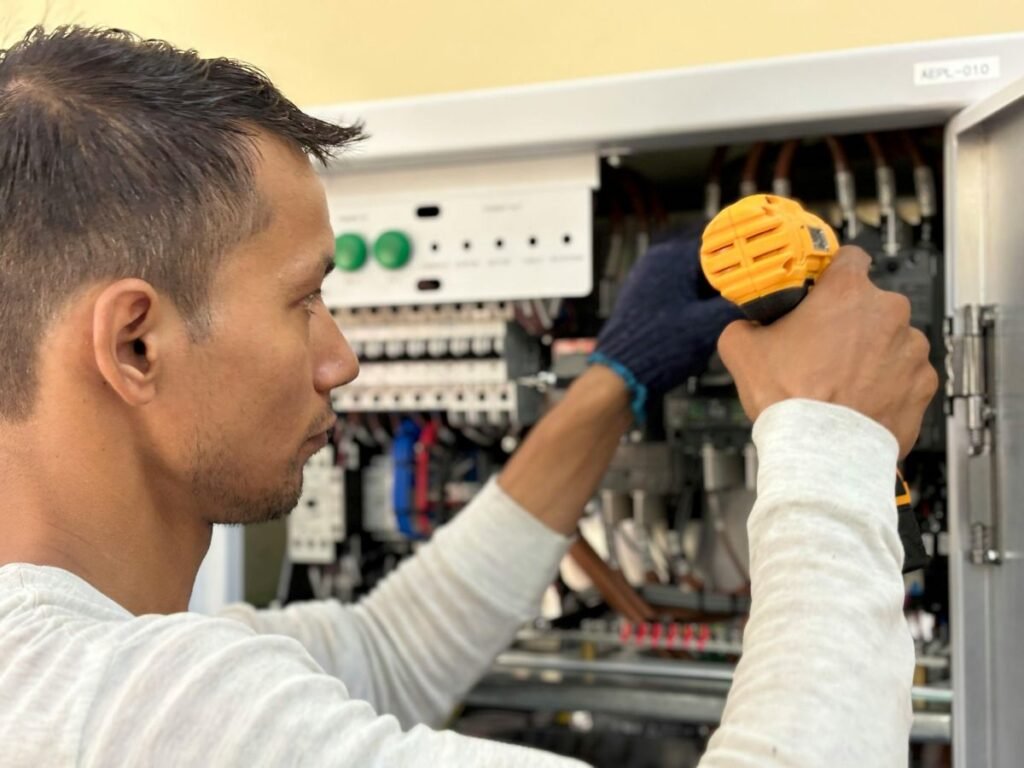
Consistency is the hallmark of a professional e-commerce fulfillment operation. Implementing a structured preventative maintenance routine is the single most effective way to avoid emergency repairs and extend the productive lifespan of your packaging equipment. The cost of 15 minutes of daily maintenance is negligible compared to the thousands of dollars lost during an unplanned 3-hour shutdown.
Daily Operator Checks (5-10 Minutes)
Before starting the first shift each day, operators should perform a quick visual and functional inspection. Clear any dust, film scraps, or debris from the photo-eye sensors and the sealing area. Check the air pressure regulator to ensure it is delivering a consistent PSI within the specified range. Verify that the film roll has sufficient material for the shift and that it is tracking straight. Finally, empty the scrap film collection bin to prevent loose plastic from tangling in the drive rollers or interfering with the bag separation mechanism.
Weekly Maintenance Tasks (30-45 Minutes)
Once a week, the maintenance team should conduct a deeper inspection of all wear components. Examine the Teflon tape and heating elements for signs of discoloration, cracking, or uneven wear, replacing them proactively rather than waiting for failure. Inspect all pneumatic lines, fittings, and quick-connect couplings for micro-leaks by applying soapy water and watching for bubbles. Clean the drive belts and feed rollers with a mild solvent to remove any film residue that causes slippage. Check all electrical connections for signs of corrosion or loosening caused by machine vibration.
Monthly Deep Servicing (2-3 Hours)
Monthly maintenance should focus on the mechanical longevity and calibration accuracy of the entire system. Lubricate all moving parts, pivot points, and bearings according to the manufacturer’s specifications—over-lubrication is just as harmful as under-lubrication. Recalibrate the temperature controllers using an external thermocouple to verify the displayed temperature matches the actual jaw temperature. Test all emergency stop circuits and safety interlocks to ensure compliance with workplace safety standards. Review the machine’s cycle counter and compare actual throughput against rated capacity to identify any gradual performance degradation.
When to Repair vs. When to Upgrade Your Bagging System?
Every piece of packaging machinery has a definitive productive lifespan. While consistent maintenance extends the life of your line, there comes a point where the cumulative cost of troubleshooting bagging machine problems exceeds the investment required for new technology. Making this decision at the right time is critical for protecting your bottom line.
Signs It’s Time to Upgrade
You should seriously consider upgrading your equipment if any of the following conditions apply. Your current machine requires major component repairs (not routine wear items) more than twice per month. Unplanned downtime exceeds 10% of your scheduled production hours. Your e-commerce business is scaling rapidly but your legacy machine cannot integrate with modern WMS (Warehouse Management Systems), automated conveyors, or robotic pick-and-place systems. The manufacturer has discontinued spare parts for your model, forcing you to source expensive custom-machined replacements.
The ROI of Modern Auto Baggers
Modern automation solves chronic maintenance issues by replacing wear-heavy mechanical components with electronic precision and simplified designs. SelectPack’s latest generation of auto baggers features tool-less changeovers that reduce material switching time from 15 minutes to under 2 minutes, self-calibrating thermal controls that eliminate manual temperature adjustments, and seamless WMS integration capabilities that enable automated order-to-pack workflows.
Upgrading to a CE/ISO certified system not only eliminates daily frustrations but also significantly reduces your Total Cost of Ownership (TCO) over a 5-year horizon. Many SelectPack customers report a 30-40% reduction in packaging labor costs and a 95%+ uptime rate after upgrading from legacy equipment.
Frequently Asked Questions
How often should I replace the Teflon tape on my auto bagger?
For high-volume e-commerce operations running 1,000+ bags per shift, Teflon tape should be inspected daily and replaced every 2-4 weeks. Lower-volume operations may extend this to 6-8 weeks. The key indicator is seal quality—if you notice any wrinkling, sticking, or inconsistency, replace the tape immediately rather than waiting for complete failure.
What PSI should my auto bagger’s pneumatic system maintain?
Most standard e-commerce auto baggers operate optimally at 60-80 PSI. However, machines handling heavier materials such as padded mailers or thick poly bags may require up to 90 PSI for reliable bag opening. Always consult your specific machine’s manual and ensure your facility’s compressor can maintain consistent pressure even during peak demand periods when multiple pneumatic tools may be drawing from the same supply.
Can I use third-party replacement parts for my bagging machine?
While third-party parts may offer short-term cost savings, they often lead to accelerated wear on adjacent components and can void your manufacturer’s warranty. Critical items such as heating elements, temperature sensors, and drive belts should always be sourced from the original manufacturer or an authorized distributor to ensure dimensional accuracy and material compatibility. SelectPack provides genuine replacement parts with guaranteed compatibility for all our auto bagging systems.
How do I know if my bagging machine’s motor is failing?
Early signs of motor degradation include unusual humming or vibration during operation, the machine running noticeably slower than its rated speed, or the motor housing becoming excessively hot to the touch. If the machine intermittently stops mid-cycle and resumes after cooling down, the motor’s thermal overload protection is likely triggering due to internal winding deterioration. Schedule a professional inspection before complete motor failure causes extended downtime.
What is the typical lifespan of an auto bagging machine?
A well-maintained auto bagger from a reputable manufacturer should deliver 7-10 years of reliable service in a standard e-commerce fulfillment environment. Machines operating in harsh conditions (extreme temperatures, high dust, corrosive environments) may have shorter lifespans. The key factor is adherence to the preventative maintenance schedule—facilities that follow a structured daily/weekly/monthly routine consistently achieve 30-50% longer equipment lifespans compared to those that only perform reactive repairs.
Conclusion
Mastering the art of troubleshooting bagging machine problems ensures your facility maintains consistent throughput, protects your profit margins, and delivers the shipping reliability your customers expect. By identifying mechanical wear early, utilizing our quick reference fault table for rapid on-floor diagnosis, and adhering to a strict preventative maintenance schedule, you can avoid costly downtime and keep your e-commerce fulfillment running smoothly throughout every peak season.
Remember: the most expensive maintenance is the maintenance you didn’t do. A 15-minute daily inspection costs virtually nothing but prevents the catastrophic 3-hour shutdowns that cost thousands.
Are frequent jams and weak seals slowing down your packaging line? It might be time for a professional assessment. Contact the SelectPack engineering team today to request a free packaging line efficiency audit and discover how our on-demand packaging solutions can optimize your operation for maximum throughput and minimum downtime.