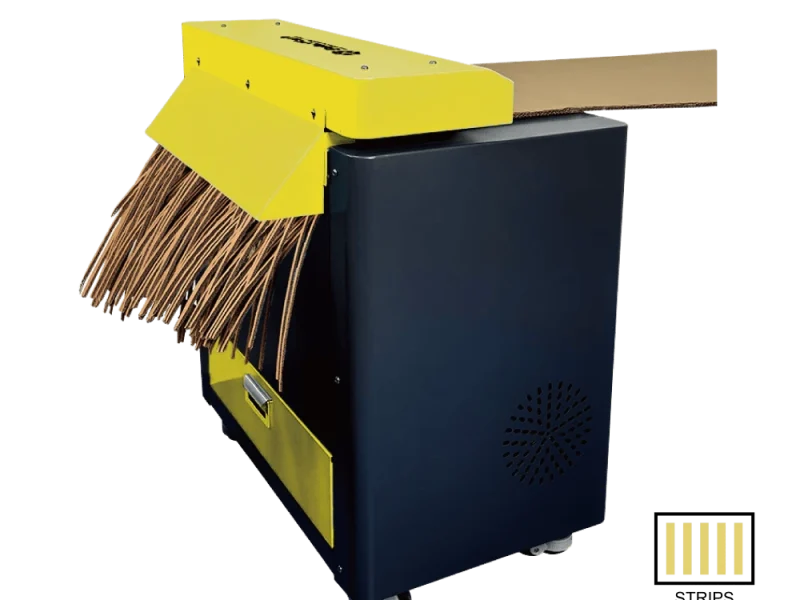
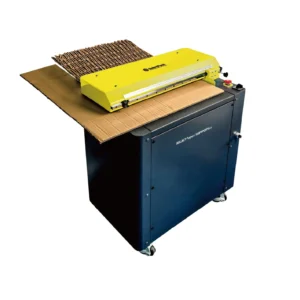
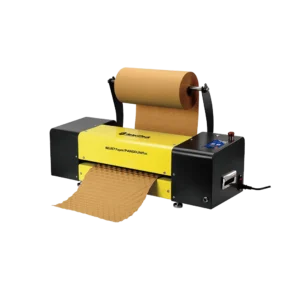
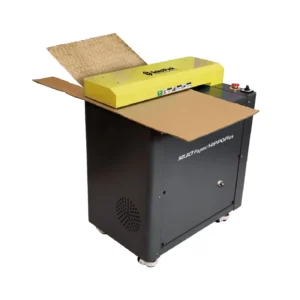
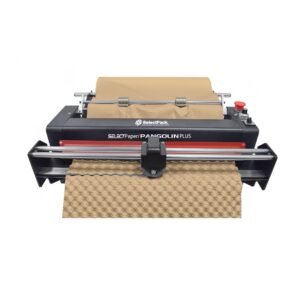
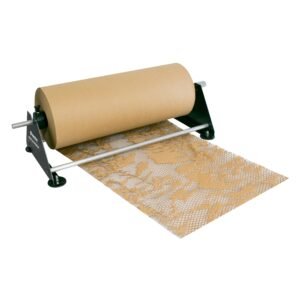
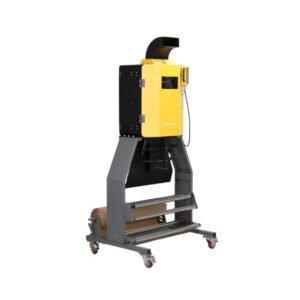
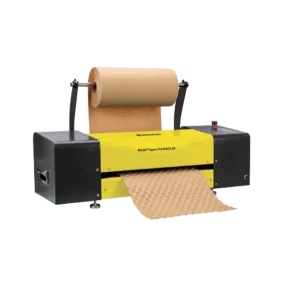
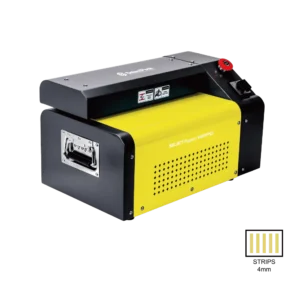
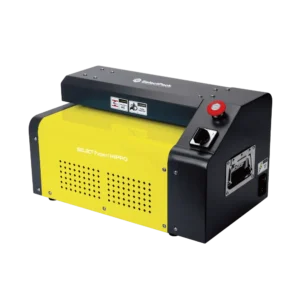
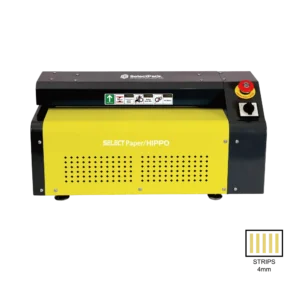
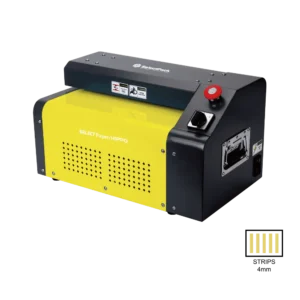
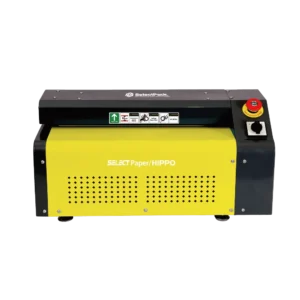
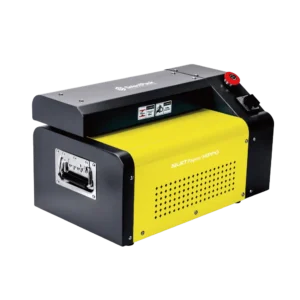
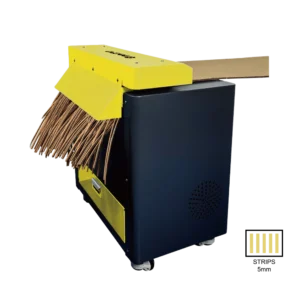
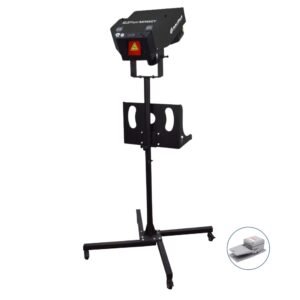
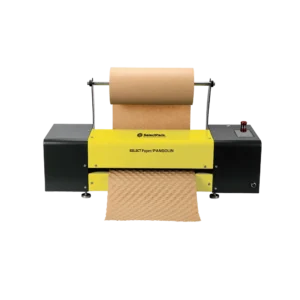
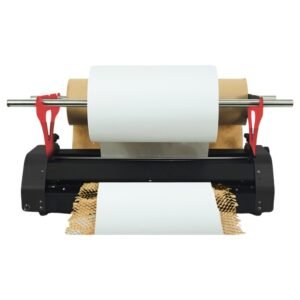
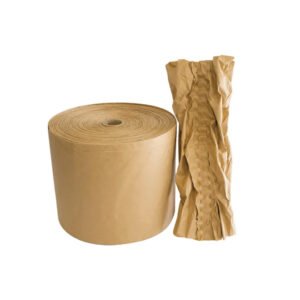
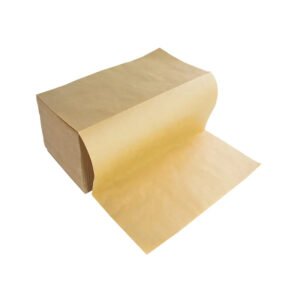
*Cardboard Shredder Machine Hs Code: 8441100000
Online sellers looking to reduce packing costs
Warehouses with high carton turnover
Studios with limited workspace but frequent shipments
Retailers switching to plastic-free packaging solutions
| Model | SelectPaper/HippoPlus PT50 |
|---|---|
| Cutting Speed | 15 m/min |
| Feed Width | 550 mm |
| Voltage | AC 110-120 / 220-240 V |
| Power | 1500W |
| Size | 740 x 460 x 850 mm |
| Gross Weight | 162 kg |
| Strip Width | 5 mm |
| Machine Dimensions | 740 x 460 x 850 mm |
| Packing Dimensions | 860 × 590 × 1020 mm |
Best for online sellers, boutique warehouses, and fulfillment centers that frequently handle compact boxes. Helps reduce filler material costs and improve packaging sustainability.
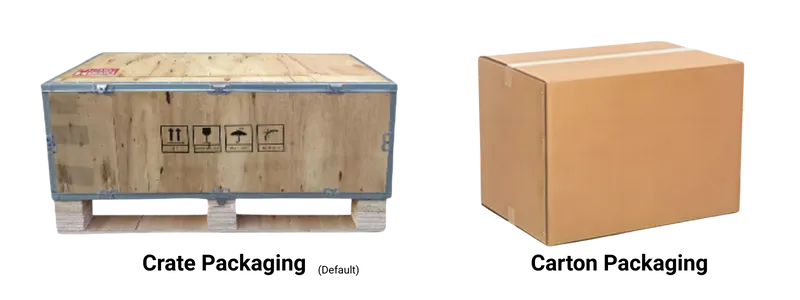
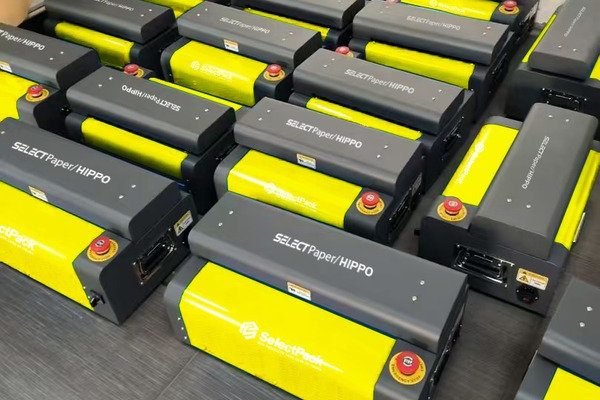
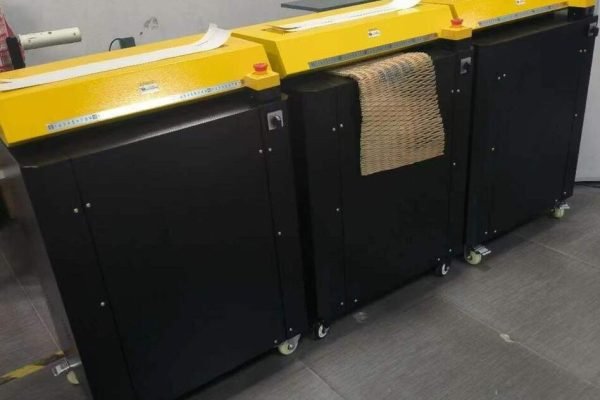
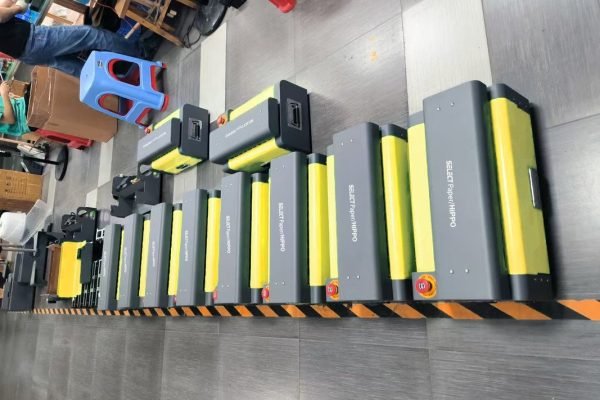
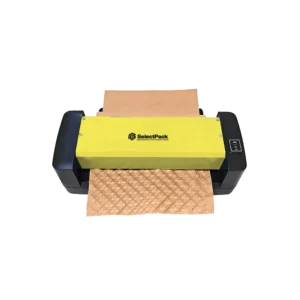
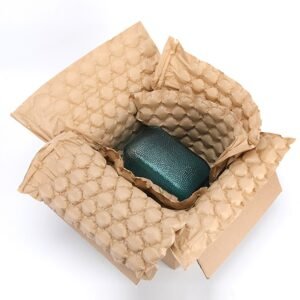
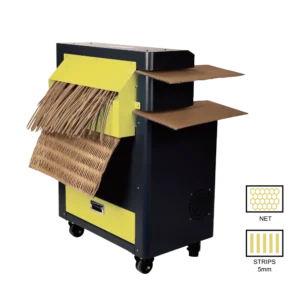
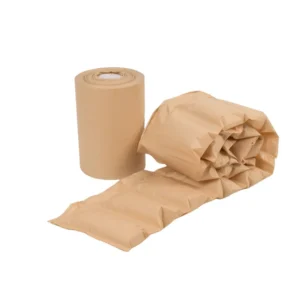
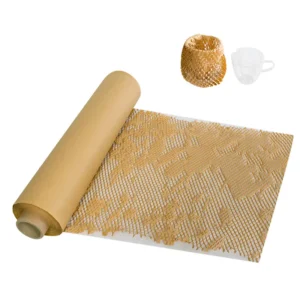
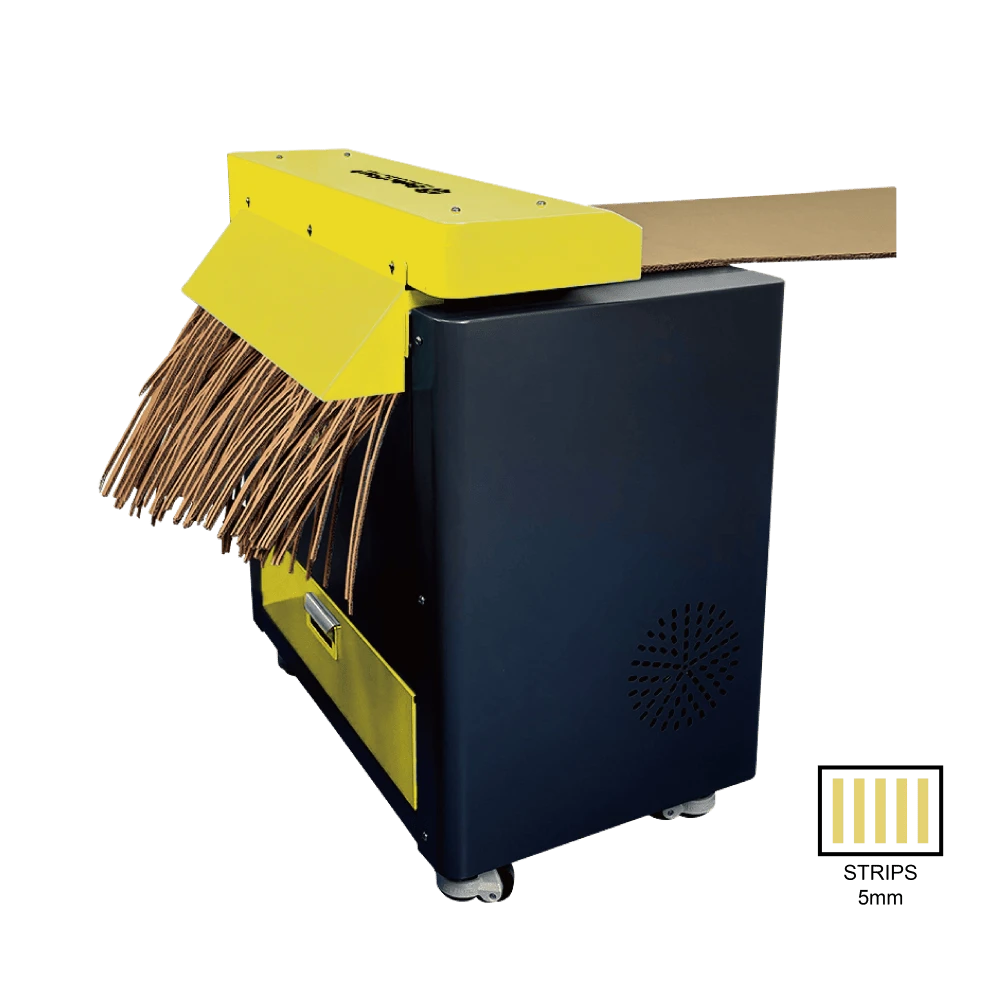
Using the SelectPaper/HippoPlus P50/P80 is simple and efficient. Just take a used cardboard box, flatten it, and insert it into the 550 mm wide feed slot. The machine automatically pulls the cardboard in and processes it through heavy-duty blades, cutting and perforating the material into flexible, net-like padding. This output can be used immediately for void fill, wrapping, or cushioning goods inside shipping boxes.
Thanks to its powerful motor and floor-standing design, SelectPaper/HippoPlus handles multiple layers and larger cartons with ease—ideal for busy packing stations with continuous demand.
The strip-cut cardboard shredder is designed for small to mid-sized packing stations, e-commerce fulfillment areas, and warehouse workspaces where space efficiency and fast material handling are essential. Its compact footprint and straightforward operation allow operators to convert used cartons into strip-cut packaging material directly at the packing bench, supporting consistent packing flow without adding process complexity. For businesses looking to reduce cardboard waste and replace purchased void fill with an on-site, low-maintenance solution, the PT series offers a practical entry point into strip-cut cardboard reuse.
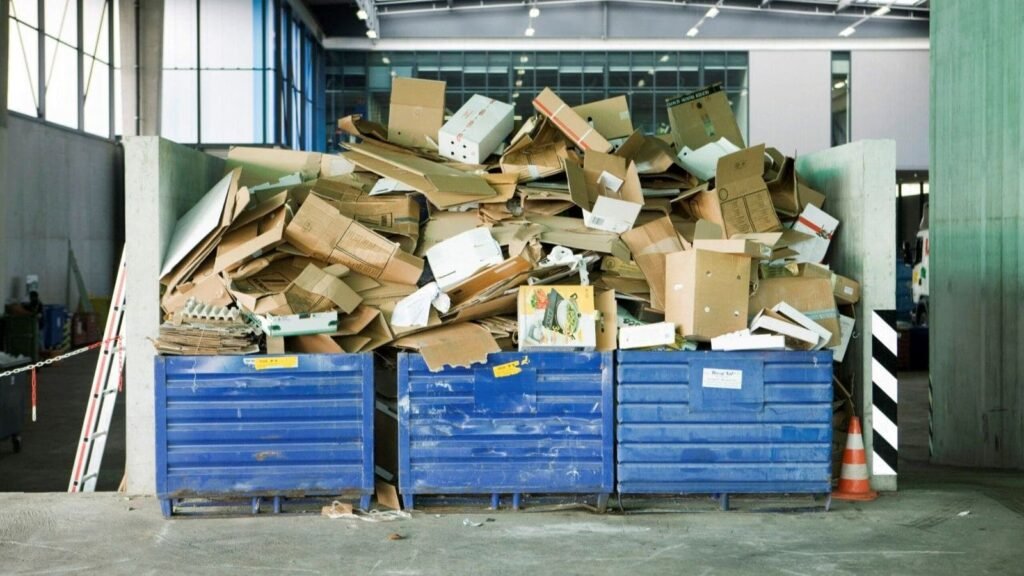
Cardboard waste is a daily reality across warehouses, fulfillment centers, manufacturing facilities, and e-commerce operations. Corrugated cartons move through packaging workflows in large volumes, protecting products during storage and shipment. Yet once cartons are unpacked, damaged, or no longer needed, businesses are left with a familiar challenge: how to handle used cardboard efficiently, cost-effectively, and without disrupting operations.
Traditional approaches often rely on external recycling services or frequent waste collection. While effective, these methods introduce recurring costs, labor requirements, and space constraints. At the same time, many businesses continue purchasing packaging materials—such as kraft paper or paper fill—to protect outbound shipments.
Strip-cut cardboard shredders offer a practical alternative. By processing used cartons on site and converting them into reusable packaging material, businesses can reduce waste volume while generating functional void fill and wrapping material as part of their normal packing routine.
This guide focuses specifically on strip-cut cardboard shredders—how they work, where they fit best, and what factors businesses should consider when evaluating whether this solution aligns with their packaging operation.
In This Guide, You’ll Learn:
A strip-cut cardboard shredder is a cardboard processing machine designed to cut corrugated cardboard into long, uniform strips. These strips can be used directly as packaging material for filling voids, wrapping products, or separating items within shipping cartons.
Unlike perforated or mesh-cut systems that expand cardboard into a three-dimensional structure, strip-cut shredders focus on clean, linear cutting. The output remains relatively compact and consistent, making it easy to handle and predictable during packing.
Strip-cut shredders are purpose-built for corrugated cardboard. They use reinforced cutting shafts, hardened blades, and controlled feed mechanisms to process material that is far thicker and more rigid than standard office paper. This allows businesses to safely and reliably shred cartons without excessive wear, jamming, or motor strain.
For operations with steady cardboard usage, a strip-cut shredder transforms what would otherwise be waste into a usable packaging resource—without adding unnecessary complexity.
Many packaging operations prioritize speed, consistency, and ease of use over maximum cushioning performance. In these environments, strip-cut cardboard provides a simple and effective solution.
One of the primary advantages is material reuse. Instead of purchasing packaging consumables on an ongoing basis, businesses can generate packaging material from cardboard already available on site. Over time, this reduces dependency on external suppliers and helps stabilize packaging costs.
From an operational perspective, strip-cut cardboard integrates easily into existing workflows. The material is produced on demand, directly at or near the packing station. Operators can take strips from the shredder and place them into cartons immediately, without additional preparation or shaping.
Strip-cut output is also highly adaptable. It can be layered, folded, or wrapped around products depending on the packing requirement. For many lightweight or non-fragile shipments, this level of protection is sufficient while maintaining a clean and efficient packing process.
In addition, processing cardboard on site reduces the volume of waste that must be stored, handled, and removed. This can free up floor space and reduce labor associated with flattening, stacking, and managing discarded cartons.
Inside a strip-cut cardboard shredder, rotating cutting shafts equipped with hardened blades engage the cardboard as it is fed into the machine. The blades slice the material into parallel strips at a fixed width, producing a consistent output with each pass.
The cutting process is mechanical and continuous. As cardboard moves through the machine, it is processed evenly without tearing or excessive force. Because the cardboard is cut rather than expanded, the original material strength is largely preserved.
Once processed, the cardboard strips exit the machine ready for immediate use. There is no need for fluffing, expansion, or secondary handling. This allows packaging material generation to match the pace of packing operations, supporting a smooth and uninterrupted workflow.
Modern strip-cut shredders are designed with safety and reliability in mind. Enclosed cutting areas, emergency stop functions, and stable feed systems help ensure safe operation in busy packaging environments where multiple operators may be working nearby.
Strip-cut cardboard is used across a wide range of packaging scenarios, particularly where controlled material placement and predictable performance are important.
One common application is void fill for lightweight shipments. Strips can be placed strategically inside cartons to prevent product movement during transit. Because the material is compact, it works well in standardized box sizes and repeatable packing configurations.
Another frequent use is product wrapping. Strip-cut cardboard can be wrapped around items to protect surfaces from abrasion or contact with other products in the same carton. This is especially useful for items with finished surfaces that require basic protection rather than heavy cushioning.
Strip-cut material is also effective for separating multiple items within a single carton. Placing strips between products helps maintain spacing and reduce friction during handling and transport.
In some operations, strip-cut cardboard is used as box lining, adding structure and stability to cartons while improving presentation.
While both strip-cut and perforated cardboard shredders process used cartons into packaging material, the outputs serve different purposes.
Strip-cut shredders produce long, linear strips that maintain material density and strength. This output is easy to control and well suited for wrapping, separation, and basic void filling.
Perforated or mesh-cut systems, on the other hand, create an expanded structure by cutting a pattern into the cardboard that allows it to stretch. This produces a bulkier material with higher shock absorption, often preferred for fragile or irregular products.
Choosing between these outputs depends on packaging requirements rather than machine capability alone. Businesses shipping lightweight goods or operating high-speed packing lines often find strip-cut solutions more efficient. Operations handling delicate items may require expanded output instead.
Understanding this distinction helps ensure the selected shredding solution aligns with actual packaging needs and avoids unnecessary complexity.
Not all cardboard performs equally in a strip-cut shredder. Most machines are designed to process standard corrugated cardboard, including single-wall and certain double-wall cartons.
Clean, dry cardboard produces the best results. Excessive moisture, heavy contamination, or laminated materials can affect cutting performance and accelerate wear on cutting components.
Light tape and labels are generally acceptable, but staples, metal inserts, and reinforced materials should be removed before shredding. Proper cardboard preparation helps maintain consistent output quality and extends machine lifespan.
Selecting the right strip-cut cardboard shredder begins with understanding daily operational requirements.
Throughput and volume are critical considerations. Small packing stations with limited daily output may benefit from compact desktop or tabletop models. Larger operations with continuous packing demand may require floor-standing machines designed for higher capacity.
Feed width and cardboard thickness should match the largest cartons commonly processed. A machine that accommodates standard box sizes without excessive pre-cutting improves efficiency and reduces manual handling.
Cut width and output consistency influence how the material behaves during packing. Uniform strips improve predictability and packing speed, particularly in standardized workflows.
Workspace layout also matters. Strip-cut shredders are often positioned close to packing benches, so footprint, noise level, and ease of operation should align with the working environment.
Finally, maintenance and usability play an important role. Machines designed for straightforward operation and easy access to cutting components help minimize downtime and training requirements.
Most cardboard perforators handle single-wall and double-wall corrugated cardboard. Light tape and labels are typically acceptable, though excessive staples or reinforced materials must be removed. Moisture content also matters; dry cardboard produces better output and reduces wear on cutting components.
Regular paper shredders are not designed for corrugated materials. Cardboard’s thickness and structure place excessive strain on motors and blades, increasing the risk of mechanical failure. Dedicated cardboard perforators are built to manage this load safely and consistently.
Materials such as plastics, metal components, thick laminated boards, and non-paper composites should not be processed. These items can damage blades and compromise safety. Following manufacturer guidelines helps extend machine lifespan and maintain consistent output quality.
Shredded cardboard is commonly used as protective void fill, cushioning fragile items during shipping, and separating products within cartons. In some operations, it may also be directed toward recycling or composting streams, depending on local regulations.
Key features include throughput capacity, feed width, adjustable output size, safety mechanisms, and ease of maintenance. Machines should match daily volume requirements without creating bottlenecks. User-friendly designs reduce training time and minimize downtime.
While cardboard shredding itself is generally unregulated, businesses should follow local waste handling and workplace safety guidelines. Proper training and machine guarding help ensure compliance with internal safety standards.
No special installation is required. Hippo desktop models are plug-and-play machines that can be placed directly next to a packing bench and connected to a standard power supply. Floor-standing models are delivered as complete units and only require basic positioning and power connection before use.
Hippo desktop models are designed for space-constrained packing stations and require minimal footprint. Floor-standing models require additional floor space for safe feeding and material handling, but no dedicated room or structural modification is needed.
In many operations, yes. Expanded cardboard produced by Hippo shredders is commonly used to replace paper padding, air cushions, or foam for void fill and product separation. The replacement level depends on carton size and product requirements.
Depending on the model, SelectPack cardboard shredders produce different output formats such as perforated mesh or strip-cut material, suitable for cushioning, wrapping, or void fill applications.
Routine maintenance is minimal and mainly involves keeping the feed area clean, periodically inspecting cutting components, and following standard cleaning guidelines. Proper material use helps ensure long-term performance.
Yes. Standard printed cartons are commonly processed without affecting shredding performance or output quality.
Hippo models are designed for active packaging environments. Noise levels are controlled to remain suitable for warehouses and fulfillment areas, allowing operators to work nearby without major disruption.
Desktop models are intended for intermittent to moderate daily use, while Hippo Plus floor-standing models are designed for continuous, repetitive operation in higher-volume packaging environments.
Yes. SelectPack evaluates carton sizes, daily volume, available space, and packaging workflows to recommend the most suitable Hippo model for each operation.
Honestly, we’ll save your budget, enhance your quality,
and fulfill your hardware quicker than ever.
Enter your email to access the download link for the product brochure & certificates