For e-commerce businesses shipping fragile products, the packaging decision directly impacts your bottom line. Damaged shipments mean refunds, customer dissatisfaction, and potential brand damage. While plastic bubble wrap has been the industry standard for decades, many companies are now asking whether paper bubble wrap can deliver the same protection while reducing environmental impact.
The honest answer is: it depends. Paper bubble wrap works well for some products and shipping scenarios, but not all. In this article, we’ll break down exactly which fragile items are suitable for paper bubble wrap, when you should stick with plastic alternatives, and how to evaluate the right choice for your operation.
Which Fragile Products Work Best with Paper Bubble Wrap?
Paper bubble wrap performs effectively when you match it to the right product types. The key is understanding what level of protection your items actually need.
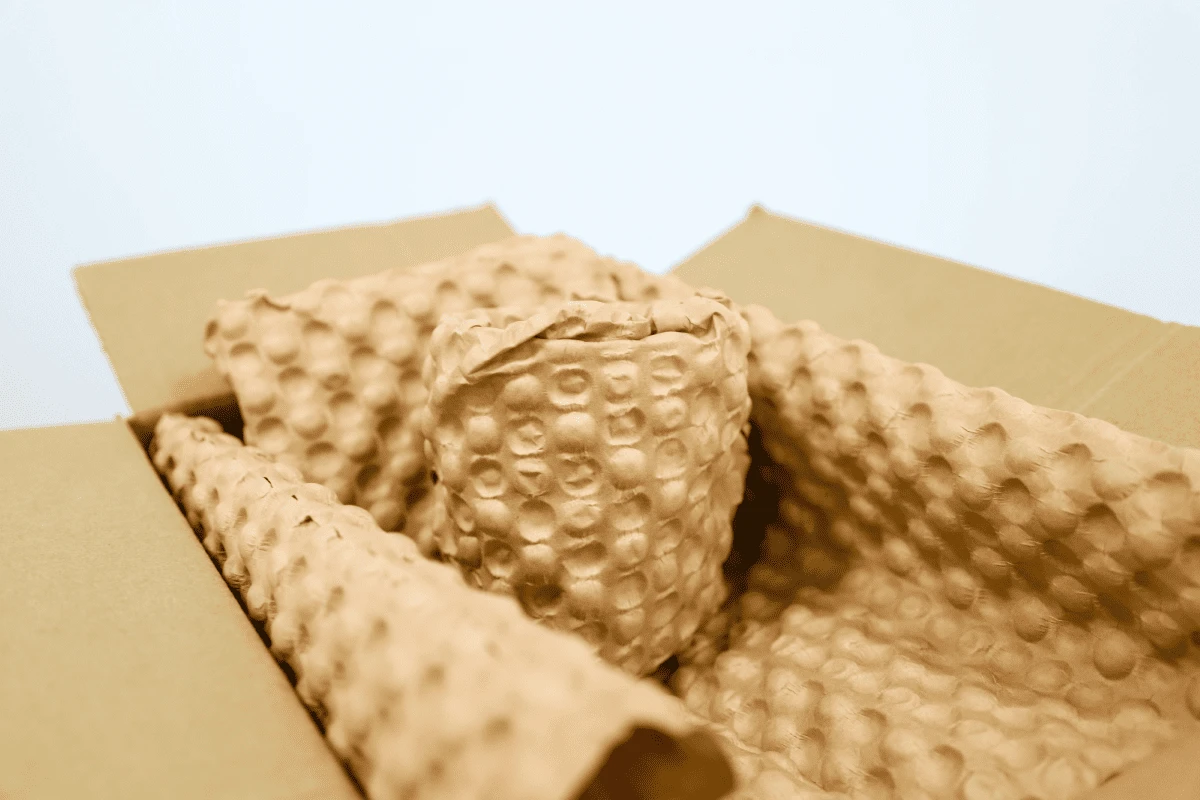
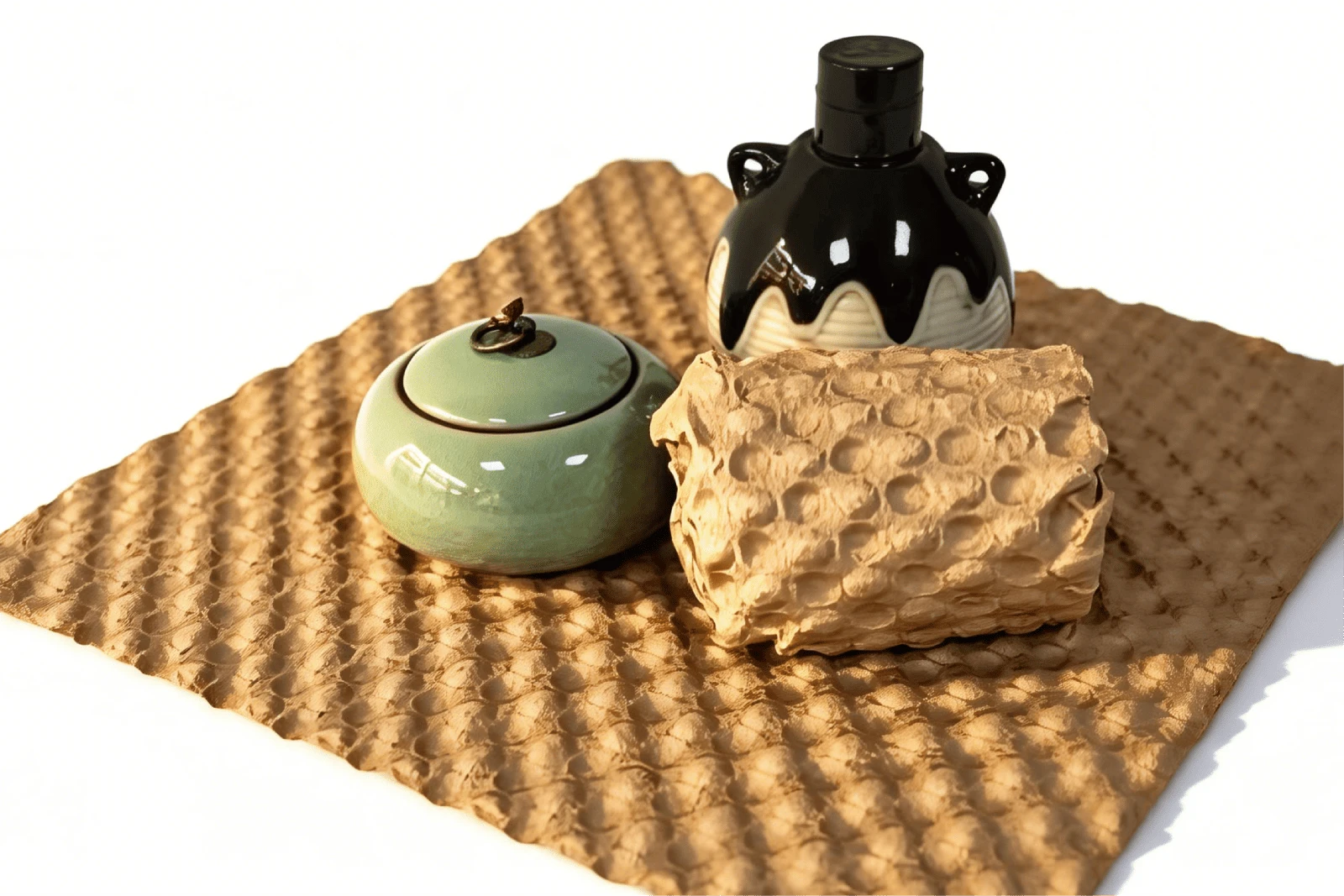
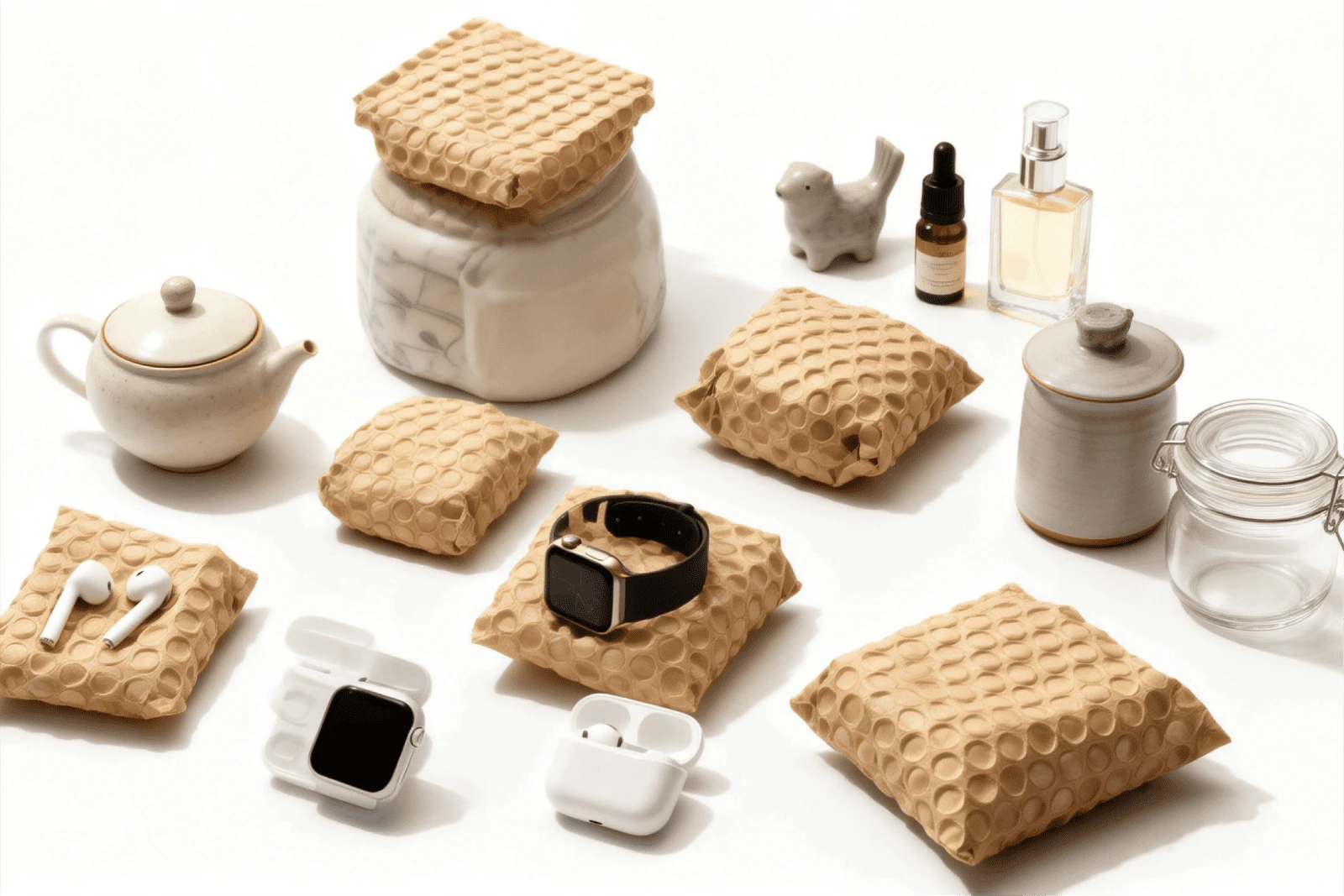
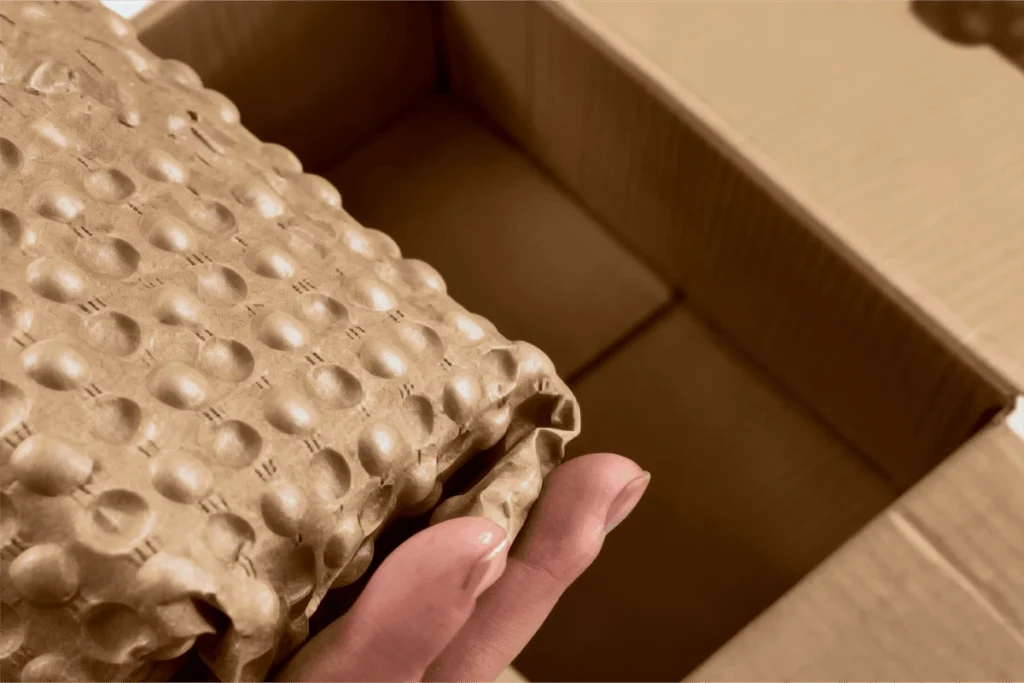
Ideal candidates for paper bubble wrap include items that are moderately fragile but not extremely delicate. Candles, skincare bottles with secondary carton packaging, small ceramic decorative items, and boxed electronics accessories all ship well with paper bubble wrap. These products need cushioning to prevent minor damage, but they don’t require the maximum protection level. When wrapped with adequate layers, paper bubble wrap provides sufficient shock absorption for these items during ground shipping.
Glassware represents another good use case, specifically when items are smaller and already have some structural integrity. Small drinking glasses, coffee mugs, and decorative glass pieces typically survive paper bubble wrap protection well. The key is wrapping each item individually with multiple layers and filling any empty space in the box to prevent shifting.
Small electronics and their accessories are also suitable. Phone cases, chargers, small tech gadgets, and similar items don’t need extreme cushioning. Paper bubble wrap works effectively for these products, especially when combined with a sturdy outer box.
Cautious use scenarios require more careful evaluation. Wine bottles, large ceramic bowls, and single-unit glass jars represent the boundary where paper bubble wrap becomes risky. These items are heavier and more fragile than the ideal candidates. You can use paper bubble wrap for these products, but you’ll need significantly more material—often 3-4 layers instead of 2—and you should monitor your damage rates closely during a pilot program.
Not recommended for paper bubble wrap are large glass panels, lab glassware, premium fragile gift sets with high claim risk, and extremely valuable items. These products require the superior cushioning that plastic bubble wrap or foam-based solutions provide. Attempting to protect these items with paper bubble wrap risks damage claims that far exceed any savings from using cheaper packaging.
When Paper Bubble Wrap Falls Short
Understanding the limitations is just as important as knowing where it works. Paper bubble wrap has clear boundaries that you need to respect.
Air shipping presents a real problem. When packages travel via air freight, they experience higher handling intensity, pressure changes, and more cumulative impacts than ground shipping. Paper bubble wrap can compress over time, and the cumulative stress of multiple handling events during air transit often exceeds what the material can absorb. If your business ships primarily via air freight or internationally, plastic bubble wrap is more reliable.
Moisture-sensitive environments are another limitation. Paper bubble wrap absorbs moisture more readily than plastic alternatives. If your shipments travel to tropical regions, through humid climates, or during rainy seasons, the material can deteriorate and lose cushioning effectiveness. This makes paper bubble wrap less suitable for these routes without additional waterproof outer packaging.
Heavy items require more protection than paper bubble wrap typically provides. A 5-pound ceramic piece or heavy glassware needs the superior cushioning of plastic bubble wrap. Paper bubble wrap can technically work for heavier items, but you’d need so much material that the cost advantage disappears.
High-value items shipped internationally or requiring insurance may not meet carrier or insurance company packaging requirements. Before using paper bubble wrap for expensive products, verify with your shipping carrier and insurance provider that it meets their standards.
Time-sensitive operations where speed is critical can struggle with paper bubble wrap. The material requires proper wrapping technique to be effective. If your operation prioritizes packing speed over protection quality, inconsistent wrapping leads to damaged products. Plastic bubble wrap is faster to apply and more forgiving of technique variations.
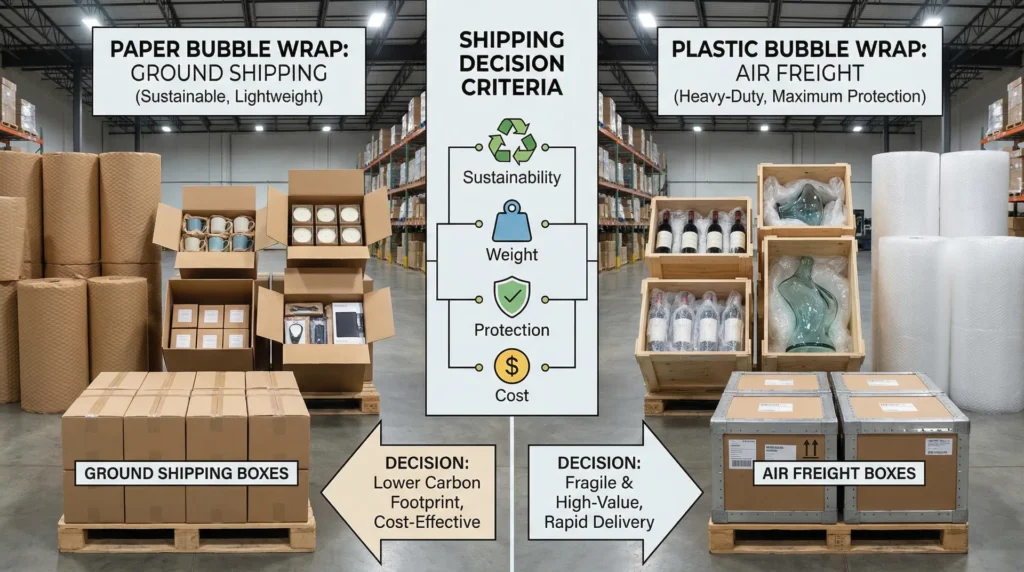
Paper Bubble Wrap vs Plastic Bubble Wrap: When to Use Each
The choice between paper and plastic bubble wrap isn’t about which is universally better. It’s about matching the material to your specific business needs.
Use paper bubble wrap when:
•You’re shipping light-to-medium fragile items via ground transportation
•Your customer base values sustainability and environmental responsibility
•Your shipping routes are primarily domestic and short-distance
•You want to reduce packaging inventory and storage space
•You’re willing to run a pilot program to test damage rates
•Your products don’t require maximum protection
Use plastic bubble wrap when:
•You’re shipping heavy or extremely fragile items
•Air freight is a significant part of your shipping volume
•You ship to humid climates or tropical regions
•Your products are high-value and require maximum protection
•Your operation prioritizes packing speed
•Your carrier or insurance company requires specific packaging standards
•You ship internationally and need moisture protection
Consider a hybrid approach when:
•Your product mix includes both light and heavy fragile items
•You ship via both ground and air freight
•Some customer segments value sustainability while others prioritize maximum protection
•You want to test paper bubble wrap without eliminating plastic alternatives
Many successful e-commerce businesses use this hybrid model: paper bubble wrap for ground shipments of light-to-medium fragile items, and plastic bubble wrap for air freight or heavier products.
How to Evaluate If Paper Bubble Wrap Is Right for Your Business
Making the decision requires systematic evaluation of your specific operation.
Step 1: Categorize your products. Document what you’re shipping and classify each product by fragility level and weight. Create three categories: light-to-medium fragile (good candidates for paper wrap), moderately fragile (boundary cases requiring testing), and extremely fragile or heavy (better suited to plastic wrap). Calculate what percentage of your shipments fall into each category.
Step 2: Analyze your shipping patterns. Track your shipping data for the past 90 days. What percentage goes via ground transportation? What percentage is air freight? What are your primary shipping destinations? Ground shipping to domestic locations is ideal for paper bubble wrap. Air freight or international shipping requires plastic alternatives.
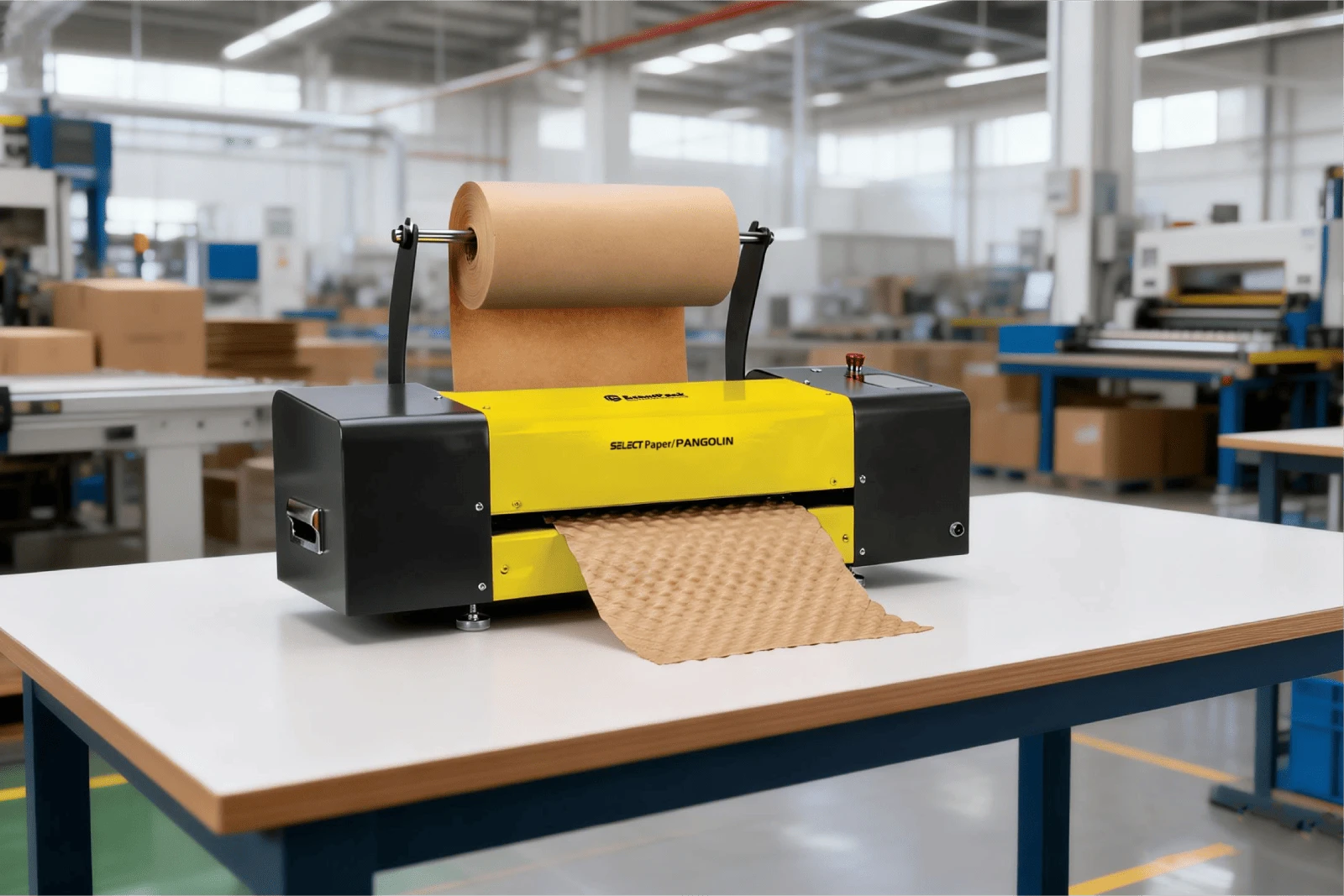
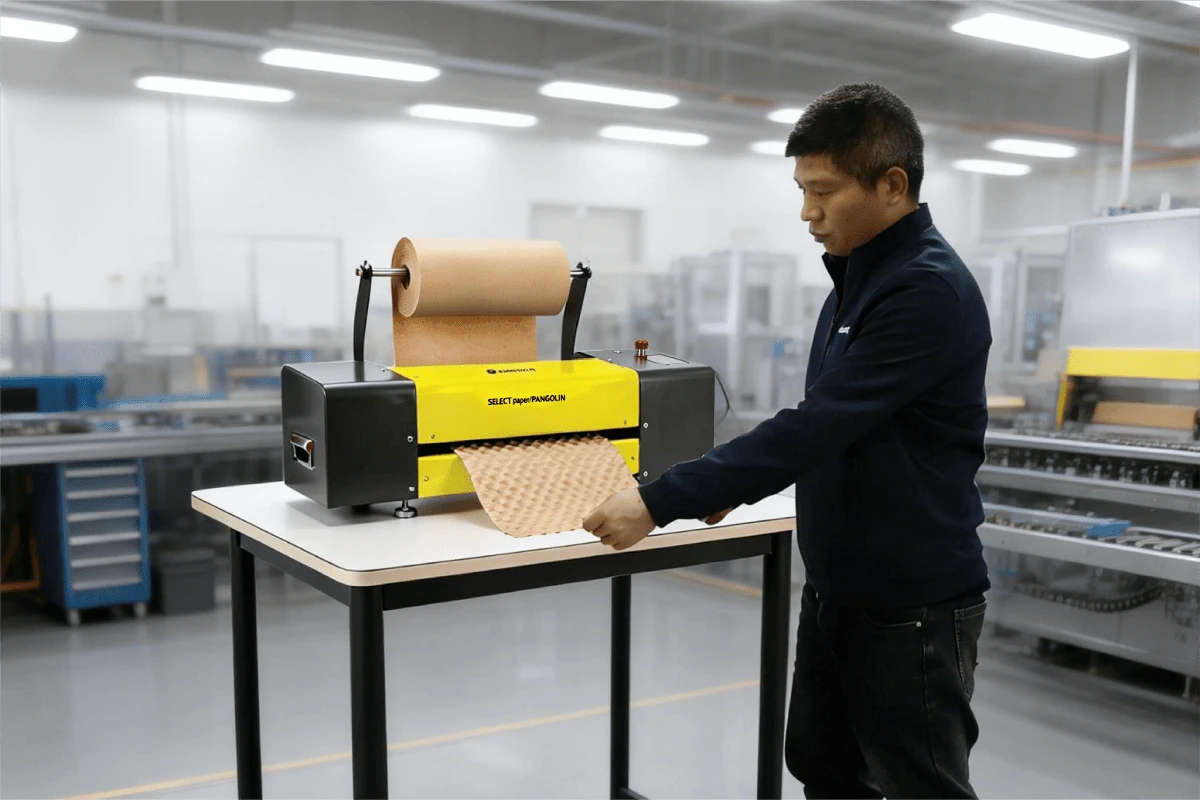
Step 3: Calculate your current packaging costs. Determine your total spend on protective materials, storage space, and labor. Include the cost of pre-made bubble wrap rolls, storage rental, and the labor required to wrap items. Compare this to the cost of implementing paper bubble wrap—whether through pre-made rolls or on-demand production via a paper bubble machine. For more details on how machines work, see our guide on how paper bubble machines work.
Step 4: Run a controlled pilot program. Select a subset of orders—ideally 200-500 shipments—and use paper bubble wrap for products that meet the ideal candidate criteria. Monitor damage rates closely. Compare your damage rate during the pilot to your historical damage rate with plastic bubble wrap. If damage rates increase by more than 5%, paper bubble wrap may not be suitable for your operation.
Step 5: Evaluate customer feedback. During your pilot, ask customers about their packaging experience. Do they appreciate the sustainable alternative? Do they notice any difference in protection? Customer feedback often reveals whether paper bubble wrap aligns with your brand values and customer expectations.
Step 6: Calculate the financial impact. If your pilot shows acceptable damage rates, calculate the financial impact of switching. Factor in material cost savings, storage space savings, labor efficiency changes, and any increase in damage claims. Determine your payback period and whether the switch makes financial sense.
Best Practices for Using Paper Bubble Wrap Effectively
If you decide to implement paper bubble wrap, proper execution is critical to success.
Apply adequate material. This is the most important rule. Don’t skimp on the amount of paper bubble wrap you use. Each fragile item should receive multiple layers—typically 2-3 layers for light items and 3-4 layers for heavier or more delicate products. The material is relatively inexpensive, so using more rather than less is the right approach.
Wrap items individually. Each fragile item must be wrapped separately before being placed in the shipping box. This prevents items from moving against each other and protects each item if the box is dropped. After individual wrapping, add additional cushioning material to fill empty space in the box.
Use the right box. Paper bubble wrap works best when combined with quality corrugated cardboard boxes rated for your package weight. A weak box can fail under compression, negating the protection from the bubble wrap inside. Seal all seams with strong packaging tape.
Train your team thoroughly. Inconsistent wrapping leads to inconsistent protection. Ensure all packing staff understand proper technique and the importance of adequate cushioning. Conduct regular training and quality checks to maintain standards.
Monitor damage rates continuously. Track damage claims and customer complaints after implementing paper bubble wrap. If damage rates spike, adjust your approach by using more material, adding extra protective layers, or reverting to plastic bubble wrap for specific product categories.
FAQ
Q: Is paper bubble wrap enough for glass shipping?
A: It depends on the type of glass. Small drinking glasses and decorative glass items typically ship well with paper bubble wrap when wrapped with adequate layers. Wine bottles and large glass pieces require more protection and are better suited to plastic bubble wrap. Run a pilot program to test with your specific products.
Q: Can paper bubble wrap replace plastic bubble wrap for e-commerce orders?
A: For some orders, yes. For a complete replacement across all products and shipping methods, probably not. Most successful e-commerce businesses use a hybrid approach: paper bubble wrap for light-to-medium fragile items shipped via ground transportation, and plastic bubble wrap for heavier items or air freight.
Q: Does paper bubble wrap work for ceramics and fragile home goods?
A: Yes, for many ceramic items. Small ceramic decorative pieces, mugs, and bowls typically ship well with paper bubble wrap. Larger ceramic pieces or those with high claim risk should use plastic bubble wrap or foam alternatives.
Q: Is paper bubble wrap suitable for air shipping?
A: Not ideal. Air freight involves more handling events and higher impact forces than ground shipping. While paper bubble wrap can technically be used, plastic bubble wrap provides more reliable protection for air shipments.
Q: How many layers of paper bubble wrap are needed for fragile products?
A: For light-to-medium fragile items, typically 2-3 layers. For heavier or more delicate products, 3-4 layers. The exact number depends on the product fragility and weight. Run tests with your specific products to determine the minimum effective layers.
Q: What’s the cost difference between paper and plastic bubble wrap?
A: Paper bubble wrap is typically 20-40% less expensive than plastic bubble wrap, especially when using on-demand production. However, if you need to use significantly more material to achieve adequate protection, the cost advantage shrinks. Calculate the total cost including material, storage, and labor for your specific operation.
Q: Should I use paper bubble wrap for all my fragile shipments?
A: No. A hybrid approach works best for most businesses. Use paper bubble wrap for ground shipments of light-to-medium fragile items, and plastic bubble wrap for air freight, heavier products, or items requiring maximum protection.
Making the Right Decision for Your Operation
Paper bubble wrap can be a practical option for many fragile e-commerce shipments, especially when businesses want to reduce plastic use without sacrificing basic cushioning performance. However, it’s not the best fit for every fragile item or shipping environment.
The key is honest evaluation of your specific situation. Categorize your products, analyze your shipping patterns, run a controlled pilot program, and monitor the results carefully. Some businesses find that paper bubble wrap works well for 40-60% of their fragile shipments, while others determine that plastic bubble wrap is more suitable for their product mix.
If your business is exploring paper-based protective packaging solutions, SelectPack can help you evaluate the right approach for your operation. Whether you’re considering pre-made rolls or on-demand production via a paper bubble machine, our team can provide guidance based on your specific product mix, shipping patterns, and business goals. For businesses with high-volume needs, explore our industrial paper bubble machines for high-volume operations.
Related Articles
•What Is a Paper Bubble Machine?
•What Products Are Best Protected with Paper Bubble Packaging?
•Paper Bubble Machine Limitations: When It’s Not the Best Packaging Solution
•How to Choose the Best Paper Bubble Machine for Small Businesses
•Paper Bubble Machine vs Honeycomb Paper Machine: Which Is Better?
•Paper Bubble Machine Maintenance and Troubleshooting
•How Paper Bubble Machines Reduce Plastic Packaging
•Industrial Paper Bubble Machines for High-Volume Operations