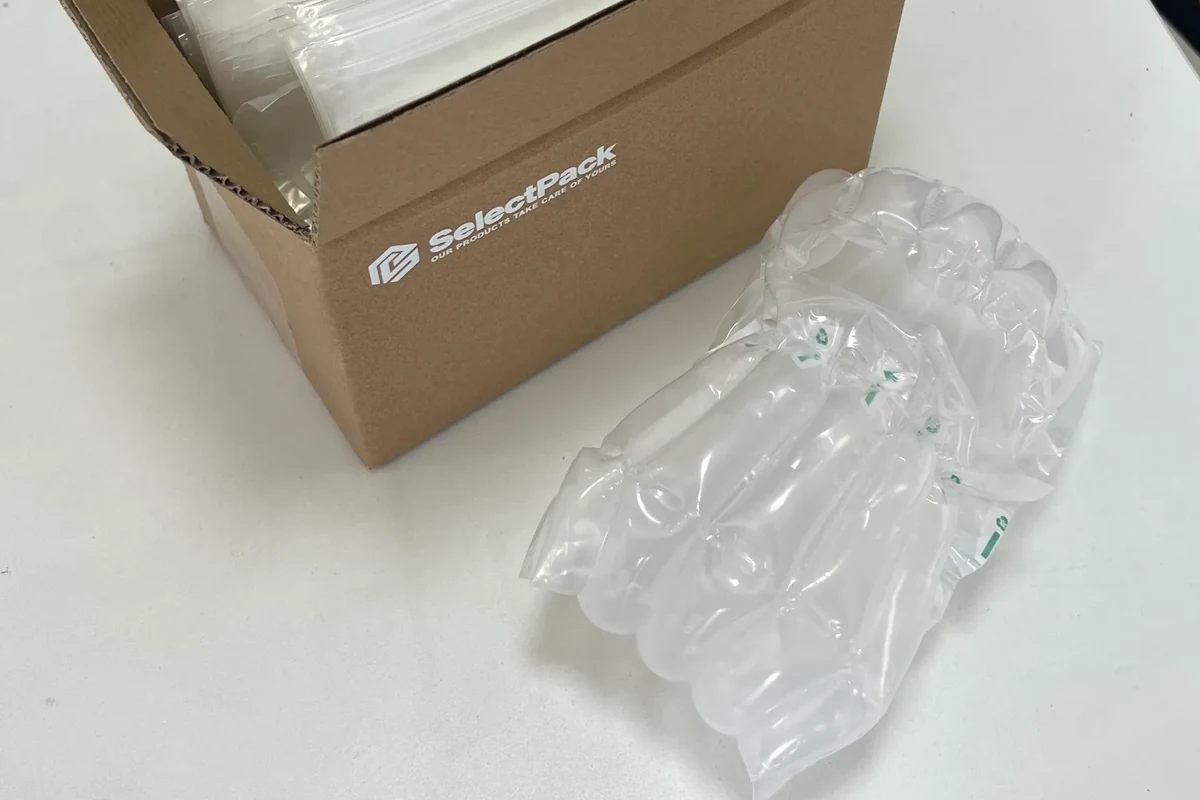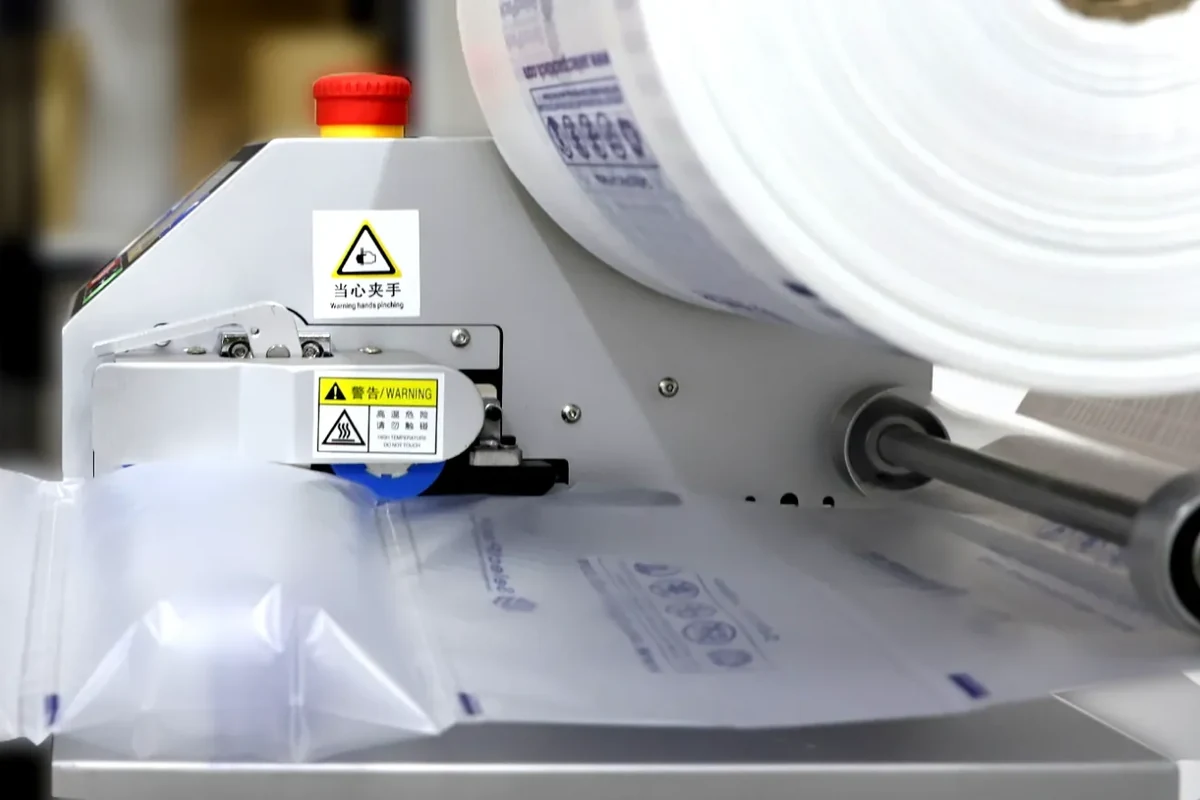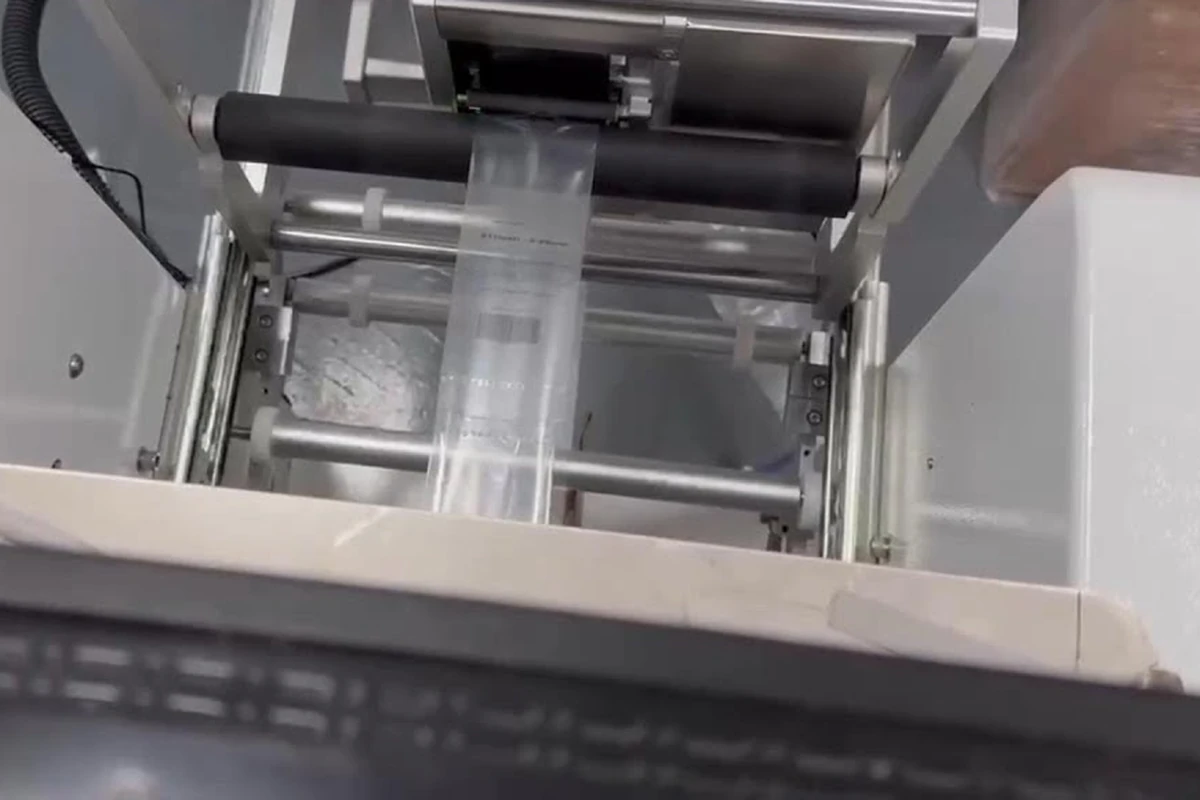
Choose on-demand air cushioning when producing approved material close to use fits your station space, demand and replenishment process. Pre-inflated supply suits a different workflow: operators receive ready-to-use material, while storage, transfer and buffer replenishment happen elsewhere. Compare the complete supply path and cost per acceptable pack, not only the space occupied by an uninflated roll.
Pre-inflated stock can be purchased ready to use or produced at a shared point inside the warehouse. Those are different procurement arrangements even though both deliver inflated material to the station. A supplier’s air cushion machine range does not establish that it also supplies pre-inflated finished stock.
This comparison assumes each option supports an acceptable pack with the required material format. A cheaper supply method cannot compensate for unsuitable cushioning or an unapproved machine-and-film combination.
Where Does On-Demand Air Cushioning Fit in the Supply Path?
On-demand air cushioning puts inflation at the packing station or at a shared in-house source. Purchased pre-inflated cushions move production outside the receiving operation. The location determines which tasks belong at the station and which move to warehouse support staff.
Three arrangements are useful to compare:
| Supply arrangement | Work at the packing station | Work elsewhere |
|---|---|---|
| Local on-demand production | Operate the source and use its output | Store and replenish rolls |
| Shared in-house production | Retrieve material from a local buffer | Inflate, collect and deliver material |
| Purchased pre-inflated stock | Retrieve and use supplied material | Receive, store and replenish finished stock |
Shared production is still an on-demand material system at the warehouse level. Its stations consume pre-inflated output, so it combines machine operation with a separate delivery task. Count both when comparing it with a machine beside each operator.
For each arrangement, assign responsibility for roll or stock replenishment, buffer monitoring and rejected material. An unassigned task often becomes operator walking time or waiting during the busiest part of the shift.
Measure Storage for the Same Packaging Requirement
Compare storage needed to support the same number of acceptable packs over the same coverage period. Comparing one compact roll with one full bin of cushions gives no meaningful inventory result unless both represent equivalent usable supply.
Start with actual material consumption per pack and the required stock coverage. Measure the locations used for bulk stock, station buffers and empty handling containers. Include the route and space required to replenish them without obstructing packing or other warehouse work.
For on-demand production, count reserve rolls, the production point and any inflated buffer. For pre-inflated supply, count the delivered stock and the containers or shelves used to make it accessible. If the stock includes several formats, record each one rather than averaging away a bulky or slow-moving variant.
Use measurements from your proposed arrangement. Uninflated film occupies less volume than the same film after inflation, but that physical difference does not establish a fixed warehouse-saving percentage. Coverage period, containers, available racking and the location of production all affect the operational result.
Inspect the condition of material after normal storage and transfer. Stock that reaches the station damaged or unsuitable for use does not count as available cushioning, regardless of the quantity received.
Compare Handling Time Across the Whole Supply Path
Count the people and actions needed to deliver usable material to the pack. Moving inflation away from an operator does not remove the work; it changes where that work occurs.
At a local machine, observe loading, roll changes, retrieval, separation and any waiting. At a shared source, observe those production tasks plus collecting, transferring and refilling station containers. With purchased pre-inflated stock, observe receipt, put-away, picking, container opening and station replenishment.
Separate recurring work from one-time setup. A machine installation cost and a daily replenishment route belong in different parts of the comparison. Likewise, do not time only the easiest uninterrupted production interval and treat it as the whole shift.
Utilisez le air cushion machine capacity guide when calculating whether in-house production meets average and peak consumption. A station can run short even when the shared machine produces enough material over the shift, because delivery or buffer recovery becomes the constraint.
Mixed formats introduce another tradeoff. One shared source might require changes between wrapping film and pillows; local sources might require more equipment and stock locations. Confirm the actual formats and change process instead of assuming one setup produces every required cushion.
Calculate Cost per Acceptable Pack
Use the same accounting period and acceptable-pack denominator for each supply arrangement. Include material actually consumed, the relevant labor, equipment allocation and operating costs.
Cost per acceptable pack = total assigned cost for the period ÷ acceptable packs completed in that period.
Include costs that belong to the supply method:
- Delivered material consumed, including material rejected or wasted.
- Inflation, roll changes and routine source operation where applicable.
- Receiving, stock handling and station replenishment labor.
- Equipment and service allocation over the chosen period.
- Measured utility costs and any explicitly valued storage cost.
Keep the calculation consistent. If actual material consumption already includes scrap, do not add the same scrap cost again as a separate allowance. If a recorded labor total includes replenishment, do not repeat that time under handling.
A hypothetical comparison
The following example is an accounting illustration, not a SelectPack quotation or expected saving. Assume both arrangements produce 1,000 acceptable packs in the period and use an approved equivalent protection method.
| Assigned period cost | Local on-demand | Purchased pre-inflated |
|---|---|---|
| Delivered material consumed, including waste | $120 | $160 |
| Source operation labor | $40 | $0 |
| Stock and station handling labor | $40 | $70 |
| Equipment and service allocation | $30 | $0 |
| Services publics | $5 | $0 |
| Total | $235 | $230 |
| Cost per acceptable pack | $0.235 | $0.230 |
In this scenario, the lower material cost of on-demand supply does not produce a lower total. The two totals also exclude a priced storage allocation, so the example does not settle a warehouse-space decision. Replace the inputs with your own recorded costs and state what the calculation includes.
If the comparison changes staffing rather than paid hours, describe the result as time released for other tasks until a financial saving is established. Avoid presenting every minute removed from packing as an automatic reduction in payroll.
Choose a Supply Arrangement That Survives Busy Periods
Select the arrangement that provides approved material when stations need it and remains practical during replenishment or an interruption. Unit cost is one decision input alongside space, staffing and supply continuity.
Check what happens when a roll runs out, a shared source stops or a delivery is late. Identify the usable reserve, who releases it and how long the proposed stock coverage supports actual consumption. Do not assume unlimited material from a central source or immediate delivery of replacement stock.
A hybrid arrangement is an option to assess: local production for frequently used material with a defined reserve or shared supply for other formats. Confirm roll compatibility and the separate handling requirements before treating backup material as interchangeable.
SelectPack gamme d'emballages à coussin d'air includes on-demand materials and equipment. Discuss your station count, formats, peak consumption, available space and replenishment route when considering that supply path. Use the same information to assess any external pre-inflated offer, with its delivered format and availability confirmed separately.